hey everybody we're live for this Bachata timing live stream so the question is the found this is mainly for Bachata dance teachers but Bachata dancers too if you're really into it you're welcome as well but a lot of this Focus will be on different questions that Bachata dance teachers may get regarding timing okay so we are going to we uh let's see just testing audio there so we are set and ready to go um one question that often comes up is is it more musically correct or isn't it more musically correct to start on one
or is it musically correct to start on two three or four so if you're new to this topic a little bit of background of course in the Dominican Republic bat to dance the dancers often start their step on the one two three or four in the music okay so oftentimes the follow starts sometimes the lead starts but ultimately that it can be started on a variety of timings whereas as bachat has begun to become to over the last you know 15 20 25 years internationally through in classes in clubs in festivals as it's become more
formally taught a sort of standard has developed where oftentimes it's started you start your first step your first of three steps on the first Beat of the Music okay so we're sort of starting from that we've done a number of live streams already and if you want to go check those out that kind of dive into that explore it talk about it culturally we look at a variety of dance examples but today we're going to look at more of that question questions you may get from students from other dance teachers who may who may wonder
you know perhaps you are considering or have already sort of started with your dance students exploring starting on different timings rather than one and and are just kind of exploring that journey and so we're going to look at some of the questions and if you know if you have them we'll save them along the way I'll try to get to them as we go along here so we have a few of you with us you know why one of the reasons I'm pretty passionate about this topic you know of course social dance in the Dominican
Republic is a big focus of mine as is the music I've done a lot of documentary film work with of course Joan Sano but interviews with many other musicians as well so really passionate about the music but also passionate about the social dance and just the culture getting people's perspectives on it and so you know this is one of those interesting interesting topics interesting things because the timing how it's taught is somewhat different than how it's socially danced in the Dominican Republic now of course it's starting on one happens in the Dominican Republic as well
probably 25 26 27% of the time I once did a study where I looked at hundreds of different Bachata videos from the Dominican Republic Social Dance videos and took a percentage tally of the different timings that were being danced and we'll probably do another live stream where I de delve into that research and in the future but just the brief the brief part of that is all timings were represented and had a fairly high level of representation meaning there were a lot of couples that had started on one on two on three and on four
and actually when I did that research on starting on the third beat was actually the most common followed by starting on one followed by on two and then on four and again this was just this wasn't something super official this was something I just did but I did look across hundreds of different dancers um over various periods of time and just made sort of an informal survey survey for myself so I could start to understand what was going on so you know starting from that perspective that question we often get the question or the push
back that somehow it's more musically connected or more musically uh somehow right you know we put that in quotations right to start on one and so I guess one of the things what I say to that often times is you know the fir the first response is Bachata is a social dance you know it's not a performance dance primarily of course there are performances now but it's a social dance primarily and it's a social dance that didn't develop um through these standards but it developed across a community it developed in the Dominican Republic and then
of course Dominicans outside the Dominican Republic with influences from around Latin America and the Caribbean because a lot of Bachata and a lot was highly influenced in derives from Bolero son maren Etc so you know there was already this influence from other genres and dance before Bata coalesced into its own dance and music genre but this is how B Chata is experienced by Dominicans meaning they will start the dance on a variety of different timings and when we say a variety of different timings that doesn't mean any timing goes and everything is okay and all
timings that's that's sometimes put out there like okay everything's okay um as as sort of a Counterpoint that's not the issue rather batas may start their dance on the one two three three or four of the music and really important this is across Generations so this is older dancers this is younger dancers this is inexperienced dancers this is the best dancers highly experiened dancers experience Bata this way so you know I filmed with a number of dancers that and people that had been dancing Bachata from before Bachata was a genre so they were already social
dancing in the Dominican Republic prior to the early 60s you know so they were growing up dancing bolero son meren and they already had that influence um and that guitar music influence so it wasn't like Bata both either the music or the dance was just like invented one day rather it it sort of over time coalesced into its own distinct genre but the point is that Dominicans these older Dominicans that were dancing it even in it before and in its early days also dance on multiple timings so I say that because the point being um
there was NE and this is really important to think about because there was never a period of time that I I can see certainly not since the 60s um but there was never a period of time where Bachata the core steps the core rhythms the core shapes the lead and follow where they were developing within this standard of starting on one so it's not that it wasn't that Bachata was somehow or the steps were created in an environment of they needed to be started on one and there was the tap on four and then it
it sort of branched out or something rather Bata coales into a music and a dance genre in a period of time where there was these this social dance happening on multiple timings and so the dance itself developed in that environment and so sometimes people will people will say Well the box step developed let there be light light just turned on that the Box step derives from The Bongo where it needs to be connected starting on one tapping on four it it's a great thing to connect to it makes musical sense to do it that way
it's a great connection point but it that step that shape and that Rhythm of the step did not come into being in an environment where there was a rule of starting on one so I don't I don't understand that that argument or how that could be so that's that's one point this is how Dominican social dance it it is a social dance um it was primarily developed in the Dominican Republic by Dominicans old young very experienced inexperienced social dance and experience it this way so that alone that's that's a big reason why as a dance
teacher you should at least share the information with students and then depending on your community how deep you explore it with them how deep you go into it depends on you your own experience with different timings but it also depends on what community you in you're in some of the goals for your dancers and so there's a lot of different Pathways you can go from there but at the very least it's something that should be shared and it's it's certainly not something that should be withheld or you you shouldn't ever feel like oh this is
musically incorrect or there's something incorrect about it or it's more correct to start on one and so that's one of the things I want to push back against um is that idea another idea that to kind of push back against related to that is that somehow that Dominicans don't you know they're untrained dancers compared to trained dancers or they're you know they don't have a sense of really a sense of timing or structure of the dance and you know yes many may not be counting they may not be counting one two 3 four they may
not be consciously aware of some of the things that train dancers get taught in their classes depending on what class but you you can't confuse that with obviously you know when you when you dance when you experience that dance with experienced Dominican Bachata dancers when you visually see it there's off obviously a high connection with the sounds with the timing maybe it's not counted timing always but with the timing and with these structures meaning these shapes these structures these movements that allows the social dance to exist and to happen and people to be able to
dance with a variety of you know in a variety of cities and places and areas and so again pushing back with that that idea that somehow you know trained is superior and untrained you know just having fun no connection no I think it's it's the the opposite so really kind of think about that and that brings me to the second point which is okay this is how Dominican dancers have done it this is also how uh bachat musicians Dominican bachat musicians experience the dance meaning Bachata musicians dance it starting on multiple timings and I've seen
quite a number of Bachata musicians dance both in person and on videos Etc um and had bachat musicians explain the step to me on a variety of t on different timings and so you know you don't only have Dominicans and the culture and the society experiencing it this way you have the creators of the music you know the people who were were with it through the 70s the 80s the 90s experiencing it this way as well and that says a lot because the musicians know exactly where the one is you know obviously these highly recorded
bass players they know where all these that these music producers you know they know where the count is they can count it they know where the sounds are and yet they musically connect with it on different timings so that's that's a powerful point so we're gonna just related to that let's look at a video real quick of an interview I did with Billy Bachata who was you know one of the most influential base players in bachate history and he'll explain a little bit about his history and kind of how he thinks the bass is important
to Bachata but then also how the bass guitar fits in with the basic step Etc and then we'll discuss that for the pl the platform right so that's the first part of it is him explaining for one just his extensive experience he was he's highly influential considered a second generation not the of the first generation but the second generation of Bachata musicians and highly influential in the bass guitar in bachata music but explaining that foundation of the bass within the music the floor of the foundation what other things rest upon right now second we're going
to hear hear him explain this step and you know pay attention his tap his touch as he explains it is going to happen on the first Beat of the Music so he's going to touch on that that full Baseline saying making sure that we understand you know the step is connected to that Baseline and then he'll explain it from there so here he goes in right so the the point being again he's he's not you know he doesn't study the dance but he's a very Billy is very someone that social dances a lot he passed
away unfortunately uh during covid but he was someone that social danced a lot and including to his own recordings it was sort of how he would test how his bass playing was is it dancable and so you know here we have someone that's hyper aware of all aspects of Bachata you know he's recorded Luis seura to Frank Reyes to mon Alexandra to Joy VES to the new musicians and so you know again this idea that somehow it's more musically correct in that Dominicans are are somehow just you know not sensing the music they're just starting
whenever that we need to push back against you know yes it's not sort of this counted considered thing often when someone starts it can be a very intuitive start and there's a lot of reasons a person may start or start on a variety of timings and of course if your partner has determined the timing now you're going with your partner and so you're going with the flow on the timing and try and then trying to keep that timing solid so you know ultimately again we're just how do we answer this question when and it is
a good question it's a reasonable question when someone says wait you know bat's 44 timeing it's counted one two three 4 one two three four so shouldn't I start my step one two 3 4 so you know it's not a bad question but it's just how as dance teachers do we then respond to it and what are the ways to explain you know and so part of it is just kind of giving this cultural background of it part of it might be if they're really dug in you know explaining perhaps how even Bachata musicians experience
it as well um talking about how Bachata as a its structure its Rhythm didn't coales didn't become a genre within an environment primarily dancing on one so those are some some ways you might respond to it um let's see if we have any questions thank you everybody for hey Aldo thank you for for joining us uh dancing is like music trained or not trained doesn't matter if talent and passion exists so that's great Point again oftentimes okay when I hear this trained untrained yeah there's differences in how we learn and that affects the outcome and
it affects how we perceive things um but this idea of one better one worse is something we should really challenge you know even in the music you know adilio pares is not a trained musician he was one of the mo most influential rinto lead guitar Joan Sano is not a train musician in fact he takes pride in saying no one taught him the guitar he learned by ear copying imitating different people play you know expressing he's not trained anony Santos is not a train musician other genres the blues Muddy Waters all these amazing Blues musicians
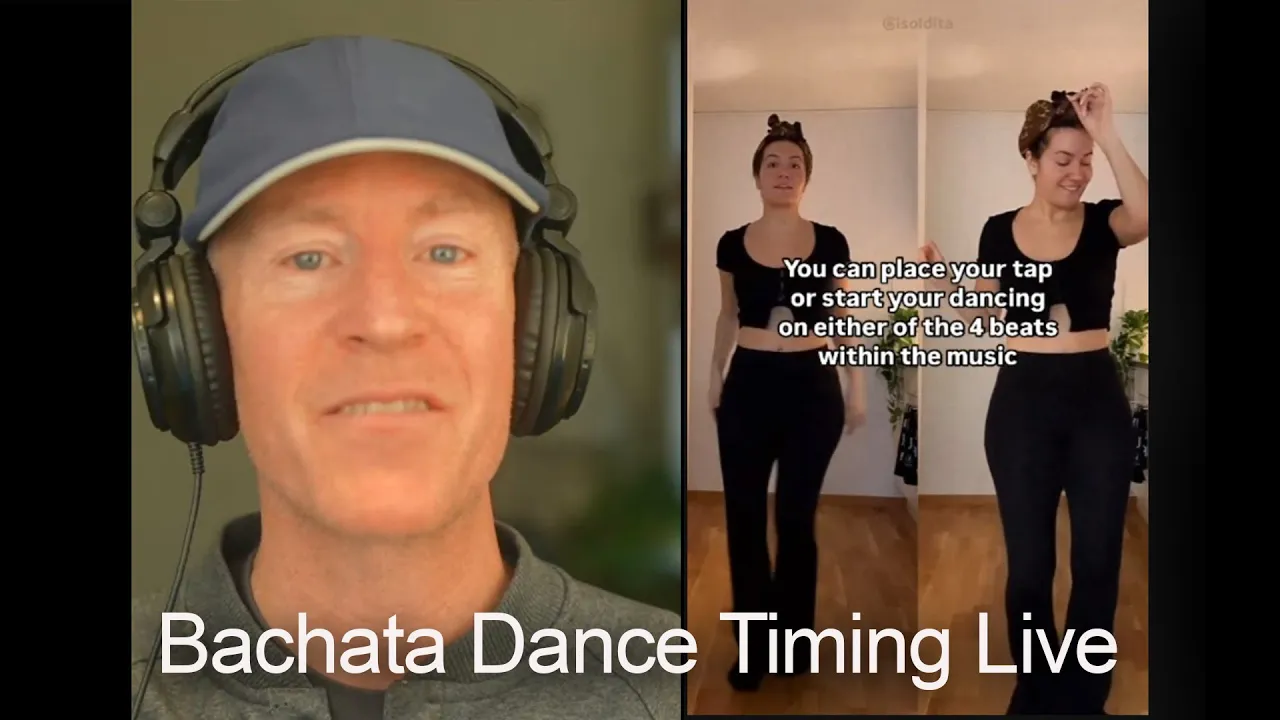
were not trained musicians and so you know we can see that in a lot of the these core musical forms that have developed across the world you know they have that that kind of tension that sometimes exists between trained and untrained but in dance as well so that's a great Point Let's see hey so I will make reals I make reals for it so more people can more people can see it right and so we sold they posted a video and we did some lives on it where she's dancing starting on one and also starting
on four and you can see those videos side by side and it's such a great video because for me it then becomes clear which gets to the other point it's sort of experiential you know when we're saying is it musical is it okay to start in these different timings well you know how would how would you determine it well we might determine it visually we might determine it dancing with someone connecting with some we may determine it experiencing it ourselves but when you see that video of Isolde to me they're both highly connected highly Musical
and what's great about it is you can see now the emphasis of her steps which instruments and where she connects to them change within the shape but her essential way of being way of dancing way of dancing Bachata is still still connected it's rooted in Dominican Dominican bachat and it's it's also highly personal and highly expressive highly individual which is I think one of the core elements of bachat the Dominican Republic because it's not standardized and so you have this individual individuality as well so again there's the experience portion and that that's a big point
so Mo most people maybe you've started on one you primarily teach on one you've danced on one for a long time that was the case for me even while living in the Dominican Republic while studying abroad even while doing the documentary with Joan it actually took me one or two years years in that social dance environment because to realize that there were multiple timings because I had just entered with the Assumption and not with the taught assumption not with the conscious assumption but just some sort of assumption that I picked up somewhere that I needed
to start on the first Beat of the Music and touch on the four and I created around that a whole lots of connections connecting points musically with the instruments and that's good that allowed me to be super solid on that timing but this is to point out that even me when I finally realized what was going on social dancing well there's all these other timings that I then had to take a few steps back kind of break down what felt so comfortable so good to me because I wanted to go through that journey and and
you know be more comfortable social dancing on other timings and so went through that process and as someone who has I can tell you that I I find musical connection on these other timings other teachers like Isolde like Edwin Dakota um many of my friends or colleagues have done the same and so there's that experience even dancers that were mostly accustomed to dancing on one and again really important there's nothing wrong with only dancing on one one it doesn't make you less musical doesn't make you a worse dancer it doesn't make you a better dancer
to dance on multiple timings it doesn't make you more musical per se um there are some you know I do think there are some benefits in just like experiencing the music the instruments and your own dance form from these different perspectives I I think there are some benefits but it doesn't make you a better dancer or a more music dancer automatically so you know as dance teachers whether we're teaching multiple timings or not you know we need to keep that in mind as well so if we have any questions feel free or any challenges to
what I'm saying or any challenges you've gotten on your videos or in your class classes is there anything or how have you responded you know when when someone has said well is this correct or isn't it more correct or I heard there was a rule you know I needed to start on one Etc so if you have any of that let me know any of your own experiences from teaching or posting videos would love to hear them so we have one here let's see we're the first one in the dancing to come come up and
educate workshops on timings was I the first one um I was the first one that I knew of I suppose um because my you know principally I started with first showing the documentary film with with Joan and I would I would teach the Box step and teach these other things I would sometimes teach it on three and I have a number of videos not only in documentary but then what became my my presentation with kande dancing um and dancers dancing on a variety of timing so I would explain that at least within the within the
multimedia presentation pretty early on and so I don't know what other people were were doing around the world um Etc but I was one one of the first I would suppose that was kind of teaching that and and then started doing class is kind of where we would explore it maybe we would explore on three or on two or you know again it really depends on the on the class um one of the things that I found teaching that's really interesting like for instance if I'm teaching at a university or if I'm teaching a group
of people that really have they've come for the cultural presentation and then we're doing a a dance class after but they have no bat to dance experience maybe they've never danced and I've got a full group of people that have never danced Bata and I'm just we've seen the film and now we're gonna learn the basic one of the foundational steps and then we're gonna try it in partners and open position and that's the class with a class like that if they have no experience in it I will maybe I'll have maybe I'll show them
the step timing without music and then I'll have them close their eyes I'll put music on I'll start them I will start them out and see what timing they start on just from my own perspective just to get an idea of how are they as someone that's never danced it before how are they experiencing it how are they how are they intuitively experiencing it you know then we might explore a different timing so you know it really depends on what class you're in one issue another question one issue I have is some Dominicans who are
internationally known don't always agree and musicians and musician dance instructors but in the Dr and Dominican communities in the UK I experience different timings so yeah that's a that's a good point so if I understand the question right um there's Dominican dance teachers that are internationally traveling and they may not agree that it that I mean one question I guess I would ask them or ask you would because there is a difference whether if they agree that it's musically correct to dance on multiple timings or if they disagree perhaps they think it's just better to
teach it on one and I do think those are connected ideas but they're somewhat separate um because you could you could think that socially and musically it's fine to dance on all timings but decide or make another decision to only teach on one you know you may think well it's just my students get too confused it's easier this way I can get farther in the class so there there are reasons a person may think it's musically okay but still decide to to primarily teach on one so I guess that would be my question to them
and to you to try to narrow it down I'd be really interested actually in the in the answer but that's part of the reason why I'm doing this particular video and that I'll do reals from it like yold said and because you know we see so many performances we see so many dance classes and we see so many uh dance teachers teaching on one including myself a lot of the videos you know I've released or classes I've done I have started on one and so we see that and so it could be natural to assume
that it is more correct or more mu or there's a musical some sort of musical reason for it and there's really and this is somewhat my opinion but it's also the opinion shared as as you mentioned it's it's opinion shared by Bachata musicians who social dance and it's shared by the Dominican culture who experiences Bata in this way so it's not just my opinion but you know it's my opinion that it's not an issue of musical correctness generally of why it's taught on one it's a it's an issue of ease of teaching the way classes
are structured how we structured classes um what we're trying to teach and and a lot of the way the ways we have structured dance classes and many of our goals within those dance classes it's clearly easier at times to start the whole class on one and end on four so that's I think one reason why people do it it's a big reason plus a lot of this dance teaching history in these forms come from genres before they come from salsa dance teachers and other dance teachers who already have this method methodology and that was brought
in and sort of adapted to Bachata so you know I had a really interesting phone call recently with uh Jorge elizando uh he runs the Dallas Bachata Festival but you know he was he was probably one of the biggest like traveling Bachata teachers known for more of a fusion Bachata and what he taught and modern but during those early years of before 2008 during 2008 he was also involved in you know the big Bata dance contests in Spain early on and and so you know a lot of this on one starting on one has its
has its roots in history because of salsa dance teaching and onone salsa teaching then being applied to Bachata so again we just need to be clear as dance teachers really the so we can push back against misconceptions and IDE ideas that are not true which the idea that it's not musically correct or it's more musically to start on one you know that's that's not a truth and you know if someone chooses to teach primarily on one which I have at times and maybe you have at times who there are reasons to do it depending on
the community but let's be clear of why we're doing it and why you know why we're not Etc so you know and how I would answer the musician dance instructors um well that's what I'm trying to do with this video you know and I've I've had conversations before one of the ways I answer answer it two two ways one was bat the actual Creator Bata musician creators of the music who clearly know the structure who clearly know the timing who clearly have an innate understanding of the music experience it and dance it in these multiple
timings and I've never in fact they explained it at times on timings other than one and so you know it's a matter of that's that's big that's one way I would answer them you know because I've never heard a bachata musician a principal Bachata musician or maybe once but not a lot pushed back against that idea so there's that and what I would also say to sort of musician dance teachers or you know the Box step these R these things we're teaching even the one two three touch the one two three touch or the triple
step all these all these essential foundational Bachata elements did not develop NE there was never an environment where they were developing where it was principally or only on one on onone was danced and it was danc 25% of the time or a little more but it wasn't only on one it wasn't there was never that rule that I can see um having filmed dancers that were dancing before Bata was a genre and early days Etc so you know what we're teaching and the elements we're teaching if you're teaching Bata those elements were not do not
derive and were not created in an environment of onone so and then that gets to the point of also you know where Bata gets its influences or deres from Bolero son um meden etc those also were not only danced on one or even principally on one and so I think that that's another way I would perhaps you know chall challenge uh some of these teachers you know it's really interesting I'm not an expert in Cuban dance or Cuban dance history or you know I'm not an a you know music Anthropologist in Cuban music but you
know I talk I have friends that are documentary filmmakers that have done work in Cuba or have worked with you know Cuban ethnomusicologists Etc and and so even some of these standard timings that have become internationally taught within Cuban dance whether it's cassino it's kind of like kind of like salsa but Casino or son or chaaa these standards socially don't exist in the same way in Cuban dance and so you know that that's a big Topic in itself and i' like I have some really cool videos as far as like Cuban ethnomusicologists and dance teachers
teaching some of those Casino steps but from different timings like three or four different timings and so maybe I'll share that a friend had shared it with me maybe I'll share that at a future live stream so so D's comment you sold day I think that those Dominican structures would reject this fact might not be aware of it or even the fact that they probably also were dancing on different timings before they came into the Congress scene yeah I mean that's a great point is you know are were you aware of the different timings before
coming in now maybe you've become accustom from all this time teaching and dancing within this timing I mean I think if there's anybody out there D so anybody else or anybody that you know sees this in the future but like that's that to me is a really interesting and important topic would be like interviewing and it doesn't have to be public because I know everybody you know we all have our uh our dance careers Etc but you know interviewing dance teachers and you might say interviewing Dominican dance teachers even would be kind of a a
focused bit of research about their Dance Experience their perceptions of it before teaching how teaching has changed that what has changed um I mean that would be that's a thesis right there that's a university thesis so we got D saying Cuban son is danced on two Dominicans son can be danced on one that's true Cuban son is often taught on too but but Cuban S as far as my understanding and seeing it too and talking to people it also has variation of timing within Cuba um the same with chaaa the same with casino and to
the point of I I had a friend he's taught Cuban uh casino for a long time and he leades tours to Cuba um for decades now but dance teachers so it's sort of a similar path dance teachers in Cuba socially if you were to would he take these groups out dancing socially socially there was diversity of timing but the dance teachers over a period of time it became hard to find dance teachers within Cuba that were teaching um Casino other than starting on one so and he actually kind of went on a search or talked
to some of these teachers because he wanted to kind of give his group or his students a little more background a little more experience for when they were social dancing in these other places but the teaching does shift the teaching does change and part of that is because of perceptions but part of that is also because of the ease of teaching in certain ways or how classes are structured awesome so I think that's I think that's it for now right if I would love to hear more questions there's only a few of us here at
this point but you know I'm going to just kind of continue with this I wanted to come on spur of the moment uh because I had read some of the conversations um Sid in Texas had done a a series exploring with his students dancing on different timings of week I think a weekend ago or two weekends ago he shared that and there were a variety of conversations around this part of what come came up was you know and it's come up before but this idea of it's more musically correct to start on one um of
course it's everybody pretty much acknowledges Social dance-wise is it's social dance on a variety of timings but there still seems to be um some people and again it's I can understand where those ideas come from I'm just trying to get people to look at it from a different way but kind of that push back a little bit that of this musical correctness part so let me see I have a few notes here thanks eold thanks D thanks for all the great questions and uh I hope you both continue to put put out videos on this
um I think we we covered most of this we'll have to cover the on one verse on five question on a different live stream because I think that'll be really interesting to kind of focus on one you know on five from a Dominican Bata perspective um so that would be something to kind of look at in the future um and and again you know we do have to keep in mind I think when we're talking to students and talking to dance teachers so as I mentioned before uh this furry so ad any other dance teachers
out there um Bata coalesced into a genre of dance but there was never that period of time as as these this social dance was developing where it was only on one you know and so the flow the moves the footwork did not develop in an environment of just on one but we have we do have to understand that some of these other styles some of their choreographies some of their longer patterns or rotations their phrasing have been developed and have um have developed in an environment of on one and so you know that's that's maybe
an extra alleng when we're teaching it because it's not just the foundational step it's also you know some of these rotations and they may not feel quite right on other timings or they may you may have to adapt them in other unexpected ways but there are some similarities because that's what happens with footwork even Dominican Dominican footwork when you learn it just on one just on one timing and you begin to connect that footwork whether it's a triple step whe whether it's heel toe and you connect it over a long period of time just on
one timing and then you switch timings you may find that it does not fit in the same way on these other timings and so you have to you have to adjust your emphasis and you know that's that's a really cool that so the the process itself I think does lead to a really a little bit of that organic in dance that that you know Dominican Bachata that disting is Dominican Bachata you know that organic flow you know sort of has to happen to a certain extent when you have all these timings present you know because
you need to be able to connect these things on different elements oh we got a few more should do interviews with Dominicans asking their experience in dancing and out I think that's that's a great idea I have you know sometimes I don't have the camera but you know here in Colorado it's a good example and again this is what propels me and kind of gets me passionate about the timing aspect I'll meet Dominicans here in Colorado um and talk about bat of course if it comes up and or or dance and you know quite a
few of them will be like well you know it like social dancing here they'll share stories of you know dancers who didn't grow up dancing it maybe even haven't even been dancing it that long trying to teach them or saying it's wrong Etc so that's one of the big things is more of this just cultural understanding and trying to avoid that and so I do think those would be really powerful interviews is um not only Dominic interviews with Dominicans in the Dominican Republic but also Dominicans in different communities different states different countries and what has
been their social Dance Experience and you know it's probably diverse the answers are probably diverse but there's probably some overlapping themes and so that would be that's a great idea and would be really cool because some Dominicans in the dancing may also attempt to Congress World style bat dance modern or even Central yeah and that's that's true and some of it you know some of it may be because they prefer it at times and so that's everybody has their own way they want to uh they may be be drawn to it you know so you
can't rule that out um they may be drawn to a different style for a variety of reasons or they may want to be able to experience Community to again going back to what we were saying at the start this this is a social dance and so part of what we learn and what we do it's you know you know it's not that this move or that is right or wrong it's like their ways their forms and ways to connect with music connect with connect with culture you know and so oftentimes we do we need to
adapt you know in order to connect in different ways I mean even Dominicans of an older generation may need to you know I have a video is years ago of Kai dancing and regon with his at one you know this house party you know and so he didn't grow up with regone or demo you know and here he is he doesn't love the music either but here he is trying to connect and you know doing what he can do and so some of it is also that is like you're in a community you want to
connect in certain ways and you you you want to find ways it's like learning a language or something so I think I think that is it for today thank you guys thank you so D Andre or uh Aldo andrees and everybody for joining and please continue to teach collect write down some of your experiences and ideas as you go through this or if there's times students or other teachers challenge you or if you end up having conversations some of these informal interviews with people please you know write me or share me share them with me
I'd love to hear them so thank you so much and we'll see you soon bye