Stated Clearly Presents: What is the evidence for evolution? The theory of Biological Evolution makes two very bold claims about living creatures: First: All living things on earth are related. They evolved from a common ancestor.
Second: The evolution of living things is powered by natural processes. Things which can be studied and understood. But is there really any evidence that these two claims are true?
Yes. There are so many observable facts from so many different fields of study that the only way we can even begin to talk about them is to group them into categories or lines of evidence. To keep things simple, here we’ll focus on Evolution’s first claim that: All living things on Earth are related.
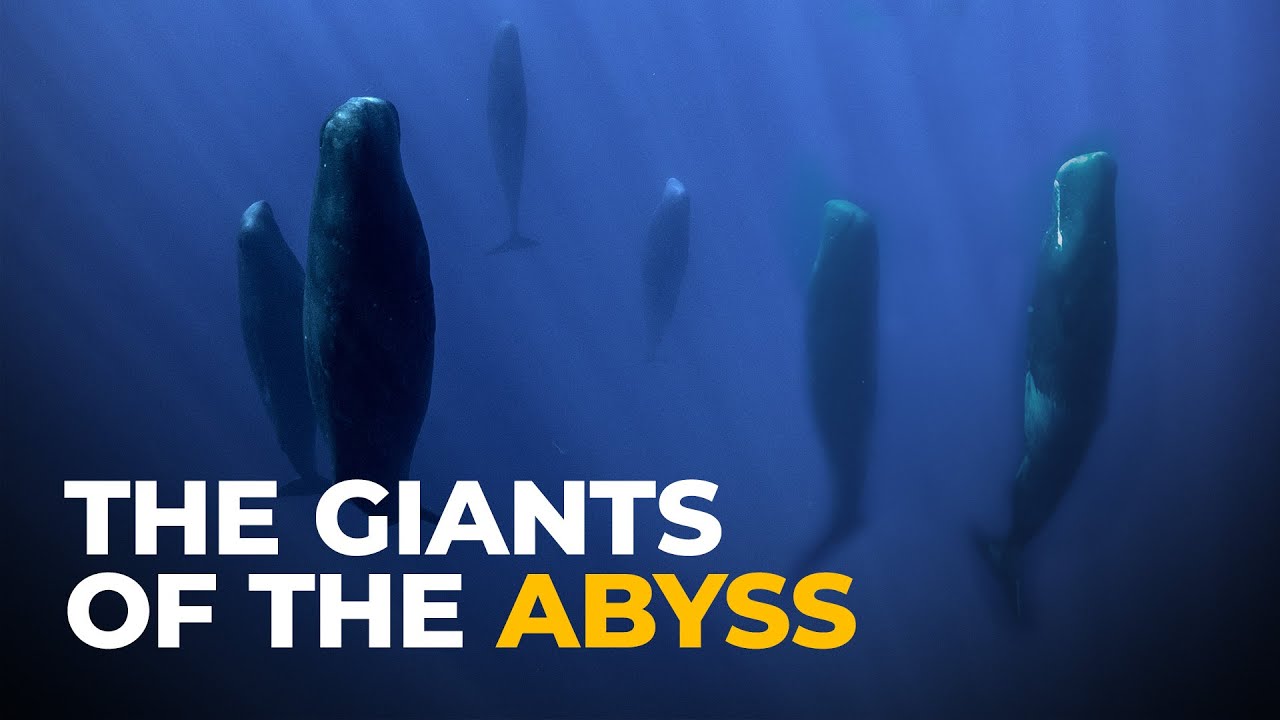
We cannot tackle the entire tree of life at once (after all there’s an estimated 8. 7 Million species alive today), so instead we’ll focus most of our attention on one fairly small but fascinating branch of the evolutionary tree: Cetaceans. This branch includes whales, dolphins and porpoises.
Biologist claim that all these creatures are closely related, and that the entire group evolved from an ancient 4 legged land mammal. Instead of taking their word for it, let’s look at the facts. We’ll start with a few from field of comparative anatomy: the study of differences and similarities between living things.
Whales live in water and from a distance, they sort of look like giant fish. A close inspection of their anatomy however, tells us a very different story. Whales, just like land mammals but unlike fish: have placentas and give live birth They feed milk to their young They are warm blooded (which is extremely rare for a fish) and whales do not have gills, instead, just like us, they breath air with 2, fully developed lungs.
Whales don’t seem to have noses like mammals do. Instead they breathe through blowholes coming out the tops of their heads. Some whales have two blowholes that almost look like nostrils, but dolphins and porpoises only have one.
Surprisingly, if you look at their skulls, you find that the blowhole splits into 2 nasal passages inside the head. Could it be that the blowhole is actually a highly modified mammal nose? It looks that way but we’ll need more evidence to be sure.
Many whales have hair, just like land mammals. In this photograph, you can actually see the whiskers of this baby gray whale as he rests his chin on mama's back. Strangely, whales have arm, wrist, hand, and finger bones inside their front flippers.
Here’s a photo of these bones, the same bones that bats, hippos and people have in their front appendages: One bone, two bones, wrist bones and finger bones. Modern whales do not have back legs but they do have a pair of strange tiny bones where the hips and hind legs should be. Here’s a picture of these bones from a bowhead whale.
They almost look like shriveled hip, thigh, and shin bones. This one even has what looks like a deformed ball and socket joint between the hip and thigh bone, just like the ball and socket joint in your own hip. Is this resemblance a mere coincidence or are these real leg bones?
Perhaps leftovers from the whales evolutionary history? Before we draw any bold conclusions, let’s see if a completely separate line of evidence will confirm our suspicions. Embryology is the study of how creatures develop before being born or hatching from an egg.
Here we see a dolphin and a human embryo, side by side, at similar stages of development. Notice that they both have what look like arm buds, and leg buds. In humans, the leg buds grow to become legs.
In whales, they grow for a while, but then stop, effectively fading away as the rest of the whale continues to grow. These are all photographs of a common dolphin at different stages of development. Notice that early on, we see two nostril grooves on the front of the face, just like you’d expect in a puppy or a human.
As the dolphin continues to grow, the nostril groves migrate to the top of the head and fuse together becoming the dolphin’s blowhole. So far we have multiple facts from two independent lines of evidence, comparative anatomy, and embryology, both telling us the exact same story: The ancestors of whales were once 4 legged land creatures! Will the fossil record act as a third witness confirming this idea?
These are two species of extinct basilosaurid whales! These creatures are known from multiple well preserved skeletons. They appear to have lived side by side roughly 34 to 40 million years ago.
In this photo we are looking down at the top of a basilosaurid skull. This is not a model or a cast, these are the actual bones which were pulled from the ground. Notice that the nasal opening is not on the top of the head like those of modern whales, and not at the end of the snout like those of most land mammals.
Instead their nostrils sit right in the middle, this is an intermediate species, exactly what the theory of evolution tells us we should find! At the back-end of a basilosaurid’s body, there are small, yet fully developed hips, legs, ankle, feet and we suspect they had at least 3 toes though we’ve only found the bones for one. These legs are far too small for walking on land, but may have been useful for mating or scratching away parasites and itchy skin.
Evolutionary theory tells us that the further we go back in time, the harder it will be to distinguish whales from regular land mammals. Meet Maiacetus. Scientists have found multiple well preserved skeletons of this species, one of which appears to be a pregnant mother.
The hip bones of Maiacetus do seem sturdy enough to walk on land, but this animal is considered to be a whale for many reasons: Their skeletons have all been found among fossils of sea-creatures Their short legs combined with long flat fingers and toes, suggest they were strong swimmers with webbed hands and feet. Here we see the bottom side of a maiacetus jaw and skull as it looked at the dig site. Her teeth match those of the basilosaurid whales we saw earlier.
And unique structures of her middle ear bones, the bulbs behind her jaw, match those of basilosaurid whales and modern whales. Maiacetus appears to be, a walking whale! The fossils of many ancient whale-like mammals have been found, and people continue to find more.
Together, these fossils blur the line between 4 legged land mammals and fully aquatic whales, solidifying the idea that whales indeed, evolved from land creatures. Now lets look at a 4th line of evidence: DNA? DNA molecules contain chemical codes which act like recipes for living things.
Without ever looking at bones, embryos, or anatomy, researchers can compare the DNA code of different living creatures to find out who is most closely related to who. Whale DNA has been compared to all kinds of other animals: fish, sea lions, you name it, and so far, the closest genetic match, is to the pudgy, water-loving hippopotamus. This does not mean that whales evolved from hippos, but if this genetic finding is correct, whales and hippos both evolved from a common ancestor which lived roughly 54 million years ago.
At first the link between whales and hippos surprised researchers. Whales are mainly carnivores - they eat things like fish and small crustaceans, while hippos are mostly vegetarian. A closer look however, reveals that hippos and whales, actually share many strange features, some of which may have come from their common ancestor.
Ancient walking whales have specially shaped ankle bones, found only in hippos and the close relatives of hippos, hippos, just like whales, often give birth and even nurse their young underwater, they both have multi chambered stomachs (which is common for herbivores but unheard of in fish-eating mammals), they are both missing a coat of fur, and here’s a fun fact - whales and hippos are some of the only mammals on earth that have internal testicles. So there you have it, dozens of facts from 4 independent lines of evidence, all tell us the exact same story, whales evolved from 4 legged land mammals, but the history of whales isn’t the only evolutionary history that we’ve been able to work out. We know from fossils, DNA, embryology and many other lines of evidence that bird wings are actually modified arms and claws!
Birds evolved from dinosaur-like ancestors. We can also clearly see that bat wings evolved from 5 fingered hands, similar to those of monkeys and shrews. We’ve found that humans share a fairly recent common ancestor with chimpanzees, that mammals evolved from reptile-like creatures, those reptile-like creatures evolved from amphibian-like creatures, those amphibian-like creatures evolved from fish-like creatures, and fish if you go back far enough, share a common ancestor with segmented worms.
So to sum things up, thousands of observable facts from completely independent fields of study, are coming together to tell us the exact same story. All living things on earth are related. I’m Jon Perry and that’s a basic overview of the evidence for evolution, Stated Clearly.
Thanks for watching our show, if you enjoyed it, be sure to share it with your friends on facebook and twitter. If you want to learn more about whale fossils, and who doesn't, we have links in the description of this video which take you to articles on our website. Special thanks to Tyler Proctor, Zaid Ghasib, Anthony Danzl, Leon Z Newman, Rosemary Mosco, and Jordan Collver.
All of these folks volunteered their time and talents to make this animation happen. Special thanks to Dr Philip D. Gingerich and Dr Hans Thewissen.
They both volunteered hours of their time advising us, and preparing images of fossils and embryos. I'm proud to announce that for the first time in Stated Clearly's history, this animation was completely paid for with contributions from our viewers. If you are able to help support our please visit us at statedclearly.
com and click "contribute" So long for now, stay curious.