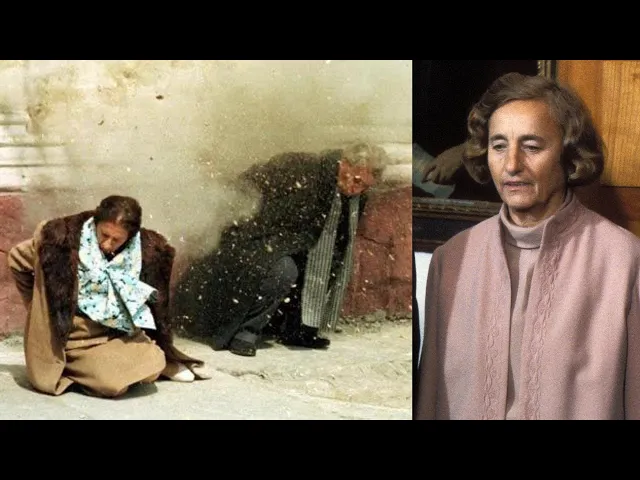
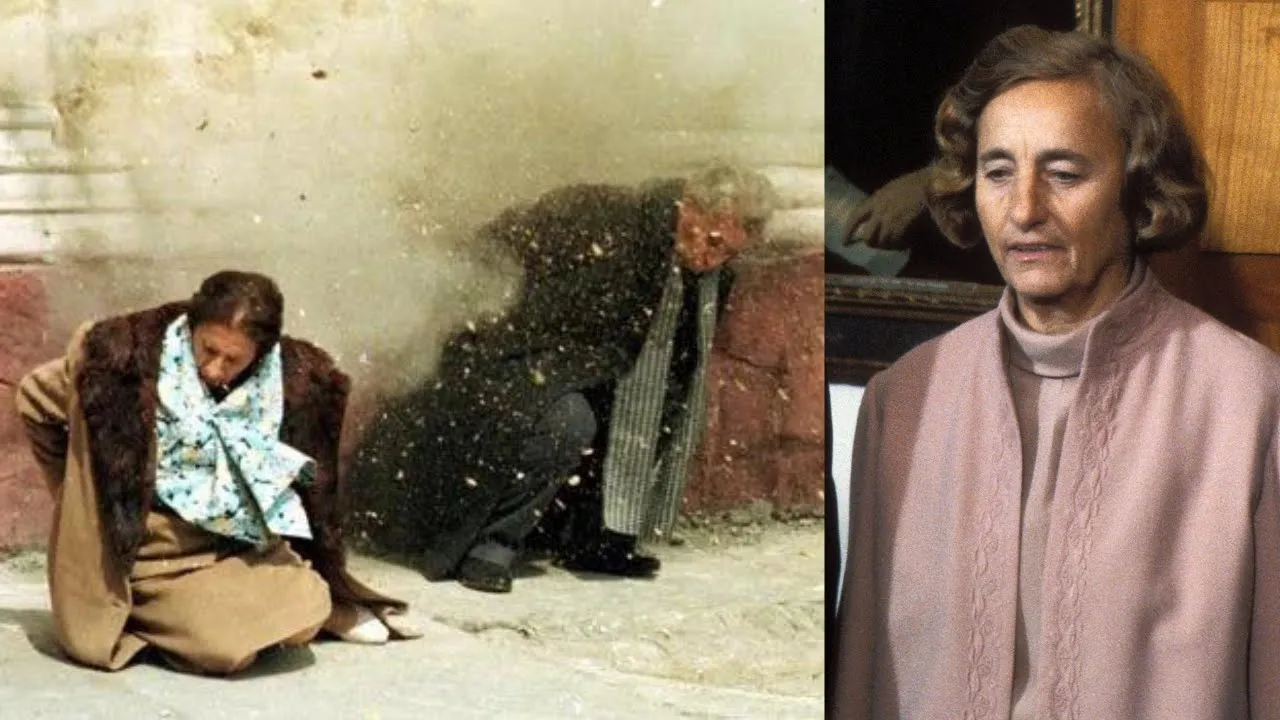
On the 25th December 1989, a woman alongside her husband were led out from their trial in which they were sentenced to death, and they were ordered to stand besides a wall where a firing squad were waiting for them. The subsequent execution that occurred was so hurriedly rushed that cameras poised to film the execution just caught the final gunshots being fired into the victims. But these were some of the most hated people inside of Romania, but they were the most powerful.
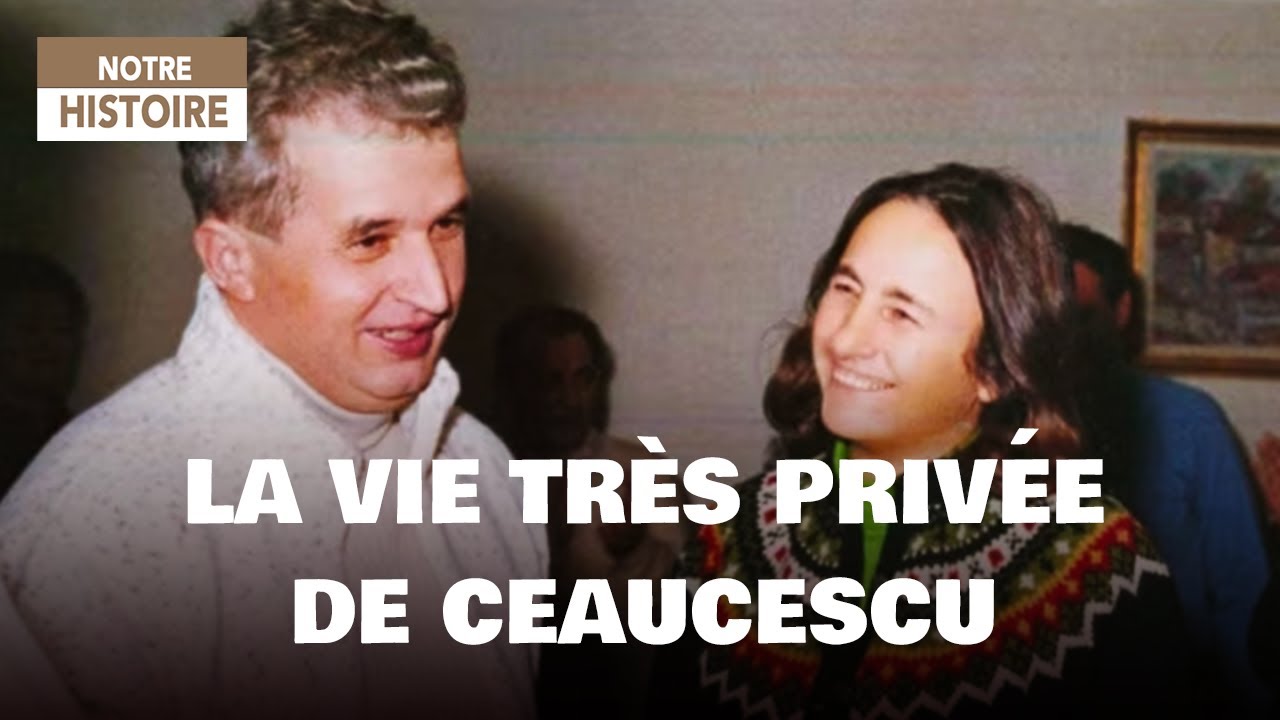
The Ceausescu’s were in a sense the ruling family, and Nicholae Ceausescu was the Romanian dictator. But a woman who was by his side every day and who was seen as ‘the mother of the nation,’ was his wife Elena. But she was a vicious and ruthless woman who could be cordial when meeting world leaders, but she was someone who would not hesitate to order arrests, ruthless interrogations and more.
Elena Ceausescu was power hungry and obsessed with gaining more power and wealth for herself, but her downfall was a shocking one and her execution was a result of a brutal revolution that took place inside of Romania. Elena was born on the 7th January 1916, and no one would have ever guessed who she would later become as her family were peasants from the region which in the past centuries was known as Wallachia, where Vlad the Impaler ruled over. Her father worked as a farmer and a ploughman, and Elena was not very well educated.
It would have been assumed that she would become a farm worker too, but she did attend a school before she moved to Bucharest with her brother. She was a clever lady, and she was also a scientist, and inside of Bucharest she worked as a lab assistant and she then after taking a job in a factory became more politically aware and motivated. Specifically she joined the Romanian Communist Party in 1939 as the Second World War was beginning across Europe, and she attended many political meetings inside of Bucharest.
Whilst involved in the Communist Party of Romania, she met her future husband Nicholae Ceausescu, and it was a strong courtship and Nicholae claimed that one he set his eyes on Elena he never looked at another woman every again. He was smitten with her, but he had his own problems as his political work would see him imprisoned a number of times. Elena and Nicholae married on the 23rd December 1947, and when the Communists seized power, Elena became a secretary inside of the Ministry of Foreign affairs but her husband was rising to senior positions.
He became the General Secretary of the Communist Party, and he and Elena travelled to different lands and countries to meet with different world leaders to secure trade agreements and alliances for Romania. Elena in 1971 was sent to China and she in particular was fascinated with the wife of Chinese dictator Chairman Mao and she saw her as inspiring and wanted to become more powerful inside of Romania. Her husband eventually became the dictator of Romania, and Elena the First Lady.
She herself had different roles such as being a member of the Central Commission on Social Economic Forecasting, and a member of the Central Committee. But she rose to become the second most powerful person in Romania behind her husband, and specifically women inside of the nation saw her as a beacon of hope, and she was considered the ‘mother of the nation. ’ Further senior positions were given to Elena, but she was not liked by many who knew her and they thought she was power-hungry, vain and nasty.
She was obsessed with her public image and was very conscious of her nose in particular and she did not want people to take images of her in profile and she would prevent these images getting out. But the Ceausescu’s caused chaos inside of Romania, and this all came to a head during the Romanian Revolution. There was a lot of tension rising to the surface inside of Romania, but on the 16th December 1989 a protest broke out inside of a city and this centred around a Hungarian priest being expelled.
The government wanted him out as it was claimed he was inciting hatred and causing too many problems, but the protests continued to grow to the point where everyone forgot the original cause and then the protest became an attack upon the government. The way this was dealt with was ruthless as the dictator and his wife ordered their security forces and police to attack the protestors. It began with tear gas and water cannons being fired, but police then beat and attacked the protestors.
But the protests then began to spread and they became more prominent. The dictators sent in their army, and the tanks were ordered to help deal with the problems, but rioters set cars on fire and many people were injured. Very quickly in towns in Romania, the streets looked like a war zone, but Elena’s husband left to visit Iran and he left Elena in charge to put this all down.
She would not relent, and martial law and a curfew was introduced, and most people refused to obey this and many men who were caught up in the protests were shot at and were killed. Elena sent others in to deal with the chaos, and they did agree to release some arrested protestors. But nothing was dying down, and when her husband returned he held a rather poorly organised speech to try and address the chaos and to bring them to heel.
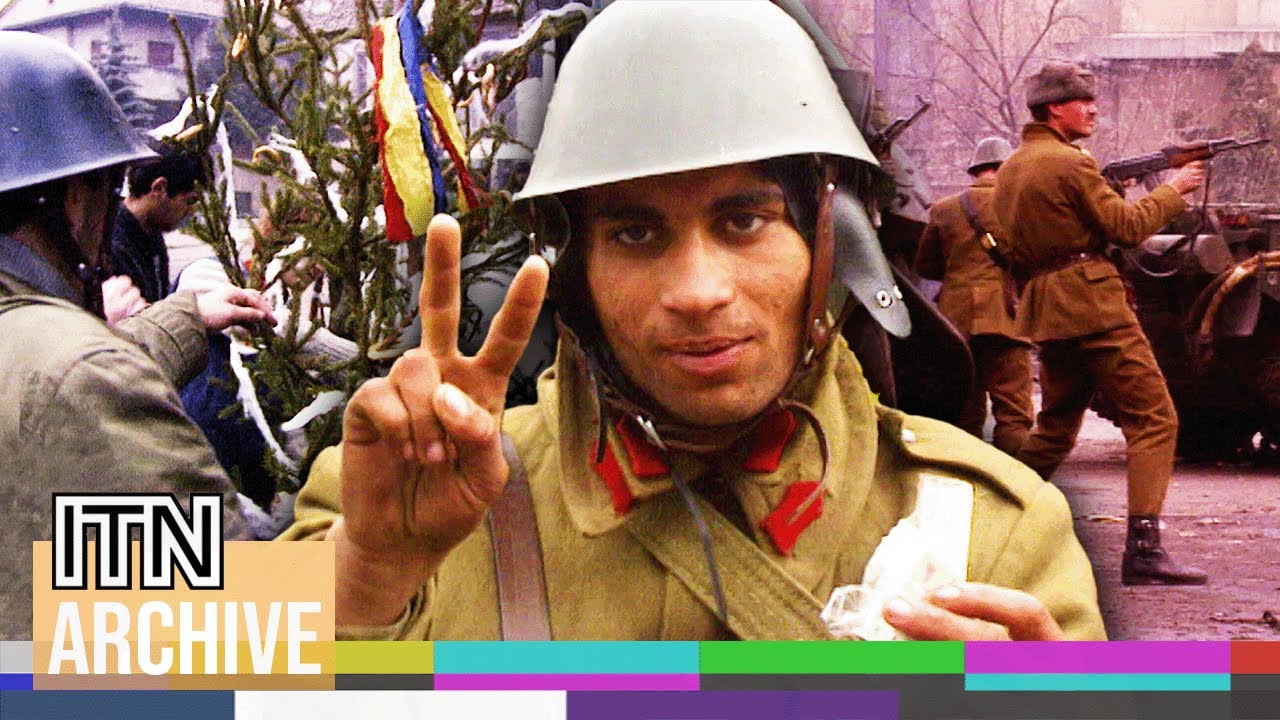
100,000 people were gathered and the speech was televised and Nicholae ordered the protestors to stop, and the crowd shouted and heckled him, and then the crowd screamed for revolution. There was panic as gunshots or fireworks were heard, and the crowd began to disperse and with the chaos, the Ceausescu’s were ordered back into the building where they were taking shelter. The revolution was in full swing, and the crowd became riotous and Nicholae and Elena were the two figures targeted by the anger.
They wanted them dead and deposed, and the government even sent in anti-terrorism officers and the crowd was now being shot at by the army, and there were many casualties and some were stabbed to death and were battered to death by the government soldiers. There were even accounts of people being run over by military vehicles, and the chaos continued. Despite having the chance to flee, the husband and wife in power refused to do this and this was a very poor decision.
Elena remained by the side of her husband, but she was also seen as a target by the crowd, and they did not want her to remain in power. On the 22nd December in the morning, the Ceausescu’s made the decision to try and escape, but Elena noticed early in the morning that there were large groups of people moving to Bucharest to continue the protests, and despite the ban on large groups of people gathering, thousands of people were in central Bucharest and the situation was looking ominous. A plan to escape was devised, and Elena and Nicholae went to the roof of the hideout, and they were going to be evacuated by helicopter.
But as they broke onto the roof, there were protestors coming onto the terrace too as they gained access to the room, and the dictator and his wife were then shoved into a helicopter along with bodyguards and this was then ordered to leave. The pair were shell-shocked and looked incredibly scared, and the pilot of the helicopter claimed, ‘‘There wasn't enough space, Elena Ceaușescu and I were squeezed in between the chairs and the door . .
. We were only supposed to carry four passengers . .
. We had six. ‘ But even this pilot had turned against the pair, as she dropped them off and told them he could not help them as revolution was underway.
Elena and Nicholae were left in Snagov, and they were then seized by police forces and were taken to a local garrison military compound and they were locked up in cells hysterical until their trial came. Elena Ceausescu knew that she would be killed. The trial of the pair was debatable and it could be concluded that it did not have too much legal standing.
The pair defended themselves, but it was obvious that they were to be executed. The court accused them of ordering the genocide of 60,000 people and in ordering the armed forces to fire upon innocent civilians, and they were also accused of damaging buildings, the economy and ruining the homes of Romanian citizens. They were quickly found guilty of all of the charges, and Elena claimed that she was being murdered and not executed as the death sentence was passed.
But there were many people queuing up to be the ones who shot the Romanian dictator and his wife, and the decision was made to use paratroopers to carry out the executions. At 4pm on Christmas Day 1989, Elena and her husband were brought out to the side of a military barracks’ buildings, close to where they were tried and there was a firing squad gathered. Nicholae before the execution claimed, ‘we could have been shot without this masquerade.
’ Elena went to her death screaming, and her hands were tied by soldiers before, and she then realised what was going to happen and screamed insults at her firing squad as she was lined up against the wall. But quickly the firing squad then aimed their rifles and weapons at the Dictator and his wife, and they quickly dispatched them with ruthless efficiency. Elena Ceausescu was 73 years old when she was executed, and interestingly she was the only woman who was ever executed under the modern state of Romania.
She was very powerful and she wanted more power, wealth and standing around Europe but those who knew her believed she was a tyrant who would do anything to get more power. Her execution was quick, so quick that camera crews missed most of it and it was a brutal end to her life.