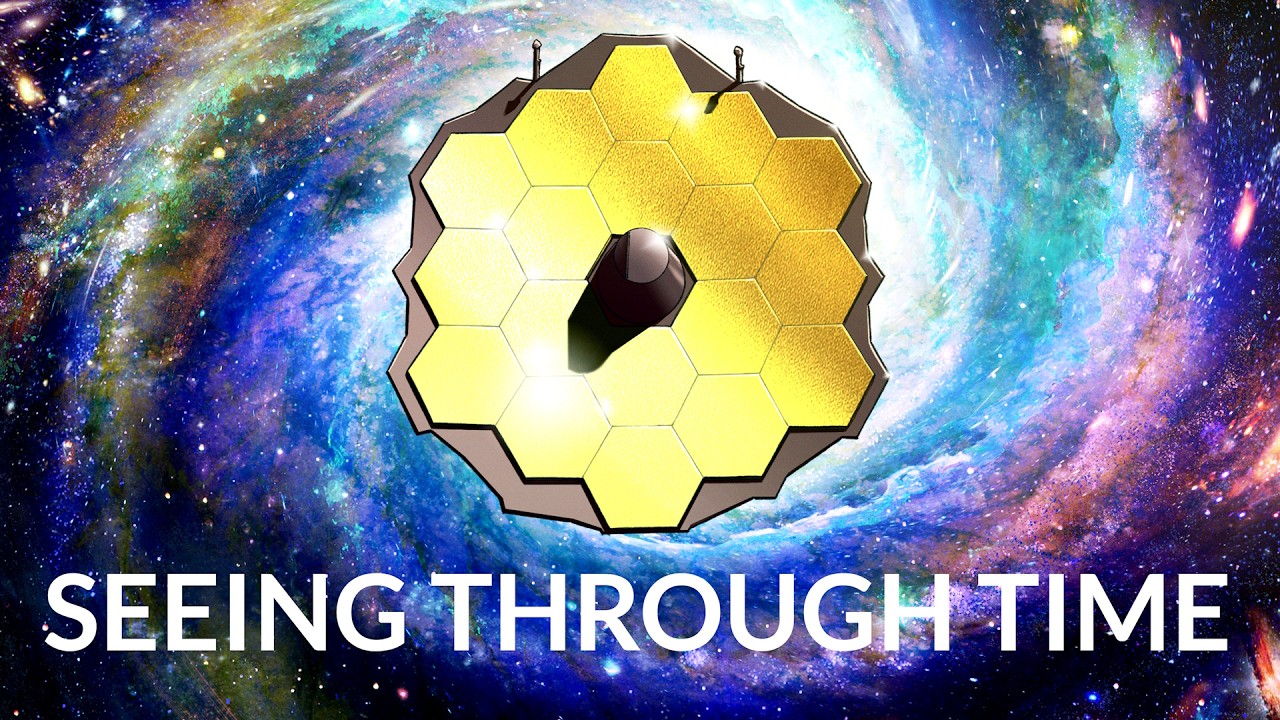
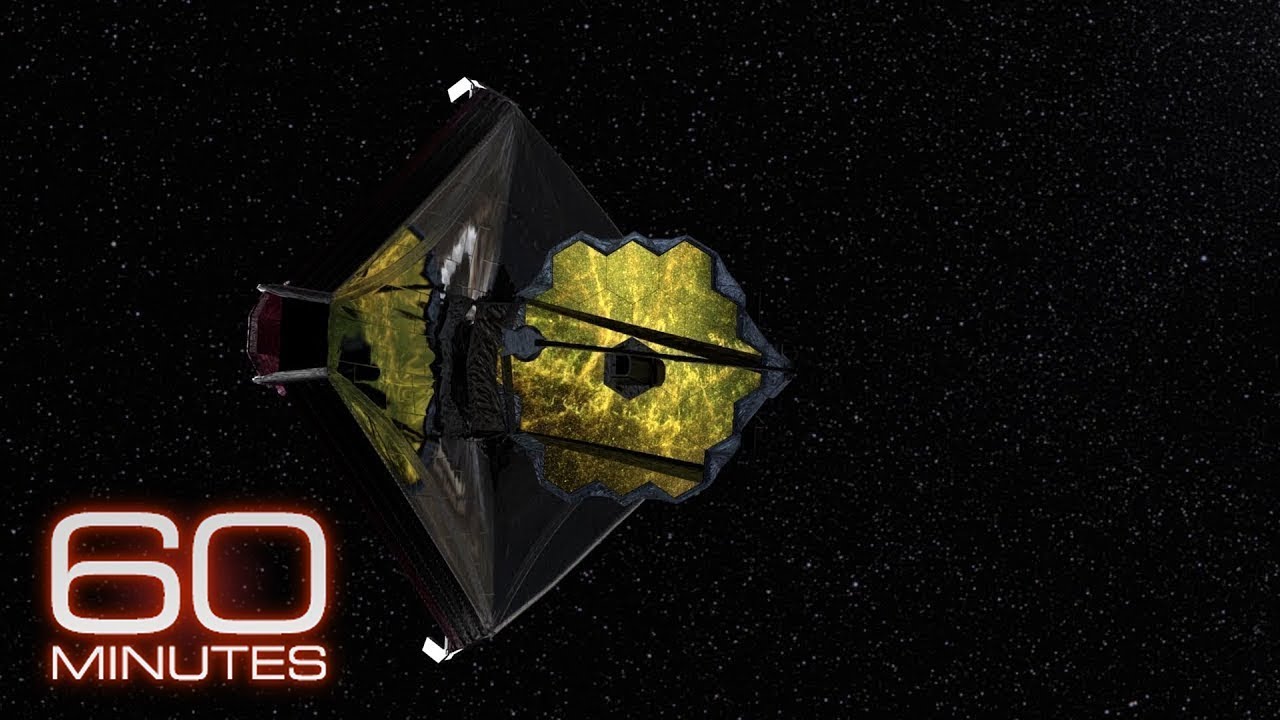
the Jane's web Space Telescope has been in the news since it was launched on Christmas Day 2021 the Superstar telescope has since unfolded the universe in a way no one expected only recently it discovered six galaxies that existed only 500 million years after the big bang not just that these galaxies are well formed and contains more stars than today's galaxies like our Milky Way these galaxies should not exist as it toys with our model of cosmology to make matters more uncomfortable for scientists researchers from the University of Minnesota have discovered that one of these galaxies is so bizarre that we might have to go back to the drawing board welcome to lab 360. it's time to explore the James Webb Space Telescope can collect about 10 times as much light as the Hubble Space Telescope and is much more sensitive at redder longer wavelengths in the infrared Spectrum this allows scientists to access an entirely new window of data of the early universe but to understand the early Universe we need to go back in time to a point where time and space did not exist according to the theory of cosmic inflation the universe was born with the big bang as an unimaginably hot dense point when the universe was just a hundredth of a billionth of a trillionth of a trillionth of a second in age it experienced an incredible burst of expansion known as inflation in which space itself expanded faster than the speed of light during this period the universe doubled in size at least 90 times going from subatomic size to golf ball sized almost instantaneously after that the growth of the universe continued but at a slower rate as space expanded the universe cooled and matter formed only one second after the big bang the universe was filled with neutrons protons electrons anti-electrons photons and neutrinos but for the first 380 000 years or so the universe was essentially too hot for light to shine 380 000 years after however Mata began to cool and it cooled enough four atoms to form however after this point the universe was plunged Into Darkness since no stars or any other bright objects had formed yet fast forward to 400 million years after the big bang and we can see the universe beginning to come out of its Dark Ages this period in the universe's evolution is called the age of reionization during this phase which lasted for more than 500 million years the first Stars started to appear so galaxies scientists thought began building up in the first billion years after the big bang and sort of reached adolescence at one to two billion years however the James Webb Space Telescope has found not one but six galaxies that were fully formed only 500 million years after the big bang and that is a problem using first of their kind observations from the James Webb Space Telescope a university of minnesota-led Team looked more than 13 billion years into the past to discover a unique minuscule Galaxy that generated new stars at an extremely high rate for its size the Galaxy is one of the smallest ever discovered at this distance and could help astronomers learn more about galaxies that were present shortly after the universe came into existence the Galaxy's volume is roughly a millionth of the Milky Ways but we can see that it's still forming the same numbers of stars each year the galaxies that existed when the universe was in its infancy are very different from what we see in the nearby Universe now explain scientists studying these galaxies could help us figure out how and when these first stars and galaxies emerged from within the universe Dark Ages until then it remains a mystery still as to how the universe came into being as days pass more results of observations from jwst is revealing that the Universe especially at its early stage was Stranger than we imagine not only has Webb discovered these early galaxies it has also now found a black hole which is almost as old as the universe scientists have discovered what they believe to be the oldest known black hole in the universe owing to the telescope's ultra powerful sensors that captured this elusive entity this supermassive black hole which dwarfs our sun by a staggering 10 million times existed at the center of a galaxy 570 million years after the universe Inception a time so remote it's difficult to fathom to put it in perspective the universe itself is estimated to be 13. 7 billion years old observations collected through the Jane's web Space Telescope have revealed an active supermassive black hole 10 million times the mass of the Sun one that is actively growing as it slurps up matter from the space around it at just 570 million years after the big bang this is the earliest growing supermassive black hole detected yet although scientists are hoping it won't Remain the record holder for long the black hole was found inside one of the earliest galaxies ever detected previously known as egsy8 though since renamed CE are sn19 its Discovery could help with one of the biggest head scratchers of the early universe how the black holes in the cosmic Dawn grew to such large size in such a short amount of time we found the most distant active Galactic nuclear say GN and the most distant earliest black hole we've ever found said an astrophysicist associated with the finding scientists were initially looking at cers 10 19 as part of their work investigating light produced by star formation in the very early universe this light called Lima now for a mission is thought to be generated by the ionization of neutral hydrogen by star formation activity the early Universe was filled with a fog of neutral hydrogen which prevented light from propagating it was only after this hydrogen was ionized that light could stream freely this e-park of reionization as it is known is not fully understood we know it took place in the first billion years after the big bang 13.
8 billion years ago but seeing that far into the early universe is really hard CRS Den 19 and a handful of other super early galaxies are excellent targets for This research because they are relatively bright the Galaxy was identified in Hubble data in 2015 and at the time was the earliest most distant Galaxy observed subsequent observations confirmed its existence but more detailed information remained elusive the earliest light in the universe has shifted so far into the infrared part of the spectrum due to the universe expansion that a powerful dedicated infrared instrument like jwst is necessary to probe them so when jwst came along ERS 1019 the brightest of the Hubble galaxies from this Epoch was an obvious Target the telescope stared at the Galaxy for just one hour with all four of its instruments but returned a wealth of data in the moment I was kind of like wow look at everything we can see with jwst we've seen this whole portion of the spectrum of this Galaxy and any galaxies early on in the universe we've never seen before said astrophysicist Rebecca Lawson I was just overwhelmed by the amount of information but then she noticed something she wasn't quite expecting in addition to the light of star formation there was a broad emission feature usually associated with Aegean and when she mentioned it to some AGN researchers things started to get interesting typically a galaxy in the early Universe emits either light from an AGN or light from Star formation to see both in the same galaxy was extremely unexpected there is some impact that the black hole is having on the emission lines that we're seeing but most of the light we see in our images is still dominated by the star-forming part of the Galaxy that a supermassive black hole existed more than 13. 2 billion years ago and was seen growing is not as surprising as you might think much larger black holes have been detected in the early universe scientists still do not know how the black holes in those galaxies got to be so massive that early on in the universe now with the discovery of this black hole only is some 500 million years after the birth of the universe is a mystery in itself the image of the early universe is changing faster than we expected and like it or not it is time to get back to the drawing board what do you say drop in your comments to let us know and don't forget to subscribe to lab 360.