Today's episode is about beginners. In one of the previous episodes, I announced a series about beginners. Actually, the series is called "The Beginner's Guide".
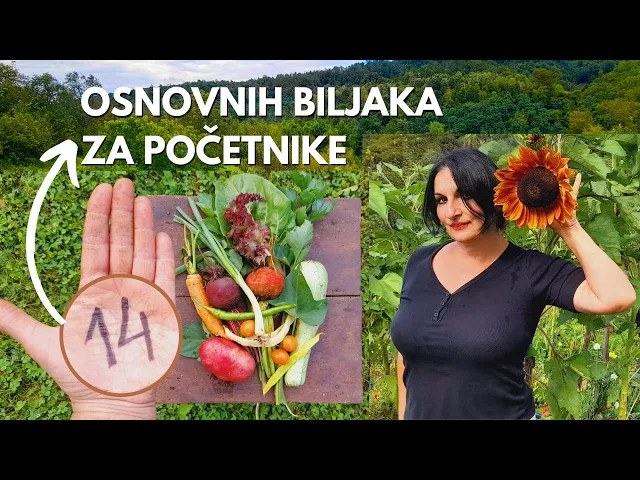
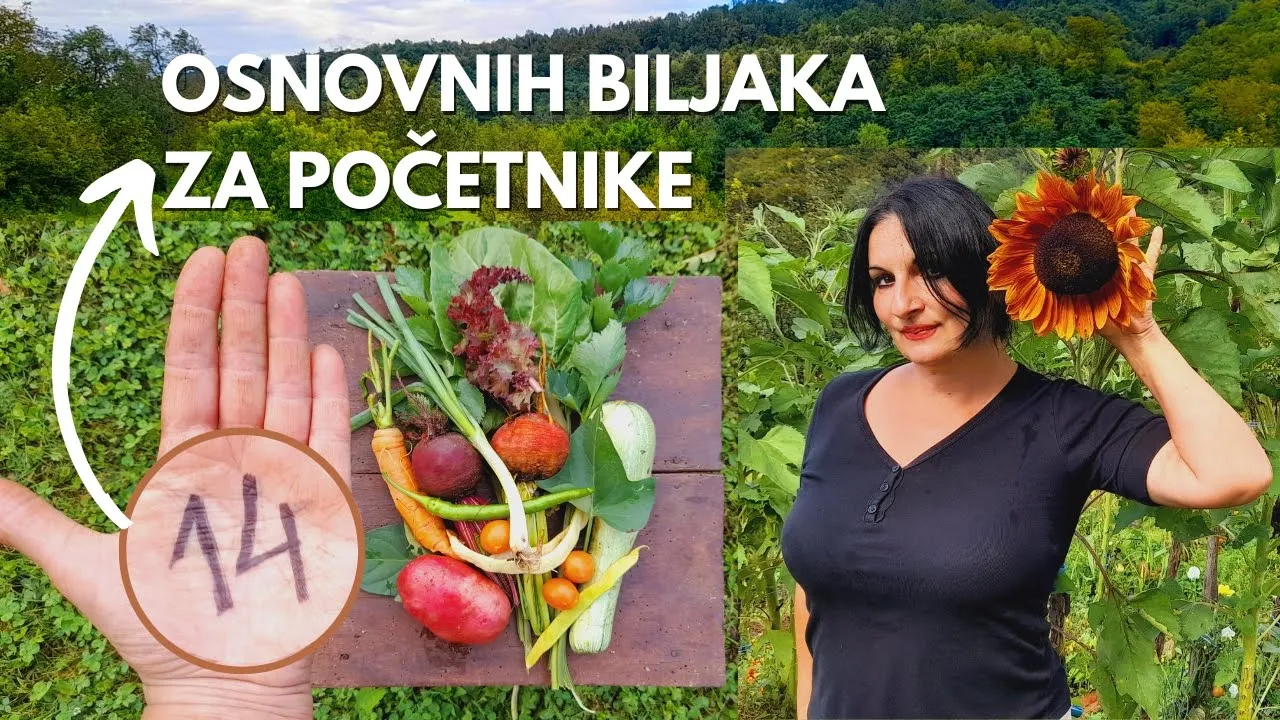
Then I announced the next episode, which is: "How can beginners choose seeds"? In this episode, I'll talk about how to choose seeds for your rookie season. I will tell you which 14 plants beginners should have in their garden from the perspective of practical realization.
So, these are plants that will more or less not bother you, with which you will have a good season, and that is the main goal, so that beginners do not give up on us. And what I announce for the next season is: "Five mistakes that beginners must make". I have a lot of experience in working with people, because 40% of beginners enter the platform.
I do more than 4,000 consultations a year and I know exactly what I'm talking about. When you enter an agricultural pharmacy as a beginner, you are very confused, because in the garden center you do not know which varieties you should choose. That's why I go with my gardeners, they turn on the cameras and I choose for them.
But now I want to help all of you as beginners to choose your varieties. I advise you to pay attention to the variety standard. Standard varieties can generally be further propagated.
This is very important because you can create your own seed bank. Then, hybrids of the F1 generation, can up to 10%. I have nothing against hybrids, just don't multiply their seeds further.
They will give you a good practical experience. Professional hybrids are plants that are adapted to certain extremes, so they can, for example, withstand blight. I have no positive experience with them.
They are more expensive and packed in fewer bags. You can try it, you might have a better experience. And old varieties up to 15%.
Why a lower percentage of old varieties? Because they are a big responsibility. Old varieties must be preserved.
You need the knowledge they will give you, just the standard variety. As for the seed bank, standard varieties can make your seed bank already in the first season. I will further pay special attention to where we buy seeds.
Sites do NOT. Why? Because a small amount of seeds are packed, because you often buy crossed seeds, because sometimes the germination of the seeds is not good.
It is not good for beginners. Beginners must have good germination in their hands, to be practically accomplished. Clear varieties, to see what they have grown.
Often on websites, seeds are packed in small bags. For example, you need a lot of radish in this grown method. If you buy radishes, which have maybe 50 seeds, that's not enough for you.
Peppers are often sold 10 seeds per bag, which is not enough for you. So the sites do NOT. You only choose sites if you want a special variety of colored tomatoes, but that will be discussed separately.
Garden centers and agricultural pharmacies have everything I listed above, and often even old varieties are hidden there, I recognize them. Exchange YES. But you have to know that there is a high risk of crossbreeding.
You don't know how the previous grower handled those seeds, how the plants were handled. I recommend these 14 varieties. First, Swiss chard.
I don't know if you like to eat it, but you must know that chard from your own cultivation has a completely different taste. No matter which chard you choose, it tastes the same. So you have different types of colorful Swiss chard.
All of them eventually, during cooking, lose their color and turn green. So, plant number 1. Swiss chard.
You don't need more than one bag, because the chard is cut. It is constantly torn and cut and always produces new leaves. Another plant that beginner gardeners must grow, i.
e. , which will be the easiest to grow, are precisely beets. You really can't go wrong with beets, because we've had so many turns of beets since the beginning, that one must work for you.
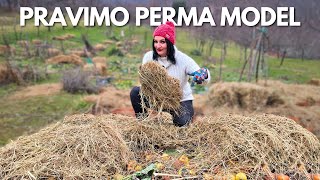
And it is enough to transplant the beetroot into the perma model and it continues to work on its own. What is most important and what confuses you are the different colors and shapes of beets. As far as colors go, this color, this is beet orange and it is purely a sight.
I know how to save her seed and it will be an heir for me. But for those of you who do not know how to save beet seeds, it is very important to choose in the agricultural pharmacy, any beet that you like to eat, it does not even matter the shape. There is a difference in the due date somewhere, but that will be another story.
To start with, pick the first beet you see that you like the way it looks, because growing beets is incredibly easy. A plant that will really make you practically come true is zucchini. Zucchini are very peaceful plants, they are somehow in solidarity with beginners.
You may have trouble bearing fruit at first, but these are actually plants that will feed you throughout the season. To begin with, I advise you to choose one variety and learn about it. It should be the variety you are used to eating.
Why is it important? Well, because you will be able to recognize the fruit very easily, and you will know when it is ready for harvesting. I only have scallions in my garden right now, so that's what I'm going to talk about.
All onions are very grateful for cultivation and they are somewhere my best assistants. Onions fall into the category of fast growing or as an old harvest, but in any case, you can sprout onions in a bag. This is what I tell my gardeners all the time, when they complain that their onions haven't sprouted.
So, onions in all forms. Just don't do the seed sowing, because you are still small and still in the beginning. Seeding can be frustrating at times.
I will show you the seedlings. In the agricultural pharmacy and garden center, you have onion seeds on the shelves, but you will not look for them. You are looking for seedlings, i.
e. portholes. They can be in three colors: white, yellow and purple.
It doesn't matter which one you buy. As far as peppers are concerned, you won't have any problems with them if you prepare the transplant yourself. You need three varieties: Amanda, Babura and Ajvarusha.
You don't have to go any further than that. Do not expand the list, because you will get lost at some point. Carrots are a must for beginners.
It will practically come true very easily, if you set up a tunnel and choose the right variety. This is a Nantes variety with which there is no mistake. It is a hybrid.
You have Nantes 1, 2 and 3. Whichever one of those bags you can get your hands on, you'll get a good score. Of course, there are old varieties of carrots, but there is also some risk if you get them on the website, that they have crossed.
So, don't immediately go in the direction of some colorful carrots, some kind of scenes. Grow your own carrots to eat. All salads will easily make you practical.
You can grow all those salads you eat. This is a lettuce seed plant, because I just planted new plants and they will bear fruit soon. What you need to know about salads are the critical stages.
Attraction - in summer, Nansen - in winter and that's it. All other salads can be planted in the meantime. Tomatoes are the biggest challenge, because a large number of varieties are often seen on social networks.
Don't go that way, you're a beginner. You only need three varieties. It is sherry, ox heart and cider.
That's all for the winter, for food, for the soul. The tomato follows the flame, and on another occasion. This is my fall pea and I'm glad it's there for you to see.
Peas are easy to grow, a must in a beginner's garden, because there is no mistake with them. Four varieties, but more about that in the lecture "The power of nitrogen fixation". Although growing potatoes comes with many problems, one of them is right here, the potato bug.
Growing potatoes is incredibly easy, especially growing potatoes on grass. That's why it's a culture that goes without saying in a beginner's garden. Green beans are a must in a beginner's garden, because they will practically make you grow without any problems.
Because if it is their season, it bears abundantly, if it is not their season, then tomatoes bear abundantly. You have two types, tall and short. Tall looking for carriers, see how many carriers we have here.
It is enough just to insert the low ones into the perma model and then the harvest follows. All the varieties you find are suitable for sowing. We reached the pumpkins and the pruning area.
Watch the episode on how to set up the pruning zone, because this is your guarantee of a successful season. As far as pumpkins go, this is Cinderella, this is Spaghetti Squash. They won't interbreed because they bloom at different times, but pumpkins interbreed terribly.
So don't make yourself a merry-go-round in the garden. Choose one variety to grow, and you'll know that those varieties remain pure for the next season. When it comes to herbs, you need a lot of herbs, but I'm going to single out celery.
Why am I singling them out? Because they are really the easiest to grow. Celery has tiny seeds, I need a leaf and a root.
In December, I give the signal for their sowing. After that, the seedlings are so small, you can see that on the channel. We move them individually, we transplant them, we will talk about that term in one of the next episodes.
And after that we transfer them to the garden and you see, giants grow. I have already removed the leaves from my celery, because I am drying it, so that they can develop good roots. So, from herbs, celery is a must, parsnip, parsley, but celery is a plant that really won't make you tired.
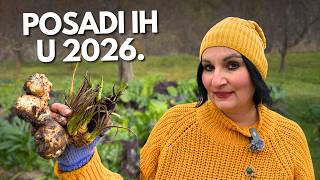
You may not like to eat sweet potato, but start consuming at least its leaves. Why? Because sweet potato is a crop for the lazy.
You just plant it and you actually take very little care of it. Ideal for beginners. Changes will occur when a person realizes that he is the lever that changes the system.
Because we are the consumers, we manage the market. In this way, we can reduce the effect of industries on our own lives. For freedom and independence, we need our own land, hardworking hands, good tools, forest, stream and knowledge.
For knowledge, follow the channel.