Good evening and welcome to the impact of information and misinformation on mental health and well-being during the covid19 pandemic a webinar produced by the australian national university in partnership with the black dog institute my name is bruce christensen i'm a clinical psychologist and the head of professional programs in the research School of psychology and associate dean of culture and well-being in the college of health and medicine at the australian national university i am pleased to be your host and moderator for tonight's webinar i want to begin tonight by acknowledging the traditional custodians of the lands
we are meeting on the many and diverse first nations of australia I pay my respects to their elders past present and emerging and extend that respect to all aboriginal and torres strait islander peoples present tonight the impact of covet 19 and the associated restrictions designed to thwart its spread has been deep and truly global we have found ourselves isolated from friends and colleagues worried about the safety of ourselves And others adapting to the stress of working and living differently coping with job loss and financial hardship and grieving the loss of loved ones the broader consequences
have been profound the united nations projects that those living below the poverty line could increase by 580 million and that hundreds of thousands of additional children Will be at increased risk for experiencing domestic violence and early death researchers have estimated that the direct cost to covid19 to the usa alone will be over 153 billion moreover these impacts will be disproportionate among our most at-risk groups including those living in poverty the elderly persons with disabilities children and Youth and indigenous peoples against this backdrop it is not surprising that the pandemic has also drastically affected the mental
health and well-being of our communities the black dog institute estimates that one-third of australians are experiencing high levels of worry and anxiety other common responses include panic depression anger confusion and Uncertainty such experiences challenge our coping skills and underscore the need for new tools expert opinion and trustworthy information today information is bountiful and it travels quickly but the curatorial role of journalists and mainstream media has decidedly shifted as they struggle against constrained budgets And the lightning speed at which competing information propagates leaving individuals on their own to sift through the mountain of information and misinformation
sylvie brand director of infectious hazardous management at the world health organization points out academic epidemics are accompanied by a tsunami of information as well as misinformation and rumors The problem of rapidly spreading misinformation has prompted the world health organization to suggest we're not fighting just an epidemic we're finding it infidemic so how can one understand information its credibility and its utility and how can one use information properly to bolster mental health and well-being during crises such as this To answer these important questions we've assembled a group of experts to talk about how to separate fact
from fiction how information travels online the impact of information and strategies to manage this and the challenge of science communication in the context of covid19 we will first hear from our panelists and then Turn it over to you our listening audience for questions your questions can be sent to us using the questions and answer box on zoom and i would like to also make our audience aware that tonight's webinar is recorded and the questions that you ask will be saved tonight our first speaker is dr erin newman she has recently co-edited a book on the
Psychology of fake news contributed to policy discourse on misinformation and contributed in legal context to address biases and juris decision making her talk tonight is entitled separating fact from fiction aaron so thank you very much for the introduction um it's a real pleasure to be here tonight contributing to um the webinar Um today i'm going to be talking about how we tend to separate facts from fiction and the brain um and then i'm going to be talking a little bit about how certain misinformation correction strategies may be ineffective and they actually end up increasing the
familiarity of misinformation and then i'll end with some more positive tips about Engagement and how we can increase the chances that the truth sticks and that misfade so as you'll hear from a moment from dr robert acklin there are several ways in which we may start encountering information online uh whether that information is actually true or false and what has become particularly clear in the context of the coronavirus pandemic is that there's Really been a wave of misinformation supposed cures preventions misinformation about how coronavirus came about in the in the first place um so as
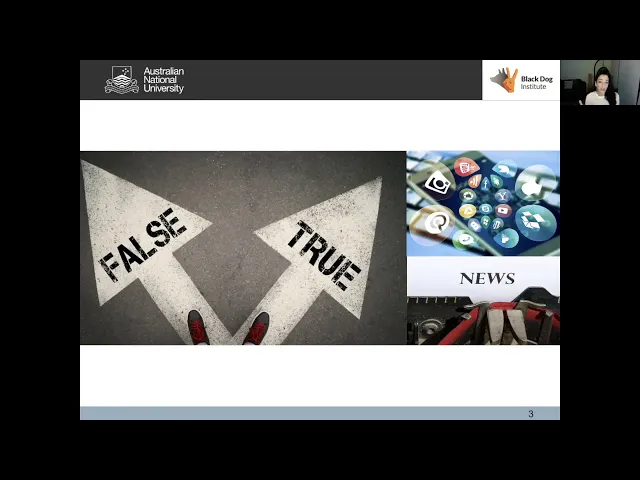
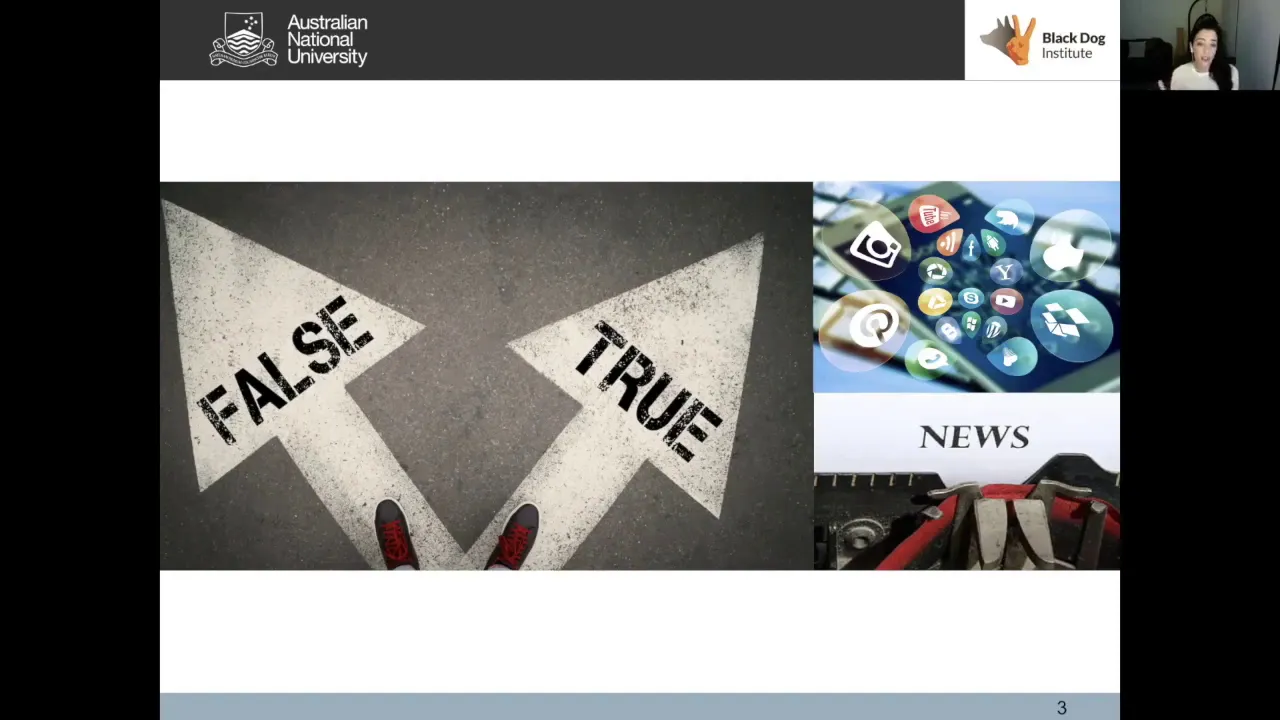
the tiny green human here on the screen um our job is to effectively handle which information is true and which is false and keep it in nice tidy piles and so when you have a look there are actually some External efforts to help us keep track of what information is true and what information is false so for instance on various social media platforms like facebook um they've tried to handle misinformation by removing it off their site so they try to take blatantly false information and remove it from circulation but a Much more common approach that
we've seen over the years in the mainstream media is to work to lift the profile of misinformation making it the sort of star of the show in order to protect misinformation for the general public and i'm sure many of you are familiar with this type of article right so they're usually called sort of myth versus fact Articles and they start off with some sort of bold claim like this one here myth one some outrageous claim involved and then following there will be a very detailed and thorough explanation um for why the sciences and logic behind
it particularly wrong now when you have a look at the research on misinformation and how these exposure to these myth Versus fact articles actually works um what we've learned in that area of research is that if i have you read one of those articles and then test you immediately afterwards you're going to be pretty good at sorting facts from fiction you'll get those things in the right piles so from an immediate retrieval perspective those articles and interventions can work quite well Um but as soon as you walk away or move on to the next thing
um what you see is that information can become a little bit blurry and that's what cognitive psychologists are what we call a delayed retrieval context so what we know for sure is that over time memory the information fades and certainly in an online environment where you're clicking between different types of information So when you have a close look at people's memory performance under this delayed retrieval context what you see is that people are less able to effectively sort information into fact and fiction and effectively what you really see here is that if it's at correction
um tend to wear off and there are several reasons for this i think one really is that the human Memory system is not like a live feed of moments moment information being uploaded to the cloud that is our brain in fact what we know about human memory is that it's much more constructive we tend to lose bits we invite other pieces in so that's one reason why the delayed retrieval context can hurt our ability to sort fact from Fiction but i think one of the very important pieces of the puzzle here when you consider an
online information environment is really about human behavior in this environment and how we tend to engage with information in this environment and what we know from research in this area is that when people engage with articles like this where there's a bold headline and then more sort of detailed text that follows while People spend time on the headline they tend to spend less time going through and scrolling through the sort of more detailed nuance and text that tends to follow so that kind of behaviour one affects what information people end up learning and taking away
from a particular article that they engage in or engage with and then two it also affects the extent to which we end up holding on to those more detailed Issues that follow and whether that ends up sort of sticking in our memory systems so when you think about sorting facts and fiction um ideally right our brains would work a little bit like this we have a second detailed sort of dedicated to true tales and one for misleading claims in fact our stacks of fact and fiction often look a little bit More like this and there
are a number of reasons why it can get a little bit blurred i'll give you a couple of examples so one thing we know from research on truth assessment and human memory is that while you might remember a certain coronavirus myth or pseudo-coronavirus claim that you encountered you may not necessarily remember the Context in which you actually encountered that claim so it's quite possible then that you remember a coronavirus claim let's say it's a false one but you actually initially encountered it in a debunking context where you were actually learning that that claim was wrong
so you learned that it was misinformation but later on all you can remember is the claim itself so sometimes we don't remember the context In which we um encounter information and sort of relatedly what we know about human memory is that when i give you a piece of information like a claim and i tag it as say true or false sometimes that those tags along with the information don't stay connected in our brain so sometimes we lose the tag and sometimes we don't actually recall and apply the tag When we're making our decision so given
this dilemma how is it that our brains actually deal with the truth assessment so um when we're trying to sort back from fiction in the brain we engage in what you might call a kind of cognitive detective task um and research shows that people do lots of very sensible things so for example we know that when people are trying to assess truth We draw on our own general knowledge to establish whether the information we've encountered actually matches with other things we know um we also do things like consider the coherence and consistency of a claim
to assess whether it has logical coherence does it actually make sense um but with limited cognitive resources we also know that people tend to draw on cognitive shortcuts when they assess Whether things are right or wrong so when you look at the research on truth assessment one of the most robust findings there in terms of the kinds of cognitive shortcuts people use is that they tend to rely on familiarity to assess the truth of the claim and to put it very simply if a claim feels familiar people tend to conclude that it feels Right and
so this bias to believe information stuff we've encountered before is unfortunately not just limited to when we're guessing so you can imagine a scenario right when people encounter an obscure claim and the more you hear the information the more that claim feels familiar and the more you are willing to believe it but it's also the case that familiarity influences people's judgments When they knew more when they knew better um and this is what is called knowledge neglect so the familiarity bias influences people even when they had the general knowledge that they could have drawn on
to assess the truth of the claim and the bad news is that it's not just a small subset of us who feel familiar who fall victim to the influence of familiarity and assessing truth So we know there are no reliable individual differences that make you more immune to the effects of familiarity in your judgments so to put it in a very simple way um scientists who study truth really worry about the repetition of misinformation and in particular given the powerful role of familiarity um and the tendency for people to lose tags about whether Um information
is factual or whether it is a myth so while reading these myth versus fact style articles seems quite appealing the risk that i really want to highlight here is that over time the details can fade from memory um and so you live so what would be the take-home points from a cognitive psychologist who studies truth um well the first thing i Think would be that trusting memory to track what is true and what is false is probably a little bit risky increasing exposure to myths and misinformation might increase the extent to which false information actually
sticks and i want to call your attention to this graph so this graph plots misinformation about coronavirus um as a search term which has really spiked in recent months um and so what That really tells us really is that people are keen consumers and people want to learn know more about misleading claims um this makes sense in many respects it's very sensible to understand the false information that's floating around what i really want to highlight today is the risk there is and continuing to expose yourself to misinformation in these myth versus facts sort of contexts
so when it comes to engagement what Should we be doing i think being engaged with facts and particularly in the context of a pandemic is very important um and so the question is what should we be doing well um as you've been hearing from a number of other sources right we should be investing our efforts and sourcing reliable information from channels that we really trust where the approach there is to elevate Information regarding truth so that it's easy to remember and as an individual luckily you have your own sort of what you might call it
your own cognitive toolset that will help you to retain true accounts of information that you encounter so what we know from human memory is that you can connect facts to other things you know which increases the chances that you Remember especially when you link it to personal experiences and connecting facts to an image or maybe elaborating with facts in terms of telling a story can also increase the chances that you hold onto information in the long term and i just want to finish by giving you a couple of websites that really are reliant on evidence-based
Updates as a consumer of science and health information in the pandemic thank you thanks very much aaron our next speaker this evening is dr robert ackland who is in the school of sociology at the australian national university where he conducts research on research and teaching in the area of online social networks he also runs a company that provides Data analytics and consulting services in this area the title of robert's talk this evening is how information travels online robert over to you okay hello everyone i'm very happy to be here tonight to talk to you about
how information travels and or travels online and why does it matter in particular in the context of Covert 19 our pandemic so covert 19 conspiracies are rampant um last weekend there was a an anti-lockdown protest at in melbourne which featured placards relating to particular conspiracies um and there's also a conspiracy video the pandemic conspiracy video that's um been doing the rounds recently so those are examples misinformation and conspiracies are an Example of misinformation can promote anxiety mistrust discord racism and and other things so there's concern that um social media um social media is contributing to
conspiracy theories and misinformation in particular the terms that you may have heard of are echo chambers so this is where people self-select on social media so for example by Following particular people on twitter friending other people on facebook such that they only tend to encounter like-minded views their views are not being challenged because the people that they connect to on social media all share the same views another concern relating to social media is that of filter bubbles and this is where social media algorithms so these are used by social Media companies to for example curate
information or news stories that you get to view these contend to reinforce a user's preferences for information and news so if i'm someone who likes cats cat images um twitter figures that out or reddit figures figures that out and next thing you know i'm seeing lots of posts about cats so this is a reinforcement of my preferences So um the concern about the web and how it's its social and political impacts have uh date right back to the early days of the web in the early 1990s in the 1990s there was a term there was
concern about the the potential for the web to lead to a an online fragmentation of on on a fragmentation of online populations this was because The web was seen as having this narrow casting ability with broadcast tv on you or radio everyone hears the same thing while with the web you can self you can select particular news sources you could follow particular bloggers you could only go to particular to particular websites that you're interested in so this concern led to a Concern about fragmentation and there's a well-known image here the divided they blog image so
this is an image of political bloggers uh in the lead-up to the 2004 u.s presidential election and each of these dots is a blogger and the lines between them is hyperlinks that they are using to connect to one another and so the concern was that um you can See here that there's a lot of uh um there's a very strong clustering on the basis of political identity conservatives are red and the and the the blue nodes are liberals um in 2016 concerns about uh filter bubbles and uh echo chambers became even more prevalent of course
um the 2016 election was uh uh interesting and infamous in lots of Different ways but one of the one of the things that came out of it was an elevation of the concern regarding echo chambers and filter bubbles so i have an image here of a twitter map of people who are uh have been identified as clinton supporters and trump supporters and this network is showing how they connect to one another on twitter And the once again the color coding indicates the um the political camp that they come from and what we can see here
is there's a divided they tweet phenomenon there's a very sort of distinct clustering in particular amongst the conservatives and it was claimed that journalists um misread the u.s presidential election because they were um in their own filter bubble they were Uh in in parts of social media that were left or liberal leaning and so they didn't see the trump election coming some researchers think that echo chambers do not exist it's been found in research that social media use diversifies users news diet rather than narrowing it other research has shown that most people visit politically centrist
News sites so these are news sites that are on the political mainstream yes there is a long tale of extremist political websites that exist on the web but these get very few visitors and it's also been found that the people who do visit such sites will also visit mainstream political sites so in this sense they seem to be getting a a balanced diet of information However echo chambers might increase the likelihood that a person believes and transmits misinformation through an echo chamber it's more likely that you're going to be connected to other people who appear
to believe the misinformation so this can lead to social credibility and reinforcement secondly in an echo chamber you're more likely to be Exposed to the misinformation because the people that you know are all forwarding it and sharing it and this can increase additional exposure can lead to increased likelihood of belief and less likely to be exposed to countering information or countering views increased normative pressure to spread the misinformation can also occur in an Echo chamber your friends might want to know why you haven't shared that video that everyone's been talking about so what can we
do well i guess it's simple for me to say break out of your echo chamber but that's easier said than done because these are our friends these are people that we know and people that we like and and people that we connect with i'm not suggesting that you just start randomly Making connections to people on social media in order to get out of your echo chamber however there are other things that we can seek to do and i'm i guess i'm echoing some of the suggestions that erin made firstly it's important to seek out independent
peer-reviewed information in order to provide a countering view to to information that you might be encountering On on social media i also feel that the pandemic um has really um it's been quite interesting as an expert i i find it interesting to see that the role of experts has some in some ways been elevated we're interested to see what the talking heads have to say um on the news about the pandemic um you know as much as i may find norm swann on the Abc slightly annoying he's an expert and i'm more likely to believe
what he says about the pandemic than some um uh conspiracy video and then finally i want to mention that um there is this issue of the decline of quality journalism um in in australia and elsewhere and this is to do with the fact that the the news media business model has been severely Compromised by the internet and so the um this is leading to less resources for quality journalism and so the 2019 a triple c digital platforms inquiry looked into this and i think that was also relevant to understanding um about how we can find
quality information relating to the pandemic so thank you for your time thank you very much robert our next speaker is jan Orman a general practitioner and gp services consultant at the black dog institute she has worked the last 10 years teaching gps and allied health professionals about various aspects of the management of mood disorders her presentation this evening is entitled swimming pools and doorknobs dr orman thanks for being with us thanks for having me bruce it's really nice to be here Amongst this company and in a moment i'll explain to you why my presentation is
entitled swimming pools and doorknobs but before i start i'd first like like to beg your forgiveness if anything goes wrong technically i'm in a rural location with a variable internet speed and if you can't see me then i hope that you'll be able to hear me through all of my presentation what i want to do here is talk to you About something that happened in the past now i guess it's prehistory because it's before the internet and i think you'll find that as i talk about this you will feel some resonance with what's going on
at the moment if you're old enough you'll know the answer to this riddle what do swimming pools and doorknobs have in common what swimming pools and doorknobs have In common is that once upon a time many of us thought that we could cats catch aids from swimming pools and door knobs and toilet seats and a whole range of other places that that were has suddenly dangerous as a result of this life threatening distorted particularly as clinicians but also as people in the population first and foremost Gloves when we were doing anything in relation to collecting
blood or or examining patients but there was a whole lot of negative impact of the misinformation as well including uh vilification of homosexual people and even simple things like not going to homosexual hairdressers or open openly gay waiters in restaurants so there was a lot of crazy stuff that went on in the period before we knew Exactly what was going on with aids and that period started in the late 70s the first case of aids the first person to die in america was a guy called ken horn who died in 1981 from proposed sarcoma a
complication of aids and in mine it wasn't until 1983 that we started to know something more about how aids was happening and just exactly how it was How it was was moving from person to person in that void of information what did we do we made things up so here are some examples of the things that people firmly believed caused aids during that period some people food was just homosexual sex per se or animal nitrate which was very popular at that time Hemophilia or blood or even just blood products on their own got the blame
for causing aids sexual promiscuity always something good to blame malnutrition contaminated food poor sanitation and hygiene and later when we knew a little more about it even the antiretroviral drugs got the blame for causing aids in Late 1983 the light started to shine on what was going on when human immunodeficiency virus was identified the blood test came in 1984 and by the end of 1984 enough evidence had accumulated for the scientific community to be firmly of the belief that human immunodeficiency virus was the cause of aids however some people responded to all of this With
conspiracy theories there's something attractive about conspiracy theories they simplify issues and make it easier for people to consume and it feeds their paranoia was it the cia that started aids was it the government that spruce was causing the virus to be spread or foreign governments trying to bring down our government or The reaction to a denial denying that this could possibly true that it be true that it could possibly be a virus that caused such a nasty disease one of the biggest denialists was a guy called bubble becky you might have heard of him you
may have heard that he was the president of south africa between 1999 and 2008 and he was a very famous hiv aids connection Denialist in fact the policies of his government in south africa during that periods were thought to lead to 330 000 excess deaths in south africa as a result of there being no hiv testing no antiretroviral none of those drugs available for people to use to treat their hiv because it was believed everywhere as a result of government policy That hiv did not cause aids so you can see that there are strong reverberations
and resonances with some of the things that are going on at the moment we are seeing post and continues and denialism going on in social media and in the media generally so remember i'm a clinician not an academic so i can only talk to you about The things that i and my colleagues are seeing in clinical practice we're seeing community impacts resistance to prevention measures for example by the denialists and as you're seeing we're seeing competing agendas driving public policy what's more important people's lives or economic survival that makes it very difficult in practice my
colleagues and i are also Seeing some positive impacts amongst individuals surprisingly we're seeing people with chronic mental health problems actually quite well and we're speculating to some extent about why that could be could it be because now those people with chronic problems are joined by everybody else in their distress or could it be that those people have had lots of lots of help in the past and still have Good coping skills to call upon when things go wrong in their lives and in the world we're seeing some improvement in communication within families we're seeing building
of positive relationships in families more thought and talk about self-care which is only a good thing we're seeing excellent collegiate Communication between health professionals and we're seeing a development as evidenced by or as made necessary by working from home even workplace fix flexibility but we're also seeing negative impacts of missing information we're seeing people come to see us repeatedly for symptoms that they're afraid might be coronavirus We're also seeing people not seeking medical attention for other illnesses for fear that they might catch corona virus if they go to the doctor or emergency department we're seeing
people who are too anxious to leave the house who won't let their kids go to school or childcare or even outside because they're so afraid of the virus as a result of some of the Information they've received we're also seeing um falling apart of relationships as a result often of anxious demands made on family members and the difficulty too of isolation we're seeing people who are feeling very low and experiencing worsening depression as a result of their concerns about the new world order and how perhaps things are not going to get back to the way
they once were We're also seeing people who've been personally attacked perhaps as a result of their asian appearance and are very distressed about the racism that's going on in the community people who are unwilling to change their behavior at all these are the denialists who in fact are abusing general practitioners for the precautions they're taking who knows What's happening when those people are on the streets so there are a good deal of negative impacts arising directly from the misinformation and the false beliefs that people have about the coronavirus so when i have a patient who's
suffering from deer i call it misinformation syndrome in whatever form the first thing we need to do is talk at great lengths about the true Facts of the situation and once we've done that we develop a plan together to help sort the facts from the fiction that includes limiting exposure to information about the pandemic not having the news up 24 hours a day on your screen and even limiting it to just watching the news at night for example or just reading the newspaper in the morning we agree generally that they must not trust Social media
as a source of reliable information that's not to say they can't read social media but perhaps they should check anything that they see on social media with more reliable sources of information and those sources of information include just some of the mainstream media as robert pointed out the quality of journalism Is not consistent across the media aaron mentioned the federal and state-based government websites i'd like to recommend the o web site as a terrific source of reliable information and just for fun is the johns hopkins university coving map i put the url there johns hopkins
university are collating all the statistics about covert 19 and presenting them in a map form Which is easily accessible and understandable and consulting that from time to time is a useful thing to do to get your facts straight basically we don't always know what makes us anxious no biggie pardon what we don't know makes us anxious we do know that to fill a knowledge void and manage anxiety people are a bit inclined to turn to Unreliable sources of information if there are no particularly if they don't know how to get to reliable source of its
sources of information there's no doubt about it that misinformation causes harm and we need to work as clinicians to prevent that harm and probably as parents too thank you thanks very much jan um finally this evening we will hear from Associate professor katie glass a mathematical modeler who has been advising government on pandemic preparedness for over 15 years and is working with national teams on modeling covid19 katie's talk this evening is entitled mathematical modeling of covid19 the challenges of science communication katie over to you thanks bruce so i'm going to take a slightly different tack
with this last talk and talk a Little bit about what i do as a mathematical modeler and how we can try and communicate this to a general audience so often when people think about mathematical models they think that they're kind of a crystal ball and that i can predict everything that's going to happen and so i can tell you what you're going to have for breakfast tomorrow the reality is that when we use models In this context particularly when we're looking at a new disease that we don't have a lot of information about there's a
lot of uncertainties and so we have to rather than predict exactly what we think is going to happen we have to look at lots of different scenarios and look at the different things that could happen under different circumstances so to give an example i'm going to talk through a model that we developed in the early Stages of the coronavirus outbreak with a bunch of people that i've pictured here and the aim of this work was to look at what would happen in australia if we had an uncontrolled outbreak of coronavirus in australia so we're looking
at people resenting to health care with either mild or severe disease and then either going to gps or emergency and then having severely ill people Admitted towards or to the intensive care unit and the concern we had in the very early stages when we started using estimates based on what was happening in china was that we were really concerned that there could be a bottleneck and emergency and we'd struggle to have hospitals admit people into into hospital where needed and also a real concern that there Wouldn't be enough beds in the intensive care unit now
two or three months on from doing that work it now seems pretty blindingly obvious we've seen this happen all around the world but we first did this work when they were just outbreaks in china and we hadn't seen it happen elsewhere and of course when we started to see the similar things happening in italy and then other countries We realized that there really was a concern if the disease spread unchecked through our population and so australia put a lot of measures in place to reduce transmission in the country and to reduce the numbers of people
coming inside and so we helped to avoid a pandemic or an epidemic in the country that really overwhelmed our health system if i think about how we communicate this one of the challenges is that if we look At that model now people say well but that didn't happen your model must be wrong because our icus aren't overwhelmed and the reality is that the reason they're not overwhelmed is that we took a lot of action based on what we saw from models and from all the information around the world about what the coronavirus outbreak looked like
and the reality and this is this is a truth in a lot of public health Is that our aim is often prevention we're trying to prevent disease happening in the first place when we're successful there when prevention works then nothing happens so the main aim of our job is to have nothing happen and not see things now because i listened to erin's talk before i'm going to get rid of that thought bubble so that you don't remember that and then you remember the thing at the bottom instead which is That the aim of public health
is prevention and when we do that well we don't see disease what i want to finish with today is talk you through some work that we're doing at the moment which is looking at how disease spreads in our community and why testing is really important for people with symptoms and what public health does when we find someone with active coronavirus so the person on my Screen at the moment is someone who's just been infected with coronavirus and we're going to track through the disease in days for them over time so what we know is initially
when someone's infected they won't likely be showing symptoms and they probably won't be infectious and there'll be a number of days like that and then unfortunately what seems to often happen is that people start being infectious Before they show symptoms this is one of the reasons that coronavirus is quite hard to control because it's hard to stop transmission when you can't see any symptoms after they start becoming infectious they will develop symptoms and then we hope that very shortly after that they'll present their healthcare so when they present to healthcare they will be isolated so
if they're very sick they'll be encouraged to go to hospital If they're um just mildly ill they'll be encouraged to isolate at home and their test will be um will be taken and then when they test positive for coronavirus if they test positive for coronavirus they'll then be encouraged to isolate for a period of time until we know they won't transmit to anyone else but what happens in public health as soon as we have that positive test Is that people in the public health units will go back and look at all the people that that
person had contact with while they were infectious so they'll look at the time they had symptoms and also the period of time before they started showing symptoms maybe a day before now the number of people they'll have contact with will really differ according to who it is if it was me i Think i'd probably have three or maybe four infectious contacts over the last um week because i've been social distancing i'm still at home i'm not having a lot of contact but if this person happened to be someone working in an emergency service or in
some field where they're having um a lot of contact with people there might be more people in that contact pool Now when the health agencies first contact these people they're not going to know straight away whether they're infected or not can't tell just by talking to someone and they may not yet be showing symptoms so they'll follow them up for a number of days so in this case we're assuming that there's two people infected which is maybe about what would happen on average and so we'll have a number of days where They don't show symptoms
and then they might start showing symptoms i've also included in this example someone who doesn't ever show symptoms we do seem to see that occasionally with coronavirus it's not very common but some people do seem to be completely asymptomatic now the other thing that important thing that happens when we have a positive test Is that all these people that are contacted are asked to quarantine for a period of time and if we get to them fast enough then that quarantine time can include all the period that they're infectious and so by that stage we stop
any further transmission from them and so this initial person that could have caused a big outbreak has only infected two people and we've managed to stop the transmission chain at that point Now if we hadn't done that if they hadn't presented to healthcare when they started feeling symptoms then and we hadn't done the contact tracing then we could well get more transmission from each of these people and then the chain would go on and on and on and we could get quite a big outbreak so what i want to finish by um talking about so
this is work that i've been doing with a whole group of people Pictured here i want to particularly acknowledge camellini rockerj who's the leftmost face there so she's been doing these sort of transmission trees for diseases for many many years and this is the first thing she does when she deals with an ebola outbreak is think about the transmission tree and how to control it and so the messaging from the work we're doing and the thing that um i want to be your take-home message from Today is that really we're encouraging people with symptoms to
present to healthcare and we know most people are not going to actually have coronavirus so we saw josh freidenberg coughing a lot the other day and he was tested very quickly and found not to have coronavirus that will be what will happen with most people but if we want to detect the final hidden cases in the population we Do need to find the few people out there that may still have coronavirus so rather than getting tested if you think you do have coronavirus we're encouraging people to get tested to confirm that they don't have coronavirus
and once they do present health authorities will then trace the whole tree to try and find anyone that that person has infected and then by By stopping transmission there we're more confident about releasing social distancing measures and giving us more freedom to go out and about in the world thanks very much katie and thank you to all of our speakers for these enlightening and stimulating talks in the face of covid19 information certainly helps us to understand the complexities around us Prepare for action and predict the future however misinformation has the power to leave us unready
complacent anxious and demoralized and i think tonight's speakers have provided a deeper understanding of information and how it achieves these paradoxical outcomes they have uncovered the design properties of human cognition and why we have trouble separating fact From fiction how information naturally organizes itself on the internet into echo chambers and filter bubbles that can be overly self-reinforcing how uncertainty can lead to heightened anxiety and false conclusions and the dynamic nature of mathematical models and the challenges associated with communicating their implications once again thank you for this stimulating Conversation i would like now to take questions
from the listening audience if anyone has questions for our panelists please send them to us using the q a box in zoom we've been having some questions coming in and i'd like to start with one from rachel and um aaron i would like to direct this question to you uh rachel asks do you think that the media gives too much attention to coverage Of false information in an effort to seem unbiased like what we see in instances of climate change and this is a really interesting question so um you know there does have to be
a discussion about facts in an open space and the the thing that i think is the issue really here is that it's about pitch so what i mentioned before is that people tend to get Engaged in the bold headline but then move on as they miss the more nuanced detailed explanation about why something is not quite accurate um so i think it's it's about pitch it's about engagement and then there's also an issue with people clicking on things and sharing them with not actually reading them prior to so there's a bit of behavioral change on
the part of the Consumer um that's required as well if we're going to think about this in a big picture way about how we might address it i've seen some really neat ways of dealing with coronavirus myths where people have created really sort of fact-based videos and explain something very clearly and in those circumstances you've got people who are highly engaged And visual cues to help you retrieve the information so i think that that is quite a promising approach thanks for that aaron our next question comes from john and i'm going to direct this question
uh to robert robert john asks how do we know how large the filter is in a filter bubble and it's just curious if there's a way for users to actually diversify what appears in their google Searches facebook news and etc okay thanks john for the question um so um facebook researchers see one of the challenges with this is that the information required to answer questions like you're posing um the the information is owned by the social media companies and it's difficult to access that information unless you're within the company or you have a contract with
them that Probably limits the sort of research you can do but there was a paper that was published where which was interesting because the the researchers facebook researchers were able to compare the impact of the filter the the algorithm the algorithmic um sorting or the filter bubble within in facebook can and compare that to the echo chamber Effect so this is the tendency for people to self-select um who they're going to be friends with and that and that influences the information they see and what these researchers found was that in terms of the impact they
measured the impact in terms of exposure to cross-cutting information or cross-ideological information and what they found was that algorithms had a smaller impact On um on i guess reducing people's exposure to cross-cutting information compared to this self-selecting effect so that was i guess a convenient um finding for facebook because it meant that they could um then say well it's not our algorithms doing it it's actually our users um and who they're choosing to be friends with um but just um so it's a challenging thing Uh to get data to but um to answer but i
also just wanted to mention about um how do you actually diversify the information that you get exposed to i think with google searches it's it's relatively easy um although google are very smart and they're they're very uh able to know exactly who's using um via ip addresses and things but if you are logged in um to your gmail account um then then they know What you're doing and they're and then they're tracking it and it's and you're going to be getting um i guess a filter bubble effect in that regard if you're not logged in
using your gmail account then or if you clear your um you know your browser preferences there are ways for you to not be tracked and that would therefore reduce the sort of the filter bubble effect facebook it's a harder thing because It's it's completely with internal within within facebook and so um i'm afraid i don't have a good suggestion for you on that score thanks for your question thanks very much robert our next question um comes to jan and jan ben is asking people need to have coping mechanisms even if that means holding on to
denial and or Anxiety would you like to comment on this fact ben and i have been secretly having this conversation in the chat box that many people might have already seen and i do agree in fact that the anxiety and nihilism are often part of their coping mechanisms but as with all harmful coping mechanisms as with all coping mechanisms they become problematic When they're harmful either to themselves or others and the dissemination of misinformation particularly um conspiracy theories and and denialism is certainly harmful to others if not to yourself and that's the point of which
people need to be encouraged to develop new coping mechanisms i'm thinking about people who drink too much in order to cope with their Anxiety or low mood we're not going to encourage them to continue along that path just because it's their coping mechanism of choice and i think the same thing applies to these pathological coping mechanisms thanks for that jan i have a question coming in from sally and katie i'd like to direct this question to you why do you think australia Has been so much more effective in containing the virus than some other countries
what did we get right yeah it's a good question isn't it um i think probably the board decisions have been quite effective um we've also done had pretty good testing levels um per per capita our testing levels have been quite high so we've been able to detect transmission And follow up on it quite quickly there has been some discussion about how much seasonality may play a role there as well that maybe we were lucky it happened in our summer initially and so perhaps it wasn't spreading quite as effectively in australia as elsewhere i'm not suggesting
for a moment that it's going to suddenly disappear in the northern hemisphere summer i don't think it'll go that low but I think perhaps that was another another factor that helped us a bit but we were also pretty prepared for it so i think i think in the most part we responded quite effectively thanks very much katie jan i'd like to come back to you there is a question here from rachel do you think there will be any long-term and ongoing differences to how people approach their personal health care Would the negative or positive impacts
seen at the moment be more prominent i actually think there will be long-term differences in the way people approach their health care hopefully they're going to seek reliable information more readily and one thing that's going to happen is they're going to be better with their hygiene in the future which is can only be said to be a Positive i do think people are probably encouraged by all the the talk in the media are going to seek help for their mental health difficulties and know where to find help for their mental health difficulties more in the
future so these are uh i think particularly positive um self-care outcomes and maybe two the the the flow on effect of improving their relationships within their families is going to have Do good things for their health generally and the way they take care of themselves so i think that's that's true the only negative thing that i'm seeing at the moment that's that i think is sure to happen is that for some time people are going to be a bit more anxious about interpersonal contacts um and that and unless that gets out of hand That's not
going to necessarily be a negative thing thanks very much jan um aaron another question coming in uh from nicholas that i'd like you to tackle how can i tell he asks whether information is true slash reliable thank you for that one um that one's tricky um for a number of reasons so simply by Reading the information yourself um there are a few sort of cues that the brain uses to assess whether information is accurate so we tend to ask ourselves you know does that seem coherent does it come from a credible source um is there
general social consensus for that idea and does it sort of fit with other things that i know um and those can be very useful strategies in assessing Whether information is correct but also we know um from research and cognitive psychology that people can really be tricked by a number of different biases i talked about familiarity but also simply sort of putting a decreasing photograph with a claim or highlighting something in a particular color can move around people's impressions of information so i guess the point i'm making there is That people are very sensitive to the
way information is presented to them um so the take home there is can you just use your brain to read something and establish whether you think it's true or false yes but but you need to supplement that by also drawing on other sources of information um and as we've all sort of discussed throughout this the webinar today i Think the best approach there is to find some information channels that you can trust read information yourself and but then also make sure that you're drawing on credible sites thanks for that erin um katie we have a
question here from him that i think would be best directed towards you mahin asks i'm wondering if networks that are used for modeling i'm wondering if networks are Used for modeling i understand that the network that is people who have been contact with the sick person for example are used to prevent the spread of the virus but are they being considered in models or can data from this pandemic be used to improve the models for future yes absolutely um there's there's lots of approaches so Prior whale prior to the pandemic there's been a lot of
studies where they've gone out and asked people to track how many contacts they have over a period of time and how close the contact is do they have physical contact or not how long were they within a certain range of each other what age was the person they had contact with and a lot of that data is used in the Is in the models that we use today we we see that mostly people have contact with people about the same age as them but then there's a fair bit of contact between people and their children
and some contact between people and their grandchildren so they have a big difference different age contacts but yeah we use all that data all the time in terms of whether we can use data from the coronavirus outbreak perhaps Um i think most of us uh don't have as much time to actually be gathering data at this stage we're trying to use what's already there to inform policy i don't think for example the covert the government's produced will be um i think the privacy means that the data from that won't be used for modeling but certainly
there's scope for it if there was data collection Thanks very much katie i think we have time for one more question um i'm going to direct this to jan jan just asking you to be mindful that we are close to finishing but there's an important question here from risha they ask how misinformation can play a role in developing stigma and stereotypes against a particular group or community and what might a lay person do To protect themselves in this regard i think this is a really good question and a source of great distress by for for
many people in the community i think misinformation around um particular groups is actually being used for political gain at the moment um the coronavirus is referred to as the chinese virus in various quarters and that has uh led to particularly nasty stuff going on For people of asian appearance as i mentioned earlier i'm not sure what the answer is to your question about how to protect yourself from or how to protect one's self from um from that sort of of uh bias or or racism in the community because i think it's so painful and so
tragic that it's happening and i'm wondering if the clinical psychologists on the panel have got anything to say about how one Might protect themselves from that kind of situation or i mean that is a very interesting question and i'm happy to bring panelists in but i'm also mindful of time jan so perhaps we'll leave it there and bring our webinar to a close thank you everyone for these excellent questions thank you for your interest in engagement in tonight's webinar this does bring the evening to a close May i also note that as attendees you will
receive an evaluation survey so that you can give feedback on the webinar if i can encourage you to complete this survey it would be very much appreciated also i'd like to remind you that we will be presenting a second webinar next thursday at 8pm focusing on social emotional and social tools that promote uh mental well-being during crises such As this one in closing i would like to thank the college of health and medicine at the australian national university the black dog institute and the many staff at these organizations who have helped organize tonight's webinar and
finally i'd like to thank the many communities and the members of these communities in australia who are finding ways to help and support those of us most impacted By covid19 we extend our wishes for a healthy and happy week good night