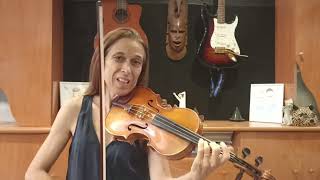
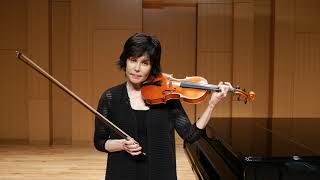
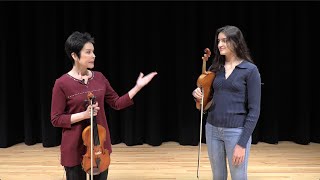
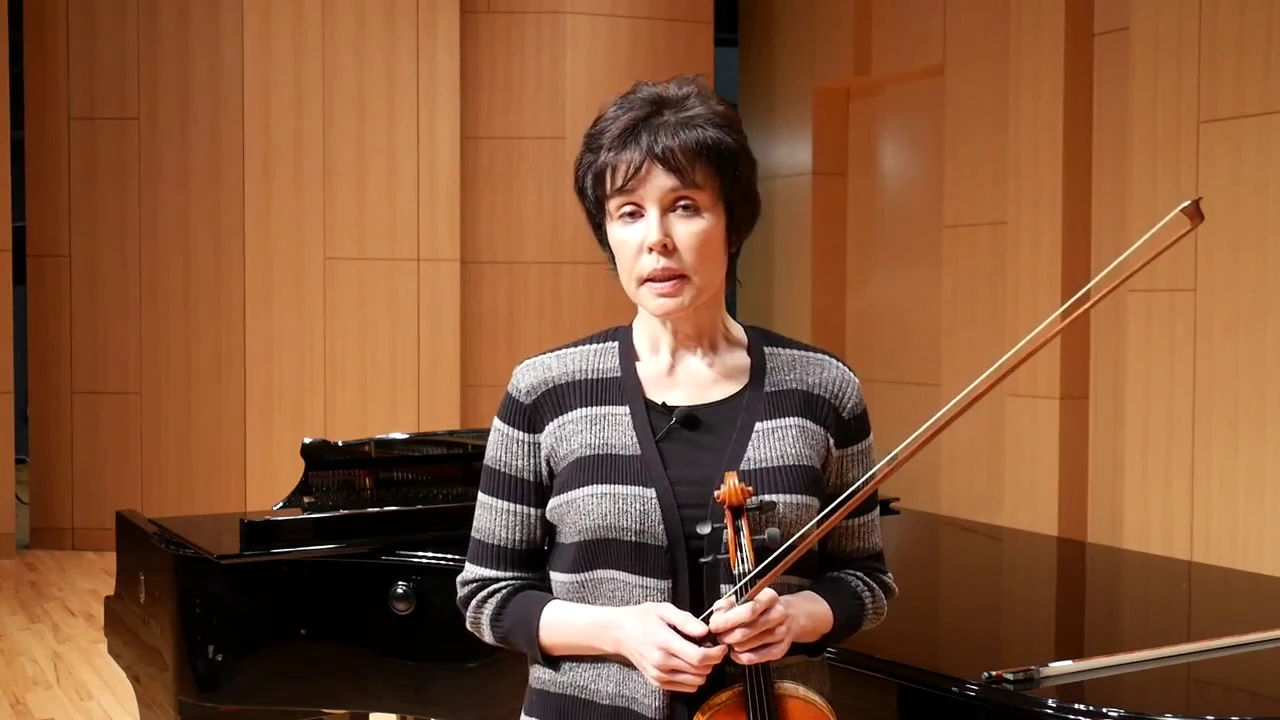
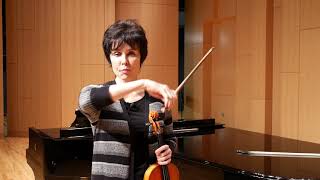
hello this is Julia Bush Cove again and I am continuing my talks about the bow and the bow hand in this one I would like to address some myths and misconceptions or just bad habits perhaps we pretty much all are acquainted now by now with idea that we can use our hand as the paintbrush the forearm being a handle the hand being the wrist being the bristles and when you paint obviously this is the moment you will make correct so when we paint with a bow we're going approximately this angle and then this movement becomes
looking like that the paintbrush so with the bow it becomes here [Music] very easy to make very natural movement I am completely going with what my hand was to do with my arm and my hand want to do and that is pretty much the principle of dragging the bow on the string again for those who watched my previous video and I talk there about holding the bow too much that relates to that as well and if you go again more maybe on D string basically we drag the bow down using the forearm thinking the forum
arm and forearm moving and then bow basically drag you know that sound might not be very pleasant but that's pretty much what's happening on the way down on the way up we're standing still in the lower part of the bow where the bow plays with its own weight you don't need to add the weight you drag the ball up which is really not up but left and here Joe gets right [Music] you just don't stop in between and you have very nice easy smooth situation connections at the Frog which is really a difficult part for
many people another thing following this we can go to the middle part of the ball and there we need to use some of the pressure to make up for the weight that the ball headed the Frog so that is the index finger when the index finger will do that and the very good exercise for this is to actually depress the ball and the hair of the they stick to the hair of the ball and holding it at the pressed depressed state do mimic the same exactly movement it's slightly harder because you do use pressure at
this point but you can see that my wrist is still going up or right and left or down and up with some students and perhaps with some not students I would suggest to switch the words up a lot of times it leads people to think up the rest too much and down actually I'd haven't seen the people doing too much of down too much of up we all have seen and that's not good because it gets us into the uncomfortable position of holding at the Frog so right on the left especially on D and g
strings are really good idea for some times so here without effort and you see the bow I also do it in such a way I basically think above the bow I am and therefore the tilt of the bow and I do it at the tilt at this point tilt I mean the angle of the hair the tilt of the bow doesn't change so in other words I don't do this but I glide I allow the fingers to glide around about this trick the stick and at the middle part where I press the end of the
hair it's the same idea the fingers you will feel the fingers sliding if they don't slide your little boat will turn so the principle here is either you turn your bow or you allow your fingers to slide choose one I choose to leave my boy alone so he can do the job and my fingers are happy to be more relaxed now I want to address a couple of misconceptions in my opinion misconceptions so I think we all agree that when we talk about good bow changes we mean that type of bow changes it looks and
definitely feels quite effortless especially if it is not at the full pressure at full weight rather on d-string but let's say on a string there's not much more that I would like to do actually than this because it's easy and it's very natural however I have seen countless situations when the students are taught to use this movement of fingers to do this and what in fact I'm doing when I'm connecting the bow at the Frog is not anything to do with this movement which many people are achieving through an exercise called Coley I come from
Russia as you can hear and in Russia we had a pretty good school of sound and I guess that kind of goes without saying back then we had many great great great performance coming out there one thing I must say for Russian school is that the culture of sound of tone production was really high was very good and one thing that we never did none of not one of us was Kalle so when I came to this country actually I was asked many times oh you must have been very good in Kalle because you know
you both handling it so good well I think that didn't know what it meant at all so not a single call they exercise and really nice boat changes for Oistrakh Cogan and so on and so forth how did it happen because the boat changes have nothing to do with Kalle I know that some people do that and somehow if they are naturally more suited to play violin they stumble upon the correct coordination in their hand but believe me they're not doing it because of Kalle they're doing a despite of coal a holiday is useful it's
a very useful exercise just not for the boat changes in my opinion so what you actually want to do is to drag the bow on the string so when you drag the forearm leads and the wrist follows then when you drag again down or as I said sometimes to the right the forearm leads and there is follows again what happens with the fingers fingers straight slightly straightened on the way up slightly to curl on the way down there's just natural response of the fingers so that's what is in the base of the truly effortless bow
change is that movement the natural moment what Cola or Cola like exercise teach younger violinists is to do this which you notice it's exactly the opposite of what the hand wants to do when you drag the bow or paintbrush and so on so in fact it wants to do asks us to do this and then sometimes I ask my students well ok so if you go down bow then I'm down it's that motion right you try to go down without the bow down and like this and then up and like that and I know it's
looks strange but if you try to do it you very immediately not even quickly immediately find out it's very hard to do this is easy to do that is hard to do so again it only proves one point it doesn't help the smooth bow changes of the Frog
![Violin Techniques - Left Hand Frame [Part 1]](https://img.youtube.com/vi/PTFzNp0jOyQ/mqdefault.jpg)