In this module, as you can see, we are studying poetry and we are going to look at certain set forms used in poetry. We're going to look at deviations from those forms. We are going to look at what to do when um analyzing a poem, what to look out for, how to answer questions on poetry etc.
Now the first form that we are going to study is the sonnet form. And the first thing to remember about the sonnet is that a poem with 14 lines is not necessarily a sonnet. There are other things um that that sonnet need needs in order to make it a sonnet.
Now we're going to look at two very basic forms. the most traditional forms and these are the forms that you must understand and that you must really try and memorize and and make your own. Okay.
Now the first one is um the Petraan set going to look at that one and opposed to that the Elizabethan. The Petraan form is the older form. It's also called the Italian sonnet and the Elizabethan one is also called the Shakespeareian sonet and that is obviously a later form um changed by by by Shakespeare um and there were reasons why he changed the form but not that right now.
We're going to look at the forms and and see how they are similar and how they differ. Now the Petetroan or the Elizabethan sonnet obviously has its 14 lines as the Elizabethan will have its 14 lines. That's a given, right?
Both should be written or both of these forms are traditionally written in amic pentameter. You must have heard about the pentiamicamic pentameter. It is the the rhythm that goes da da da da da da da daamic uh pentameter means there are there are 10 ft and um five stressed syllables.
So now we get to the differences between the two solid forms and the first thing I'd like to say and that you need to understand is the one aspect that that distinguishes the petroarchan form is what they call bipartite the bipartite format. In other words, you have an octave consisting of two quattrains which is clearly distinguished from the cest which is the remaining six lines and those then are two tets and there's a clear separation between the two. Sometimes in the octave you'll get um say an argument and in the cate um a reaction to the argument perhaps in the octave a happening an event and in the cate a reflection upon the event but there's always the turning point which we also call the vault.
So basically it is an octave eight lines cate six lines and with a very definite um rhyme pattern. It's inter um interlaced uh rhyme. Here you've got A B A in the first quadrant, a ba in the second quadrant making up the first eight lines.
Then you get the vulta. It's also called a seizura or a long pause before the cest starts. And the cestet um has two toetss which goes like this.
CDE CDE or CDC CDC and so we can call the the octave perhaps the statement and we can call the cent state the answer to the statement but most importantly you must remember about the petro is that it's in two parts the statement and the answer to statement or the reaction Petro and Italian started by Petro in ancient times. Now we've got the um did I I said that was all that is Italian. Yes.
So now we've got the Elizabethan set which is started in during the Renaissance and mainly um by by uh Shakespeare but there were many others also that wrote sonnetss at the time and it was an altered form of um the Petrarchan sonnet altogether. It's mainly because of the inflection of the two languages. It was sort of easier in English to get more rhyming words because of inflections.
So also written in amic pentameter as we said in those two aspects they are the same and that there are 14 lines. But now what do we have in the Elizabethan? We've got three quattrains.
So we have four 8 12 lines 1 2 3 quatt trains and then we have a rhyming couplet. So you can see that the structure is is totally different. So, we've got A B A B first quadrin, C D C D, second quadrin, E F E F, third quadrin, and then we've got the rhyming couplet, which is GG.
I call the Elizabeth and sonet my Xi format because it ends in the GG. So you can see how um in the Elizabeth and there are more rhyming words and it's because of the nature of the language which is different from the Latin. Fine.
Now how does it work? It's not like the statement and the reflection about the statement. It is three quattrains.
It is usually an argument in one, two, three parts, one aspect, then the second aspect, then the third aspect. And then of course then you've got the GG where everything comes together um in a clinching conclusion. The argument is concluded.
Not always in Shakespeareian sonets a logical conclusion to what you've heard before but the the poet's clinch to his argument. This is what I say about the three aspects I've mentioned before. This is how I see the conclusion.
So this is an argument in three parts and then the clenching in the rhyming couple couplet. So can you see how the two differ? As an example of the Petroan um set we um are going to give you um composed upon Westminster Bridge by William Werdsworth and um it is a poem.
It's basically just a reflective poem. Um it's a description of the river Tims and um London. Can you see London with all its buildings and so on?
In the early early mornings as he stood on Westminster Bridge, he observed something, right? So remember I said it's Petraan. So you're going to have the bipartite, the octave cestate, right?
So you're going to find in the octave a description of what he sees. You can imagine it's early morning. He's standing on the the the bridge, the Westminster Bridge, and he's looking over the temps, at the boats, he's looking at London.
He's looking at the buildings, and it's early early morning and beautiful. The sun is just rising. So, the first part is just a description of the city.
Now, uh, William Wdsworth um was said to to say about poetry in general that as far as he's concerned, uh, it's recollections um that he then in tranquility makes poetry about. So he he sees something and then when he's tranquil, when he's quiet, when he's still, he reflects upon what he has seen and then he writes a poem about it. So very apt here then will be that there's this vulta after the description of what he has observed and then there's the vulta and after the description then a reflection upon what he has observed.
Now once you remember that already you're going to understand half of the poem right? So this is the the octave. Now listen to his description of London.
Earth has not anything to show more fair. Dull would he be of soul who could pass by a sight so touching in its majesty. This city now doth like a garment where the beauty of the morning silent bear.
Ships, towers, domes, theaters, and temples lie open to the fields and to the sky, all bright and glittering in the smokeless air. So, you can see this description. There's a lot of um imagery going on here.
I'm not going to dwell upon that right now. You can have a look at the rhyme scheme. You're going to see it fits.
So but the point is that here he is giving this description and he is focusing on the beauty of the city in the morning. The air is smokeless and there is no pollution there. The the the ships that are normally um busy, they charted and they're doing this and that and the other.
They're quiet right now. The city is quiet and and the and the buildings, if you think of all those buildings and the things that are going on inside every day, people doing things, there's nothing like that. So everything is lying open open to the fields and to the sky.
In other words, open to nature and and and the influence of nature rather than man-made things. Can go and look at that. um by yourself.
And then of course we've got the vultar, the long pause, the seizurer. And now we have the reflection. And this is how he feels now in tranquility.
He thinks about this. And he says, "Never look at the hyperbole. You can have a look at all those aspects of poetry later.
But never did son more beautifully steep in his first splendor to him. He has never seen anything this beautiful. Valley, rock or hill, never saw eye.
Can you see the eye? The reflection. Never felt a calm so deep.
The river glideth at his own sweet will. In other words, there's no invasion of human activities at his own sweet will. Dear God, the very houses seem asleep.
And all that mighty heart is lying still. What I wanted you to see is the clear bipartite structure and that this is a typical example of a petroan sonnet. Fine.
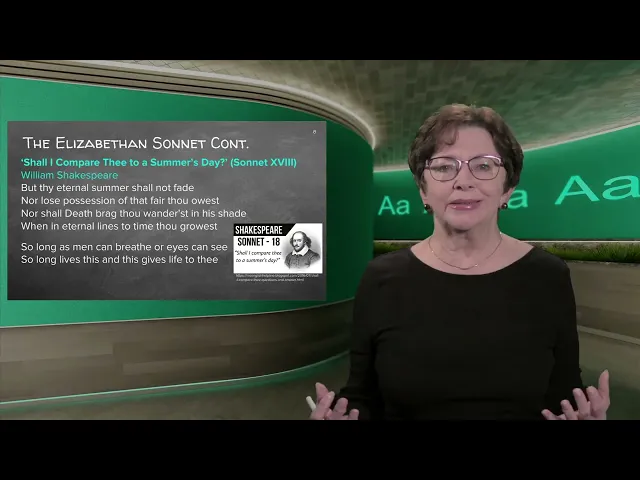
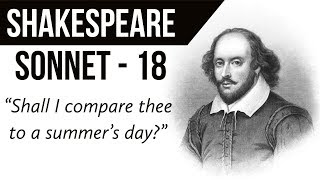
Now we're going to go to the Elizabeth and sonet which as I said was made popular by um William Shakespeare in the Elizabeth and times during the Renaissance and we're going to look at shall I compare thee to a summer's day which is sonnet 18 and it's one of the best known sonnets um that Shakespeare wrote. He actually wrote 154 sonnetss of which 126 were dedicated to um William Herbert who was the Earl of Pembrook uh which could have been one of his patrons. A beautiful young man.
They were dedicated to this beautiful young man. Young boy sometimes called boy but his young man. And then of course there were 28 dedicated to the dark lady.
One of which, of course, is um the the one about the the the the my mistress eyes are nothing like the sun. She has these black wires growing on her head and she's not beautiful at all. She's not like the you know the the picture that she should be.
That is also that is one of the 28 dedicated to the dark lady which could have been perhaps his mistress. We don't know. So remember we said three quattrains in a kind of argument.
We're not going to do a perfect analysis of this sonet. We're looking at the structure and we've got the ab you can see it here. A B A B and it follows sorry that looks terrible.
Um it follows that that correct rhyme scheme etc. It's perfect example of his his sonnetss. So we've got the first quattrin where he says now okay asks this rhetorical question shall I compare thee to a summer's day what shall I compare you to you are so beautiful now remember um for instance it's not africa the sun is not you know so frequently seen there so shall I compare thee to a summer's day which is so beautiful full of sun and flowers and so forth but he says now you are more lovely and more temperate rough winds do shake the darling buds of May and sh summer's lease um hath all too short a date.
So in other words, summer is too short and it's it it is too inmperate to be like you. You are better. Can you see how he says I want to compare you to a summer's day which is one of the best things ever but you are better.
Then he goes on to the next quattrin uh in the next part of his argument if you like in and what he wants to convey to this person to the Earl of Pembbrook he says I'm going to explain to you why why also you are better because sometimes in in summer um the sometime too hot the eye of heaven shines sometimes it's too hot uh sometimes the gold complexion is dimmed it becomes overcast and Every fair from fair sometime declines. So in other words, beauty must somehow die. The most beautiful rose must decline and die, right?
So um because nature does it to them. So therefore you are better. So can you see the kind of argument that he says?
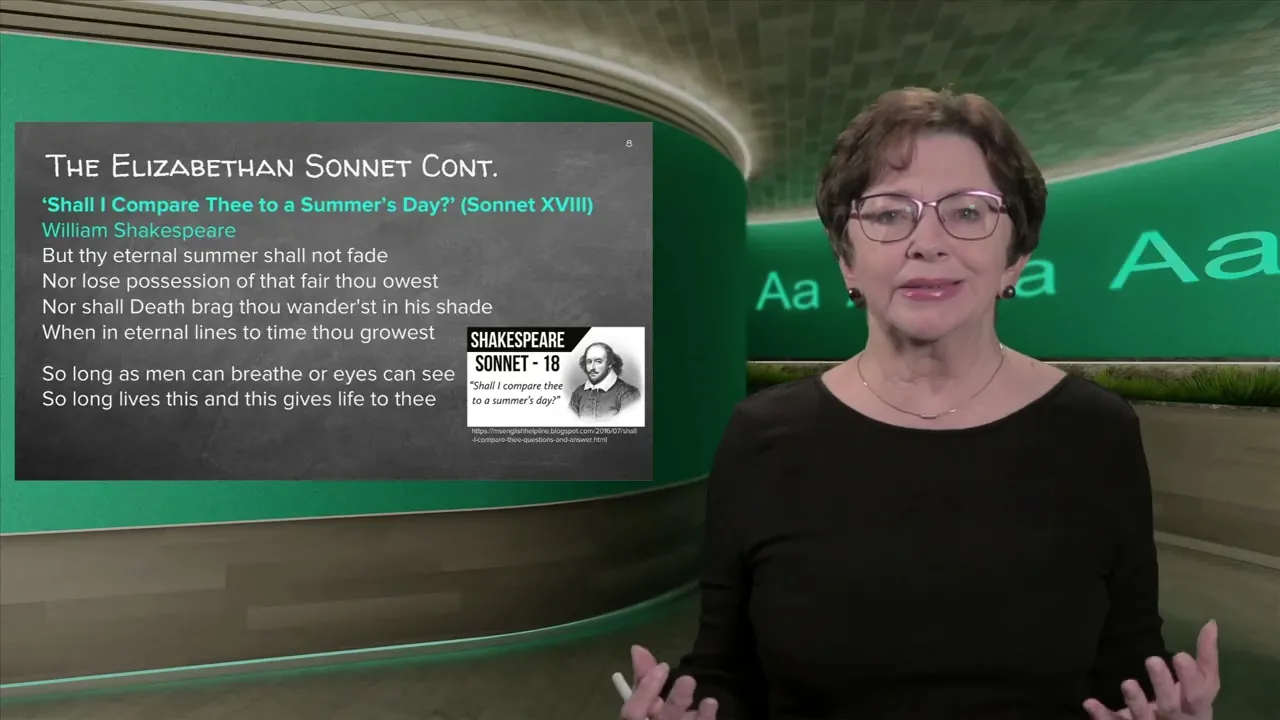
I want to compare you but you are better and more reason why you are better. And then it goes on and he says there is is is a slight uh slight change in perspective here but he goes on with his argument. He says but thy eternal summer shall not fade.
He has a kind of inverted personification used here. In other words that the the instead of that the the person is compared to summer is comp compared to the to the person. In other words, a person has has a summer, right?
And you have an eternal summer. In other words, your summer will not fade. Um, and he's he's he's clearly working up to a kind of conclusion here.
And he says, "And it will also not lose possession of the fair thou owest. You are too beautiful. You will not become ugly like the rose that have, you know, that has faded and died.
Your your fairness will stay forever. Nor shall death brag. Death will not brag and say, "I'm going to take this person.
" Because you will never die like nature, things in nature will die. And um nor shall death thou uh wanderest in his shade. In other words, not going to be in the shade of death.
When in eternal lines thou growest, you will grow in eternal lines. There's punning there that you can go and think about, but we're not analyzing right now. This is the third part part of the argument.
Not only are you better than Summer, but you are not not going to die. You are not like Summer at all. Summer's going to die, but you're not.
And then he clinches. He he gets to his rhyming couplet. Can you see there is your GG?
Uh he says, "You will live forever. " Why? Because of me.
And that's typical of Shakespeare where he brings himself into the rhyming couplet. I will make your I will take all transients away from you. I'll make you live forever.
How? Because as long as men can breathe like you and I are now breathing and what are we doing? We reading a Shakespearean sonnet and we reading that the of Pimbrook was much more beautiful and more temperate than summer and you will never die.
Why not? Because I am still breathing. I am still reading.
I the reader and eyes can see. As long as that happens, there are people who can breathe and read. So long lives this in other words lives this poem and this this poem gives life to thee it is going to make you immortal because we have now just met the Earl of Pimbrook after all these years there's I suppose a bit of truth in that but it's quite an arrogant statement but that's typical of Shakespeare typical of his Xes that he makes this arrogant clenching final statement in a rhyming couplet.
That then uh concludes our lesson on the the sonnet form. Um especially then the Shakes the firstly the Petraan and then the Shakespearean and how they differ. Until next time.