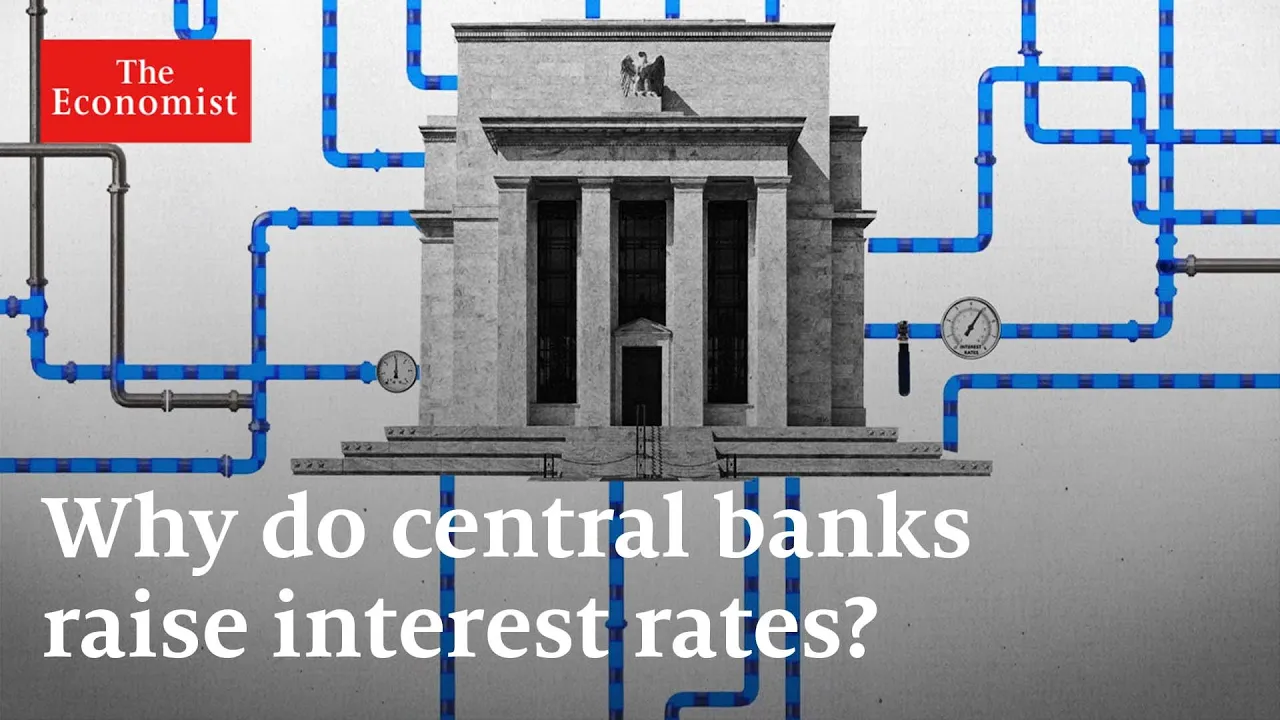
when central banks raise interest rates it's big news bank is judging that the only way they can try to pull down inflation is to carry on raising interest rates we're going to see rising rates rising interest rates that will make the cost to borrowing go up it can send ripples across the whole economy it can sink consumer confidence result in fewer jobs and lower wages and cause stock prices to fall if they go too far too fast it can tip economies into recession so why do central banks raise interest rates [Music] let's start with the
basics if you borrow money you'll have to pay back a little extra to make it worthwhile for the lender well i think we can make you this long you have a good reputation we know you're reliable i'm glad you think so this is the interest rate so if you are taking out a loan you want the interest rate to be as low as possible so you don't have to pay that much back on the flip side if you want to save money then a high interest rate means you can earn more on your savings see
it as a reward for leaving money in your account but the size of your reward depends on the circumstances there's no single interest rate in the economy you've got thousands of banks setting their own commercial rates that's all influenced though by the interest rate that the central bank sets a central bank is like a bank for banks just like you and your savings account banks also earn interest when they leave money with a central bank commercial banks have these things called reserves so that's a bit like their cash on hand commercial banks lend those excess
reserves to each other at an interest rate and they also can deposit their excess reserves at the central bank and when they do that they can earn an interest rate ordinary people can't access the interest rate on the excess reserves but it still affects them and that's the idea when central banks raise interest rates they're trying to control inflation how fast prices rise for everyone they were 129 now they won 39 and last in the space of four weeks central banks like the fed or the bank of england or the european central bank are all
trying to hit an inflation target of two percent interest rates are a really powerful tool that they have to do that if inflation is seen as too high that's when banks raise interest rates the change spreads through the financial system and slows down the rate of inflation here's how a rise in interest rates from a central bank means that a commercial bank will earn more on their reserves they might make more from keeping their money in a central bank then lending it out so if they do lend it out they'll raise their interest rates to
make it worth their while how that affects consumers depends on the economy take mortgages in places like finland or australia lots of people have mortgages with variable interest rates if you've got a variable rate mortgage where the interest rate that you pay is linked to the central bank's interest rate then higher interest rates mean that essentially immediately the higher rate will translate into less cash to spend on other things less spare cash means households will spend less and less spending means businesses will be warier of raising prices this should lower inflation in other countries like
america or canada a bigger share of mortgages are set at fixed rates people with fixed rates are protected against the direct effects of an interest rate rise but will still feel an indirect impact higher interest rates mean that mortgages will become more expensive if that is affecting all new buyers then house prices will begin to fall and that will make everyone who owns a home feel poorer and therefore they might spend less lower spending will translate into lower inflation and it's not just consumers who will tighten the purse strings when interest rates rise then businesses
will find it more expensive to borrow and invest that generally means less economic activity it might mean fewer jobs are created fewer jobs and lower wages could mean less money for households and consumer confidence might suffer which also means less spending people are grappling with a decline in real wages meaning their money buys less when interest rates rise that will tend to slow down spending investment and generally depress economic activity overall that will make businesses more reluctant to raise their prices and that will tend to pull back inflation it sounds straightforward right but the trick
is judging how far to go in 1981 the federal reserve america's central bank allowed interest rates to rise to a whopping 19 the move curbed inflation but it led to widespread economic pain i regret to say that we're in the worst economic mess since the great depression it is very difficult to get inflation under control without severely denting economic activity in america it's been over 70 years since they've managed to get inflation down from over five percent without causing a recession a little inflation is okay it keeps the economy moving at a sensible speed but
inflation staying high for too long is a problem higher prices means employees will need higher wages pushing up costs for businesses that could drive up prices further potentially leading to an upward spiral of wages and prices retail inflation india has surged to 7.8 percent the combination of step 8 economic activity and high inflation poses serious challenges for indian economy going forward central bankers are really concerned about setting expectations of inflation the idea is that if it can show that it is credible that it will always act to get inflation back down to two percent then
maybe it won't have to you know raise interest rates and then lower them in this kind of seesaw fashion raising interest rates can slow an economy right down the trouble is the brake pedal has a delay it can take as long as two years to see the full results from interest rate changes central banks know this so when they set interest rates they're actually trying to read the road ahead but predicting the future isn't easy the problem is it's difficult for the central bank to work out whether the inflation will fall back on its own
and even when central banks do get it right they might still cause a crash it may be a blunt instrument but raising interest rates is still central bank's main tool for taming inflation central bankers would say that yes raising interest rates can be painful slowing down the economy is not fun but it's worth it it's worth it to get low and steady inflation so that in the long run you don't have to think about it thank you for watching to read more of our coverage on interest rates click the link and don't forget to subscribe
you