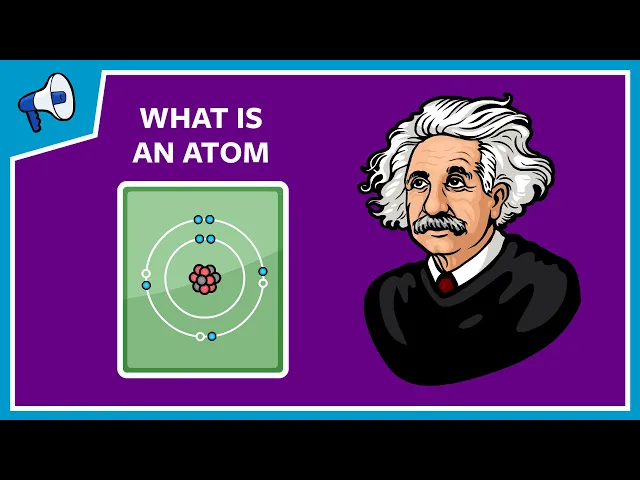
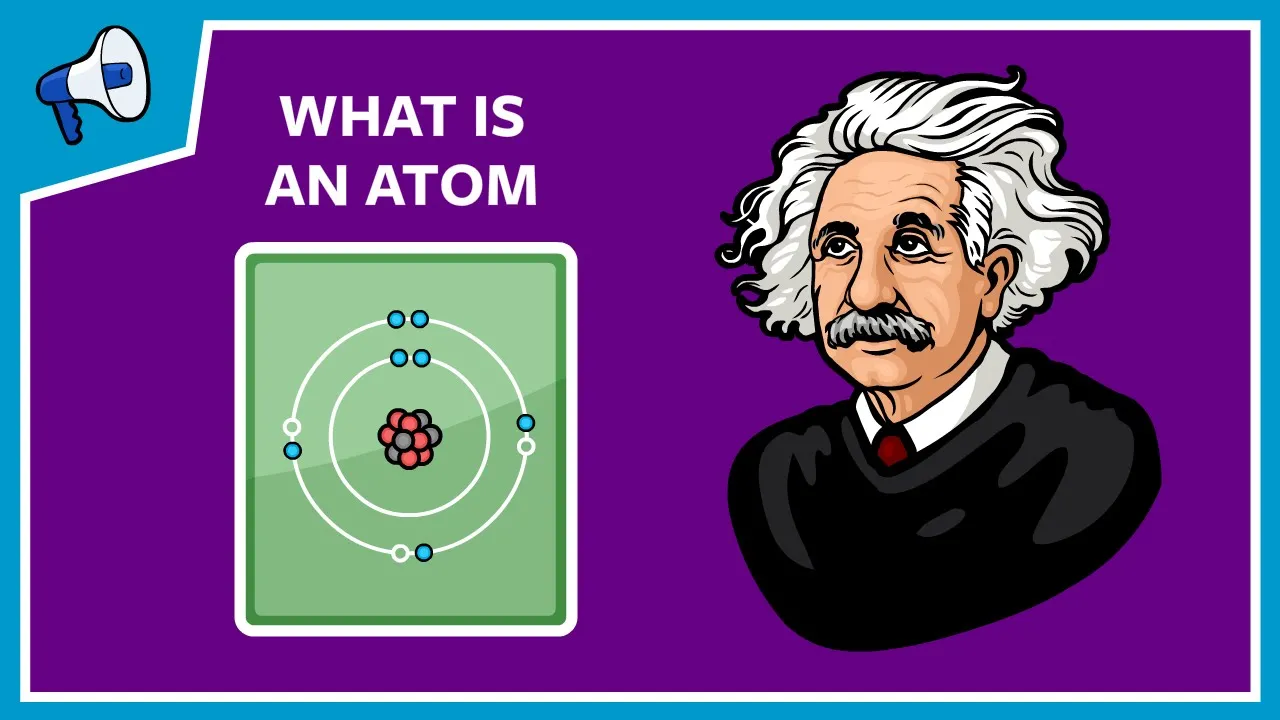
Stated clearly presents What is an atom and how do we know Atoms are the fundamental building blocks of chemistry Just like baked goods are made of a collection of different types of ingredients Matter itself is made of a collection of different types of atoms scientists have discovered 118 kinds of atoms which we call elements. You can find them laid out on a chart called the periodic table All things from the screen this video is displayed on to the eyeballs with which you're watching it are made of atoms But a single atom is so small. It is impossible to see with the naked eye So there you have it a random voice from a video you found on the Internet claims that everything is made from invisibly small atoms You may now blindly accept this as fact and happily move on with your day, right?
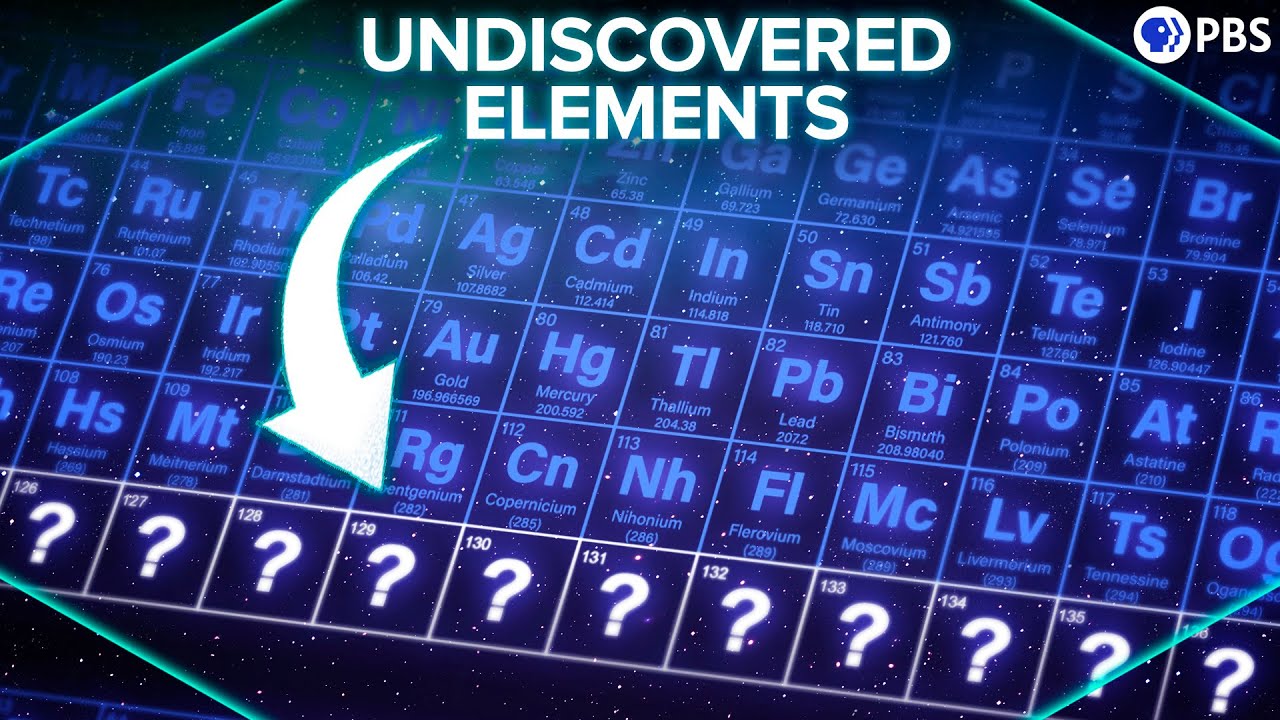
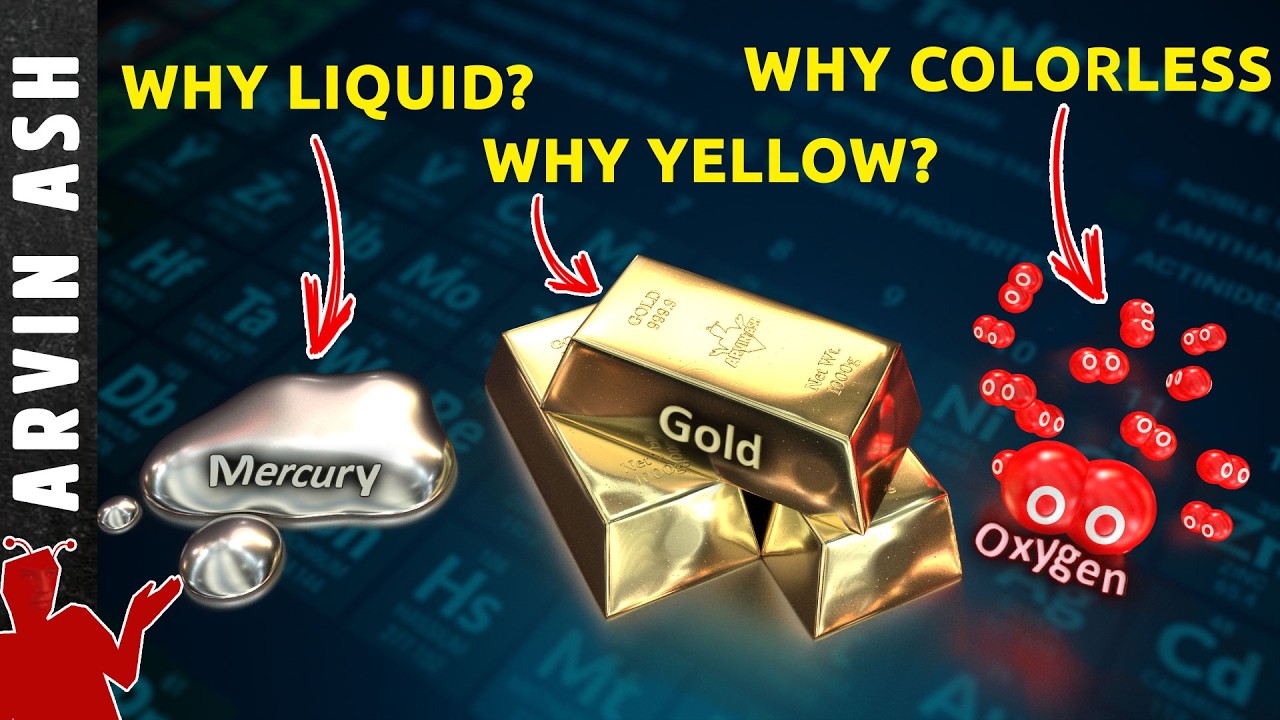
No Now you are extra curious you want to know for yourself exactly why it is that scientists think they know that atoms exist Well to find out we must travel back in time to ancient Greece meet Democritus the man that many historians credit for first clearly proposing the idea of an atom in His day, it was thought by some that if you were to chop up a piece of matter an Apple for instance You could just keep on shopping forever and ever there was no end to smallness for reasons not fully agreed upon by historians this concept did not sit well with Democritus Instead he insisted that at some point you would reach particles so small and so indestructible They could not be divided any further. He called them Atomos or atoms which means uncuttable Now Democritus didn't actually have any evidence to back up his claim and because of that many people simply rejected it after all That which can be asserted without evidence can also be dismissed without evidence Let's fast forward several hundred years and hop on over to the Arabic world You probably know that salt can be extracted from seawater by simply letting it evaporate or boiling it dry People have been doing this forever but missed Jobber, eben high n and those that followed his work took the science of extraction to a whole new level through careful Experimentation, they developed complex processes of filtration boiling vapor collection and cooling They found that crude starting materials could be divided into multiple Incredibly pure substances pure meaning they appeared to be consistent all the way through unlike the complex mixtures of matter often found in nature in The 1700s a French husband-and-wife scientific, duo Marianne poults and aunt Juan Lavoisier studied and built upon the work of their Arabic predecessors They found that certain pure substances could be broken down even further through chemical reactions Water for example can be boiled into steam which is still water but it can also be split into two pure gases hydrogen and oxygen No matter how hard the couple tried. However, they could not reduce oxygen or hydrogen into simpler gases They concluded that the gases must be elements Foundational substances that cannot be created by mixing other chemicals together and cannot be broken down any further with this concept in mind scientists everywhere began searching for and listing as many elements as they could eventually discovering all 118 listed on the modern periodic table Some such as oxygen and hydrogen are gases at room temperature others are solids such as elemental carbon and gold Others still are liquid at room temperature Mercury and bromine.
It was also found that under the right conditions Pressure and temperature certain elements will react with each other upon mixing to form new substances with new properties These are called compounds the elements oxygen and iron can react to form a brown powder known as rust Oxygen and mercury react to form a toxic orange powder Oxygen and hydrogen react to form a clear refreshing liquid. You probably know it as water Though the steps may be complicated all of these reactions Can be reversed elements can be re separated and the amount of each element we get back after Separation is always exactly equal to the amount that had reacted to form the compound in the first place wonderful Elements are real and they appear to be essentially indestructible But what are they made of if you were to zoom in on one chunk of pure gold? For example, can you just keep zooming in for ever and ever saying nothing, but pure gold for infinity in?
The early 1800s a school teacher from England named John Dalton grew fascinated with chemistry Along with conducting several experiments of his own he read about every experiment He possibly could paying special attention to the quantities of each element used up in every chemical reaction in these numbers He was surprised to find a pattern emerge when two elements can react to form multiple types of compounds They always do so in small whole number ratios in this example here We see that in order to transform a gram of carbon into pure carbon monoxide we need to add 1. 33 grams of oxygen to turn a gram of carbon into pure carbon dioxide We need to add exactly twice as much oxygen That's two point six six grams This and many other similar observations strongly suggests that oxygen and other elements are made of tiny indivisible units atoms He didn't know exactly how small an atom was but the number suggested that the atoms of a single element Were all nearly identical in size to each other but different in size to the atoms found in other elements in 1808 he wrote a 560 page book that briefly mentioned his discovery it even came with some quite beautiful drawings While scientists weren't fully convinced that atoms were real they did find the concept of atoms extremely useful it helped them make accurate predictions and perform cleaner chemical reactions in 1905 Albert Einstein hold on there in 1905. He was quite a bit younger than that.
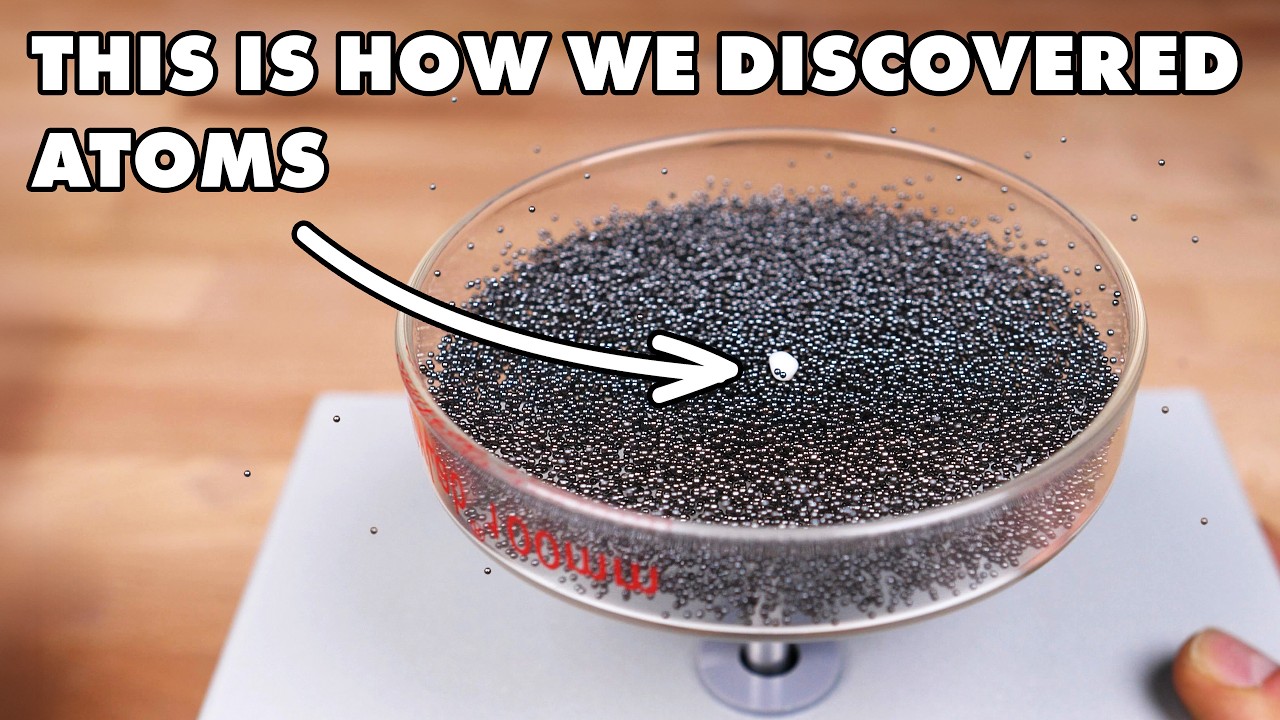
There we go in 1905 Albert Einstein proposed an experiment and produced an equation that could be used not only to confirm the existence of atoms but to determine exactly how big they are a few years later French physicist, Jean Perrin or I guess in French That would be something a little more like jean pail used einstein's concept to actually do the experiments confirming beyond reasonable doubt at least two other physicists and mathematicians That atoms do in fact exist Now if you happen to love math and possess an in-depth understanding of physics Then great. You can just turn off this video right now and go read his book But for the rest of us a little visual confirmation that atoms actually do exist would be nice, right? Unfortunately individual atoms are far too small to be seen with normal light.
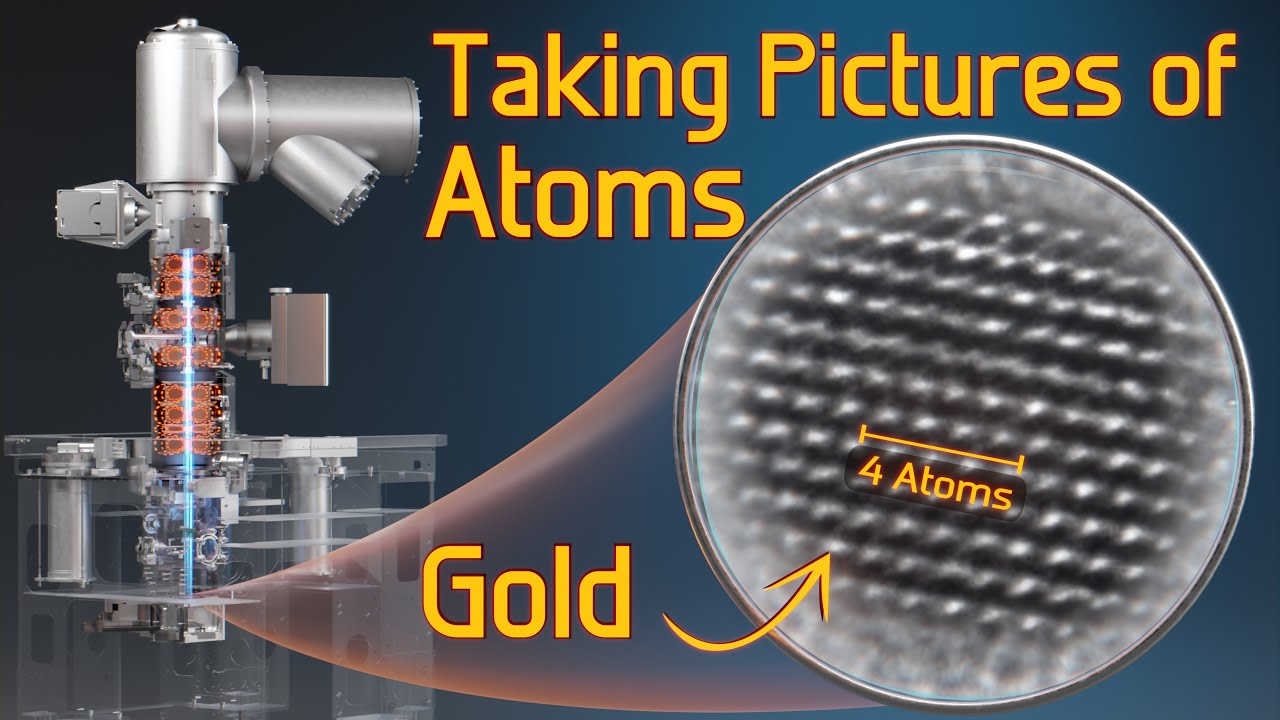
The wavelength of light is just too great This means that normal microscopes cannot see atoms in the 70s a group of engineers led by GERD Binnig and Heinrich Rohrer began working on what they called the scanning tunneling microscope a microscope They hoped would let us take undistorted images of many different types of atoms It uses a process called electron tunneling to scan and Essentially feel the surface of the sample much like you can feel around in the dark to get a picture of your surroundings This is an actual scan of silicon atoms forming the surface of a crystal the colors here are Artificial but this is real data showing the actual pattern of silicon atoms arranged in the sample Later work by dr. Wilson Howe improved the technique and cleaned up the presentation of data While quote feeling the atoms does give us good information Researchers still wanted more a group led by dr ara up carrion of the National Science Foundation's Castle Research Center Discovered a way to use actual light to see atoms in the past This was thought to be impossible because the wavelength of light is so much larger than an atom but by shooting light at the tip of a probe in a modified scanning tunneling microscope They were able to essentially shrink the lights wavelengths and get it to scatter off the sample onto a detection screen By moving the sample bit by bit hitting it with light again each time They were able to piece together this image of a single nitrogen atom each pixel Representing an individual data point from the scan if we smooth it out Sharpen the edges and change their chosen color scheme It is shocking to find how close John Dalton's old drawings Actually were to reality our species has finally done it over 2,000 years after Democritus first proposed the idea of an atom we have now received direct visual confirmation atoms exist So in summary, what is an atom? atoms are the fundamental building blocks of Chemistry, how do we know they exist?
Through chemical reactions we can witness their effects through mathematical equations combined with indirect observations We can calculate their various sizes And finally with the aid of new technologies such as the scanning tunneling microscope atoms can now be seen While the word atom technically means uncuttable. We'll see in the next animation that atoms actually can be split apart Atoms themselves are made of smaller pieces I'm John Perry and that's how we know that atoms exist stated clearly Well folks there we have it that was the first animation in my four-part series on the basics of chemistry the fundamentals of chemistry Hope you enjoyed it If you did subscribe to this YouTube channel and click the little bell icon that makes sure that you'll you'll see the next Animation when it comes up again. There's three more to go still.
So make sure you're subscribed this animation was funded in part by the Casal Research Center Castle that stands for chemistry at the Space-time limit. This is a research group over at the University of California Irvine that does atomic and molecular Imaging they take pictures of atoms and molecules When they're not busy taking pictures of atoms and molecules, they do science outreach They fund projects like this animation that you just watched and they also produced recently a video game called bond breaker That is absolutely wonderful. It will teach you the basics of chemistry and a little bit of Nuclear physics.
It's totally free to use to play the download you can use it on your phone You can use it on your computer. You can use it on your tablet. So go check that out as well There is a link down in the video description This animation was also funded in part by my patrons over on patreon.