There’s a lot we know about Earth’s history: We know that it’s about 4. 6 billion years old. We know that it formed from things like asteroids and comets crashing into each other.
But one thing we don’t know about our planet is exactly when life first evolved. Until now, our earliest fossils showed that there were microbes around 3. 5 billion years ago.
But this week, a team of scientists are reporting in Nature that they’ve found even older fossils, breaking the previous record by 200 million years. A lot of the debate about when life first evolved has to do with something that happened around 3. 8 billion years ago: Earth was pelted by asteroids and comets in a period called the Late Heavy Bombardment.
There are tiny crystals in ancient rocks in Australia that contain traces of carbon from 4. 1 billion years ago, before the Late Heavy Bombardment, which might have been left there by very basic life. So it is possible that life first showed up more than 4 billion years ago.
But it would’ve been hard for early life to survive while all that stuff was crashing into Earth, which is why a lot of scientists think that it must have evolved after the Late Heavy Bombardment. Those 3. 5 billion year old fossils supported this idea, since they’d have had time to evolve after the bombardment was over.
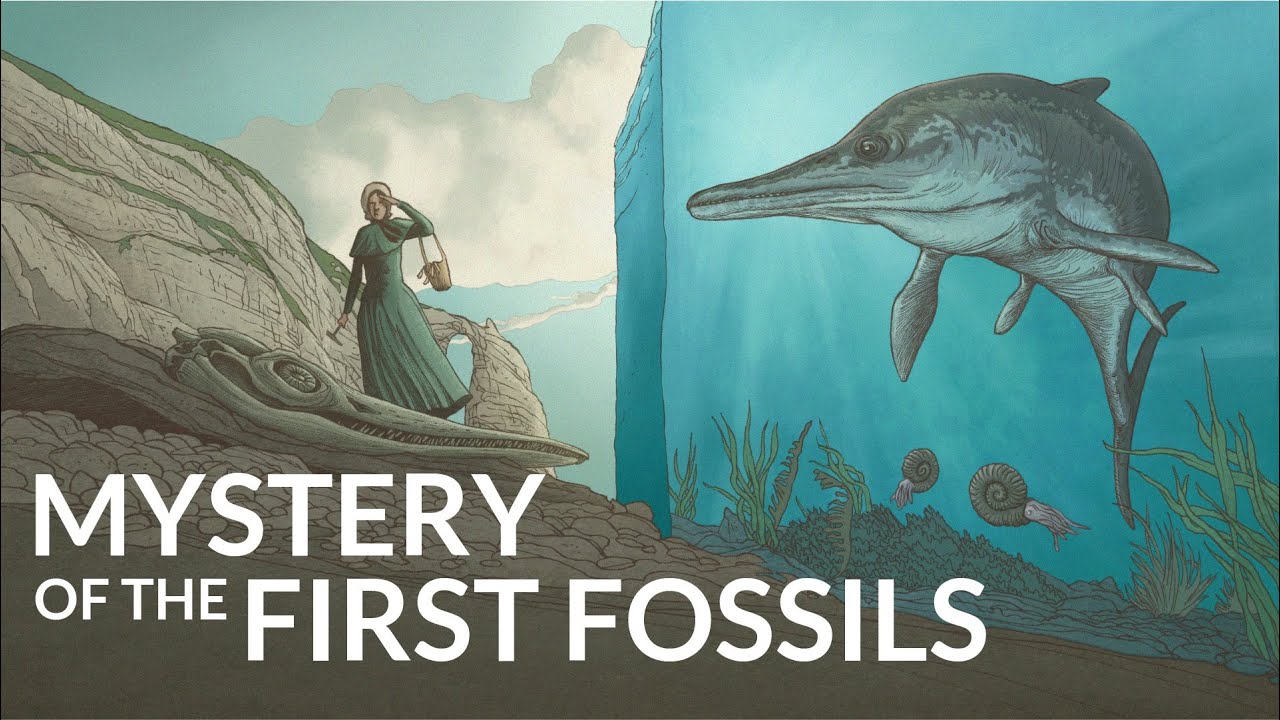
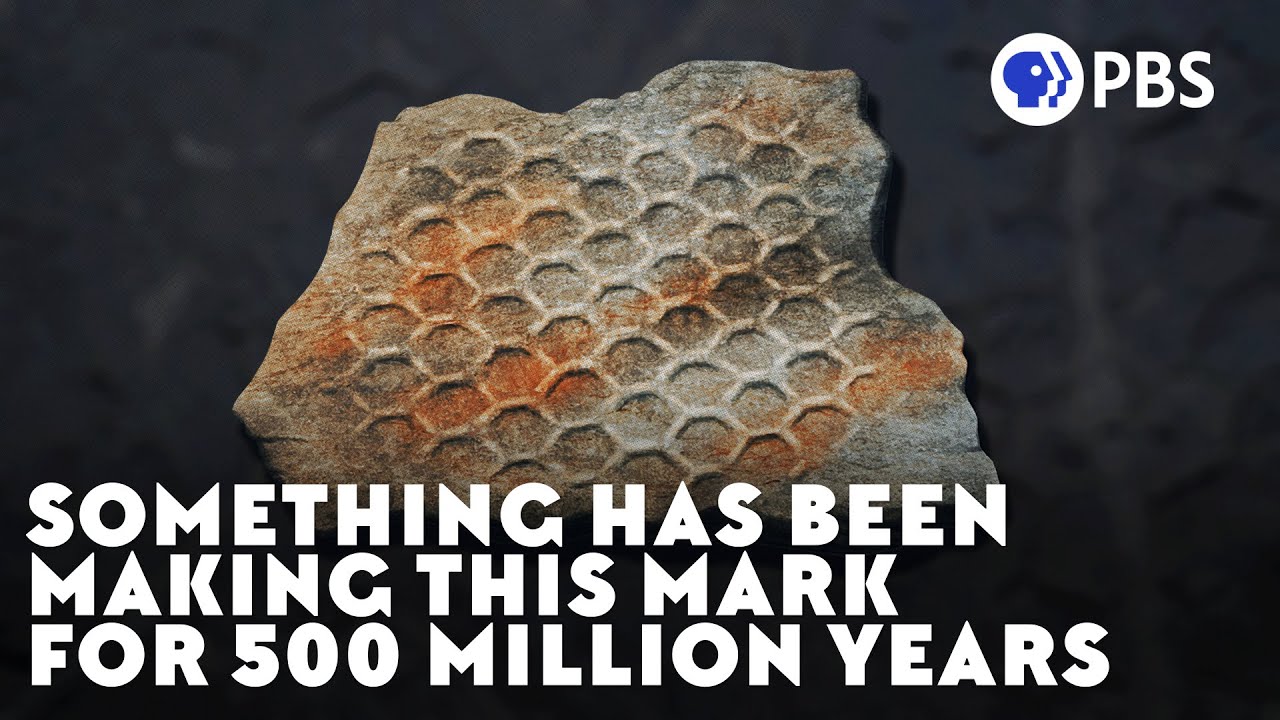
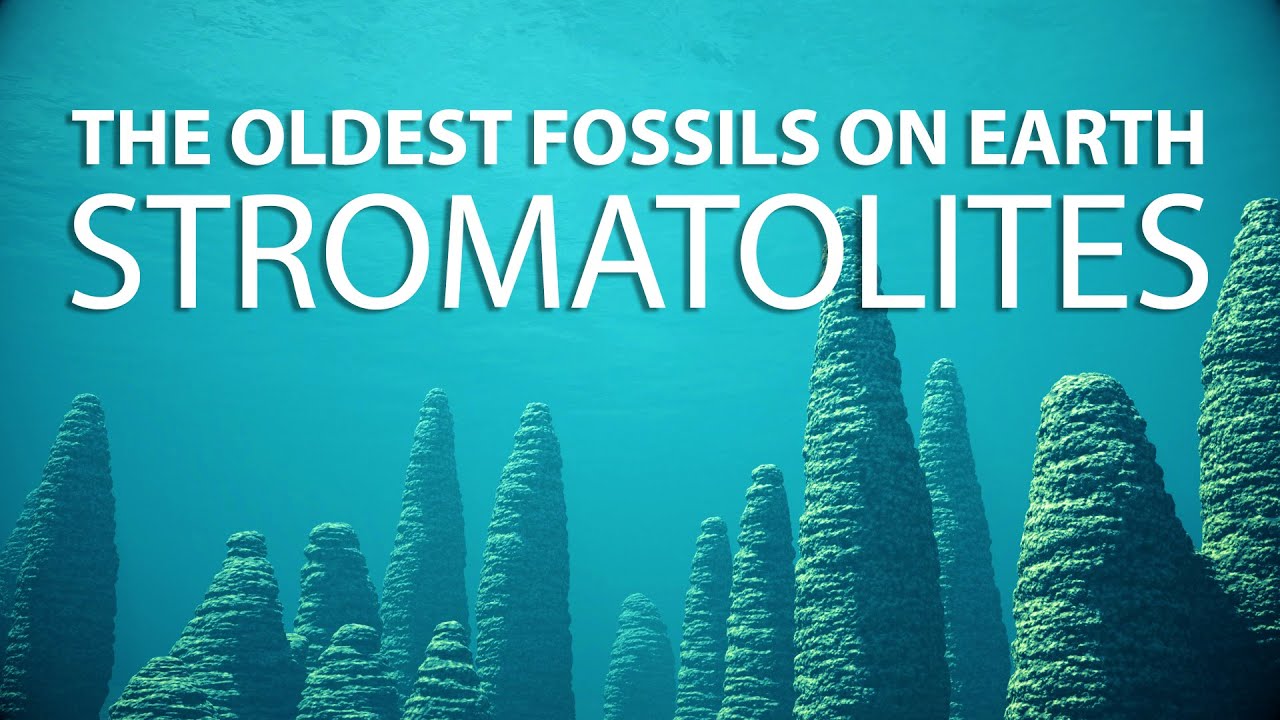
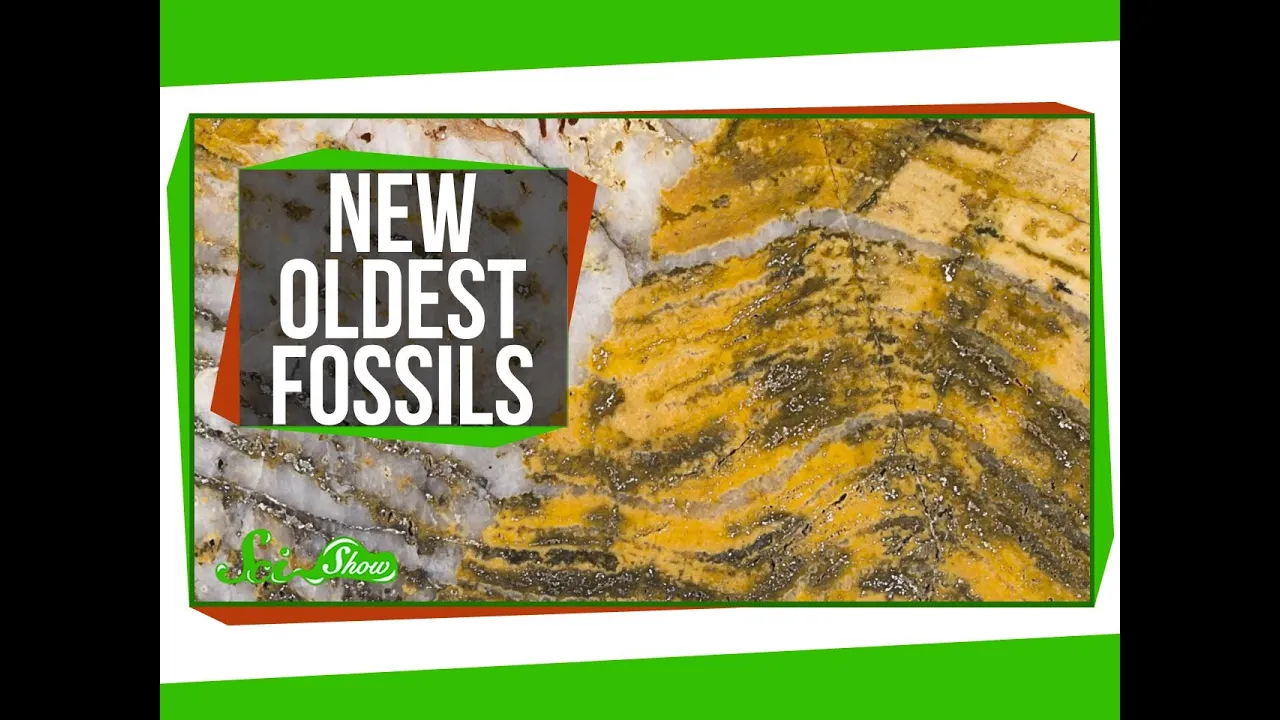
The fossils are called stromatolites, and they’re made up of layers of sediment formed by growing mats of bacteria. Layers of sediment can also just build up over time, but the shape and chemical signatures in a stromatolite can reveal if it was formed by microbes. So we know that life was around at least 3.
5 billion years ago, thanks to these fossils. But now, there’s evidence that microbes were around even earlier. In a paper published this week, Australian researchers found signs of stromatolites in 3.
7 billion year old rocks in Greenland – some of the oldest rocks anywhere on Earth. These older rocks are metasedimentary rocks, which means they’re sedimentary rocks that have been changed by heat and pressure. The shape and texture of certain layers in the rocks, plus their chemical composition, are clues that there are stromatolites made by microbes inside the rocks.
So these could be the oldest fossils ever found. And at 3. 7 billion years old, they were formed around 100 million years after the Late Heavy Bombardment.
And that’s a bit of a problem for the whole life-evolved-after-the-bombardment idea. 100 million years isn’t much time for simple life to get as complex as the bacteria that would have formed these mats – which means that life might have begun before the asteroid-pelting ended. The researchers suggest that some life could’ve developed even earlier, and survived through the chaos of the Late Heavy Bombardment.
So maybe early life on Earth was even tougher than we expected. So we still have a lot to learn about the history of our planet, but some things have always been around, affecting how everything in our universe interacts: The four fundamental forces of nature. There’s the strong interaction, the weak interaction, gravity, and electromagnetism.
Physicists can pretty much describe everything they’ve ever measured with those four forces, from galaxies to gluons. At least, until now. In January, a team of Hungarian nuclear physicists reported that they’d found an anomaly in one of their experiments – one that could mean a brand-new kind of particle.
Since then, a team of theoretical physicists in California have looked at the data, and think the anomaly could be explained by a fifth fundamental force of nature. The researchers found the anomaly when they were watching unstable beryllium nuclei decay into photons, which are particles of light. Sometimes, the photons split into an electron and a positron, which is basically the opposite of an electron – it has the same mass but a positive charge.
In the experiment, most of the time the electron and positron pairs flew apart with a tiny angle between them, which was detected by the researchers’ instruments. But every so often, the electron-positron pairs flew apart with a way bigger angle, and were detected much farther apart – the experimental anomaly. They knew a photon wouldn’t fling the pairs apart at that large an angle, but couldn’t explain the anomaly with anything else known to physics.
So, they suggested it could be an entirely new particle that was splitting apart. In April and August of this year, a team of theoretical physicists from California posted papers on arXiv. org with analyses of these data.
And they hypothesized that the anomaly could be explained by a new particle, which they’re temporarily calling an “X boson,” and a fifth fundamental force. Which would be a huge deal. Like, a Nobel-prize-winning, history-making, physics-shattering deal.
But, these theorists definitely aren’t saying this experiment is proof of a fifth force. It’s just one possible explanation right now. Plus, the Hungarian researchers who found the anomaly have made a few extraordinary claims in the past that haven’t held up to scrutiny.
So, we’ll need more experiments to confirm that this anomaly exists, or refute the result. For now, most physicists are remaining skeptical – as they should be. But with more research, this could be the start of a fundamental change in our understanding of how the universe works.
Thank you for watching this episode of SciShow News, which was brought to you by our patrons on Patreon. Right now, we are doing something a little bit different on Patreon. For the next four months, until the end of this year, starting September 1st, we are gonna be putting on all the money we raise on Patreon toward a brand new show.
The three choices for a new channel which will be adding to our current staple of SciShow and SciShow Space, are SciShow Life, SciShow Psych, and SciShow Health. If you are interested in any of those ideas, Patreon patrons are gonna be making one of them happen, and they are gonna be deciding which one it is. Of course, if you are not interested in any of that, that’s fine, you can just go to youtube.
com/scishow and subscribe. That’s enough for me.