Rice is life. That's a popular saying in many parts of Asia, and I for one, agree. After all, it provides 20% of the entire world's caloric intake, and is central to so many cuisines around the world.
So how exactly did rice become such an important food? And how did this history shape the way we grow and eat rice today? A staple crop for over half the world, rice is a cereal grain, meaning that it's a seed cultivated from a species of grass.
Rice plants can grow anywhere from three feet all the way to 16 feet in height. That's over a whole building story tall! When rice seeds are harvested, they're dehusked to remove the outer hull, which isn't edible.
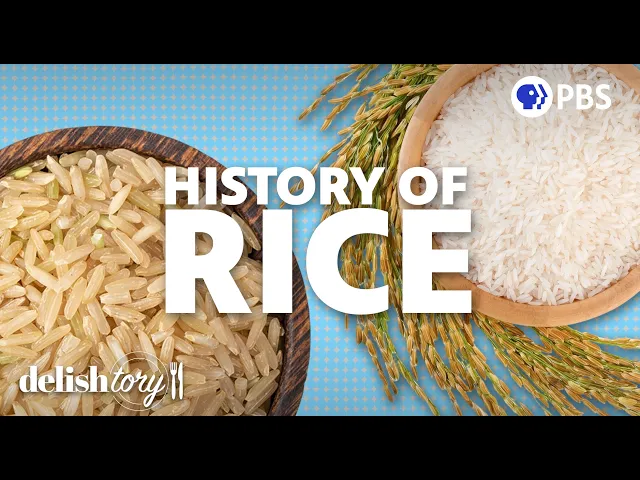
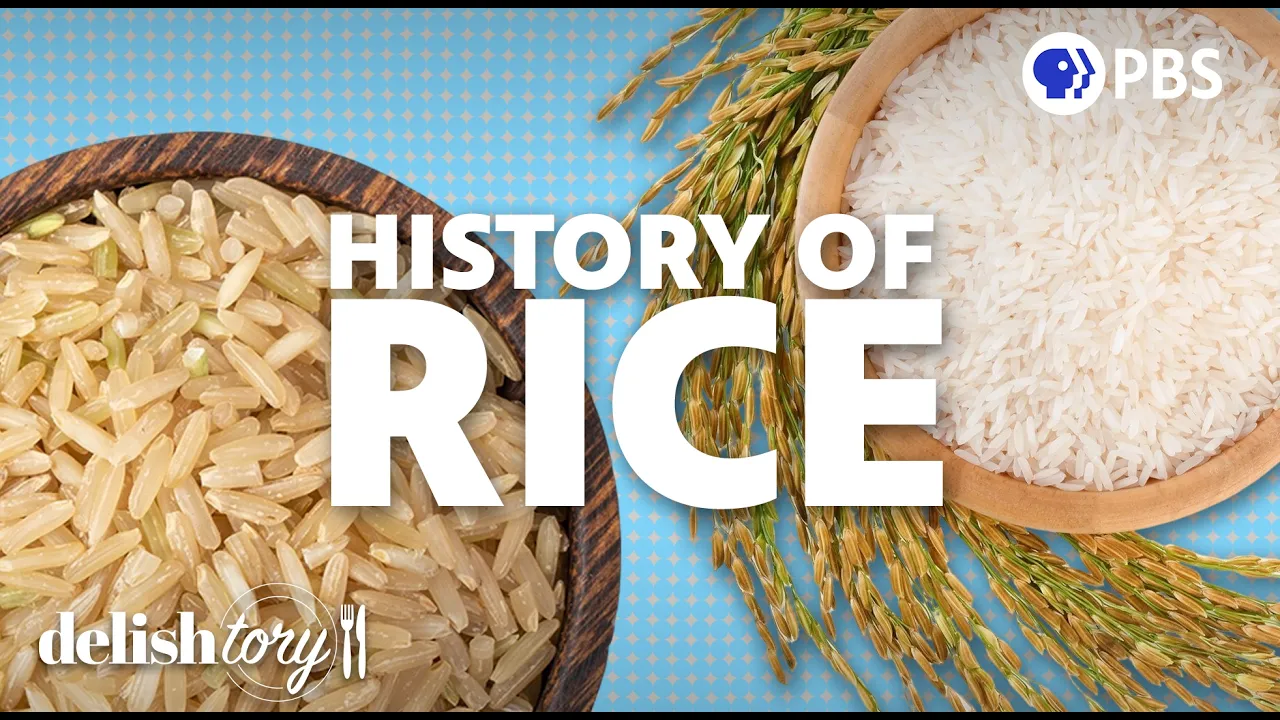
What's left at that point is what we know of as brown rice. It's brown because it's still covered in bran. To remove the layers of bran, the rice is then polished until what's left is the white rice that you're probably most familiar with.
White rice is less nutritious than brown rice, but it's also easier to digest and has a longer shelf life. There are also other varieties of rice that are deep tones of purple, black, and red, but polished white rice is by far the most popular form of rice around the world. The history of rice cultivation is a subject of study and debate, but today most experts agree that the story of domesticated rice first began in China around 9000 years ago, specifically in the Yangtze River Valley.
From China, it first spread southward and eastward to other parts of Asia, and eventually westward through the Silk Road and maritime trade routes along the Red Sea and Mediterranean. This species of rice is often referred to as “Asian rice”, but it's more formally known as Oryza sativa. It accounts for most of the rice produced today, but it's not the only species of domesticated rice.
While Oryza sativa was spreading across Asia, an entirely different species of rice was being domesticated in Africa. Experts believe that this species, known as Oryza glaberrima, was first domesticated about 3000 years ago in the Inner Niger Delta in modern day Mali. Although more recent studies suggest that regions further west also played an important role.
When the Portuguese began colonizing Africa, they brought Asian rice to the continent, and over time it began to supplant African rice production - most likely because it provided a higher crop yield. Today, Oryza glaberrima only accounts for a small percentage of rice produced in Africa, but it remains an important ritual crop for followers of Awasena, the traditional religion of the Jola people. When compared to Oryza sativa, Oryza glaberrima is described as being more aromatic and having a nuttier flavor.
Evidence also points to the domestication of a third species of rice in the Amazon region of South America, but this species is no longer around today. So we know how rice was domesticated. But why did rice become such a big staple for so many people around the globe?
Well, rice is pretty adaptable. Although it thrives in tropical climates, it can be grown in both upland and lowland regions as long as it receives enough water. Rice also has a high yield potential, meaning it can produce way more food per acre than many other crops.
And it's high in calories and other nutrients like magnesium, phosphorus, and iron. It's also shelf stable and can be stored for long periods of time, which is massive for food security. Dr white rice in particular, can be kept indefinitely as long as it's stored correctly.
Today, when we talk about rice, we're mostly talking about Oryza sativa, which can generally be broken down into two subgroups: japonica and indica. Japonica rice is rounder, thicker, and stickier. Think sushi rice and arborio rice used in risotto.
Most indica rice is long grained or medium grained, like basmati or jasmine. This rice is fluffy when cooked, and is perfect for pilaf or biryani. And what about wild rice?
Well, the name can be a bit of a misnomer. The wild rice you find in stores technically isn't rice at all. It's an entirely different grass species called Zizania palustris.
This grain is native to North America and historically has played a crucial role in the diets and cultural practices of the Anishinaabe people, including the Ojibwe. The Ojibwe still harvest truly wild Zizania by hand in lakes and rivers, but most wild rice today is farmed on paddy fields as part of large scale commercial farming efforts. And this is what you'll find in stores labeled as wild rice.
That being said, there are plenty of true wild rices that are naturally occurring around the world. In fact, scientists are hoping that these wild cultivars can help with increasing the sustainability of rice farming. In addition to the two domesticated species of rice that we've been discussing, there are 24 other naturally occurring species of rice that are currently being held at the International Rice Gene Bank.
The gene bank holds the largest collection of rice samples from around the world. But how does collecting rice seeds help? Well, since most rice produced globally is from the same species, Oryza sativa, there is very little genetic diversity in the rice that we grow.
This means that most of our rice faces the same intolerance to pests, diseases, and environmental changes. It also means that the rice we grow demands similar amounts of water. And that is a problem.
Rice occupies over 11% of the world's cropland and consumes over a third of global irrigation water. The flooding used in traditional rice farming also contributes to around 12% of human caused methane emissions. It's estimated that by 2050, there will be a 50% growth in demand for water worldwide across all industries, risking water shortages and threatening our food supplies.
There are a variety of methods that can help address these issues, including new technologies that help mitigate unnecessary water usage. But many scientists think that seed banks will play a crucial role in increasing food security and crop sustainability. There are even varieties of rice that can thrive in salty water!
By domesticating new varieties of rice that are more adaptable to different environments. These scientists hope that rice can remain a delicious and nutritious staple around the world for generations to come. There are so many rice dishes around the world, it's impossible to even begin to list them all in this video.
But this list, even if it's small, can hopefully begin to give you an idea of just how popular rice really is. There's tahdig in Iran, puttu in India, waakye in Ghana, nasi lemak in Malaysia, arancini in Italy, bibimbap in Korea, congee throughout East Asia and Southeast Asia, and jollof rice in West Africa. Then there's the Creole and Cajun classics like ettoufee and gumbo.
And you can find arroz con pollo all over Latin America. And don't forget about the many forms rice can take. There's rice cakes like mochi in Japan and biko in the Philippines.
And rice alcohols like soju in Korea. Horchata in Mexico is usually made from rice as well. I could go on for hours, but you get the picture.
So what's your favorite way to eat rice? And which varieties of rice are staples in your pantry? Let us know in the comments!