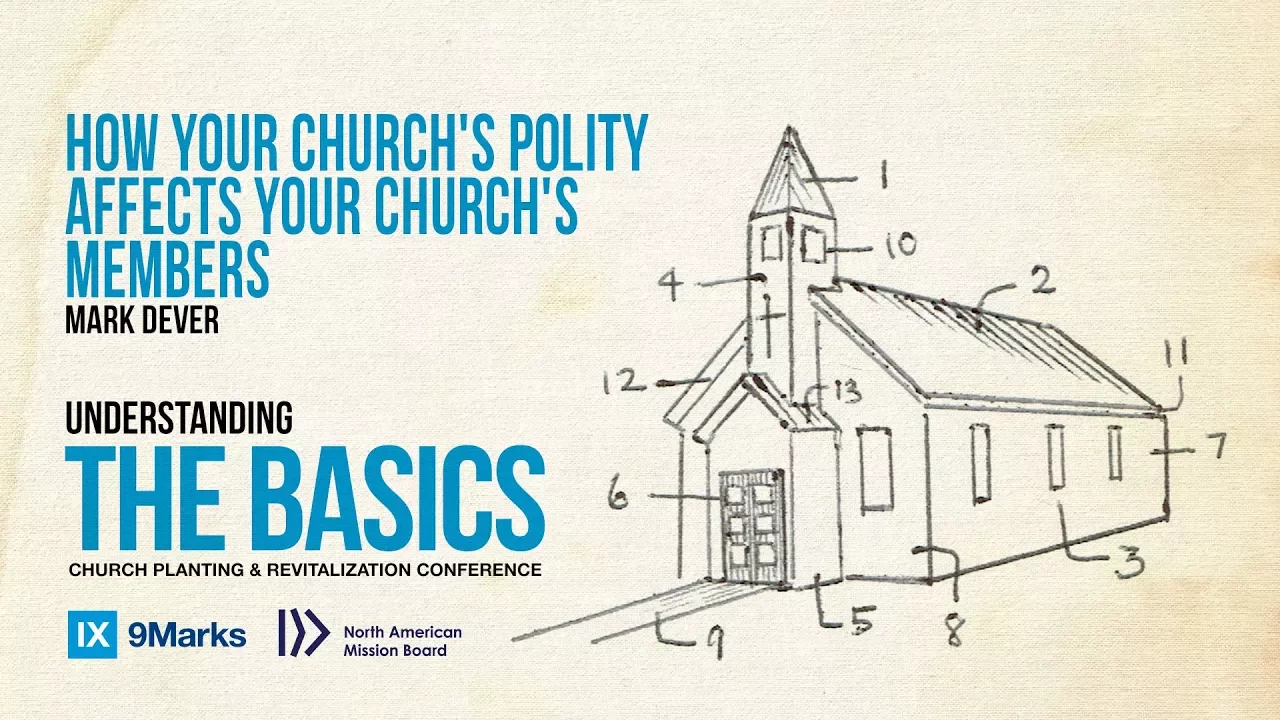
friends I have had a number of conversations lately in which I have found myself discussing the importance of Congregationalism as an aid to disciple I've had a number of conversations lately in which I found myself discussing the importance of Congregationalism as an aid to discipleship and I think a lot of pastors today don't think that church polity has anything to do with the average Christians life I think pastors are tended to think it's a matter of interests maybe for preachers or church historians or church nerds but it is not of real value in trying to
see people mature in Christ I think on the contrary understanding what the New Testament teaches about church polity that is about how your church is to be structured is part of not only obedience to Scripture but also how you help to see the members of your church mature in Christ so this is what I'm saying is very unusual today it would have been very not unusual 150 years ago but it's very unusual today let me just begin by pointing out just a little historical definition for us we turn when you think of polity how a
church is organized there are basically three traditional ways people speak of it Episcopalian Presbyterian and congregational Episcopalian meaning that there is a episkopos a bishop overseer use dinner changeably with pastor elder there's a there's a single bishop that oversees a multitude of churches and these days that could be the Episcopalian structure of a denomination or it could be a multi-site Church where you know David pastors Church that meets in Virginia and another church that meets in DC at another church that meets in Maryland but because it's if they have one you know pastor and what
John was saying earlier one budget one brand they call it one Church the Presbyterian structure very similar but instead of the bishop it's a court of people and they oversee a number of churches and then as opposed to this the third time is congregational where each each church is understood to oversee itself there's a lot more you could say about it but it's it's understood to oversee itself when you use the word independent it's really not the same thing as Congregational because of the history of the English Reformation those words if if an Anglican is
speaking those words independent and congregational are often used interchangeably and this confuses people who read older material thing and they think the two are the same they're not independent is a basic statement saying that the local church is not under a higher authority either of a group or an individual but each local church will take care of itself it doesn't actually in itself speak to how that local church makes decisions because you could have an independent church that is kind of like a little Episcopal see you know where the senior pastor rules espy rules you
know and that's just how decisions are made you know kind of like if Brian were to become the senior pastor at arisen Christ fellowship in Philadelphia and Brian's decides this is what will happen at the church all right or the very common thing among independent churches you could have elder rule where you have a plurality of elders inside the local church a kind of local Presbyterianism but they make the decisions for the congregation as a whole so that's still an independent church but it's not in any sense congregational congregational which again 300 years ago was
often used interchangeably the independent meant a specific kind of independency because when the people who are coming to Christ in the 1500s and 1600s and studying their Bibles and wanting to reform the Church of England very few advocated keeping the polity they had Episcopalians and most of them thought we need to go here we need to go this more representative kind of Presbyterianism or as they kept setting some of them like Thomas Goodwin John cotton John Oh and said actually what we need to go to is this nobody was really advocating these things these are
fairly recent this was seen to be the more biblical alternative to this by some people and they press on over and that's called Congregational independent and in America we've seen these others grow up the senior pastor ruling or elder rule in a local church so what I want to maintain in this brief talk is that this is what the Bible teaches and this will help the Christians in your church grow more so that's the basic simple idea of what I want to say here now some people think that if you're independent like this you don't
cooperate well with other churches well that may be but friends there are a lot of Presbyterian churches and Episcopalian churches that don't cooperate well with other churches especially other Bible believing churches you know a Congregational Church is free to cooperate with any other local church including an Anglican Church or an Episcopalian Church or a Presbyterian Church any way they want to any way they see the gospel and their ministry together so independency does not have to mean that cooperation with others is inhibited we can work together in missions we can work together an education we
can work together in evangelism we can work together in disaster relief what what in dependency means is simply that no one a bishop or Pope or no body of presbytery or an association or a General Assembly or a Southern Baptist Convention can save from outside of a local church what that local church must do so what we're saying is that local church has that responsibility in matters of discipline and doctrine to follow the Lord what they see in his word so relying on the clarity of Scripture perhaps more than and the other polities mentioned here
we assume that God will lead his people as a whole to understand who should be recognized as its members and leaders what should be believed and what should be done so to be clear by Congregationalism I mean that the last and final Court of Appeal in the matters of the life of your local church is not the Bishop of Rome or the Bishop of Constantinople or of Washington or of Raleigh it is not some international body or some national assembly or conference or convention it's not acts 15 happening again it's not the president of a
denomination or the chairman of a Board of Trustees it's not a regional Senate or a ministerial Association it's not even a group of elders inside the local church or the senior pastor like Brian it is in fact the final Court of Appeal in the matter the life of the local church is and should be the congregation itself so friends I'm to those of you who are here who are Episcopalian in your structure which could be a lot of Baptist churches these days or Bible churches or Presbyterian a few Presbyterian brethren or a lot of just
elder rule or practically senior pastor rule I want to lovingly argue with you for just a few minutes that the Bible clearly instructs us on this matter the Bible clearly instructs us on this matter so in matters of dispute between Christians in Matthew chapter 18 Jesus is very clear verses 15 to 17 if your brother sins against you go and show him his fault just between the two of you if he listened to you you have won your brother over but if he will not listen take one or two others along so that every matter
may be established by the testimony of two or three witnesses if he refuses to listen to them tell it to thee and now here's the drum roll is it gonna be to the Pope no it's gonna be to the bishop no is it gonna be to the presbytery or the General Assembly or the Standing Judicial Committee no is it going to be to the senior pastor no is gonna be the elders no tell it to the church and if he refuses to listen even to the church treat him as you would a tax collector or
opinion if you look in Acts chapter 6 when there's another dispute it's gotten bigger it's not just a personal matter it's between the greek-speaking widows and the Hebrew speaking widows and the daily distribution of food there's concern and this was requiring a good bit of the Apostles attention evidently look in verse 2 of Acts chapter 6 so the twelve gathered all the disciples together and said it would not be right for us to neglect the ministry of the word of God in order to wait on tables brothers choose seven men from among you who are
known to be full of wisdom in the spirit we will turn this responsibility over to them and we'll give our attention to prayer in the Ministry of the word this proposal pleased the whole group uh if you were to go over to first Corinthians chapter 5 you would see the famous example of the man who was having his father's Widow and Paul specifically tells the Corinthians in verse 12 for what have I to do with judging outsiders is it not those inside the church whom you are to judge who is the you it's in the
plural and it's referring to the members of the Corinthian congregation not the elders you know where refers to the elders it's to the members so friends according to the Gospels Matthew 18 according to the book of Acts acts 6 according to the epistles 1st Corinthians 5 in matters of dispute between Christians the congregation as a whole is the final Court of Appeal in Scripture and it's not just in matters of disputes it's also in matters of doctrine in matters of doctrine all of the letters of the New Testament except Philemon and the pastoral were written
to churches as a whole instructing them as a whole on what their responsibilities were even in matters of fundamental understanding of and definition of the gospel the congregation seemed to be the court of earthly final appeal so the famous example of this Galatians chapter 1 Paul calls on congregations of fairly young Christians to sit in judgment of angelic and apostolic preachers even himself he says in Galatians 1 verse 8 if they should preach any other gospel than the one which the Galatians had accepted he doesn't write merely to the pastors or to the presbytery or
to the bishop or to the conference's or to the convention or to the seminary he writes to the Christians who comprised the churches and he makes it quite clear that not only are they competent to sit in judgment on what claims to be the gospel but brother preacher here's where your work comes in but that they must okay if your members must do that you are in error if you are not equipping them to do that a basic part of your pastoral work is to give their doctrinal all factory senses trained where they don't just
sniff am i submitting to the elders bad they need to sniff is this according to the Bible yes you want to teach them to be Bereans now well some of them be argumentative jerks yes and we know this because some preachers are argumentative jerks so definitely some members will be argumentative jerks but it doesn't mean that the Bible isn't clear that this is our responsibility and our members will not know this if we don't teach them this we must teach them that they have an inescapable duty to judge those who come to them claiming to
be messengers of the good news of Jesus Christ they need to judge them against what they know to be the good news of Jesus Christ that would just saved their souls Paul makes this point again in 2nd Timothy chapter 4 verse 3 when he writes counselling Timothy and the church in Ephesus on the best tack to take with false teachers when he describes the the coming tide of false teachers in the church in Ephesus he particularly blames it's very interesting 2nd Timothy chapter 4 verse 3 those who to suit their own desires gather around them
a great number of teachers to say what their itching ears want to hear so whether that is in selecting those teachers or paying for those teachers or approving of their teaching or simply content consenting to sit there listening to them repeatedly the congregation that Paul envisions here in Corinth is culpable they are guilty they are responsible they are held as guilty for the teaching that they tolerate as are those who teach them falsely so we have no debate about the responsibility of the teachers they certainly have a responsibility that we know that you know James
3:1 not many of you should be teachers brethren teachers will be held accountable to a stricter judgment but what's often not understood and not highlighted is the fact that the people sitting there willingly listening they have a responsibility they are enabling that to happen by forming a congregation you know when snoopy preaches in Charlie Brown he makes a bunch of old snowmen you know he preaches to them although snowmen have no responsibility you know those no mean we would all agree have no free will but when you have a congregation of people who choose to
come that part of that is their responsibility they are choosing to sit there and listen to this and if we as the preachers have not instructed them to realize the significance of their choice they will remain uninstructed in this also in matters of discipline the congregation has the final authority we see that very clearly in the case I alluded to in 1st Corinthians chapter 5 and in matters of church membership even it's implied so in 2nd Corinthians chapter 2 it's well it's more than implied here it's implied in all the cases of discipline that are
dealt with but here in second in chapter 2 verses 6 and 7 and 8 for such a one this punishment referring to someone perhaps the guy in first Muse 5 we don't really know but for such a one this punishment by the majority is enough so the action was taken by the majority to plain him and again he's not ready to elder's he's riding two members and he's assuming that these members then who took the person out for unrepentant sin would have the authority to bring them back in so who the members of your church
are is established in part by the congregation now I think by implication we can see other so I've given you four ways that I think we clearly see the New Testament evidencing the congregation has responsibility in disputes between Christians and matters of doctrine and matters of discipline and in matters of church membership you should teach those four things clearly to your congregation I think it's also by implication of the case that we have responsibility for our pastors for choosing our elders and this is actually the thing you can find most clearly from church history you
can find this in other denominations you'll find this in in Presbyterian denominations you'll find this in anglican denominations you'll even find at the Roman Catholic Church you'll find long history of voting for the pastor the preacher of a church and I think by implication you can get there because of some of these matters that we've already mentioned especially the responsibility of the congregation in the teaching of the church in making sure that teaching is Orthodox there are other matters of Congregationalism the carnations authority that are mere matters of prudence that I think we could disagree
between our congregations so for example we will always vote on our church budget it just seems wise if it's going to be your money if you're in the congregation that we are taking to spend that you would be able to give consent to that or warn us if you're not going to so if the elders bring forward a budget and our members 60% vote it down well guess what we probably won't be having that budget but that that's a matter of prudence that's not a matter of anything directly I think from Scripture so that's Congregationalism
defined now I would just want to talk a little bit in the few minutes I have left about what it doesn't mean so that people don't misunderstand this simply say the scripture presents the congregation is the final Court of Appeal the final earthly authority of the meaning and application of God's Word in our lives does not mean that the congregation is always right you think of the example I just gave from second Timothy chapter 4 verse 3 when Paul is writing to Timothy and he tells him look men will not put up a sound doctrine
a time is coming instead they will to suit their own desires gathered around them a great number of teachers to say what their itching ears want to hear it's very interesting there that as culpable as the teachers of an assembly are for false teaching Paul does not only suggest that those who teach are responsible which we clearly see in Scripture but he also says those who here have a responsibility and a Congregationalism is biblical but that does not mean that congregation is inerrant right so we're not not saying that at all I think the portrayal
of Congregationalism in the New Testament is admittedly an incomplete picture you find it in snatches and asides and assumptions I think it's clearly present and the more one thinks of it the more obvious if it comes through out nevertheless that the sort of peripheral assumed nature of it would seem to leave not only it clear that it's there but a good bit of Liberty and how we might vary from congregation to congregation and how we exercise it there's great ground for Christian prudence that Christian prudence according to the general rules of the word as the
Westminster Confession put it that means that a church in which the congregation only holds title to the property is in some sense a congregationally governed Church because they can always decide to jerk the property from the person who's preaching there if they need to even more is a church considered congregational if it has the final say in the issues of budget or even who calls the pastor and the call of a pastor you add to that the congregation is the final Court of Appeal in terms of doctrine and discipline and disputes and membership and then
you seem to have a Congregational Church not unlike the models given us in the New Testament now how much further a congregation decides to involve itself corporately in decisions about the leadership of the staff the budget that's a prudence and discretion for the individual congregations but we just have to know that there aren't nominating committees in the New Testament you look in vain for Finance Committee's you look in vain for small group leadership teams belief in the sufficiency of Scripture doesn't forbid those things happening but it just kind of relative eise's their authority over against
what is in Scripture and this is in Scripture so any structure of committees or leadership council which would undermine the biblical offices and the responsibilities of the congregation should not be encouraged and should certainly not be planned it should instead be opposed friends what I want you to see is that this matters its it matters in terms of faithfulness to Scripture it also matters for the life of your congregation part of how we live out the Christian life together in our churches is formed is created by our recognizing this and our teaching the members the
responsibilities that they have we should respect the structures that God has put in place and trust his wisdom in doing so I know there are many godly Congregational Baptist churches which in deciding to have elders have also decided to have constitutionally mandated standards of subscription for elders that are higher than the subscription standards for the members of their church for instance they have all the members of the church affirm the New Hampshire confession while they ask the elders to firm the 1689 or something like that I think it's good to desire exemplary maturity in the
elders of a congregation I think that's healthy I think that's biblical but I think this way of achieving it leaves something to be desired I would caution you against that we don't see this model in Scripture and I wonder if this wouldn't perhaps leave the congregation both feeling and appearing unprepared to be the court of final appeal in matters of doctrine as Paul used them in Galatians and you have to decide this ultimately for yourself but while I will certainly desire and probably expect a more mature understanding of doctrine from those who would serve us
as elders I would not for a moment want to move our congregation to a more clergy dependent position that I find on the pages of the New Testament and I fear that formal requirements like that may tend to that and they're also not as flexible as real life and the changing issues of the day and the varying maturity of the men in your congregation are I think certainly the Christian history gives me no encouragement to think that the more centralized the polity is the better it protects orthodoxy and the gospel that's always the argument that's
given the presbytery or the bishop or the church with the missionaries the church is these will do a better job protecting the gospel well look at the Greek Orthodox Church look at the Roman Catholic Church look at the church that John Calvin preached in look at the church that John Knox preached in look at all the oldest Presbyterian churches in all of our cities in America friends do you know in God's kindness where you can still hear the gospel preached as it was preached 100 and 200 years ago it's usually not in the Episcopal churches
or the Presbyterian churches it's in these churches over here where people who there's no requirements for EM divs there's no educational requirements but people simply know how they got saved they got saved because the gospel of Jesus Christ and trusting him those churches they're the ones who are still preaching the same gospel they were preached like this one is 140 years ago it was founded when sadly I feared I had a kind of ad hominem argument like this but I think it's related to the to the reasons for the arguments if you go to any
Episcopalian Church or Presbyterian Church founded in Washington DC the same year this church was I fear today they won't be preaching the gospel and that is sad and the irony is deep because the whole justification for their structures or that they will do a better job protecting orthodoxy my friends they haven't now are there are their liberal Congregational churches well there are yeah that's why the 4 C's has to exist but I would say a couple of things there well just one overarching thing if you're not careful to protect the members of the church with
a clear preaching of the gospel and only have intend to have only regenerant members and I say there's no way our Presbyterian brother would understand only prone ly believers credible professors take communion this exact same conversation you know if we're not careful about that but if we become lacks in our standards of membership at so many Baptist churches have become well then Congregationalism is an absolute you know crash it's a wreck it's it's just it's a mess because you have a bunch of unregenerate people arguing with each other well of course that doesn't work you
know in that sense it's tidier to have this or or even this if you're gonna have a lot of unregenerate people in your church but if you're gonna have regenerate people who are well taught friends this puts the demand and the weight of discipleship on the people in the way I think you want it to be there I have to say that for us as a church we want to understand the congregation's responsibility in order to teach the congregation what responsibility they have and to teach each member what responsibility therefore they have according to the
Bible what what we should do it puts a greater weight when you join this church on them because they have to say that they themselves agree with the statement of faith they can't just say they're agreeing to be taught this that to say they think the Bible teaches this so friend they have to sign our statement of faith in order to become a member because the members of the end of the day vote they change the statement effect so I remember one time doing a membership interview with a friend from Connecticut who didn't believe in
the Eternity of hell he was playing with the idea of annihilationism and he loved everything about our church he loved everything else in the statement of faith he just didn't agree with that and uh I said well then you you he said so can I sign this I said I don't think with any integrity you can so I would counsel you not to sign this I said listen I gave a couple of things to read in Scripture and some sermons so when you go and read these things and come back and talk to me in
a couple of weeks well he went away and he read these things and a couple weeks later he comes to talk to me and you know what he said he became convinced of the eternity of hell and he said he said mark it his revolutionized even when I come to church he said the hymns are sweeter he's a thing about the atonement is deeper and richer I never had any idea that that little father much I didn't think about that much would have such big implications friends as a pastor you need to stand vigilant guard
over the membership of the church you need to teach them what they need to understand if they're gonna be a member of the church and that can also tell you it has very helpful effects not just on the individual Christians who are members of the church but on our eldership it makes our eldership very thoughtful about what we will bring to the members because we know that we have to prepare them to vote correctly so we can't just quickly decide I've had good friends this happens pretty much annually who are in larger churches and who
will have some mess up over church discipline and often it's because of something like a pastor excommunicate someone see that that's to speak gibberish and gobbledygook in the New Testament I don't think a pastor can excommunicate anybody that's just not it's not in our confident I can't fly you know well I just can not I do it badly I can't well in the New Testament a an individual cannot excommunicate it is a church that excommunicates so when you know that and your elders know that and your members know that then that brings a kind of
a weightiness to what we're doing in our eldership we're deliberating because we're knowing that we don't have to just become convinced among ourselves we got to turn around and convince them we got to help them understand the seriousness of this we got to not say too much lest it become gossipy but we have to say enough so that they will understand the nub of the matter and be able to use their judgment drill to go yes this this is unrepentant sin from everything we can tell because we love this person we love the Lord we
must we must excommunicate them our elders knowing that helps us do a better job as elders and it helps us to equip the congregation better friends my time is up but I want to convince you that the Bible teaches this kind of responsibility of each local congregation and it will actually help the members of your church to grow as Christians if you recognize this and if you teach this in your own local church