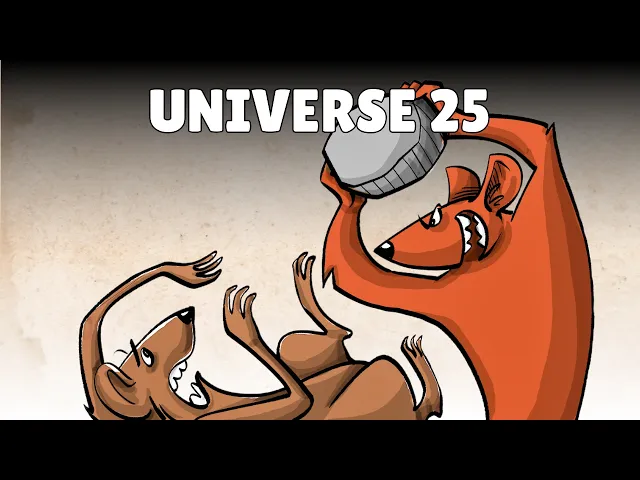
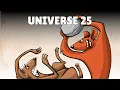
Cannibalism, asexuality, and violence. A society that had collapsed. What’s going on here?
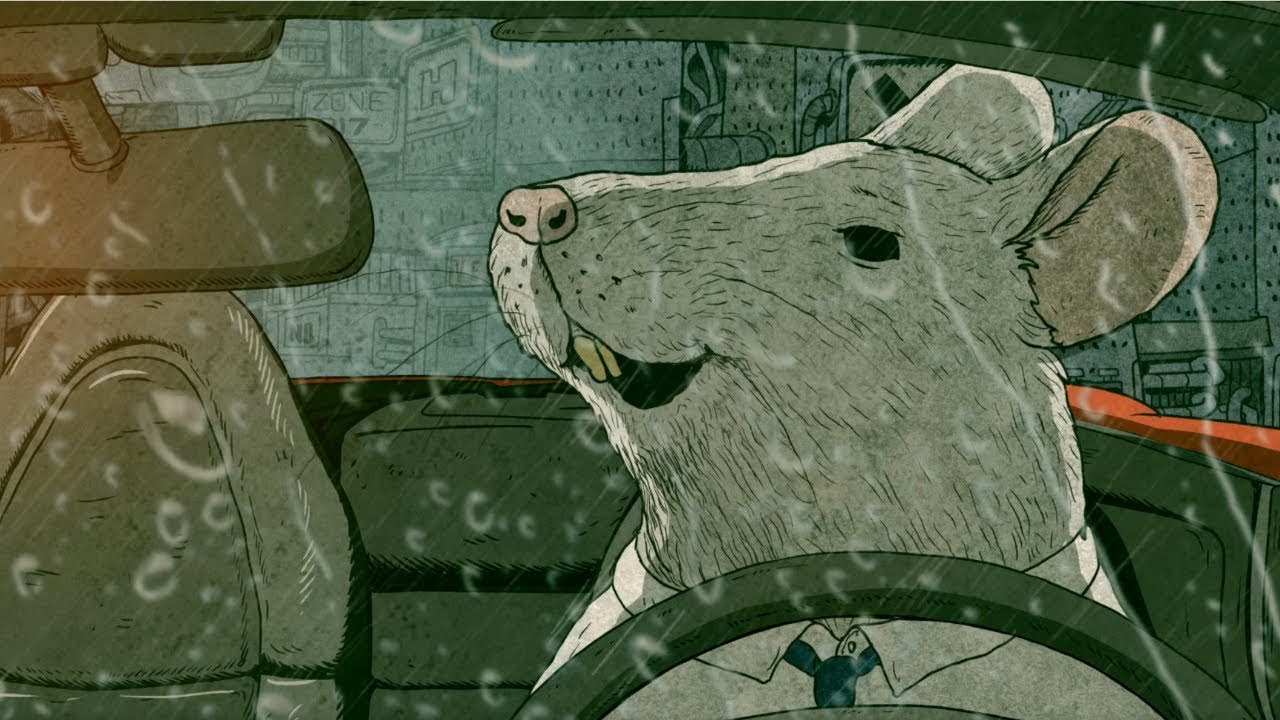
In 1972, John B Calhoun detailed the specifications of an utopia designed for mice: built in the laboratory. Every aspect of Universe 25, as this particular model was called, was designed to cater for the well-being of its rodent residents, increase their lifespan, and allow them to mate. There was abundant food, water, and nesting material.
The universe was cleaned regularly. There were no predators, the temperature stable. Paradise.
Or maybe not? Four pairs of disease-free mice, selected from the National Institutes of Health’s elite breeding colony, moved in on day one. It took months for the rodents to familiarize themselves with their new world.
Then they started to reproduce and the population increased exponentially, doubling every fifty-five days. Those were the good times in paradise. Past day 315, more than six hundred mice now lived in Universe 25, rubbing shoulders on their way up and down the stairwells to eat, drink, and sleep.
Population growth slowed. Young ones found themselves born into a world with far more mice than meaningful social roles. Males faced a lot of competitors to defend their territory against.
Many found that so stressful, they gave up. Normal discourse within the community broke down, and with it the ability of mice to form social bonds. Lone females retreated to isolated nesting boxes on penthouse levels.
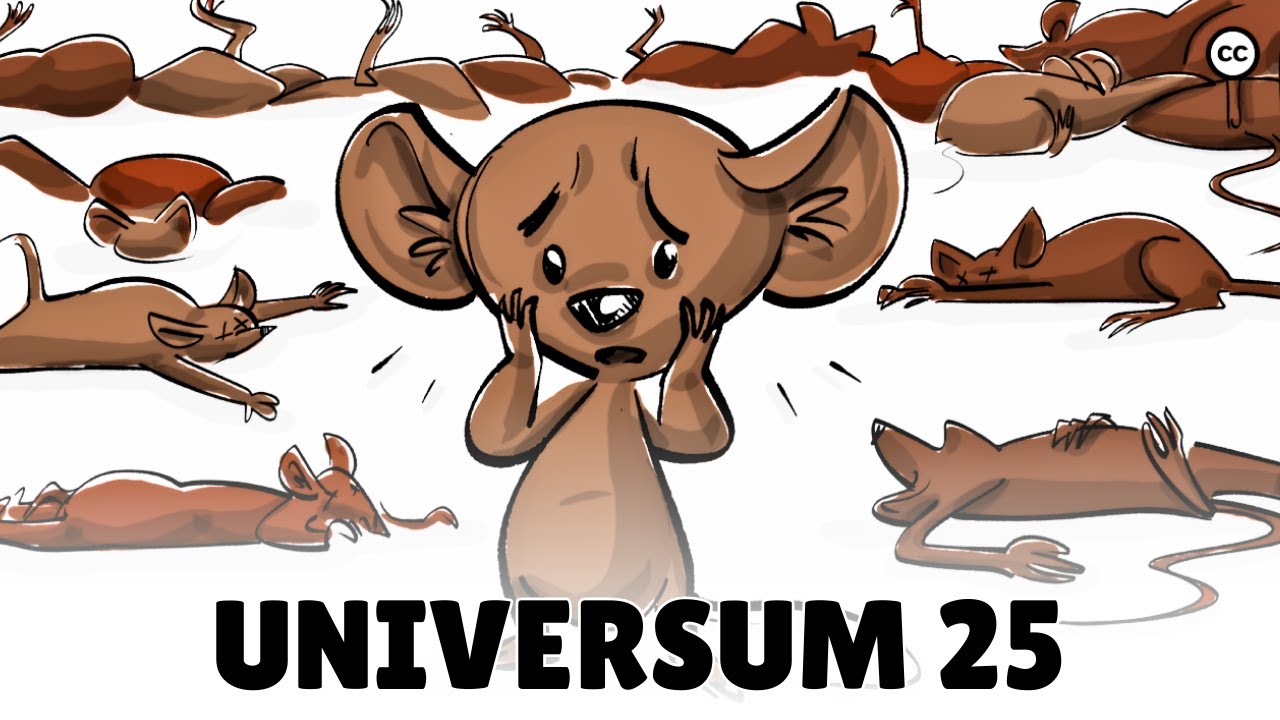
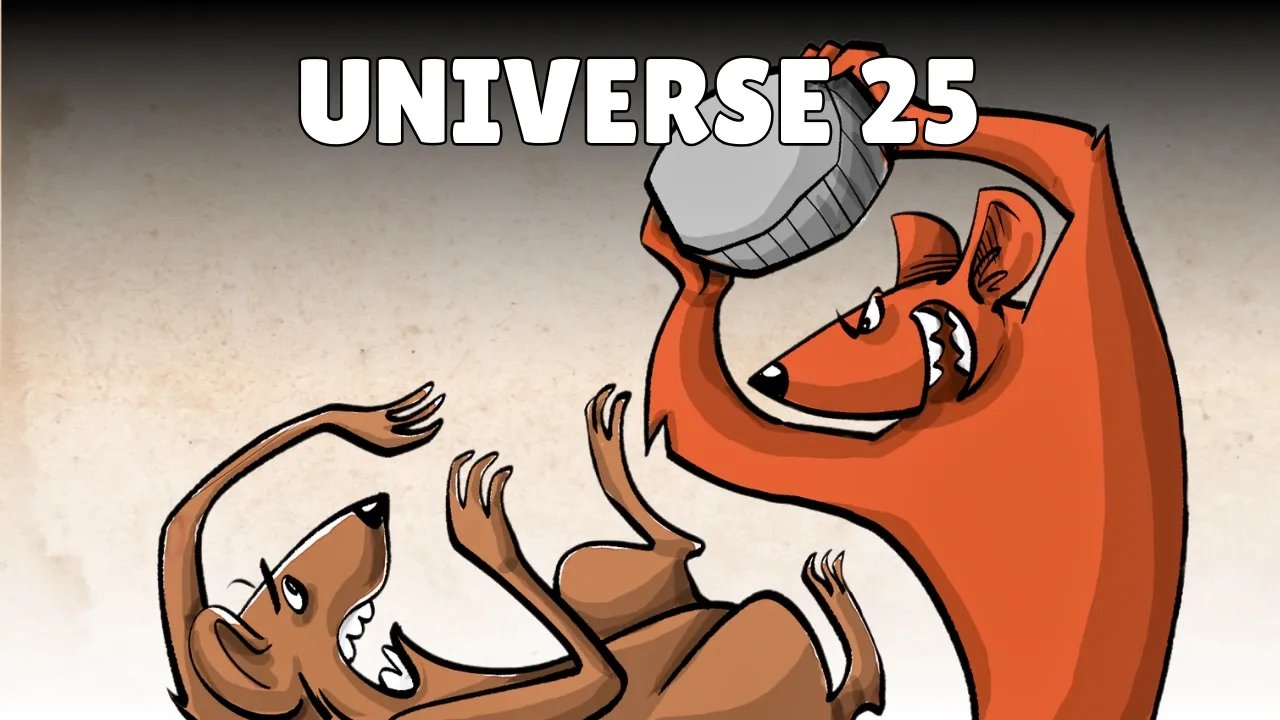
Other males, a group Calhoun termed “the beautiful ones,” never sought sex and never fought — they just ate, slept, and groomed, wrapped in narcissistic introspection. Elsewhere, cannibalism, asexuality, and violence became endemic. Mouse society had collapsed.
On day 560 the population peaked at 2,200 mice. A few survived past weaning until day six hundred, after which there were few pregnancies and no surviving young. As the population had stopped regenerating itself, its path to extinction was clear.
The mice had lost the capacity to rebuild their numbers—many that could still conceive, such as the “beautiful ones” and their secluded singleton female counterparts, had lost the social ability to do so. On day 920 was the last conception. The last mouse died on May 23 1973, four years and ten months after colonization.
Calhoun later said that the creatures had died two deaths. The first was that of their spirit and their society. The “second death” was that of their physical body.
It was not the first time the ethologist had built a world for rodents. Colhoun had been creating utopian environments for rats and mice since the 1940s, with consistent results: overpopulation leads to explosive violence and hypersexual activity, followed by asexuality, self-destruction, and extinction. In his widely cited paper, “Population Density and Social Pathology”, Calhoun concluded: No matter how sophisticated we are, once the number of individuals capable of filling social roles greatly exceeds the number of such roles, only violence and disruption can follow.
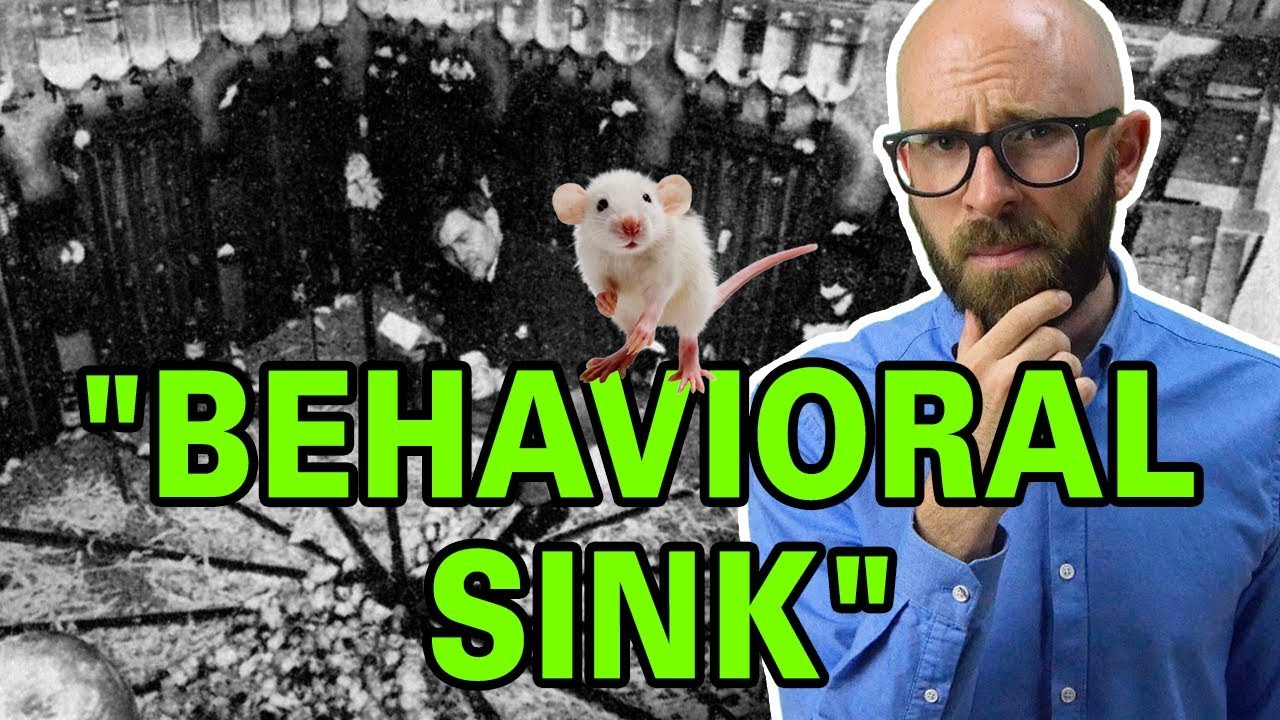
He then referred to a phenomenon he called “Behavioral Sink” Behavioral sink is our desire to be in the presence of others, to be conditioned to seek to be near others, and to be drawn to the crowd, in spite of the conflicts that this can generate. Drwing from Calhoun's popular research, social scientists started to call for restrictions on reproduction as the only possible response to the world's rising population. Calhoun himself was more optimistic about our future.
He argued: as our physical space declines, we are forced to extend a conceptual space — our network of ideas and technologies. Later in his career he turned to possible solutions and began to build creative universes that minimize the ill effects of overcrowding. What are your thoughts?
Is overcrowding a danger for mankind or does it only affect rodents? And if so, what can save the human psyche? Avoiding eye contact in crowded places is one strategy, but is that enough?
To read more about Universe 25, and its cultural impact, read the paper of Edmund Ramsden & Jon Adams. You’ll find a link in the description below. If you like how we explain complicated ideas in simple cartoon animation, you can support us.
Go to patreon. com/sprouts . Just visit us, learn how it works, and what’s in it for you.
We hope to see you there! And if you are a parent or educator, check our website sproutsschools. com There you can find this and other video lessons, additional resources, and classroom activities.