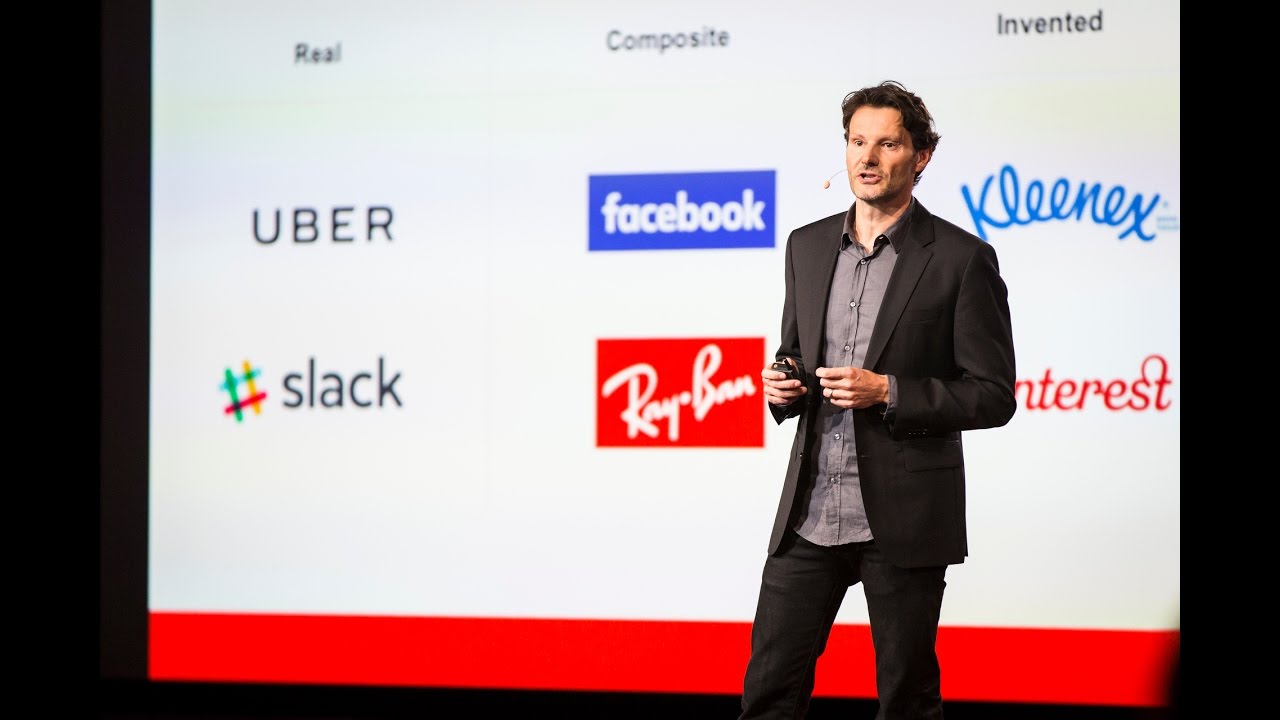
- Coke is just soda. Tylenol is just acetaminophen. And Levi's are just jeans.
Yet consumers go out of their way to select these specific brands over others. - An economist would say, "How is this possible, that a rational consumer would be willing to pay more for exactly the same thing? " We love to think about ourselves as rational.
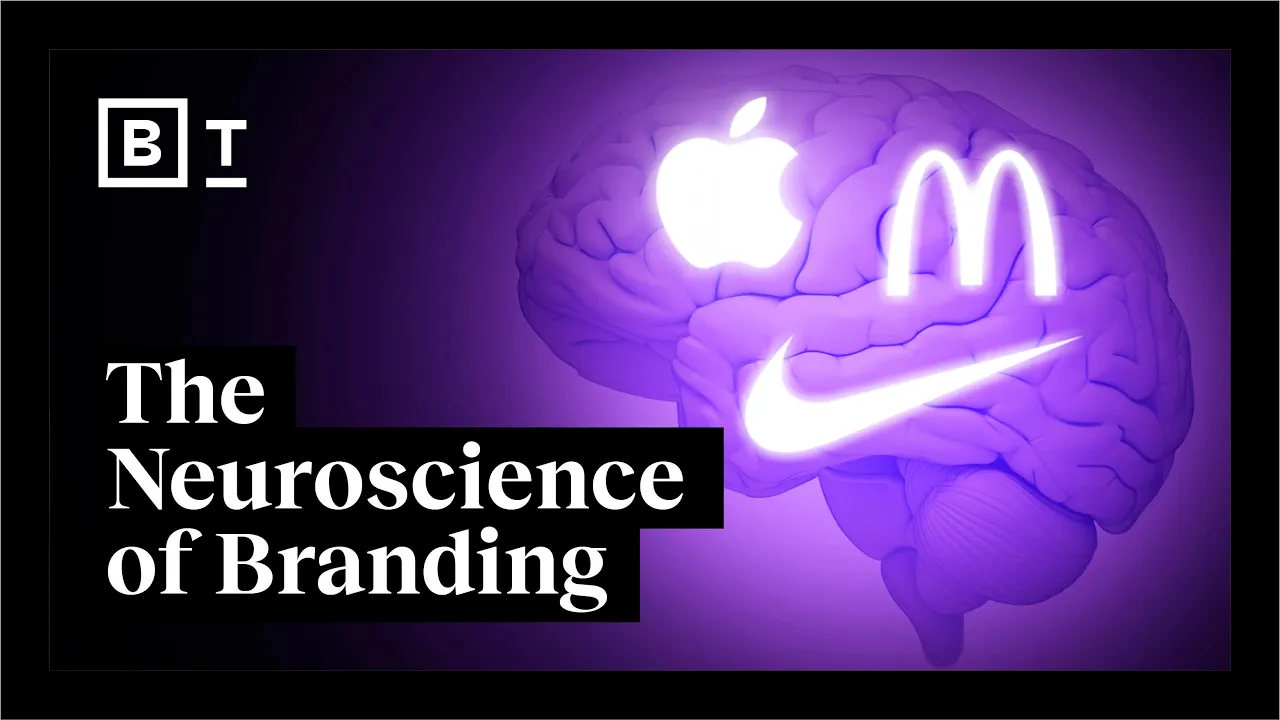
That's not how it works. A very famous study done by colleagues at Duke University flashed either the Apple logo or the IBM logo to two randomized groups of participants. - The study found that after being subliminally exposed to the Apple logo, compared to when you'd been exposed to the IBM logo, participants performed better on creative tasks.
- And the argument is that Apple has been telling you this story over and over again, that Apple is the brand for hip, cool, fun, creative people. - This is the true power of brands. They can influence our behavior in ways that extend way beyond the point of sale.
So to what degree can the influence of brands wreak havoc on our ability to make rational spending decisions? This is your brain on money. This is Americus Reed.
He studies identity and marketing at the University of Pennsylvania. When I make choices about different brands, I'm choosing to create an identity. When I put that shirt on, when I put those shoes on, those jeans, that hat, someone is going to form an impression about what I'm about.
So if I'm choosing Nike over Under Armour, I'm choosing a kind of different way to express affiliation with sport. The Nike thing is about performance. The Under Armour thing is about the underdog.
I have to choose which of these different conceptual pathways is most consistent with where I am in my life. - And once a consumer makes that choice, their relationship with a brand can deepen to the point where they identify with that brand like family. And once you identify with a brand, it can shape the way you behave.
- And it's really interesting because they will also, if someone talks bad about that product, brand, or service, they will be the first to go out and defend. Why? Because an attack on the brand is an attack on themselves.
- Michael Platt is a professor of neuroscience, marketing, and psychology whose research demonstrates how our perception of brands influences our decisions. - There's an idea in marketing, which is that we relate to brands in the same way we relate to people. It's like, "I love this brand," or, "I hate this brand.
" Of course, what people say, right, can often be different from what's really going on in their heads. So we thought, "Well, why don't we just ask the brain directly? " - Michael and his team observed the brains of iPhone users and Samsung Galaxy users with an MRI machine while they heard good, bad, and neutral news about Apple and Samsung.
- Apple customers showed a brain empathy response toward Apple that was exactly what you'd see in the way you would respond to somebody in your own family. - Strangely, Samsung users didn't have any positive or negative responses when good or bad news was released about their brand. The only evidence that Samsung users showed was reverse empathy for Apple news.
Meaning if the Apple headline was negative, their brain reflected a positive response. - You know, it really shows us that Apple has completely defined the market here. Samsung customers, it seems, from their brain data, are only buying Samsung 'cause they hate Apple.
- The kicker? The Samsung users didn't report feeling the results their MRIs showed. What was happening in their brains and what they reported feeling towards Apple and Samsung, were totally different.
- Most people just don't realize that they are subconsciously choosing brands because those brands have some kind of self-expressive value. - You can see there's a lot of power here in terms of shaping consumers' decisions. As we learn more and more about that, we have to think much more deeply about the ethical, legal, and societal implications of doing that.
- So, as consumers, what can we do to make informed choices? Well, the best thing we can do is to be aware of the influence that brands hold. - I think it's important to always pause and think a little bit about, "Okay, why am I buying this product?
" - And like it or not, brands aren't going anywhere. - I've heard lots of people push back and say that, "I'm not into brands. " I take a very different view.
They're not doing anything any different than what someone who affiliates with a brand is doing. They have a brand, it's just an anti-brand brand. And I think about, what is it that I've learned about identity over time?
I think a lot of it has to do with the fundamental need that we as humans have to have support systems. Perhaps it was the church, it was the community, it was these other institutions that existed. Now, brands have stepped in as pillars of our identity.
So I'm very much motivated to see that in that positive light.