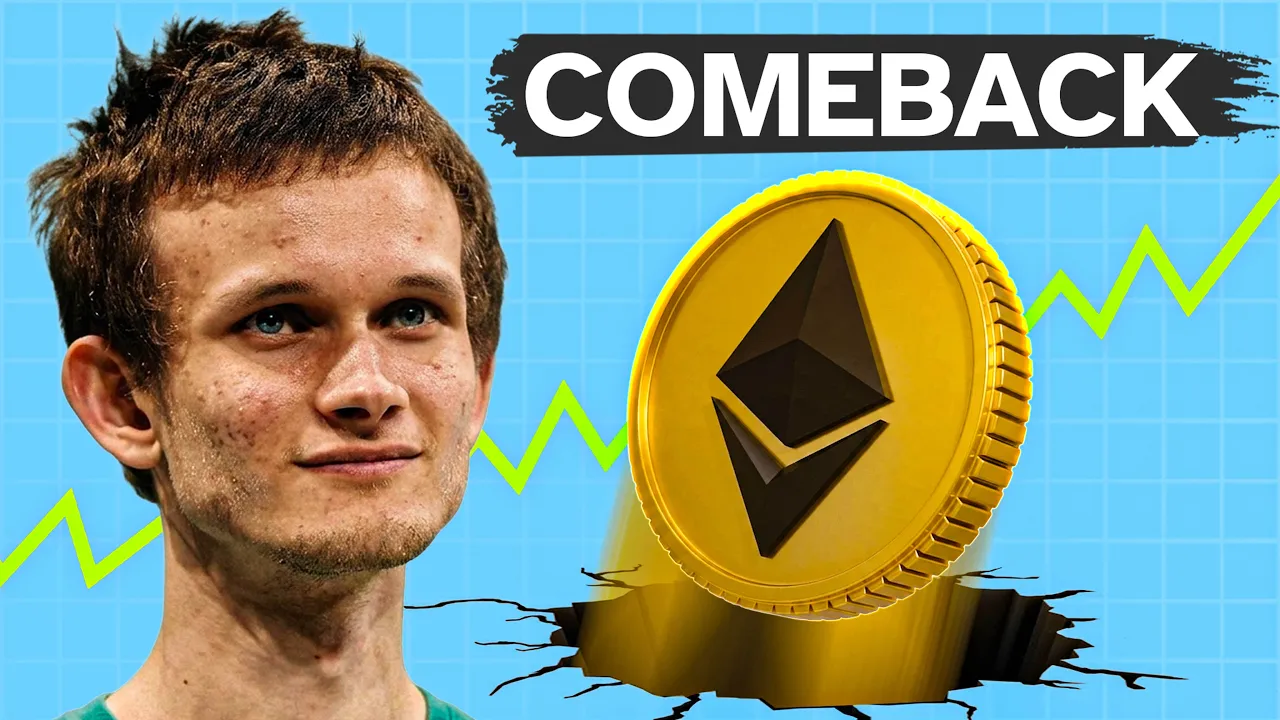
As much as it hurts to say, Ethereum has been somewhat of a laughingtock for years now. Everyone calls it slow and expensive. While competing blockchains like Salana boast higher speeds, lower costs, and a simpler user experience.
As far more DEX activity has been taking place on Salana, even the most diehard ETH holders have had a hard time defending Ethereum. But not anymore. Ethereum is making a comeback, and the numbers don't lie.
Back in January this year, Ethereum was processing around $53 billion on its dexes. That sounds like a lot until you realize that Salana was processing around 116 billion. Put differently, Salana was handling 218% of the DEX volumes seen on Ethereum.
That's no small difference. Salana was leaving Ethereum in the dust. Today though, the numbers look very different.
Since that 116 billion peak in January, Salana's DEX volumes have plummeted, while Ethereum's DEX volumes have come down much more naturally. Specifically, Salana Dex volumes dropped by over 70 billion, falling from 116 billion to just 43 billion by the end of April. That's a 63% decrease.
By comparison, Ethereum's DEX volumes stood at 53 billion in January and only slipped by 7 billion to 46 billion by the end of April. That's a far more modest drop of just 13%. And the eagle-eyed among you will have noticed something intriguing there, too.
Salana and Ethereum DEX volumes are now neck andneck with Ethereum's even being higher in April than Salana's. To put that into perspective, the last time Ethereum DEX volumes dominated Salana was way back in August of last year. Regardless, this parody matters more than you might think because it signals a major shift in narrative.
Salana's biggest flex has always been its higher throughput and lower costs pulling users away from trading on Ethereum. And to be fair, Salana deserves its flowers. For Hot Minute, it was where everything happened.
But the data now suggests that trading momentum has faded and things have changed. And while Salana was cooling off, Ethereum was doing what it does best. institutional activity, tokenized assets, stable coin settlements, and large-scale DeFi liquidity have largely stayed loyal thanks to its solid, reliable infrastructure.
So, even when Salana activity faded, Ethereum activity remains strong. And the idea that Ethereum is dead no longer makes sense. And by the way, if you want to keep up with the latest Ethereum news as it stages a comeback, well, then you could join the Coin Bureau's Telegram channel.
That's where we share the latest breaking news, provide deep dive alpha, and give you the most important market updates, all ping directly to your device so you don't miss a thing. So, it's time today using the link down in the description below or the QR code that is on the screen now. So, what actually happened to Salana?
Well, first, let's be clear. This isn't a story about Salana failing. It's more like a sugar rush finally wearing off.
Back in early 2024, the launch of Pump. fund led to thousands of new tokens being minted every day. Memecoin mania was in full swing and crypto Twitter was flooded with FOMO.
Pump. Fun alone was responsible for a massive 80% of Salana memecoins at its peak. But of course, it wasn't alone.
Pump. Fun success quickly sparked competitors like Lead Spunk, Radium Launch Lab, and Moonshot. During that period, Salana processed massive volumes, and Soul's price went parabolic.
But there's one issue with all of that. Barely any of this activity was organic economic growth. It was a heavy speculation, casino style, highfrequency trading on tokens with no real purpose beyond going up and more often than not going down.
As a not so fun fact, around 18. 7 million tokens have been launched on Pump. Fun.
According to data from Dune Analytics, less than 1% of those ever reached the $50,000 market cap needed to graduate to external dexes like Radium. Even so, this didn't stop people from aping into the latest memecoin the second it hit the market. Thanks to Salana's low fees and high transaction speeds, traders were betting on dozens of tokens a day.
And for better or for worse, Salana had built a bit of a reputation for being a memecoin blockchain. The problem with that, however, is that once the memecoin cycle ended, demand within the Salana ecosystem quickly faded with it. This can be seen across various other metrics, not just DEX volumes.
For instance, the number of active Salana wallets has plummeted from 8. 7 million at the peak of October 2024 to just 1. 9 million at the time of shooting.
New accounts have dropped from around 27 million in July 2024 to just 10 million today. Although, we should note that these numbers are inflated with bots, so take that with a grain of salt. Even so, daily application revenue on Salana has collapsed from a high of 85 million in January 2025 to less than $2 million today.
Onchain total value locked or TVL reached over 13 billion dollars in September, but has since fallen to just $6 billion today. With all of that said, it is important to reiterate that Salana didn't do anything wrong. It still performs just as well now as it did during peak memecoin mania.
It was retail speculation that broke down. But that speculative wave never really hit Ethereum, at least not to the same extent. So, as retail capital moved away from memecoins, what was left was a serious money and most of that resides on Ethereum.
Now, if anything that we've just covered makes you think that Ethereum is just plain old boring by comparison, well, you might be right. But that might actually be its superpower. In a space that rewards hype, narrative, and viral moments, Ethereum has spent the last year or so being relentlessly, stubbornly unsexy.
Instead, Ethereum was cementing its position as crypto's most mature ecosystem. While dunking on Ethereum has become a pastime on crypto Twitter, many people forgot that Ethereum is the dominant force in almost every crypto narrative. Just look at DeFi.
52% of the entire DeFi ecosystem lives on Ethereum, accounting for $44 billion. And that's not even including its layer 2 ecosystem. That's just what lives on the mainet.
Then there's the tokenized real world asset or RWA sector, which is quickly becoming the most important sector for crypto's institutional adoption. Ethereum controls a massive 55% of the market share, accounting for roughly $19 billion. And of course, one specific type of RWA is stable coins, which are the backbone of the entire crypto industry.
Just over 50% of all stable coins in circulation live on Ethereum and a massive $164 billion. Heck, even if you look at the ETFs, you'll see a similar dominance there. Obviously, the spot Bitcoin ETFs are in the league of their own.
But when it comes to altcoins, Ethereum is miles ahead of its competitors. At the time of shooting, Ethereum based ETFs have a combined $16. 6 billion in assets under management or AUM.
Trailing behind with less than $5 billion are multi-asset ETFs, which consist of entire baskets of cryptocurrencies. Now, what all of this shows is that users would rather go where liquidity is deepest and where the rails are most trusted. It's not exactly exciting.
There's no hype around 100x meme coins, but there is liquidity. And this is why institutional capital has chosen Ethereum as its home. Institutions have deep, deep pockets.
They don't care if they have to pay more in fees or wait a little bit longer for a transaction to clear. What they care about is deep liquidity and a reliable architecture that keeps their massive stacks of cash secure. That's why Ethereum's most boring properties are also its most valuable.
Ethereum's upgrades journey so far. By now, you could see that Ethereum leads across multiple narratives. The irony, though, is that it's not even trying to.
While other blockchains have been chasing their product market fit, Ethereum has spent years rolling out major upgrades to strengthen its core infrastructure. And if you're wondering why Ethereum's future still looks bright, you only need to look at what it's already accomplished. Now, for context, Ethereum upgrades are rolled out through hard forks, which for those who don't know are simultaneous upgrades to both Ethereum's consensus layer and execution layer.
Every upgrade has been huge for Ethereum, but no upgrade was bigger than the merge, which took place in September of 2022. This was not only Ethereum's biggest upgrade, but one of the biggest feats in the history of computer science. That's because the merge marked Ethereum's transition from proof of work to proof of stake.
The name came from Ethereum's mainet, merging with the beacon chain, Ethereum's consensus layer, based on validators staking ETH rather than miners using machines to secure the network. It was an extremely complex process that required delicate execution. And yet, the devs implemented it without the network experiencing any downtime.
Respect. The merge was followed by Chappella in April 2023, which basically allowed people to unstake the ETH that they'd locked away prior to the merge. Admittedly, Chappella turned out to be a bit of a nothing burger.
After that, though, was the Denune upgrade, which was rolled out in March 2024. Denkun had a much larger impact on the network because it focused on making Ethereum cheaper and more efficient especially for layer 2 rollup solutions like optimism and arbitum. The headline feature of Denune was EIP 4844 which introduced proto dank sharding.
It sounds complicated but basically introduced a new temporary data type called blobs which allow roll-ups to post transaction data more cheaply. Blob data is stored temporarily instead of permanently, dramatically lowering costs without sacrificing security. The result is much cheaper fees for users on layer 2 roll-ups.
Then after Denkun was the Pekra upgrade, which was rolled out in May last year. Pectra focused on network performance, validator deposits, and made improvements to how Denun's data blobs are handled. More importantly though, Pekra brought major improvements to the user experience for both validators and the average user.
On the validator front was EIP7251 which increased the maximum balance per validator from 32 ETH to48 ETH. The practical effect of this was that operators like staking pools and institutions can consolidate their validators into fewer units. This reduces overhead, simplifies infrastructure and lowers the bandwidth and operational burden on large stakers while still preserving the decentralization at the protocol level.
On the user front was EIP7702 which benefited Ethereum wallets. Basically, Pectra enhances account abstraction for Ethereum wallets, allowing them to temporarily act as smart contracts during transactions. This lets them run custom code, unlocking new possibilities like more secure transactions, gasless transactions, transaction batching, and improved recovery options.
All of which are major improvements to the user experience. And this brings us to the most recent upgrade, Fusaka, which was rolled out in December last year. Fusaka focused on making Ethereum even more scalable and introduced a novel concept called peer-to-peer data availability sampling or pure DOSs for short.
To keep things simple, Pure DOS basically made it possible for nodes to validate data by sampling small pieces from different nodes, in other words, their peers, rather than downloading everything. It sounds a little boring, but this was a real big deal because it dramatically improved how Ethereum handles data, resulting in cheaper and more scalable roll-ups. So then that brings us up to date.
As for what comes next, all eyes are on the upcoming Glamsterdam upgrade. At the time of shooting, there's no confirmed date for Glamsterdam's rollout, but it's expected to happen in the first half of this year. So in the very near future, whenever it happens though, it will bring improvements to Ethereum's layer scalability.
That's because Glamsterdam introduces a concept called parallelization. Right now, Ethereum processes transactions one after another, which can cause problems when the network is congested. Glamsterdam changes this so multiple transactions can be processed in parallel, making the network run much faster, even during busy periods.
Then after Glamsterdam is the Higod upgrade, scheduled for the second half of 2026. Hugoto's details are still being ironed out. But the idea is to shift focus from block production to statelessness and state expiry.
It's a mouthful, but in simple terms, it just means that Ethereum nodes won't need to store an entire blockchain history anymore. Naturally, this will be a major improvement to network efficiency, which should drastically reduce congestion and fees. But it doesn't stop there.
Ethereum developers are already mapping out Ethereum's possible evolution throughout the rest of this decade. In February of this year, the Ethereum Foundation, the nonprofit coordinating Ethereum's development, published a so-called straw map, which is essentially a road map that explores different possibilities rather than committing to anything in full. This straw map outlines five goals: near instant transaction finality, dramatically higher throughput, built-in privacy features, improved interoperability with Ethereum's layer 2s, and quantum resistance features.
No single path has been agreed on yet, but any one of these directions would bring major improvements, whether in scalability, security, user experience, or all of the above. In any case, the key takeaway is that Ethereum isn't fighting any particular narrative war. Instead, it's shipping out major improvements that ensure it remains the dominant force it is today.
Now, if there's anything that you should take away from this video, it's this. Ethereum has been slammed by critics more times than we can count. After the 2018 bare market, after the DeFi summer hangover, after the gas fee crisis, after the merge hype faded, even during the most recent crypto market cycle, there's always someone ready to write its obituary.
Yet, Ethereum is stronger today than it's ever been. I mean, just look at what Ethereum has survived. It made it through the ICO boom and bust of 2017.
Its smart contracts gave birth to DeFi from nothing. And years later, it continues to host the majority of DeFi liquidity. Entire sectors of crypto were built on Ethereum and never left.
Yes, Ethereum lost the memecoin narrative to Salana, but ultimately that didn't really matter because while Salana was busy turnurning out waves of shitcoins, Ethereum was busy becoming the backbone of institutional finance on the blockchain. RWAS, tokenized treasuries, stable coin settlement, all roads led back to Ethereum. Put simply, Ethereum has unmatched staying power.
Every cycle produces a chain that becomes the latest digital casino. This cycle it was Salana. Before that it was Binance Smart Chain, now the BNB chain.
Before that, it was Tron. And before that, it was EOS. All of these chains had something in common.
Fast speed, cheaper fees, and plenty of retail speculation. And to be clear, every one of those chains is genuinely great at what it does. But when the casino closes for the night, the serious money is all that's left.
And what they want is a settlement layer. Settlement layers don't need to be flashy. They just need to be reliable, battle tested, and trusted by people moving ungodly amounts of capital.
Think of it this way, the New York Stock Exchange is not exciting. Swift is not exciting, but you'd be crazy to bet against them just because a faster alternative showed up. Ethereum has spent years earning that kind of institutional trust.
And that trust compounds over time in ways that raw throughput numbers simply don't capture. Outside of Bitcoin, no crypto project has demonstrated anything close to Ethereum staying power across multiple market cycles. Bitcoin's resilience is well understood.
It has a digital goal narrative. It has the ETFs and it even has sovereign adoption. But Ethereum is doing something genuinely different and arguably harder.
It's maintaining relevance as programmable infrastructure across the entire crypto industry. There's a reason why Ethereum has so comfortably survived even as competing blockchains have repeatedly tried to kill it. ETH's price might not always melt faces.
I mean, we only need to look at the last cycle to see that. And to be blunt, ETH's price will probably underperform in future cycles, too. There will be times where the narrative seems broken and where something newer and faster comes along.
But that's just the nature of crypto. But Ethereum has a structural advantage that no other project has ever replicated and likely won't be able to replicate in the future. And with that, that's going to be all from me for today.
But I want to hear from you. Are you bullish on Ethereum's future? Do you hold any ETH?
Or do you think that Ethereum's days as the second largest crypto by market cap are pretty much numbered? Let us know your thoughts in the comments down below because we would love to hear from you. And if you want to learn more about how you could use Ethereum without getting rinsed in fees, well then check out the video right over here.
And if you want to learn more about Ethereum's latest Fusaka upgrade and what comes next, well, check out the video right over here. Thank you all so much for watching and I'll see you again very soon. This is Louis over and out.