April 2018, Elon Musk tweets, "Tesla is three months from death. " The company was bleeding cash, production in chaos, bankruptcy seemed inevitable. One year later, Tesla opened a gigafactory in Shanghai, built in 11 months, the fastest automotive factory in history.
Here's the puzzle. Google failed in China. Uber burned two billion and failed.
Amazon failed. Why did Tesla, nearly bankrupt, not just survive, but thrive in the world's most unforgiving market? You think it's because Elon's a genius or Tesla's tech is superior?
The truth, everything you believe about Tesla in China is wrong. And the real story changes how you see global power. Stay with me.
Like and subscribe for what's coming next. When you think of China's market, what do you see? Most Western executives see opportunity, a billion consumers, the future.
But there's another way to look at it. China is a graveyard. A graveyard littered with the corpses of the world's most powerful corporations.
Companies that dominated everywhere else but were humbled, beaten, and expelled from the Chinese market. Let me walk you through the tombstones. Uber.
They entered China in 2014 with swagger and Silicon Valley confidence. They deployed their classic playbook, burn cash, subsidize rides, crush local competition. They spent $2 billion.
2 billion. And in 2016, they surrendered, sold their China operations to DD for a fraction of what they'd invested. Uber's CEO at the time admitted, "We were getting killed.
Dog Google. " In 2010, they left China entirely. Why?
Because they refused to comply with censorship requirements. They wanted to keep their principles, their algorithm secret, their western values intact. China said adapt or leave.
Google chose to leave. And today by dominate search, built on the vacuum Google left behind, Amazon. When they entered China in 2004, they had 15% market share.
15%. By 2019, it had collapsed to 0. 7%.
They tried to impose the Amazon model, the logistics, the ecosystem, the playbook that conquered America. It didn't work. Alibaba and JD didn't just beat them.
They made Amazon irrelevant. Same story. They launched in China, tried to run it like eBay USA.
Taobao emerged, adapted to Chinese consumer behavior, let sellers communicate directly, built trust through chat. eBay stuck to their rigid model. By 2006, they were gone.
Here's the pattern. Every single one of these companies failed because they wanted to change China. They wanted China to adapt to them, to their values, their systems, their way of doing business.
They saw China as just another market. They were wrong. This is what I call the adaptation tax.
If you refuse to pay it, you die. It's that simple. But here's the puzzle that should keep you up at night.
If Google couldn't survive, if Uber with unlimited capital couldn't survive, if Amazon, the most customer obsessed company on Earth, couldn't survive, how did Tesla, a company that was literally 3 months from bankruptcy, not only survive, but thrive? The answer is this. Tesla paid a different kind of tax.
And understanding what Tesla gave up to get in is the key to understanding how China's market actually works. Because this isn't a free market. It's not a closed market.
It's a strategic market and you only win if you serve China's national goals, not your own. Let me show you what that actually means. Picture this.
It's 2017. Elon Musk sits across from Shanghai municipal officials in a quiet conference room. Tesla is bleeding money.
Production is chaos. Wall Street analysts are writing obituaries. Elon needs this deal.
And the Chinese officials know it. They offer him something extraordinary. 100% foreign ownership.
No joint venture required. For context, every other foreign automaker in China, Ford, GM, Volkswagen, they all had to partner 50/50 with a Chinese company. They had to share control, share profits, share everything.
Tesla could own it all. Elon must have thought, "This is incredible. " But then came the conditions.
And this is where the story gets interesting. Condition one, you can own 100% of the company, but you have to share 100% of your intellectual property, every patent, every trade secret, your battery technology, your software, your manufacturing processes, all of it. Open source.
Condition two, you must build the Gigafactory inside China, not import, not assemble. Full production, transfer the entire supply chain, train Chinese engineers. Condition three, you will help us build a domestic electric vehicle ecosystem.
You're not here to dominate. You're here to teach. Now, let's be very clear about what this means.
GM and Ford had 5050 joint ventures. They kept their core IP protected. They manufactured some components abroad.
They maintained control. Tesla got 100% ownership but gave up the one thing that made Tesla Tesla the technology. This is what I call the IP paradox.
You own 100% of the company. But you have 0% exclusive control over the technology that defines your competitive advantage. Think about that.
Tesla had to open source its battery management system to CL, the Chinese battery supplier. They had to share manufacturing techniques with local parts suppliers. They had to train engineers who would later go work for NIO, for Xping, for BYD.
When this deal was announced, Tesla shareholders were furious. Analysts said Elon was insane. You're handing them everything.
They'll copy you. They'll crush you. Why would Elon agree to this?
The answer is brutally simple. If he didn't, Tesla would die. In 2018, Tesla was on life support.
They needed cash flow. They needed scale. And China wasn't just a market.
It was the market. 60% of global EV sales happened in China. If Tesla wanted to survive, they had no choice.
But here's the deeper truth that most people miss. This wasn't forced technology transfer. It was a voluntary strategic exchange.
Tesla needed China more than China needed Tesla. Elon knew that. The Chinese officials knew that and so they negotiated from a position of total strength.
Tesla gave up its technology. China gave Tesla a lifeline. It looked like a bad deal.
But sometimes the worst looking deal is the only deal that saves you. Now you might ask, was it worth it? Did Tesla win or lose?
And here's where the story gets even more interesting. Because China didn't just take Tesla's technology and say thank you. They used Tesla as a weapon against their own companies.
If you find this analysis valuable, don't forget to like and subscribe for more deep dives into global business strategy. There's an old technique in fish farming. When you transport live fish in a tank, they get lazy.
They stop moving. They weaken. Some die.
So, what do fish farmers do? They throw in a catfish, a predator. Suddenly, all the other fish start swimming.
They stay alert. They survive. The catfish doesn't kill them.
It makes them stronger. This is called the catfish effect. And this is exactly what China did with Tesla.
China didn't let Tesla in because they love Elon Musk. They didn't let Tesla in because they believe in free markets. They let Tesla in because they needed a catfish to wake up their own electric vehicle industry.
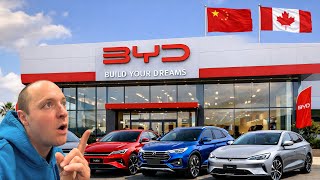
Let me show you what happened. In 2019, when Tesla opened the Shanghai Geiga factory, BYD was struggling. Their cars were cheap, but the technology was mediocre.
Build quality was poor. They were barely profitable. But the moment Tesla started producing Model 3s in China, everything changed.
Chinese consumers saw what a real EV could be. Suddenly, BYD's cars looked outdated. NIO panicked.
Xpang panicked. They had to innovate or die. And that panic, that pressure, that's exactly what the Chinese government wanted.
Here's the data. In 2019, Tesla sold 30,000 vehicles in China. BYD sold 220,000, but BYYD's technology was generations behind.
Fast forward to 2024, Tesla sold 600,000 vehicles. Impressive growth, right? But BYYD sold 3.
02 million. And their technology, battery range, autonomous driving, build quality had leapfrogged Tesla. BYD didn't just catch up, they surpassed.
There's a saying that Chinese officials used internally. We invited the wolf to train the sheep. Tesla was the wolf.
Aggressive, advanced, intimidating. But the sheep, BYD, NIO, Xpang, they didn't get eaten. They evolved.
And now those sheep have become wolves themselves. Here's the contrast. GM and Ford have been in China for over 20 years.
They had joint ventures. They sold millions of cars, but they never created a catfish effect. Why?
Because they never shared cutting edge technology. They kept their best innovations for the US and European markets. They gave China outdated models, last generation engines.
So, Chinese companies learned nothing revolutionary from them. But Tesla, Tesla gave China the blueprint for the future. Battery tech, software, manufacturing, everything.
And here's the part that should terrify every Western executive. China didn't steal this technology. Tesla handed it over willingly.
And China didn't just copy it, they improved it. BYD's Blade battery is now superior to Tesla's cells in some metrics. NIO's battery swap stations are innovations Tesla doesn't have.
Xbang's autonomous software is catching up fast. So, let me be very clear about what happened here. Tesla's success in China was never the end goal.
It was the means to an end. The goal was to create a globally competitive Chinese EV industry. and it worked.
Today, Chinese EV companies are expanding into Europe, Southeast Asia, South America. They're undercutting Western automakers on price and matching them on quality. Tesla was the spark, but China built the fire, and now that fire is spreading across the world.
So, why did Google, Uber, and Amazon fail while Tesla succeeded? The answer comes down to one fundamental misunderstanding. I call it the control fallacy.
The belief that you can enter China and maintain total control over your business, your values, your playbook. It's a seductive idea and it's dead wrong. Let's start with Google.
In 2010, they faced a choice. China's government demanded censorship, compliance, and transparency into their search algorithm. Google's leadership said, "No, we don't compromise our principles.
We don't reveal our technology. " And so, they left. Now, you might admire that it's principled.
It's brave. But here's the hard truth. Ideological rigidity is a death sentence in a strategic market.
Google chose their values over access to 1. 4 billion people. Today by dominates Google has zero presence.
Was it worth it? That depends on whether you think principles are more valuable than influence. But you can't have both.
Not in China. Now Uber. They entered China in 2014 thinking they could play the same game they played everywhere else.
burn billions in cash, subsidize rides until the competition dies, then dominate and raise prices. It's the Silicon Valley monopoly playbook. But China had a different plan.
They backed DD, a national champion. DD had government support, local knowledge, and unlimited patience. Uber spent $2 billion,$2 billion.
And in 2016, they sold their China business to DD at a massive loss. The lesson, you cannot outspend a governmentbacked competitor in their own market. It's not a fair fight.
And if you think it is, you've already lost Amazon. When they entered China, they had a 15% market share. They were the global leader in e-commerce.
But they made a fatal mistake. They tried to impose the Amazon model, the logistics, the infrastructure, the customer experience. They assumed what worked in America would work in China.
But Chinese consumers didn't shop like Americans. They wanted integration with Alipe and WeChat Pay. They wanted live stream shopping.
They wanted sameday delivery through hyper local networks. Amazon didn't adapt. Alibaba and JD did.
By 2019, Amazon's market share had collapsed to 0. 7%. The lesson, the playbook that made you dominant at home will not make you dominant abroad, not in China.
Now, contrast this with Tesla. Tesla didn't come to China with swagger. They came desperate.
They needed cash flow. They needed scale. And so when China said, "You can have 100% ownership, but you must give us your technology," Elon said, "Yes.
" When China said, "Build the factory here. Train our engineers. Help our competitors," Elon said, "Yes.
" Tesla surrendered control. And that surrender saved them. Here's the pattern.
Every company that failed wanted to change China. They wanted China to adapt to their values, their systems, their way of doing business. Tesla did the opposite.
They changed themselves. They adapted. And that's what I call the adaptation advantage.
In a strategic market, flexibility is survival. Control is an illusion. And the companies that understand this are the ones that win, or at least the ones that survive long enough to compete.
So, let me give you the real playbook for entering China, not the one taught in business schools, the one that actually works. Rule one, serve China's strategic goals. If your business doesn't align with what China wants for its economy, its technology, its people, you will fail.
It's that simple. Rule two, trade control for access. You want the market, give up your intellectual property, share your supply chain, transfer your knowledge.
This isn't theft, it's the price of admission. Rule three, accept that you're a catfish. Your role isn't to dominate.
It's to force local competitors to improve. You're a tool in China's long-term industrial strategy. If you can't accept that, stay home.
Rule four, build local, hire local, transfer knowledge, not because it's ethical, because it's strategic. If you try to run China operations from California or New York, you'll be outmaneuvered by people who understand the market better than you ever will. And rule five, your timeline is 10 years, not three quarters.
Wall Street will hate this. Shareholders will panic. Analysts will downgrade you.
But if you're optimizing for next quarter's earnings, China will eat you alive. Now, here's the final twist. In 2024, BYD overtook Tesla globally.
3. 02 million vehicles sold versus Tesla's 1. 8 million.
BYD is now the world's largest EV maker. So, let me ask you, did Tesla win or did Tesla lose? It depends on your perspective.
Short-term, Tesla won. They survived. They're profitable.
The Shanghai Gigafactory has positive ROI. Elon is still standing, but long-term, China won. They now have BYD, NIO, Xpang, homegrown champions competing on the global stage.
And they don't need Tesla anymore. Tesla was the spark. But China built the fire.
And now that fire is spreading across Europe, across Southeast Asia, across the developing world. This brings me back to something I talked about in a previous video. The foreigner's graveyard.
Most foreign companies that enter China eventually end up there. Tesla avoided that fate. But at what cost?
They gave China the keys to the future of electric vehicles. And now Chinese companies are using those keys to unlock markets that Tesla can't touch. So here's the question I want to leave you with.
Was Tesla's deal with China a stroke of genius or a fouian bargain? And here's the answer. It's both.
Everything you know about Tesla in China is wrong because you're reading it through a western lens. You see Elon Musk as a hero or a sellout. But this isn't a story about Elon's genius.
It's a story about knowing when to surrender in order to survive. And that playbook, the one where you trade control for survival, where you accept being used in order to gain access, is being rewritten right now in real time across every industry. This isn't about ideology.
It's about pragmatic power dynamics. And if you want to understand where the world is heading, you need to understand this. China's market isn't free.
It isn't closed. It's strategic. And the companies, the countries, the leaders who understand that will shape the next century.
If you want to dive deeper into global economic and geopolitical strategy, like, subscribe, and comment below with your thoughts. The next video will analyze why China is cracking down on its own billionaires.