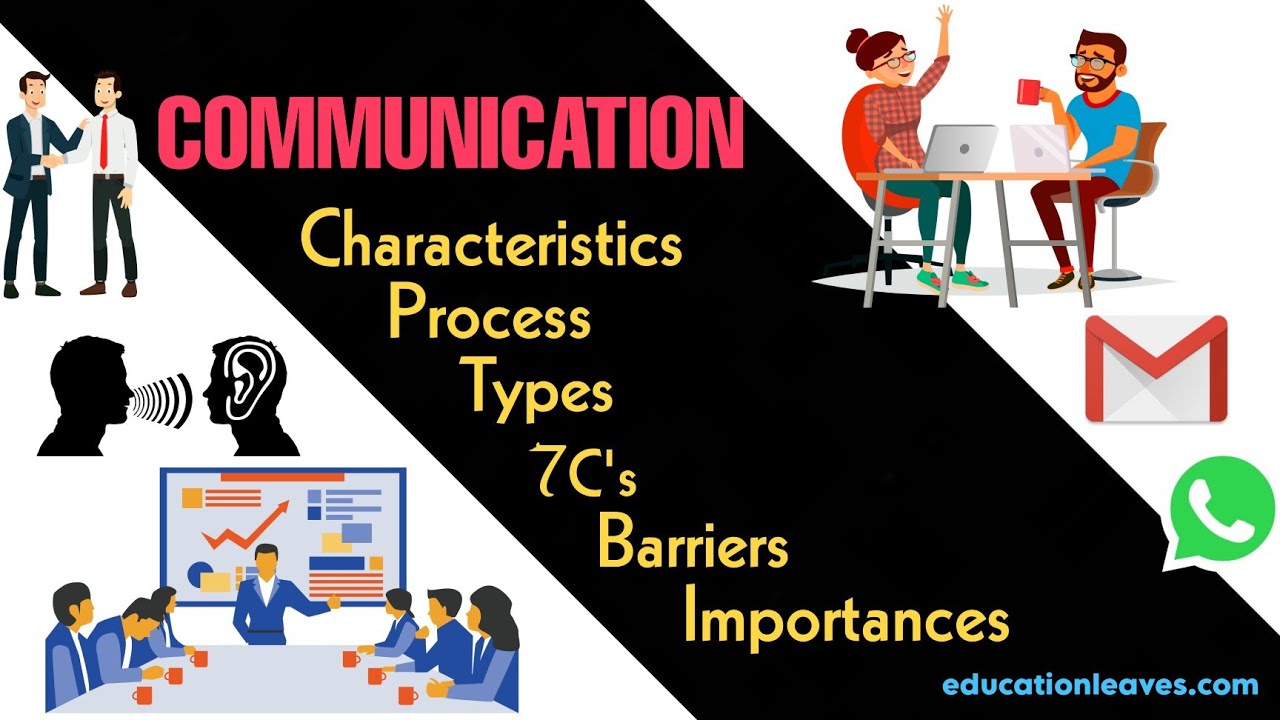
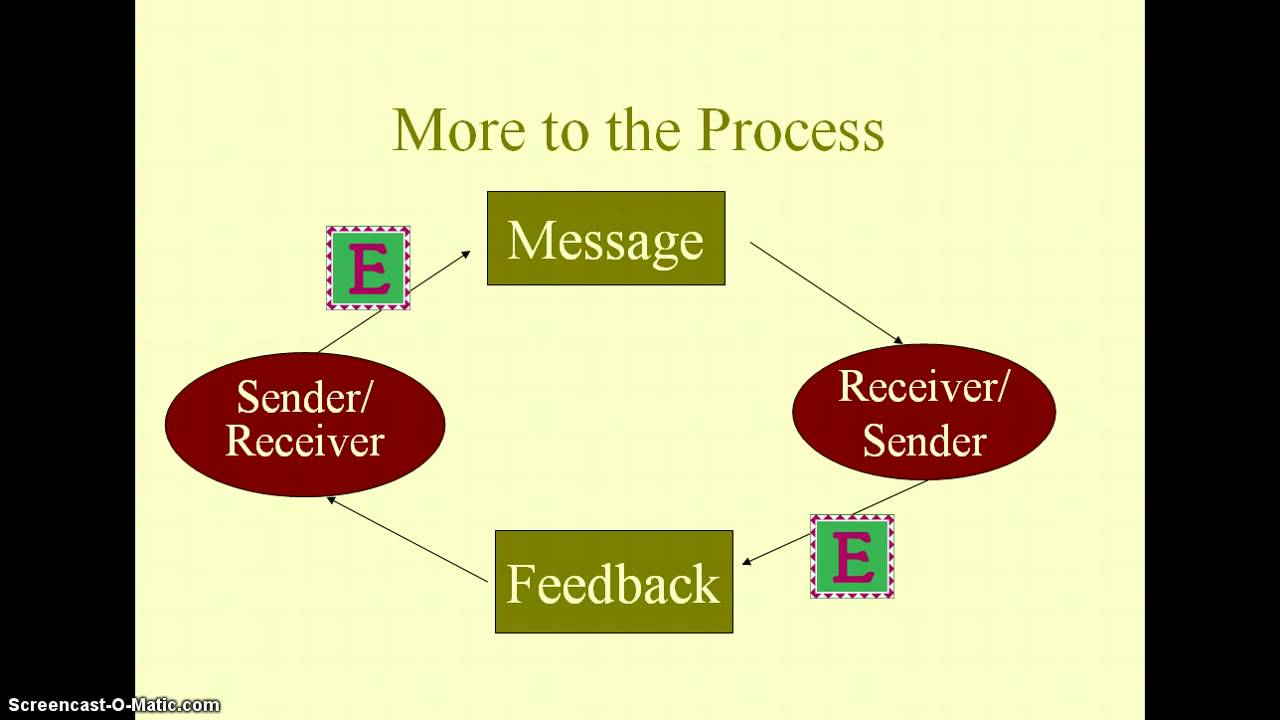
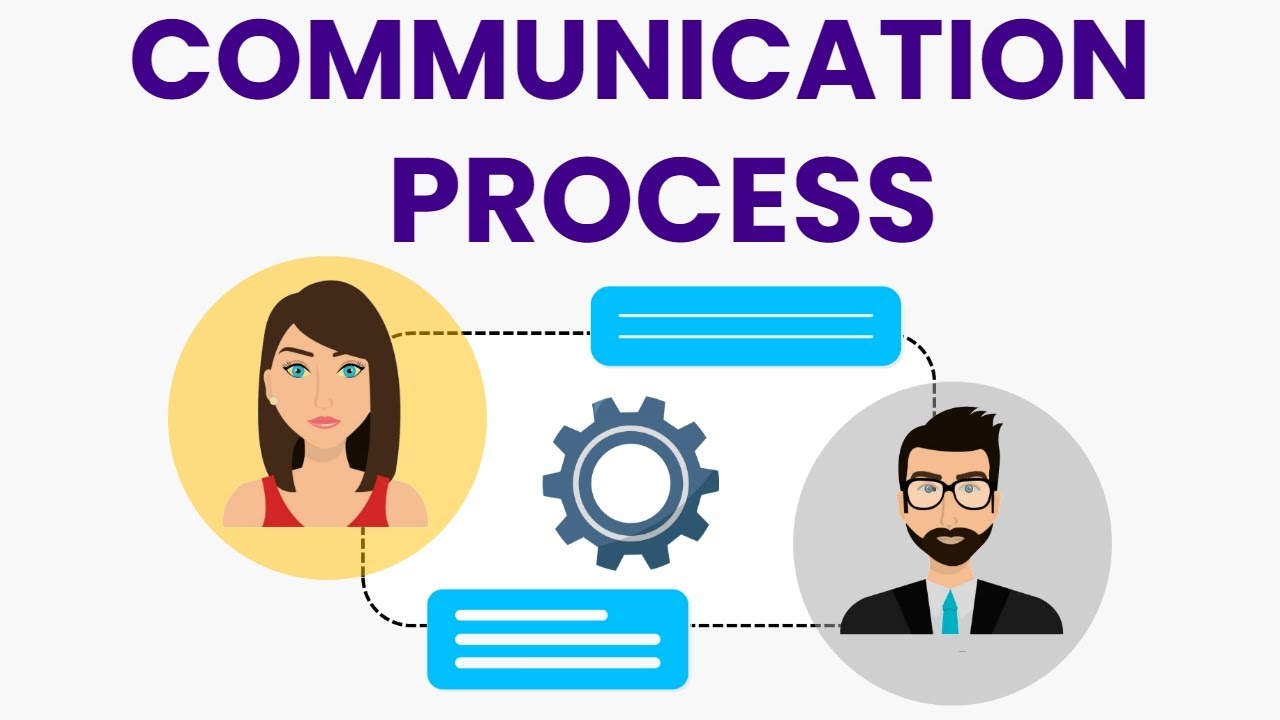
well we're going to talk about how the communication process works here the communication process is extremely vital in terms of increasing your effectiveness in communicating and what we find is if you have an understanding of the different stages of the process and the different parties involved you will help increase the extent to which you communicate more effectively now the communication process starts with in this case the sender the sender is the person that is going to be transmitting a particular message and usually if we're going to communicate something we have to decide what it is
that we're going to communicate but not only what we also have to determine how we're going to communicate that the means through which we're going to actually communicate the message this includes everything from face-to-face or verbal communication this includes email or text and a variety of other mediums written communication obviously would fall into this category and so the sender what they do is they're in charge of what's called encoding a particular message and encoding is not only determining what it is that you're going to say but how it is that you're going to communicate it
including that nonverbal communication piece right things like body language and the tone of our voice the pace of our voice whether or not we make I camp contact all factors in to how we send a particular message now the goal here for the sender or at least it should be is to communicate something as accurately as possible and what that means is you have to take into account the knowledge and the education and the background of the receiver of that message because if you communicate in a way that cannot be understood then you're really just
wasting your time it's not very effective the intent here is to be understood and so obviously we have the message here and that is what is encoded that message gets sense of course to the receiver depending upon what medium we chose to communicate with that will transmit a number of different ways but the receiver what they're in charge of is decoding that message and what decoding means is they're trying to understand it they're interpreting that per particular message and so they're listening to what is being said and they're trying to assess what that is and
engage it for understanding now the problem and we're you've probably picked up on is that a lot of times people can hear the same message and take two completely different things and that's because there's a lot of noise that gets involved in the communication process not only do you have to be aware of the understanding of the receiver but you also have to take into account physical noise like surroundings are there people involved if you're communicating in a noisy restaurant there's there's a physical limitation there where the actual noise and the restaurant is going to
inhibit the receiver understanding your message so that would obviously be in a physical sense but you also have to take into account the person's mental state you know are they preoccupied you can probably think of a time and when you were involved in a conversation and you're communicating with somebody but real not really you're kind of going through the motions you have your mind somewhere else you're thinking about something you're preoccupied and although you're physically present mentally you are absent and that obviously is an obstacle or barrier to effective communication in addition you also have
issues with education you know if you're communicating with someone who is of higher education or less you do have to take that into account because if you're sending the message you do want to make sure that the person can understand it right if you're going to communicate to a group of elementary school students it's probably going to look different than if you communicate to a group of college students because you have to take into account the knowledge and educational level of the audience and so from a receiver standpoint if you're interpreting a message then that
could also be a deterrent to effective communication you've probably been involved in in a high school setting or in a college classroom and a professor instructor is you know lecturing on a particular set of material and you're sitting there not understanding a word they are saying and maybe just maybe that's because the person communicating isn't doing so with the actual audience in mind something to keep into consideration now the other part here is we're going to move on is feedback and feedback takes both verbal and nonverbal communication now when I say verbal obviously we're talking
auditory things that you're actually saying nonverbal communication is body language posture eye contact those different types of things things that you're not actually saying but communicating via your body language and what we know about communication is about 70% of the message is communicated or interpreted via body language meaning that if you say something to me but your body language says something else I am more inclined to go off of what your body says if there is an inconsistency between the two but this feedback piece is very important because for feedback what happens is is the
sender is looking for some feedback to see whether or not the receiver actually understood the material so let me give you an example when I lecture in the classroom one of the things I look for when I'm communicating I don't have my back obviously turn in the classroom because I'm looking for feedback right if I am discussing a particular concept and I see that eyes are starting to glaze over and people are yawning and checking their phones and you know doing other things I know that maybe what I'm saying isn't getting the point across and
maybe I should go at it from a different angle that's an example of feedback so feedback allows the sender to ensure whether or not their message is being understood kind of checking clarification so to speak now in addition to being nonverbal it can also be verbal right obviously in this case the receiver can transmit a particular message to the sender indicating whether or not they understand maybe asking clarifying questions if something is a little confusing could be a really good example so those are all different ways that the sender or the receiver I'm sorry can
actually transmit feedback to the sender so just to recap here real quick this process obviously we're looking at is very simplistic involves two parties the sender and the receiver obviously a lot of times when we're communicating out in the real world where there are many different parties involved and so that just further complicates things because you have more physical circumstances to take into account you have more mental states to take into account more educational backgrounds to take into account of course and that just further complicates the communication process but looking at it very simplistically we
know there's a sender and a receiver there's a message right the sender encodes the message provides meaning to it the receiver then decodes trying to understand that particular message we know that there are issues involved with that and then in turn the receiver will send feedback to the sender or they can confirm whether or not they understood that particular message and that is how the communication process works