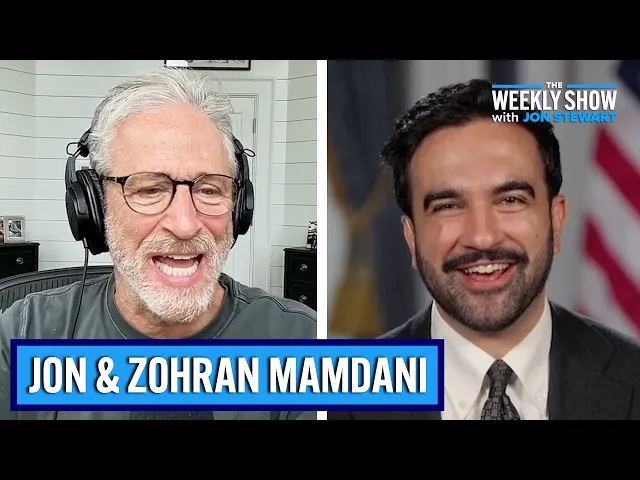
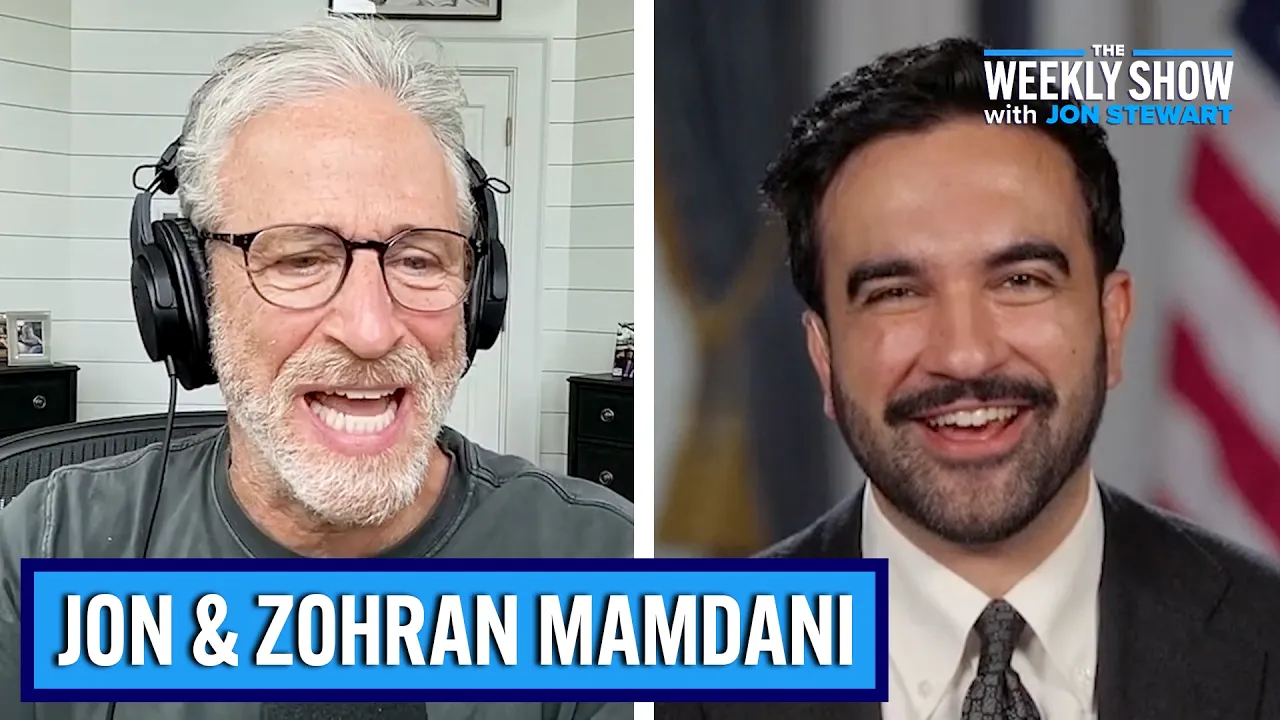
It sounds like what you're doing differently is you're being competent or, you know, ruthlessly pursuing those goals and chipping away at them. So why why take that on? You know, I I want to be honest with people about what it is that I actually believe in. And I also think what we've seen over many decades is a fear-mongering in our politics where anything that we disagree with or anything that portends significant change is described as if it is socialist. You know, at times as as if it is communist. And the intent of that is to
end the conversation there and then. And it especially happens when you're talking about something that would disproportionately benefit working people. If we truly want to reckon with one in four New Yorkers being in poverty, we have to also ask ourselves about if it's important to change the framework with which what we determine success to be. And also, you know, being a Muslim democratic socialist, I thought it would be pretty straightforward. You just thought like, well, what if I label myself something that scares people the most? I'm a Muslim democratic socialist. If you're scared, you're scared
of twice. and I'd like to run your public transportation system. Ladies and gentlemen, welcome once again to the Weekly Show podcast. My name is John Stewart. Uh it is today is Tuesday, July 21st. We are coming off of the uh the beautiful World Cup that was held in Canada, Mexico, and the United States. And and what a treat that that was. And it's and and it's it's over now. And I do hope that the enthusiasm and the love that Americans showed for the game of football and for the countries that were playing it, I hope
this isn't like we had a foreign exchange student come live with us for 6 weeks and like got along great, but now that they're gone and every now and again we'll check back in by text. No, I hope that it's a lasting relationship and and and one that we that that we value. Uh but you know in in these times these are the the moments uh post World Cup there's a period of reflection and uh and we're going to do that on today's podcast not reflecting on the world but reflecting on uh one of the
cities that was central to the World Cup experience which was New York City. And who better to check in uh with New York City and with how things are going at that time than his honor for God's sakes the mayor of New York City. Let's talk to the mayor. Why not? Why not us? Let's talk to the mayor of New York City. So, ladies and gentlemen, uh we have the distinct honor and pleasure today to be welcoming the mayor of the great great city uh that is uh the one that never sleeps, the biggest apple
of them all, New York City. Mayor Zoron Mdani is Joining us. Mayor, Mr. Mayor, your honor. His honor, your honor. How are you? I'm doing well, man. Thank you for having me. It's a pleasure to be back. Are you still feeling the afterglow, the joy of the of the halo effect of the New York Nicabunkers incredible run to the championship this year? Do you still feel it? 100%. It is. It Nixon 5 has become a greeting in New York City. It's the most beautiful. One question, sir. uh at city hall at the end of the
Canyon of Heroes in the parade, there was a great deal of uh Knicks memorabilia uh that was hung up around the in decorative fashion, giant Knicks caricatures, uh Knicks jerseys. I I guess my question to you is, may I have those? You know what? I'll ask the team where they are. I don't know if there's a I don't know if there's a shed behind city hall where they keep them, but if if they're still there, I will get back to you, brother. I appreciate it. H how are you feeling now? So, you have been the
mayor for you you started January 1st. It is now July, 7 months. What's the reality of being the mayor? Is is what is the difference between the rhetoric of running for mayor and the reality of governing as mayor? There's often a lot made of a campaign as if it is easier and a governing as if it is a harder experience. Yes, I think both are challenging. I think what is lost though is that governing comes with the opportunity to deliver. When you're campaigning, you're asking people to believe. You're asking them to put their trust into
a politics that's often disappointed them. And when you're governing, you can earn their trust by what you deliver. And so it is much easier to have a conversation about this vision today when we've been able to pave 175,000 potholes, put the city on a path to universal child care, win more than $60 million for tenants whose landlords made negligence into a business model. When we have that conversation now, you can point to what these last six months have looked like under Democratic socialist principles. when you have it during the campaign. Sir, what? We're We're being
recorded right now. What are you doing? Apologies. You're throwing in the sword. I didn't mean to use a slur. Don't throw in the sword. I didn't mean to use a slur live on this podcast. Son of a What? I just wanted to make sure that we're going to be together in the cell when we're all rounded up. All right, fair enough. So, that's the interesting thing. There's a caricature of democratic socialism and there's a a reality of democratic socialism and then There is just governing that has very little to do with democratic socialism. So can
we tease those a apart a little bit in your mind? What is governing by the principles of democratic socialism? What does that entail? It means making the choice every day to to fight for working people. It means that you believe that everyone in your city deserves to live a dignified life no matter how much money is in their pocket. And what we've found is that this city is many things all at once. It's both the wealthiest city and the wealthiest country in the history of the world. And it's also a city where one in four
people are living in poverty. And so that you'll often hear the phrase, don't sweat the small stuff. To me, being a democratic socialist is also sweating the small stuff. Because for a lot of New Yorkers, it's those things that are the measure of how their how difficult or easy their life is. Whether they're able not only to pay for their rent or their child care, but whether they're able to also rely on city government to get around their city, to breathe in their city, to experience life in their city. And I think that we've we've
forgotten that at the heart of what we want to deliver is not just the existence of a public sector, it's also the excellence and efficiency of a public sector. I want New Yorkers to be choosing to this city government every single day as opposed to feeling as if they're subjected to it. To me though, that statement if if a Democrat was running or even a Republican to some extent, that feels like something that everybody would say. We want everybody to be able to thrive in this city. Is there something about democratic socialism as a theory
that brings those to bear? In other words, is it about the safety net? Is it about, you know, the caricature is you're a communist who's going to nationalize the industries? You're going to take over Goldman Sachs. I'm I'm actually coming on this podcast to let you know that it's now my podcast. Wait, what? You rips. Here's the thing. Here's what I love about that. You walk the walk. That's the important thing. Somebody had to seize the means of this production. It was It was this specific production that I was talking about. Wait, I'm doing this
in Jersey. I'm out of your jurisdiction, man. I'm not even around there. You were doing this in Jersey. Wait, you're moving me? I'm moving you. Damn you, Stalin. I think that to your point there there are a lot of politicians of a variety of ideologies who will speak about housing as a human right for example or healthcare is a human right or they'll talk about dignity. I think that the where the rubber meets the road is are you actually willing to ensure that that Which no one should be priced out of no one is in
fact priced out of it. So I'll give you an example okay childare. It's hard to find a politician who will say child care should be more expensive. They'll generally say they'll generally say it should be more affordable. Right. Right. Right. Um but are you willing to take the step to provide child care as something that is guaranteed to New Yorkers regardless of how much money they have in their pocket? So one of our focuses has been universal child care, right? take the successes of free child care for three-year-olds, of prek, and extend it to two-year-olds.
Now, it's not just as simple as saying, "Oh, yes, I want to do that." You have to also be willing to fight for the revenue you need to do that. And so, day eight of our administration, we secure an agreement with the governor for $1.2 billion that unlocks free childare for 2-year-olds for the first time in New York City. And our dream is that this will extend not only to the 2,000 2-year-olds this year or the 12,000 next year, but every single 2-year-old by the end of four years. And it's not just a dream, it's
it's a promise and it's a commitment. So in some respects is it about the priorities that you have are about quality of life for those even if they don't make because universal uh prek or universal child care or those kinds of things you know Delasio might have brought that up or you know it's it's not something that I think that the caricature of democratic socialism is That you're a different it's a completely different ideology than those that we have seen or is it perhaps just a different nomenclature than we've seen? I think part of it
is that words have lost their meaning over time. There we go. That's this is where I'm this is where I'm getting to is is it really about the labels is my I I think if if you go back to some of the Democrats that we most admire FDR LaGuardia you will see a lot of democratic socialist principles in their vision and if you think about a lot of what we've come to accept as just the facts of life across our country a lot of it is also still driven by democratic socialist principles now if today
you and I were to introduce the idea of a building that lends out books for free, we would be slandered in the same way that so many new ideas are slandered today. And yet that's the library. And the same thing with the fire department, the same thing with public schools. And it's to say that a lot of politics has been a debate about who deserves what. And I would prefer a politics that debates how we can deliver that to everyone. and and and to deliver it at a standard that is so good that no matter
how much money in your pocket, you opt for that. And I think at its best, the New York City subway is an illustration where no matter how much money you have in your Pocket, you understand that if you want to get from point A to point B, best way is to get on that train. That's for sure. So to to that end, was there ever a consideration for you because of the priorities that you have, why take on the label of democratic socialist knowing that it comes with a lot of other baggage that may not
be helpful to you in your pursuit of what are what was it about what they were saying that drew you as opposed to running as the things that you were suggesting to me if you ran on these is as a Democrat I it's not I wouldn't say like what what the heck you know it's it sounds very much in line with that. It sounds like what you're doing differently is you're being competent or you know ruthlessly pursuing those goals and and and chipping away at them. So why why take that on? You know I I
want to be honest with people about what it is that I actually believe in. And I also think what we've seen over many decades is a fear-mongering in our politics where anything that we disagree with or anything that portends significant change is described as if it is socialist. You know, at times as as if it is communist. And the intent of that is to end the conversation there and then. And it especially happens when you're talking about something that would disproportionately benefit working people. And I think it's important because we keep speaking about some of
The inequities and inequalities that we see in our city as if they are bugs in a system as opposed to features in them. And if we truly want to reckon with one in four New Yorkers being in poverty, we have to also ask ourselves about if it's important to change the framework with which what we determine success to be. And also, you know, being a Muslim democratic socialist, I thought it would be pretty straightforward. You just like, well, what if I label myself something that scares people the most? I'm a Muslim democratic socialist. If you
scare him, you scare them twice and I'd like to run your public transportation system. So is is there in in some regard I is this a is the idea being if I can show myself to be a competent steward of the dayto-day functioning of maybe one of certainly one of the most complex city systems in the world. I can demystify. I can take these labels that are so loaded with fear and I can maybe uh take a little bit of that caricature out of them. I mean my my my true goal is to deliver for
the people of the city and if in the process of doing so we can demystify so Much of the fear that has become the norm in our politics I I welcome it. And and I also think that for a long time we've discussed democratic socialism as an intellectual debate. We haven't been able to point to what examples look like of it delivering for people. And now we have that just over 6 months. And I think that it's it's an incredibly exciting opportunity because there's a reason so many New Yorkers lost faith in city government and
and the political impulse of lecturing someone as to why they should believe and why they should vote as opposed to asking yourself why is it that they lost that faith. When you're governing, you have the opportunity to not just listen, but also then respond in action, not in words. And and I think that what's been so exciting is to see that New Yorkers understand that some things will take time and some things that can be done immediately. And if you're able to show that you're doing both, then it is exactly the kind of extension of
an arm to say, would you like to join this movement? And I've just heard from so many that they would. Ground News is what it's about. They might You know what? I used to sometimes think that you guys are my best friend, but I think Ground News might be my best friend. I think I want to get a rental at the Jersey Shore with Ground News. Have like a barbecue. Ground News is a website and an app because this is uh America in the 2020s. You got to have an app and it helps you better
understand the news you consume. With ground news, You can see who owns every news outlet and you compare how these different outlets frame their stories. compare news coverage of a story, see how the same events painted across different news outlets and why the headlines differ. You got to understand who owns it to understand the editorial priorities. Uh they got a blind spot feed helps you find stories that aren't being covered by uh your side. The Nobel Peace Center called it an excellent way to stay informed and expand your worldview. And the FIFA Peace Center uh
well they they didn't weigh in yet, but they will. That's also a very big peace center. To get the same unlimited access to the Vantage subscription, go to groundnews.com/stewart and subscribe to get 40% off. I've partnered with ground news to get you the discount that is available only for a limited time. That's groundnews.com/stewart or scan the QR code on screen. Thank you to Ground News for sponsoring this episode. It's such an interesting thing because when you talk about the demonization, you know, I I always think people always say, "Oh, that's anti- capitalist." And in some
respects, I think it's it's the opposite. You know, capitalism, I think, would have faced a much stiffer opposition from communism and socialism in the 1930s if the New Deal hadn't been instituted. If we hadn't had created a more robust social safety net, revolution would have been much more on the table without social security, without, you know, uh, uh, better housing for people. And I wonder if that's similar today, that in Some respects, what you're doing is actually a reform movement for capitalism to some extent. I mean the some of the things that you've said social
security if you go back and see how that was treated when it was first introduced right it was it was described as the sovietization of America Medicare and now it is thought of as one of the most American things that we could ever be talking about and I think about you know when you go around New York City and you see these monuments to FDR to the New Deal you know you go to four freedoms park on Roosevelt land. It is it is a sad reflection of the state of the Democratic Party that a lot
of what is said in those in in in those programs and those visions today would sound as if it is a bridge too ambitious for the party that we belong to. And and I think that's that's part of my hope as a Democrat is how do we ensure that New Yorkers and Americans don't have to look to the history books to be able to find a party platform that speaks about a freedom from want and a freedom from fear. I think it's a question of also how you're going to get there because I think you
know if I may and you tell me if you think this wrong as I watch you pursuing your agenda it doesn't seem radical it it seems workmanlike you you know when you talked about uh the universal childare you didn't uh Seize the means of child care and create a Soviet style uh system where they all get the same little uniform and they all come in at four years old and they, you know, pray to the uh the gods of of socialism. You didn't even really raise tax. You went to the governor and she was able
to help uh you know fill in a little bit of the financial gap. You created a pietare uh uh tax for uh you know second homes that of the over $5 million in value. Is that correct? like they're not these are not particularly radical reinventions. It feels like smart prioritizing if I may. Well, I I I think that a lot of it comes back to how do you judge the success of your work? And I think you have to judge it by what you deliver. And one of the cornerstones of our campaign was universal child
care. Given the fact that in a cost of living crisis, child care is the second highest expense for families in New York City. We're talking about $20,000 a year for a single child. And in this city, you have to make $334,000 to be able to afford that kind of expense. And to me, it is how do we move as quickly as possible? Is that all over this city or is that is that does that vary in burrows or that's that's the average for all five burrows? That's the measure across the five burrows that that that's
how much your family would have to earn to be able to absorb that kind of a hit and people Earn less than that and they find ways to make it work but not without it being to the detriment of themselves and their financial situation. Right. And I think that, you know, I never thought that I'd be the guy making it easier for aunties at the family function to pressure you into having a kid, but but here we are. So, in some respects, Zoron Mandani's mayoral has been an aphrodesiac for for New Yorkers to to begin
to repopulate this grand experiment. I can see the attack ads now. Exactly. Zoran Mdani, the the aphrodesiac. So, what about what you're trying to deliver has been slightly more complicated than what you thought it would be? You know, we we can walk through it. Housing. So, you were able to get through a a rent freeze, a two-year rent freeze. Yes. Yeah. The Independent Rent Guidelines Board established a two-year rent freeze for for over 2 million New Yorkers who live in rent stabilized housing. Right. And again, not when they people immediately cried, communism. It's not unprecedented.
The two years is unprecedented, but this has been done for one year by other mayors. Yeah, they have done it in the past. Yeah. Uh what about in terms of housing? What's been uh you know, what have you been able to deliver? What's frustrated you? What's the next step? Well, I I think I'll just take a step back to tell you, John, that the most challenging thing overall was when I came into this position. I expected that it would be difficult in terms of the finances of the city, especially given my predecessor's approach to those
Finances. What I did not expect was $12 billion worth of difficulty. Right. And and how you're you're the fiscal conservative. Like even with the city council, you've got uh uh what is her name? Menon. Julie Mannon. Speaker Julie Menon. Julie Menon. Upper East Side. Wealthy Upper East Side lady. We all know the caricature. You know, they don't pick up after their dogs. You know what I'm talking about. You're the fiscal conservative in that relationship. Did that surprise you? I You know, it is. When I've talked about wanting city government to be remade in the image
of a struggling New Yorker, one aspect of it is that we be as careful with our money as working New Yorkers are with theirs. And one of the many reasons for that is that this is their money. And when we're looking at when we looked at that fiscal deficit, what was hard, one of the many things that was challenging about it is that you couldn't blame it on an external reality. You couldn't say, "Oh, it's the fiscal crisis of 2008. Everyone can see what's going on across the country and the world." This was in many
ways purely of city hall's doing. It was mismanagement and underbudgeting. And it had been building for years. And I think that one of my goals is how do we write the ship not just in a 12 month, you Know, interval, but frankly on a medium and a long term? Because if you're just trying to survive on a calendar year basis, you're, you know, in many ways going to have to rob Peter to pay Paul. And that's eventually that bill is going to come due. And the thing that I'm looking forward to next year is that
we're not going to have to inherit a $12 billion fiscal deficit no matter how tough it is. Right. Right. Although that's what what do you do with you know there are certain things that you know they sort of call them gimmicks as you start to um to balance the budget and there a lot of the mayors have done that. there sort of these things that they pass along to other I think Bloomberg was one of the ones who did it. H how does straightening out that without pulling from different pension funds that are going to
you know mature in 2032? H how do you begin to straighten those finances out without having to use kinds of you know it's in in some ways it's like you're the GM of a football team that's got a salary c you know you you don't want to go into that second apron for New York City man and so h how do you begin to do that in a manner that is more objectively grounded and and not really budgetary uh uh magic Well, first, you know, you you you brought it up, so I just got to
say I'm already missing Mitch. Um, it's very hurtful. It's very hurtful. Well, we'll continue on. Did Did you see his comment on on the Boston Celtics Instagram page? Well, no. Oh, when he went after the Celtics fans when he said, "I own you." Yeah. God bless. Can I tell you something? There is a monster trucksized hole in my heart. Yes. It's one of the best Tik Tok pages to go to. He's the best. So, so funny. I never appreciated those cars until I saw those videos. I know. Seen him stand. I think that was his
truck in the parade, by the way. I don't even think that was I think that was actually he just drove he drove there that day and just got in the back of it. I think that's how it worked. God bless. Yeah. Um but but to your to your actual question, I think one of the key things is you have to ask yourself, is this arbitrary or does this have a rationale? Okay. And what I mean by that is for example with the pension system, we had a deferred payment that was spread out over about 22
years or so. And every year the cost to the city was increasing and then it was going to just fall off a cliff in terms of the city. It was going going to go up about maybe $6 billion a year and then the next year it's going to be zero dollars. And some of the Challenges that we're facing are challenges of this moment specifically because of just how much underbudgeting there was, how much money the city was spending but not showing on its books for a lot of its different social programs and services. And so
when we looked at that and we said if you just spread what had already been 22 years, if you just extend it by a few years, you would then be able to take savings that you will get the year after as you're scheduled to, but instead spread them over. Then you can actually make sure that you're able to steward this in a way that's more healthy in a medium-term level. Now, I know that there are others who've seen municipalities move around their pension obligations and there's a worry of what does this mean for, you know,
are you going to honor that this, that, and the other. The thing that's different in New York City is that we are not only funding our pension systems at a much higher level than many of the other municipalities that are being cited, but also that it's not a question of if we're going to get to 100% funded, it's just a question of when in the 2030s we would do so. And and then do do you have to look at it because I guess there's sort of different areas like we'll spend less here but we need
to raise more revenue here. Is is there a kind of interplay between the kinds of taxes cuz Albany I imagine is not going to go along with really raising taxes in the same way that you might want to. I I think what you'll find actually is is there are a lot of people in Albany who do agree with the vision of raising taxes a little bit more on the wealthiest so that everyone can afford life in New York City. And you know what what but what it is as you said is it can't just be
one thing. It has to both Be a conversation about revenue and a conversation about savings. So we actually created something called chief savings officers for the first time where we had in every single agency and department Oh sure. Csos. CSOS. Come on. CSOS. You know you're at the water cooler. You know you're talking to your friend. You're like hey have you heard about the CSOS? What do you think about the CSOS? Hey do you know the CSOS coming in here? Yeah. They got like five CSOs over here. Me and my CSOS were hanging out catching
up. Beautiful. Yeah. And the CSOS, they found about $1.7 billion in savings across city government. And they're actually going to continue that work because when you look at the size of our budget and you also look at what the approach has been to the finances of our city, we know that there are more savings to be had. And sometimes these are the efficiencies that come from when you're actually pressure testing how we've been doing things. There's savings to be had when you actually say that you know could that contract that you're giving to a consultant
actually be done in house and it can be a lot of times. Were there stuff in the budget as you went through like $100 million on mittens? What is this? Like did you find things that you couldn't believe? You were just like where's these love seats? What's going on? I haven't I haven't haven't seen that specific example. You don't comb it through like that. It's not We do comb through. Um and and there were a number of things where you you can't provide a justification for it. And if you can't provide one, then why should
the city be spending that money? A lot of times it comes from a vision of government where you want to hollow out its capacity and privatize as much of its responsibility. And often times it's done in the name of fiscal prudence. And yet what you find is you end up overpaying for that external capacity than what it would look like if you invested internally. I mean, you know, we've talked about in the past this, you know, the previous administration had an AI chatbot that cost hundreds of thousands of dollars that was not even usable. Was
it just like the Microsoft paperclip that just pops up? What can I do for you today? It's like I thought you lost your job. It's just as Jeez. is just back, right? That's all they do is they just run it through that. And you look at that and it's not just the amount of money. It's also the number of vendors that we went through to get to that point. It just speaks to an approach to contracting that does not actually save you money and it doesn't build any kind of long-term fluency. What it does is
just lock you into commitments that will cost you money and and often times won't even perform those services. I don't know if you know this about me, but uh my summer wardrobe is and I've I've taken to this been for many years now is uh I wear uh only 19th century swimwear. That is I wear woolen one-piece uh uniard bathing suits like you would see on Coney Island uh when they first invented uh the the camera. And uh and and I also have a giant handlebar mustache that I glue on and and walk around with.
And so that that that's where uh that's where the company Quint comes in. Uh for those of you like me uh who are only festuned in 19th century swimwear, uh Quint comes in and and and they they've got all kinds of options for you that are better than that. You know, they got what what do they got? Linen pants. Come on. Europe. You know what? European linen pants. Not like, you know, linen pants from Akran. No, European. The good kind with a very lightweight, you know, and then they work with ethical factories. You know, cut
out the middleman. You're paying for exceptional quality, not brand markup. Make your summer wardrobe easier. Go to quint.com/tws for free shipping on your order and 365day returns. Now available in Canada, too. That's qui.comtws for free shipping and 365day returns. quint.com/tws. The contrast between the caricature of you, if you spend any time speaking to you, there's a grounded seriousness and Reality to the way that you're approaching these problems. Look, there's going to be mistakes. There's going to be first snowstorm is not going to be the same as the second snowstorm as Fat Joe has in his
song. Today's snowstorm is not but that was the first draft of that song. That was the first draft of that song. But I the charact So Trump will tweet out communist lunatic and are there criticisms that bother you? Are there ones you laughed on? You know, uh, the city tweeted out during the heat wave, "Put your thermostats to 78." And and immediately Ted Cruz from Texas is like, "So the warmth of collectivism." Meanwhile, Texas tweets out the same thing and so does the energy department of the United States of America, which they pull off of
their website out of fear that now they will be associated with this. Do any of those criticisms permeate? Do any of them land? Have you heard any of the criticisms where you thought to yourself, actually that's constructive, and I will think about how to make uh adjustments to that any of that. Look, I I took offense when they came for socialist icon Rudy Giuliani's energy pumps. I said, you say what you want about me, but yeah. No, you you know what? Nobody puts Rudy in a corner. Let's Let's not go there. Let's not go Let's
not go there. But I but I think you know it is easy when there is this much noise to tell yourself that all of it is exactly that. Tune it all out. But that's also what it will leave you in an echo chamber. You cannot have it that you are only surrounded by people who agree with you. You might as well just stay home at that point. And I think that the job that I have, that my team has, that our administration has is how do you listen to all of it and then separate out
what is actually worth engaging with and what is just driven by the algorithm and written in response to what the algorithm responds to and rewards. And and I think that the the other part of this is no matter how good we may feel about whatever achievement we have or how this, you know, 6 months has gone, you always have to push yourself because every day is an opportunity to do better for New Yorkers. And and I think that's something that I love about this city is you especially see it in in kind of sports culture,
but I would say even in in the cultural aspect of the city, there is this sense of having to be the best, of driving yourself. Sure. each and every day. And yet in our politics that often feels as if it's missing there that there's somehow in a city that is that is the best in the world at so many things mediocrity has come to be accepted as the standard in our politics. And I think that that's it's something that that we shouldn't accept any longer. And it was one of the things that I think drew
people to you, if I may, is there was a it it didn't just feel like Platitudes. There was a specificity to the affordability argument. You know, I see a lot of politicians that they they perform the rhetoric of that argument. We need to get back to kitchen table issues and all that rather than going out to a halal food truck and go, "Why is this $14? There's like three pieces of chicken in here. It's like why does that cost that way?" You know, I is is affordability the toughest challenge that you think you'll face? I
think so. Is this could this still be a middle class city? that that is what it has to be. And I think if if we if we allow it to continue on the path it's been for many years, it will become a museum of where workingclass people once lived. And we we don't want this to be something that people can visit to pay tribute to what it once was. We want it to be a living, breathing testament to that energy. And I think what is one of the most concerning things that I hear is when
I turn to someone who is working as hard as they can for this city and I ask them how long their commute home is and they tell me it's ours because they're going to another state or another city. That's a reflection of a failure to ensure that those who build the city can live in the city. And the reason I think that affordability will be our greatest challenge and also our greatest opportunity is this is what is pushing people out of this city. You you cannot disentangle the cost of housing, of Child care, of groceries
from the exodus of workingclass people from out of this city. Some of these things are New York City specific. Some of them are true across the entire country. And we have to finally change direction so that people can actually afford to live here. See, that I think is such it brings up such an interesting point. And you don't get sick. I don't know what they're do. You protect Get this man some Purel and you do not get sick, brother. No, I'm on that I'm on that emergency every day. I take that I take that vitamin
C. You're shaking too many hands. I see it every day. the uh but but you know the big uh talking point is my god this communist lunatic is going to drive out our billionaires as though that is the reason that people are drawn to New York that that tourists come here and go let's go down to little billionaire and uh it's the area of New York where the billionaires live and we can enjoy a small slice of how they live but the real danger to New York is not the couple of billionaires who feel as
though taxing their second home is too burdensome for that. But the exodus of essential workers who can no longer afford to be anywhere near this area. Wouldn't that be much more devastating? What you're saying speaks to the fact that for all of the conversation about an imagined capital flight, there already is a flight. It's just of workingclass people. And we know that the racial dynamics of this are also immense, right? We've seen over the past few decades, our city has lost 200,000 black New Yorkers. From 2010 to 2019, the population of black children and teenagers
declined by 19%. And you can feel that in this city in neighborhoods that are shells of what they once were and small businesses that don't have those same customers coming through that came in for years in classrooms that are a little less full. If you want to be honest about what it's going to take, it's not just going to be one day to the next, it's also going to have to be a complete shift. I mean, I'll give you an example of this. When we talk about housing, since the early 1960s, New York City started
to make decisions that would render it unable to build the level of housing it needed to to keep up with demand. What were those dec are those zoning decisions? A lot of those are zoning decisions. there decisions around capacity and and also around size of building, scale of building. And you'll walk around the city, you'll see buildings that are incredible that we associate with our city, yet you could not build them today because they were built prior to to those zoning changes being having happened, right? And one of the critical things here is we have
to treat the cost of living crisis as both a short-term crisis and a Long-term crisis. We have to take immediate action and then we have to do the long-term work of being able to build 200,000 new affordable homes over 10 years because if you do not have a city that is growing, a city that is building, then what you have is a city that is dying. And it's difficult because here's now here's your dilemma. Hit me. You make this place too nice and rents are really going to then the whole then you because you are
you're in a vicious cycle in some respect. Look, we joke about it, but there are a lot of people in Brooklyn that are resentful. As Brooklyn started to change and develop, it gentrified. And suddenly the people that lived in Brooklyn, as my family did when when when they came here, couldn't afford to live there anymore. It's as though when they finally came in and made the neighborhoods more livable, that drove out the people that had been living there. And I imagine that's a difficult problem to solve as well. It's this strange trap. And I think
anyone growing up in this city has gone through the experience of looking at a construction site in their neighborhood and asking themselves, "Is this for me or is this going to push me out?" And and one of the key things here is that we have to both build more housing than we've ever seen in our city in a long time and do it while strengthening the tenant protections that we have in this city so that we're not forced to choose between the tenants of today and the tenants of tomorrow. And I think to what you
said, there are a lot of New Yorkers who rightfully associate even just investments in their own neighborhood as if it is the appetizer to displacement. And we have to show that these things are not in fact tied together. That you do not need new residents to invest in that old park. You can do that. And I think you know when we go back to this conversation around the fiscal deficit of the $12 billion there is in that moment it is all too easy to say my only focus right now is to get out of this
fiscal crisis and then everything else will figure it out next year. We wanted to also use it as an opportunity to show that we mean what we say. That you do want to still fund your parks, your libraries, your cultural institutions, and do it in a way that annualizes that funding as opposed to making it subject to every single year's, you know, budget dance with the city council. And that's also to me what is a critical part of earning those New Yorkers trust back is that they see those investments in their neighborhood and they see
it before anyone's ever going to talk to them that you may have to leave. We want them to stay. And it's and and sometimes it's a small I I tell you this seems like a ridiculous thing. One of the most important things you did was getting people to take some of that scaffolding down. Like it's things that you don't like it. The scaffolding is so a part of the landscape that I almost thought of it as like, oh, that's how buildings are like they're built and people just hang scaffolding like Christmas lights, just never take
them down. Like that's just a Crazy weird thing. And when you start taking them down, you're like, "Oh, wow. New York's beautiful." Yeah. It's it's we treated it as if it was part of the physical landscape of the city, right? So much of what the approach has been is it is what it is. This is how it's always been. And and that's just not acceptable. And I think to to your point, when you are able to change these kinds of ways that New Yorkers measure their quality of life, it gives them it's an invitation to
them to hope and believe. But if you don't change those things, then why should they take that step? And so getting back to the original sort of, you know, that idea of of redefining sort of what democratic socialism can do for a city this complex and and and this size and kind of the realism that has to go along with it and the budgetary uh you know restrictions and things that you have to get there. Do you in any way have that conversation with so now democratic socialism is considered the hottest trend in the Democratic
party and and there's there's energy grassroots energy and all and and these Democratic socialist candidates are popping up and you're having to answer for every one of their policy positions and there are some look maybe I'm an old man or a [ __ ] liib or whatever they want to call me but you know who's calling you this anybody if you if someone says we're going to abolish all prisons and borders. Like I do go I don't think that's a good idea. Like it's it feels Like order and security is also a progressive value. Why
shouldn't people in neighborhoods with less resources have the same safety and security that neighborhoods with lots of resources? So are there tenets of those that are kind of following in the wake of Zoron Mdani's success that you're not comfortable with or that give you pause? Yeah. If if you have more than one socialist in a room and there isn't disagreement, then you don't have more than one socialist in a room. Are you allowed to have more than one socialist in the room? We're we're actually just trying to change that law. We're trying to get it
to two. It's sort of like how soccer used to be in the NASL in the 80s. There had to be two Americans on every team. So, there's got to be there's got to be two socialists in every room. Well, look, man, now we have quarters. And I didn't think that day was going to come with with with with the World Cup. That's what I'm talking about. So, but you're comfortable with those kinds of discussions. Well, I I'm comfortable with disagreement and and I'm comfortable with disagreement that doesn't end the conversation entirely because I think what
motivates a lot of people is how do you deliver public safety? And the thing that I've said time and again is we cannot have New Yorkers choose between Safety and justice. And yes, I am, you know, doing the work with our police department and we have been able to deliver the lowest number of murders and shootings in recorded history. And at the same time, I'm doing the work to close down Riker's Island and ensure that we are actually building the four smaller burrow-based jails that brings an end to a horrible chapter in New York City
history. And I think to your point, you know, when we're thinking about safety, there cannot be a hierarchy of safety where you experience it more or less depending on where you live in our city, uh, or how much money is in your pocket. And there also can't be a definition of safety that is purely after the the fact meaning that how you respond to violence. We also have to do the work of investing so that we prevent violence. to that point the department of community safety which was you know one of those things that you
had ran on which I think was sort of rep prioritizing some of those assets so that not necessarily it was always police were the first responders to everything there was also a social how how has that come I know it the money for it didn't exist you had to do an executive order I believe what's what's the status of that how has that grown so we've we've created that office of community safety we have for the first time in New York City now a deputy mayor for community safety, Rita Francois, who's doing great work in
putting together what is right now a quarter of a billion dollar budget in a lot of the very kinds of things that you're talking about. And I think, you know, one of the clearest examples to me is we have asked Police officers to do almost everything we can think of when it comes to dealing with the failures of not just the social safety net, but also violent crime and also and also and also across the five bureaus. And what we found time and again is that these same officers who signed up to join the department
to respond to violent crime, to prevent violent crime, are also being tasked with responding to a mental health call. And this is the kind of work that undermines both our ability to deliver on public safety as a whole and it shows that we need to develop a new model here. And so one of the focuses coming out of the Office of Community Safety is how do we provide the investment and the support so that when a New Yorker calls for help with a mental health crisis that they can also receive that help from mental health
professionals as well. And that's something that continues alongside the incredible work that the office is doing with gun violence prevention, which is work that always we always need to do more and more of because we know it's an epidemic in this city and across this country. And a lot of that prevention work also comes with investing in gun violence interruptors, in the crisis management system. And I've had the privilege of meeting a number of young people who themselves have been victims of gun violence and they've told me how organizations like the ones that New York
City invests in are the ones that will respond to them in the moment and make sure that retaliation isn't something they're thinking about but rather recuperation is what they're focused on. Right? So that it's it's there's a wide variety of uh interdictions that you can do in those various situations. Not just after the fact make those arrests. So there's a whole cadre of groups that you know, look, they stood in opposition to you. There was a great amount of fear and we can run through them from police department. I think there was a lot of
uh fear there and I know listen the cops in this city, they do incredible incredible work and they don't necessarily get the recognition and the care. You know, I think there was a lot of hostility to them for a lot of years and I and I I think that's unfortunate. I I think they're You know, like you say, that's something that you have to to battle with. There's Trump supporters. You know, New York City has has everything. Uh there's the billionaire class. We got it all. What's your outreach like to those communities? What have you
learned from those communities? What have you learned from those people? How do you interact with them? And how do you take in their criticisms of you or their uh fears? I think that the first thing you have to do is walk into those conversations without having already made a judgment. And when when you walk into it with an open mind, then it means that you can actually have a conversation and make a decision as to how you feel after you have that conversation. And I think in a lot of our politics, we we label people
and then disregard them entirely. We treat them as if they're not even people worth Engaging with. And look, I'll have conversations with more billionaires that oppose my fiscal policies than those that don't. But there's still more things to actually be discussed about with them. And similarly, you know, what I've also found is to our benefit. The caricature of me and what our administration would mean was so immense. When I walk into a room and I don't immediately strangle three people that are in front of me, people are taken aback that might not actually be as
bad. slightly low bar for a conversation. Now, what about have did you have caricatures of them? Are there, you know, look, I saw when you tried to go to Staten Island, that was a rough ride, but are there caricatures that you've had of uh those folks that have been shattered when you've spent time with them? When we talk about Staten Island, you know, what comes to mind for me is when I went there, I was being protested outside uh by a number of of Staten Islanders who were very supportive of the president, deeply opposed to
me. And then when I went inside the restaurant, there were other Staten Islanders who were very excited about me coming there. To me, it also shows me that you can just paint a broad brush and say, you know what, I'm not going. It's actually funny that you mentioned it because right after this, I'm going to Staten Island. I didn't didn't plan that. Have a capray salad for me, my friend. I got you, brother. It's a beautiful thing. Um, but yes, you you grow up in this city. You have caricatures of so many people and you
have to leave those at the door and you also have to be willing To move beyond them and for some of those conversations to be actually good faith ones to offer people the ability to critique you to you. And I think, you know, sometimes when you're the mayor, you're in a position of power, you want people to just tell you, "Oh, you're you're incredible. Here's here's what I love most about your agenda." It's like, you're not actually going to get anything done if that's how you want to be treated. We do have some leaders in
this country who appreciate who appreciate that work and I'm cognizant of your time and I really appreciate you spending here. So, uh, the final question, which I have to ask because it's it's dominating the news today. uh you know and I the question to you is the Netanyahu thing and arresting Netanyahu understanding where you're coming from there. Is there a sense you have that maybe is that a distraction from all these other things that you want to do? Is that taking a little bit more of the media space than you realized? Well, I I think
I have a responsibility to be honest with New Yorkers and when I'm asked a question to answer it honestly. So that was brought up to you. That was brought up to you. Yes. Yes. And and yet I know for many New Yorkers when they see a clip it doesn't begin with the question, it begins with the answer. And I think I think the the the focus always has to be on the work that you're doing and how you find a balance between you know not giving your kind of a classic, you know, a political deflection
where you don't want to answer any of those questions and focusing on the work and still finding that together. And are there any other uh leaders that you would also like to arrest? Because I have a list of just anybody who the ICC has called for. I think we we should be honoring. All right. Seven or eight. All right. Very very good. Uh Mr. Mayor, thanks so much for joining us and uh uh keep going and we'll check back in uh every six to seven every Knicks Championship you'll come on this show. See you next
year. Fantastic. Enjoy Staten Island. Have a great day. Thank you my friend. Thank you guys. Oh folks, it's back. It's bomb buzz, you know. I love the bombas. I cuz I Let me tell you something about my feet. My I'm a delicate flower when it comes to my uh my feet. They My feet have to be enscconced in uh luscious fabrics. Uh your socks, your socks are the building block of your entire outfit. If the socks aren't going, you're not having yourself uh a day. And I have had, you know, those socks that and you
wear them a couple times and you wash them and they turn crinkly like h how do socks get like is the elastic just melt? Is it some sort of is it material that's biodedegradable and it just turns into uh nonsense? But the the Bombas sock and especially the sports sock, man, this this bad boy, it's cushioned exactly where you want it To be cushioned. It is. and it's sucking up your sweat. The point is this. You put your boots back in the closet and you got Bombas warm weather footfair ready for the rotation. They got
slides and sandals. They've revolutionized the feet game. Foot game. Feet plural. Whatever it is. For every item you purchase, by the way, an essential clothing item is donated to someone facing housing insecurity. So, not only are they saving your feet, they're saving the world. Head over to bumbus.com/weekly and use code weekly for 20% off your first purchase. That's boom mas.com/weekly codeweekly at checkout. Guy's been on the job six, seven months. How is his hair darker now? He's getting younger. He said he's on minoxidil. He did? Is that really true? He did. Wow. Okay, that's some
trans radical transparency. What is that something that What would that work? Should Jesus is that what can Wait, what have I been doing wrong? Youth, baby. Youth. I've been on smoke and and carousing. This is crazy that that doesn't work. Somebody should Yeah, somebody's got to publicize that. It's so interesting to me. And I I would imagine he somewhat like Obama was that is very effective in diffusing the Caricature because when you do talk to him, it's very clear his focus is uh very grounded in the brass tax of the logistics of how he's going
to do this [ __ ] and not necessarily the broad strokes of we must take over first the means of production and like he's literally like there's this fund and so what we do is we defer the annuum of the fund to 35 and then we can fund the ch like it's it's very serious. I mean, weirdly, the AC thing, for as stupid as it was, is just a great example of that where he's like, "Set your AC's to 78." And then they have a full-blown panic. Call it socialism. Call it communism. And he's like,
"Set your ACs to 78." Just do it. I I don't know what to tell you. The funny thing was it wasn't even him said like it was like an auto, you know, an auto text that goes out during heat waves that had been going out for like a decade. Exactly. Yeah. Like you just end up looking foolish like he's just running the city, right? But they real they make it seem as though he literally was sitting back there. He goes, "We must feel this oppressive heat because the billionaires must understand that the people the fever
of the Yeah, it is a huge threat to them. It's like any thought about collectivism is a threat to their way of life. You know, they're like radical individualists. They think about only themselves, these politicians. And the idea that you might have to suffer a little bit of warmth so that everybody else can feel a little cooler is a threat. Yeah. What I don't understand about it is it's already the dynamic we have in this country. Now in the last 50 years obviously capital has been overvalued and labor has been undervalued and that's kind of
through policy. That's how this inequality I think has been allowed to grow. You don't tax capital the same way you tax labor. You know salaries are for suckers as they say. Yeah. But you know it's not as though collectivism is unheard of. They they make it sound like we've all been living the the fountain head. Like, oh yeah, it's so [ __ ] weird to me. Like, and Republicans with Social Security is sacrian. Medicare is sacri. What do you think those are? That's setting our thermostats to 78 in a heat wave. It's the same [
__ ] thing. And guess what? People really like them. They're very popular, right? People love 78. 78 is a great temperature. Who loves 78, Joey? 75. I, if I may say, it's a range. 75 is 75 is a little more reasonable. Some of us, you know, we might have been fussing with the dial a bit. Yeah. Right, guys. I'm currently set to 62. That is not true. Yeah. You get get out of that house right now. We're going to get the Office of Community Safety on you, Britney. What's the V? Listen, I know the V
like when you guys are out in the city, do you feel any difference in the management of it right now, do you feel any like there have been times that I've been in the city and I have felt like when I first moved there in ' 86 87 and all that like it did not feel like a safe place. It did not like and and you know there was a in in that burst of uh when they started busting in a lot of immigrants that the city was not able to absorb at first. You felt
the difference there. Do how are you guys feeling? Yeah, I mean I feel very safe. I' I've felt safe. I've lived in the city for 12 years. You know I've I've certainly felt safe, you know, for the majority of that time. Um, but realistic. Everybody who lives in New York City feels safe, but have to be realistic. Yeah. Like take your headphones out at night, you know, like if you're walking around, we all we all make those choices. Um, but I think what the mayor's office is doing so well is like communicating what they're doing.
I don't know how much I would be aware of that has changed in the past 6 months if it wasn't for such an effective media strategy, which is a huge part of governing effectively. It's like do your job, do it well, and let people know that you are doing your job well. Right. I think he's undeniably changed the mood slash attitude like towards politics overall, which I think is such a huge win. And like also just resham people that like politics doesn't have to be just business as usual anymore. And it's okay not like he's
just like we've talked about this, but the good vibes he's put back into this city. Like the happiness, the joy, it's like it's not meaningless. Yeah, it's not meaningless. It makes you excited to be part of a community and be out there and and celebrate wins and and do fun stuff together. So, it's He's also Let's Let's I mean to come in on a Knicks championship and a World Cup that is that that's also timing. There's a certain amount of timing like he could have come in on, you know, the 18th Mets collapse, which he
is like simultaneously. Yeah. But nobody gives a [ __ ] anymore. I don't even I watch the Mets now. I'm like 8 to three. It's fine. It doesn't matter. Knicks one. Yeah. Knicks in five. Nick's in five. Nick's in five. It's fine. Britney, what do the people want? John, yes or no? Did Joe Biden win the 2020 election? Uh, at this time I'm uh I'm not going to be drawn into this kind of uh conversation uh and I defer to my previous statements uh on the matter. It's simple, John. Yes or no? Uh Joe Biden
was uh certified uh in the 2020 election. Uh Joe Biden slept in the house. that is traditionally reserved for uh the president of the United States when Joe Biden would at 3:00 in the morning ask the chefs who are on call at that same house to make him a grilled cheese uh sandwich. they would do it. Uh thus reflecting his uh certified position uh at it's so [ __ ] bonkers. Uh I would like to change my answer. If you woke up from a coma in 2022 and said Biden is the president, you would be
right. Yes. Uh if someone uh were to ask the question on Jeopardy uh during the years of 2021 to 2024 uh the president currently certified of the United States of America recognized internationally. The answer would be uh who is uh Joe Robinet uh Biden. Uh and that is uh all your your time is up. That's it. Thank you so much. Next next questioner. I y I yield I yield my time. What the [ __ ] are we doing? Like it's insane. And it's all done to just flatter. They you know I don't doubt now that
with the ideological heart hiring there he does have some true believers who are I mean there was a guy in Homeland Security who was like you know sometimes I uh transport myself into Chick-fil-As. Like I'm sure there's like lunatics out there, but overwhelmingly it is a you know there's a thing in football like sometimes you see it if you're watching the film like you know Derk Henry will be charging down the field with the ball and he's a giant running back and like very difficult to tackle and you'll see a quarterback kind of come up
and like do a little bit of a shimmy and not really make direct contact and they always call it as a quarterback made a business decision. That was a business decision that was made. These people in these hearings are making business decisions. Their feely to Trump often times is a business decision or it's a building block in their larger uh project of uh reclaiming this country for the heritage Americans who they think built it. And that's and that's all it is. And they know it's nonsense. And the way you know they know it's nonsense is
all the years they've had to prove it. And they have never once they can [ __ ] do every they can do any late night uh presidential address that they want. But there are places where you can adjudicate where you can bring your evidence to a a place that has Evidentiary standards and you are allowed to do that. And they don't they can't they cherrypick, you know, intelligence reports until they can find the thing, not realizing that the rest of the page debunks it completely. They have no ability. They they shoot their own arguments in
the dick time after time after time. But if they really believed it and if it was really true, we'd know it because they would have taken it and and they would have given it credence and credibility by applying actual evidentiary standard to it. And they don't. [ __ ] them. [ __ ] them. [ __ ] them. [ __ ] them. All right. And I was going to say feed them beans, but no. No. No beans for them. They don't They don't deserve beans. They don't get them. I don't know why I got mad at
that. That was like a weird get mad. We should honestly be pretty mad about that. We're all mad. Like, it's pretty [ __ ] up. I had like a weird Yeah, it's it's watching that theater is it's such a weird performance to do like especially I mean I don't know, not to get like too, but like people that are supposed to then take on a position that's independent of the president. Like you think of Kevin Walsh, the new Fed chairman. Like you're supposed to not care what the president thinks. And you care so much about
what the president thinks. You're going against every sense of like every bit of common sense in your head to not be able to say That he [ __ ] lost in 2020. And then we're supposed to have any faith in this like that. No, no, no, no. He's actually independent. How? But it is, you know, in a lot of ways it's like in the middle of a job interview where, you know, where national security depends on your competence, where uh the rule of law depends on your ability to understand it and execute it. And in
the middle of it, they go, "And one final question, are Keebler elves real?" And you have to go, "Uh, sir, uh, I've seen no evidence that, uh, they are real or unreal. I do know that cookies are delicious. Uh whether or not they are made in trees is not my purview and I would like that's so stupid. That's how ridiculous it all is. These are unserious people. It dumb. Yes. Okay. What else? Bring John. Do you think Donald Trump will write a presidential memoir? No. I think someone will write a presidential memoir and it will
say written by Donald Trump, but it will not be written by Donald Trump. Yeah. Do you think Donald Trump will write his name legibly on a piece of paper? Yeah. No, I don't I don't I think Donald Trump will film a presidential movie about his I think Donald Trump will do a radio uh serial on I think there will be a podcast. There will be a building somewhere in Florida that will look like the Legion of Doom. And you know what? If I'm Donald Trump, the the truth is if you're Donald Trump, you're hardpressed not
to think you are that special boy. Oh my god. Because he really has lived this weird life that lacks accountability where the rest of us really are NPCs. They stormed the capital in his they beat the [ __ ] out of police officers. They sprayed them. They hit them with flag poles with the Confederate flag flying off them. And in the next election, he won anyway. and he had sex with a a porn actress after the birth of his son and his wife was like me like like how could you not live that life and
you know and paid the the actress $130,000 and his lawyer went to jail for it. He was fine. It is like at a certain point it's that uh might Shyamalan movie with Bruce Willis like invincible like it's a it's a train wreck. Hey, but my clothes aren't even ripped. Like, it's Yeah. How do you not come away from that thinking, I guess I am a god? He walks between raindrops. Like, it's I don't know. I would if I was him, I'd think pretty highly of myself as well. Yeah. Maybe not not that highly. It'd be
hard to think that highly, but No. Well, not No, he's he's still like I think he looks I think when he was on stage with those uh uh Spanish uh Football players who had just won the World Cup and he was standing there, you know, in his looking like like a weird door to another dimension like he just I bet he sat there like I wonder if they can tell us apart. We're all fit athletes. Look at us over here. Just just 21 22 super hot guys. in the sun celebrating a big victory. Huh? Chaa.
And then he that's cha cha chaa. Doesn't his physical say he's like 210 or something? It's crazy. Yeah. They they showed it once if you took his stats like 63 225 and then they showed like uh uh I don't know DK Metaf who's like known as a complete physical anomaly of a specimen and like that dude's 63 225 and Trump like with his head slowly sinking into his shoulders and his front butt slowly consuming his back butt and you're just like what what kind of fairy tale are we [ __ ] living in Why? That's
the next thing that they should ask in the Senate when they come for their confirmation hearings. What do you think the president weighs? Like That would be hilarious. Well, there's obviously muscle and visceral fat and then of course there's bone and hair and the brain so big. The brain. The the the weight is most likely the brain that has taken over. Okay, last one. All right. crunchy or smooth? Oh, I I I mean, I I can't even imagine that this question made it past our screeners. That made it past the thing. The idea that you
would settle for only one sensation when it comes to a snack when you can have two sensations and the same flavor. I mean, that's honestly, why would you opt for less fun like that? Oh, do you want ice cream with whipped cream? Uh yeah. Isn't that more? That's better. Like crunchy is just better. Smooth. I don't even understand the what the purpose of it is except for like cocking. Like crunchy. If you're going to have peanut butter and there's an ability to add a crunch to it. Okay. And by the way, layer I'm not done.
Honey, a banana. Oh, some jam. Like throw a [ __ ] party. If you're gonna have it, have it. Do it. And I ap by the way, I apologize if either one of you is smooth. And I and I know I' I've actually pinned you now down to a very untenable position. I just thought I thought where you were going with that is to say like why limit yourself? Like you can have either one. But I see what you were saying now is either one. Just have one and it's crunchy. No, this isn't this isn't
uh you know a a a question of choice. Yeah, I don't know how to admit this, but I'm a smooth girl. Britney, how long have we known each other? Should I leave? Many years. You know, we And I you know how highly I think of you and how much I value the work that you do. Oh, no. And that's why this is it's so hard for me to have to say, Britney, I had no idea. I know. That's this whole time, Britney. This whole time. Uh, very interesting though, Britney. This is an insight. An insight.
The more you know. Is it uh strange that I have uh I guess more emotion in that than when I'm talking about the straight of Hormuz? Is that Is that weird? Very nice. Well, uh uh how do they keep in touch with us for God's sakes? For more of these scintillating takes that I have on on food. Um Twitter, we are Weekly Showad, Instagram threads, Tik Tok Blue Sky, we are Weekly Show podcast, and you can like, subscribe, and comment on our YouTube channel, The Weekly Show with John Stewart. Very nice. Producer, uh Britney Mavic,
producer Jillian Spear, video editor and engineer Rob Bullah, audio editor and engineer Nicole Boyce, and our executive producers Chris McCain and Katie Gray. Couldn't do it without you guys. And thank you very much. And uh we'll see everybody next week. The Weekly Show with John Stewart is a Comedy Central podcast. It's produced by Paramount Audio and Bus Boy Productions.