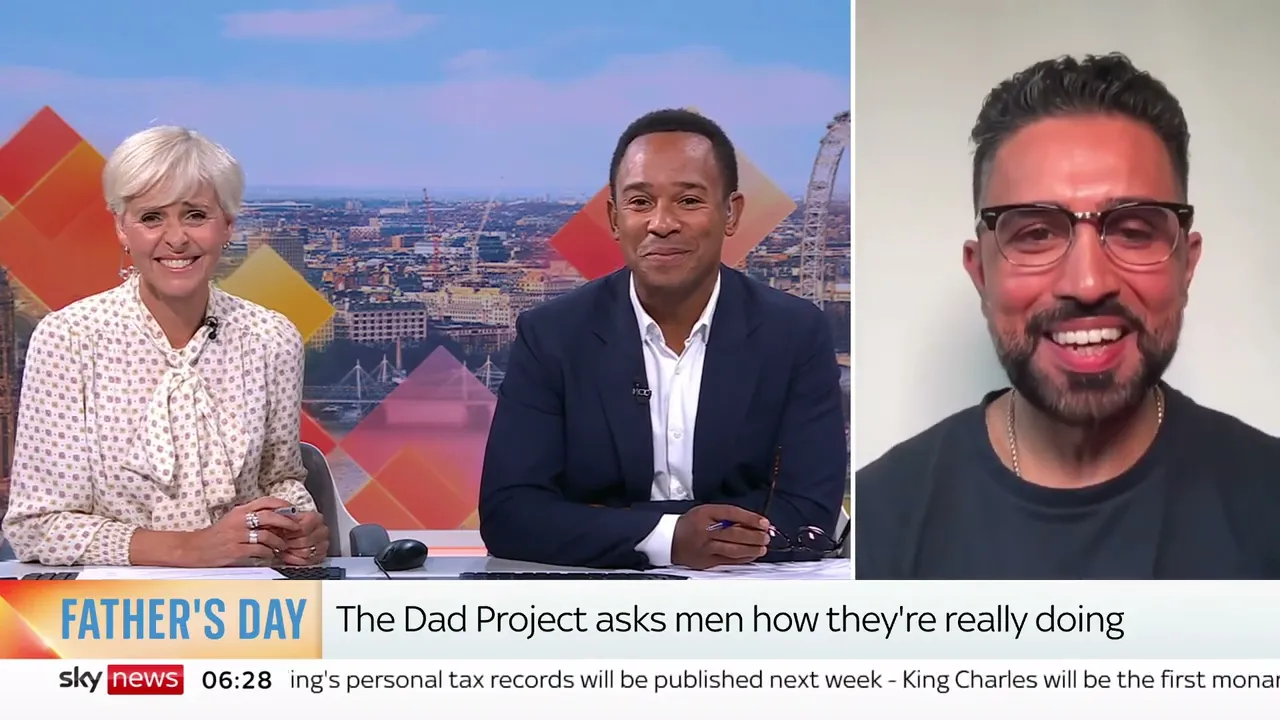
Well, thanks for staying with us. Now, this Father's Day, one dad has made it his mission to encourage men to open up and recognize they don't have to navigate life's challenges alone. >> Yeah.
Through his podcast, The Dad Project, Narup Juty has interviewed more than 32 people, including business leaders, community champions, and even a former category A prisoner. All with the purpose of sharing their experiences and struggles associated with fatherhood and masculinity. >> Well, today's asking men one simple question.
How are you really doing? Well, Narup joins us. So, let's put the question back to him.
Narup, morning to you. Happy Father's Day. How are you doing?
>> Very much. >> I'm doing great, thank you. It's a little bit early for Sunday morning.
Glad to be here. It's okay. I'm used to it.
>> We're very pleased to have you. And look, happy Father's Day, as I said. So, why is it important for uh men who have children like you and I to have these kind of conversations?
>> Well, men men simply don't speak. That's the problem. you know, we don't have enough safe spaces where we feel we can really share what we're feeling inside.
And as fathers, you know, there are extra pressures that we do face that we don't always feel we've got the right community or the right people to talk to. And this is why conversations for men are really important to share our emotions, to share our feelings, and just to feel like we've got the community around us uh to support us during difficult times. >> Yeah.
And so through the dad project, you've talked to to a lot of fathers, haven't you? From all walks of life, as we were saying in our introduction, are there sort of common themes that emerge from those conversations or everyone got a very different experience? >> Well, everyone has a different experience.
And I speak to fathers, but I speak to men from different backgrounds, men of different ages. And the common themes are there's a big sense of loneliness, there's a big sense of misunderstanding. Um men just with the digital um with digital being so important right now and people communicating so much online, we don't have that human connection anymore.
And men don't feel sure how to share what they're feeling. They don't know how to call for help. And sometimes they'll ask people around them um to share what they're feeling, but they're not they're not the right people.
And so by doing live events and doing the events that we do and having the podcast and really allowing men to know that they can they can communicate how they want to. They can share their feelings. It's really creating a massive change.
N what are the main things in these conversations that kind of come up uh for for the men that you speak to? >> It's loneliness. It's pressures of fatherhood.
It's a lack of purpose. It's a lack of belonging. But we're really getting men who are role models now.
men who are paving the way and that's really making a difference. >> There has been a lot of conversation, hasn't there about the issue of men's health and and the need for people to to speak out to improve their their mental health? Is that having an impact?
Do you think people are more likely are men more likely to to seek help if they are struggling? >> I think there is a change. One of the good things about social media, there are people out there who are now actually saying it's okay to share, people who have been there, done it, sports stars, businessmen.
I think when men can see people who they do respect, saying, "Look, I have been there. Um, I I know what it feels like, it gives men the permission to to do the same, to ask for help. " And we do a lot of live events.
We have um weekly men's meetup groups. We do once every six weeks we have a live podcast event I call it where we uh interview people in front of an audience of say 70 people and men can come down and experience that and that community and that belonging that really couldn't change how much is this sort of a generational thing I want to be really careful with how I phrase this but like our generation are much more hands-on you know nappies night feeds doing the school run all that sort of stuff and perhaps an older generation weren't quite so much and it's it is hard it is hard work isn't And where are we able to kind of communicate that sort of challenge? I mean, I guess our our our father's uncles and stuff, they they might not have been so able to to talk about that.
They had to kind of bottle it all up. And we're we're able to do that. So, we hear a lot more about it now, don't we?
>> We do. I actually had my father on one of the early episodes of the podcast and I think it was really beautiful to see a son and a father talking to each other and um he said he didn't know how to do it. He wasn't he wasn't shown the way, you know, because his father wasn't shown the way.
And there is a lot of stuff that passes down generation to generation, you know, generational trauma, but it's also men not knowing how to show and express love. Um, especially the language of communicating love. And it's so it's that generation.
I do like to speak to to older men as well to to kind of understand where they're at. Why do they feel stuck? Why do they feel they don't know how to, you know, hug their son and say, "I love you.
" It doesn't matter what age he is. And our generation, I think, now is starting to break that because we also have different influences. So when we were my father's generation was influenced by his his uncles and his dad, but now we're starting to see different types of role models that we can learn from and I think that's making a difference.
It >> definitely is. Really good to speak with you. All the best with the podcast.
Happy Father's Day again. You have a great day. Thanks for being with us.
>> Bye. Yeah.