extending the life cycle of buildings and building materials is of Paramount importance in mitigating the climate crisis wood has the potential to store carbon in building materials and products for centuries this is essential as demand for housing skyrockets so we are going to need new new buildings and we know that uh wood can play a strong role here however there is much room for improvement in the recycling and life cycle design of wood products especially in the construction industry I think in general we as as Engineers we have a quite large responsibility about our environment
and I mean we all know that our buildings are a large share of our CO2 footprint and other environmental burdens uh and so we really should start to design our buildings in a way that in in multiple ways more efficient construction and demolition way waste is the largest waste stream globally accounting for 40% of the total waste volume on average only 30% of all wooden construction waste is recycled and the remaining 21 million tons goes to waste every year in Europe alone at the current rate of use it corresponds to over 9 years worth of
wood needed for Wood Construction in Finland there are many challenges in recycling wood one of them being the hybrid nature of buildings building always contains multiple materials it would be very inefficient to have an entire building for one material so at the end it will be a hybrid products out of many different kind of components when we create uh hybrid materials hybrid systems we kind of introduce complexity and that makes it a lot more difficult to then uh recycle reuse those uh in other in other forms for me it's it's very important to be working
with designers and with architects to look at these issues also with Structural Engineers I think no one discipline is going to have all the solutions to uh this kind of issue at Alta University a multidisciplinary group of researchers is working to improve the life cycle thinking in forest-based products in the construction industry I think we can say that for the last century uh researchers have been probing wood as a material we still don't know that much about wood still uh even after all that time and that's just fresh problem wood so when we're taking this
other material that's that's had another life uh and we don't necessarily know what the life has been we don't know enough about its its properties its characteristics in order to reuse it there are many open questions because um if you look at the current situation the process they use to demolish a building and to process wood is meant for energy recovery rather than reuse and recycling the fundamental Material Science research in this area aims to understand the properties of aged and used wood when we talk about piece of wood uh that's been let's say taken
from a a demolished building it will have undergone an aging process it depending upon what function it had in that building if it was a structural member or if it was uh nonstructural uh it'll also depend upon things like whether it's it's had any Coatings or any treatments it will depend on how it's been fixed whether there any glues metallic fixings uh whether it's been uh made as part of a a system so whether it's got insulation attached to it or Plastics so there's a whole bunch of different uh things that can influence the the
quality of that material the quality should be assessed and there are many applications according to the quality of food but after the demolition they crush it in smaller pieces in order to like make the basically transportation to waste management site much easier which is against like what we want for you and recyc so I would say there are like many application like CLT LVL like uh like even direct reuse or or particle boards or anything rather than like energy recovery in addition to the study of the properties of used wood Hughes and his team also
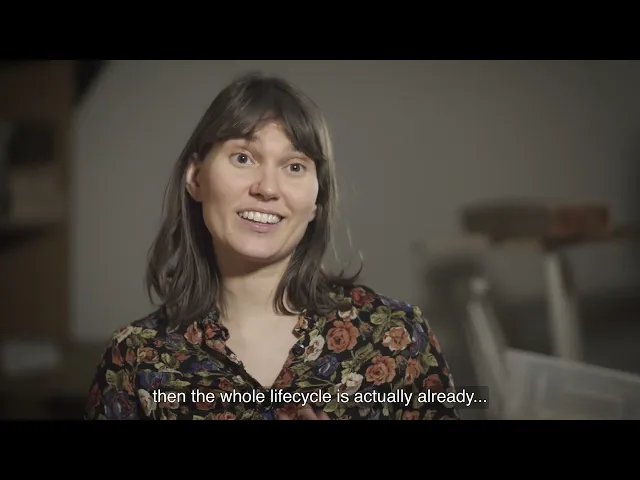
approach The Challenge on a systemic level I I think the whole life cycle is is the key point because when we're thinking of life cycle of product we usually think it from okay the material to when we maybe dispose of it or then reuse it afterwards but when when it's wood we're talking about then the whole life cycles is actually already we should have a focus also with the forests there and the use of forests which we use as a material the life cycle perspective emphasizes the importance of Design This can also be promoted through
a better understanding of the material if you have a concept called design for disassembly or design for deconstruction where in the design pH of a building you think that this building someday in the future wants to demolish and and instead of like normal demolition that you crush it with with big vehicles you will basically disassemble it into individual pieces or into into wall units or to like different units and then you will use it into in a in in a new building or in in in a new material form to tackle this challenge a new
research project called Duet is focusing on the circularity of wood building elements apart from developing processes design and grading the ReUse of material faces challenges such as acceptance and feasible business models how do we manage this waste stream how do we process it how do we then Market that how do we create business from it and things like that so I don't I don't think I don't think we're far away from it it's just I think building the right circumstances in order to make it happen this area of research is pivotal alongside other measures such
as extending the lifespan of buildings and reducing new construction Recycling and reuse can play an important role in reducing the impact on the carbon footprint of the global construction industry