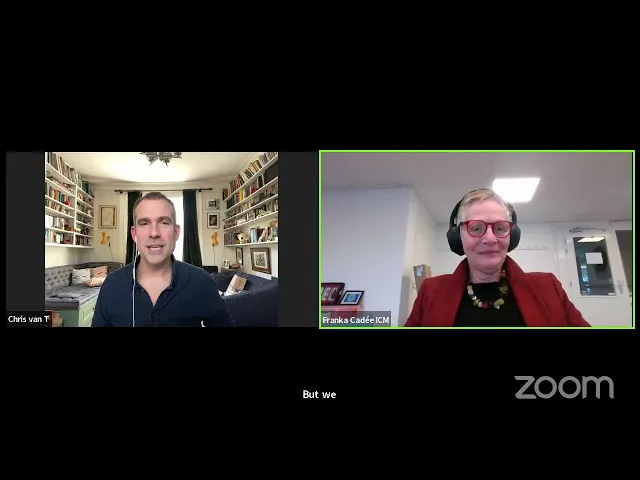
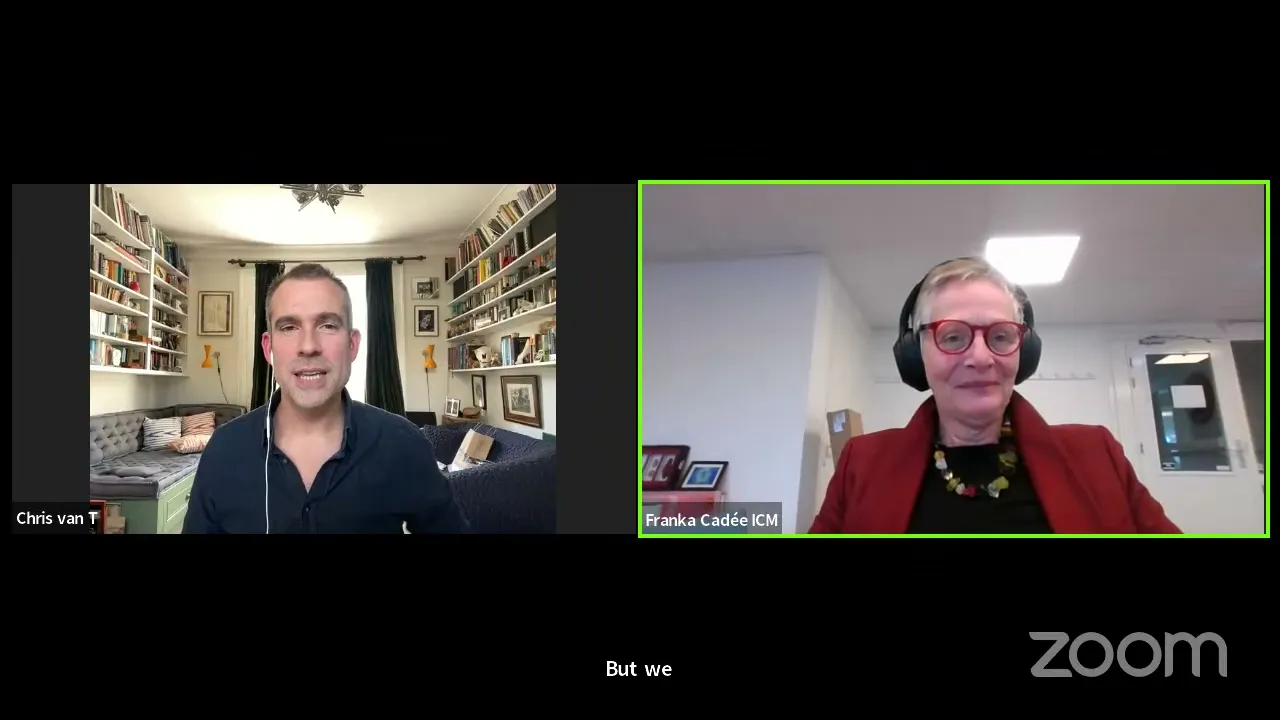
Foreign a very warm welcome from a slightly cold London I'm Chris vantilic and I'm an infectious diseases doctor here at the hospital for tropical diseases I'm a BBC broadcaster and I do academic work at UCL where my research focuses on conflicts of interest and that's why I'm your moderator for today in this the second in a series of webinars about the problem with the formula industry This event's in English this simultaneously simultaneous translation in French and Spanish and I want to say thank you to the World Health Organization the British medical journal the partnership for
maternal newborn and child health and cap 20 30 for co-hosting this event and the first webinar exactly three weeks ago we spoke to health professionals about their personal experiences of formula milk marketing how they came to recognize its Power how it affects all infant caregivers regardless of how they feed their children if you missed that it's the links in the chat and the recordings on YouTube to be clear from the outset once again this is not a discussion about the benefits according in progress this is not a discussion about the benefits of any one way
of feeding a child we all know there are many factors that inform feeding Decisions which are deeply personal this is a discussion that seeks to support all families in their feeding practice this is about protecting everyone from foot marketing that's driven by the procedure of profits not the pursuit of Public Health so our Focus today is very strictly on the marketing practices of the companies who make infant formula and their relationship with all of our different Healthcare professional associations so the question we're Focused on is should health professional associations refuse funding from the formula milk
industry and the answer feels pretty straightforward but the devil's in the detail there are lots of ingenious ways to move money around that feel like they might be okay saying no can be difficult financially and it can also be technically quite difficult so I want to highlight a few points in the webinar which we talked about before as individuals the research is very Clear that even as experts we are vulnerable to the power and influence of marketing the research also shows that very few of us understand just how vulnerable we are we're exposed to thousands
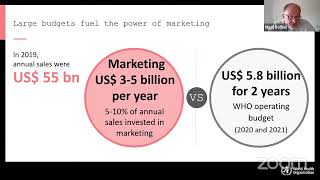
of ads every day the formula industry knows that marketing works it works on patients and it works on us and that is why they spend twice the annual World Health Organization operating budget every single year on doing marketing the Second thing they know is that people trust Brands they know this from their own experience and they understand that we all of us as individuals but our associations particularly are brands in the UK many of our associations have Royal warrants so they are brilliant places to put trust and value in Partnerships there's another starting point which
I just want to be clear on that we and our associations we've all signed up to a Set of ethical principles that we've committed to the associations also have the responsibility of supporting patients and they influence guidelines the formula milk industry is committed to a very different agenda they have legal obligations to increase sales increase growth and increase profit for their owners the shareholders so their agendas and our agendas they may feel sometimes that they're quite aligned but they're not they will inevitably Collide They have and they will again the aims are not the same
so we're talking about these two systems of influence today there's the influence that we have and our associations have of a government guidelines patients our feeding culture and then there's the influence that the formula industry has over us and over those associations if they become extensions if ours if our associations become extensions of the marketing divisions of those companies that do not And cannot share our aims it will compromise the work that we all want to do so I want to start with a video to remind us all about the people we're talking about the
people who are most impacted last February who in UNICEF published a study that interviewed eight and a half thousand women about their experiences of formula milk marketing and this video shares some of those voices with their words read by actors The video speaks to systems those two systems of influence the one that we have and the one the industry has and how they intertwine to influence the decision making of anyone who feeds children [Music] thank you after I gave birth they seem to be fighting for the first sip of formula milk [Music] Obviously we were
looking online and that little advert for the same brand of milk just popped up and with these cookies I mean they must know that we're looking at baby stuff I saw an advertisement on Facebook the ad was eye-catching register immediately to receive 110 000 Vietnamese Dong discount code foreign I think that all those scientific acronyms like DHA give a feeling of Scientific sophistication you don't know what it is but sounds cool I find those advertisements more reliable when there is someone with a white lab coat yes when mothers see the ad they get motivated as
they claim brain development nutrition and other benefits then the mothers think that if they feed this to their baby then their baby will be healthy foreign [Music] They say when she is born by this formula I have been given a free sample at the hospital I think that's a form of advertising I feel like part of the advertising is done by pediatricians because my pediatrician told me give him this milk and he gave me a free sample [Music] stage two and stage three it's kind of like let's continue your journey Let's help you I felt
like I was strict into the follow-on formula it's comparing it To breast milk it's justifying giving formula because it's talking about how similar it is to breast milk I know formula milk is supplemented with various vitamins and nutrients and things and it just made me a bit worried that maybe I wasn't giving him enough I do like the look of the one formula brand where it's scientific it will make me feel like more research had been done into the Ingredients that might be better for my baby you know we all want the best for our
children it's really powerful words there especially I think that idea of it being sciency of of the packs now have the Holograms and long acronyms that even many many of us might not fully understand powerful words so we want to address some of these tensions that we saw in the video really head on and this webinar isn't about pointing a finger It's about recognizing the scale of a problem and figuring out what the challenges are and how we can create a dialogue to move forward so we're really lucky today to have the current and incoming
heads of a number of very large health professional associations first I want to talk to turn to Frankie caday she's the president of the international Confederation of midwives she's joining us from Belgian hi Franca can you tell me about icm's approach or your policy To taking funding from the breast milk substitute industry how do you treat this with regard to other Industries say like Pharma well actually um what you were saying right at the start that we refuse I think as ICM we're pretty clear we refuse but we don't we do we don't take money
but it's at times quite hard because we are our member associations and so we as ICM we have several policies about Breastfeeding breastfeeding and HIV about trade displays exclusive breastfeeding all kinds of kind of documents that we support our members with not to accept money or not to to basically to promote breastfeeding but our member associations are often very very poor and they're pushed in all kinds of ways to take funding for their local congresses and so it's really difficult for I I just can't say to you we actually refuse even though our Principle is
to refuse because refusing is virtually impossible for some of our members and I personally mean as when I was a midwife myself I know I accepted certain things but now I know were not acceptable so but as ICM we refuse that we could totally refuse it's such an honest answer and I I I think um part of the difficulty with this discussion is stepping up and being straightforward about uh what you do and What's right and what what the reality is and then we can talk about how to get around it so more about the
constraints and tensions that your Association faces internally and externally when you're looking at sponsorship from BMS well as I said during our congresses we don't accept it but there's many many more things than that and as midwives we don't get much funding from like for example the Pharmaceuticals midwives are Generally there to promote normal birth and so we are not that interested interesting as as a group by Pharma and those kinds of organizations so the and I think this this industry the the the formula milk industry knows that about midwives and they also know that
we're the people that are there in the community prenatally when we give the device during birth after birth and so even though I for example as I said when I was a midwife myself in the Netherlands where people have all kinds of opportunities I was really Pro breastfeeding and yet I had several sachets of milk in my bag with me or formula milk that were given to us by the industry and I was told and I'm not the most stupid person but I was told you know do that because just in case someone are needed
at night no then you'll have that little sachet so I felt that I was being professional even though I know now I was not you know we Had little plastic covers that used that the clients put their cards in their own personal cards that They Carried with them with all the data on it that card had the name and I won't mention the name but had the name on it of a formula milk organization and I did I think a few times say look should we be doing this and I was told just but you
know if we don't do that they won't be able to put their cards into a nice little plastic folder and and in that way it Sounds so like so small but in that way we get influenced all the time even though you have your deep principles because in principle midwives are really support breastfeeding and of course formula feeding if it's absolutely necessary but breastfeeding is what we do and yet still we get influenced all the time and do you think the situation is getting worse or better in many ways it's getting worse what I Find
with my colleague midwives as well is that when we're pro-breastfeeding we often get called the breastfeeding Mafia so when we are really Pro breastfeeding support women are breastfeeding and actually what you're doing is supporting women families to give the best I mean if it were to be vegetables or things like that we'd be seen as doing the right thing you're giving the best but with breastfeeding the pressure is On in a big way and so we have to be so careful that people don't feel guilty and this term breastfeeding Mafia I sometimes wonder why and
how that got fed into into society because as soon as you try to support women to breastfeed and you know I often certainly towards the end of my career I used to say to women well you know you don't have to have any any artificial milk in your house you don't need to you can always get it if you really need it in the end But don't get it beforehand but some people really felt this was pushing them and I have been called that I'm a member of the breastfeeding Mafia and and that's such a
strange I I sometimes feel that's that kind of argumentation is fed it's really really hard for midwives and I know some of our associations our associations in low-income countries that have very little money it's like just a few midwives sitting around a kitchen table trying to organize the Whole of Midwifery within their country and then they get told oh you know we can support you with this and and then that's the way that the formula industry gets in and so it's so hard to refuse I think your point about language is so important um the
the other even more offensive term that we have in the UK is the the bristarpo and where these terms come from is impossible to evidence Um uh but this is a a discussion where I think everyone however they are choosing to feed their child and I say this as a parent of two however you feed your child you feel marginalized and excluded um and uh and and often humiliated Franca thank you you know Chris can I just say one more thing I actually sent a little Twitter message out just before this this session and I
asked midwives to respond and said like you know what what are your experiences and this one Person told me her words are literally as an editor for a Midwifery Journal I was invited to attend an all expenses paid five-star trip to see around a formula company abroad and hear lectures of how good they were with the aim to persuade us to advertise for them wow it's very hard to say no to that kind of thing institutionally or professionally uh well I hope you've shared that on on Twitter I think everyone will will Follow you and
and have a look certainly I am um Frank are we going to come back to you later in the discussion um I'm going to turn now thanks very much and I think naveen's screen is on um so I want to turn now to Naveen thakka he's the president-elect of the international Pediatric Association he's joining us from India Naveen tell us about the ipa's approach to formula milk funding and about the challenges you're Facing on this issue yeah so uh as as IPA uh you know our tagline you can see working for every child every age
and everywhere so we we have always supported uh breast milk VMS code of who and we have always worked with who to promote that but before 2019 you know it depends also on interpretation and I I will be honest as Franca that before that we have accepted from foundations not not company but Foundation because our interpretation Was that but as soon as this watch pointed out we immediately stopped and the IPA in 2000 2020 IPA executive committee had unanimously agreed that IPA will not accept funding from any BMS industry or any entity associated with it
maybe Foundation or maybe Institute and so as of now we now we don't accept any funding from any BMS any entity then as as I said we are committed to work with who and we we have uh we have supported uh uh through our work Plan with Who as a non-state actor we in 2000 20 to 22 we had this element uh in activities now in the going forward in 2023 to 25 we have already our strategic Advisory Group on nutrition has a plan of collaboration which proposed technical approaches to address potential conflict of interest
between Healthcare professional and manufacturers for food for infants and young children but coming to the as you said the uh what challenges we face at Same at Franca you know we IPA is a uh umbrella organization of all periodic societies and only umbrella organization there is no everybody is is under the leadership of IPA 112 years old from 160 countries and while from lower middle income countries there is which you know really have beared the burnt of the uh this uh violation of this code and these aggressive practices there is a lot of support and
many of them they feel this is more also not only policy but uh by Law but it is also by ethical and moral duty of IPA to support that they feel but we as I said we have member societies from everywhere and only one organization and running very successfully so there are many other member society which have different views that we you know we may not be affected by this uh marketing practices and so there is there is a not a agreement and for us we can have we cannot force anybody and we have to
Definitely listen to all member Society that's one thing second thing is as Franca said the uh it's easy to uh it was always easy to get funding from either companies or their foundation in past and it's very difficult to run a scientific meetings without funding and definitely be maybe better place than midwives in getting other funding but still it's a very limited space and getting more and more complicated so uh but this these are the challenges which We Face uh uh internally and externally uh you know we cannot we have to listen there is a
very strong feeling by that IPS would listen to the majority of member societies and uh you know there are large number of member Society in Western World with their field we are not influenced and we should have choice so it's a really a difficult situation uh for us but IPA we are very clear we are not we have a congress in India we are not accepting We are not going to accept in 2005 in UK and also going forward whether it is foundation whether it is Institute in any form and we will discuss about how
these uh you know you are taken for a right through a different entities yeah I think you've raised the point that we're going to come back to again and again notion of these foundations and ways of channeling money that feel more acceptable and we I think we need to be Inspecting whether or not um those those channels do in some way launder or cleanse the money ethically and and and remove the benefit from it can you just give us a very quick sense of um where do you think most of your member organizations are sitting
did I understand that the balances that the the the the organizations in the north Rich West parts of the world are generally tending to be more comfortable With influence than those in the in lower income settings I will not say comfortable in getting influence because that's they are very confident whether any society whether in west or east or you know lower income middle income countries I am very confident that it's not easy to uh and as a pediatrician I am very I am very confident it's not easy I'm not saying impossible to influence like you
cannot you cannot influence my decision but uh They they feel that you know there is a need for a more dialogue and more you know if you have research we have to show them we have to have that but it's a it's not a like you know even in the Western World there are many countries who feel that uh you know we should have policy and if IPA as an organization could take that stand it can it could have never happened without uh you know the support of everyone so they they are not they are
they are not opposed to it And they are not they are not supporting the companies are they feel that they cannot be influenced that's the thing and uh when we talk about the measures we have to see that if there is research we have to uh so that and prove that that it's happening and then uh have a dialogue and create more awareness I think it's a lot of homework and we are we are very much as I said we have a who collaboration 23 to 25 and uh this where this is prepared by our
Western Colleagues only who leads the SAG and they they are very it is very clearly saying that we will uh find the technical approaches to uh how we can do that so they are very much willing to be for this proposed technical approaches to address potential conflict of interest so uh that's that's the thing but I I I don't think that they are ready to be in place I very very much object to that statement okay Naveen thank you so much your Passion uh is very clear in this area and we've of course spoken about
it privately I want to turn now to um and Naveen will come back to you in the discussion later I want to turn to Dr Anne Beatrice kehara she's the president-elect of the International Federation of Gynecology and obstetrics Figo um she's joining us from cat you're in Kenya uh it's very good to see you uh can you Tell us a bit about figo's policy the challenges that you face okay I will start right at the top Figo says above all Do no harm I know with breastfeeding we tend to think a lot more of the
neonate but it is both the mother and the neonate that do have advantages from breastfeeding practices in Figo the policy is very clear that one shouldn't entertain the BMS industry whatsoever But it is Converse in fact I I actually support what my two colleagues have said you have member societies we have 132 member Societies in the regions of the continent and there is only so much influence you can give as the leadership at the top and particularly I really want to highlight the reality in Low Middle income countries because I do belong to one of
them and the issue is you have a congress you have a training you have some travel to be made and These guys are so quick to come with the Shillings really it boils down to you and your individualized value system should I should I not because there is what you say at Global level what you say at Country level what legislature and policies do exist in Kenya it's very clear do not take BMS support at all do not be an advocate but when you narrow it down and come to private public practices you begin to
see the cracks We shouldn't have branding we shouldn't have um even the use of things like pacifiers we shouldn't have bottle feeding yet the reality is different the advertising the marketing even just looking at what you see on the usual um on televisions and what comes up on the social media really become really discreet tempting issues so we have this right from Figo we have this even very clear in some member societies with an even Low Middle income countries but as My colleagues have said the reality is different you even have the reality of where
they may even select speakers to speak on nutrition yes the policy may say no the discretion should be at the discretion of your body if you have to receive any funding Let It Be An unrestricted fund where they cannot therefore dictate which direction it does go but but so I will actually say Chris it is more complex than just straight jacket it is a very complex Entity compounded by what is on your contextual front in your country and more so what becomes the value system and even the experiential I am a mother when I look
at when I was supposed to be breastfeeding I was already in medical school the challenges of tangoing we didn't have baby dishes we didn't have time out to actually after the third month continue breastfeeding so even putting the economics and the labor markets and the environment these are Things that are strictly feeding into the same what do you then do what do you then do and at the end of the day you want the best for your baby possible how does your influence as president of FICO compare over those 132 membership organizations in the region
how does your influence compare to the influence of the formula industry um variable it's variable I have to be honest Areas where you definitely have had the public messaging and the move towards that um movement out of breast milk substitution but there are other places where you you really don't have much to say particularly where they've percolated and marketed themselves and distributed coupons and even continue to support um activities related to getting doctors into different Um outfits if I can put it that way so the Workshops the Congress is the traveling um it then becomes
a catch-22. and when you talk about the individual individualized uh values that help people make these decisions how crucial is it that those umbrella leadership organizations you're in the same position as Naveen how important is it that you show very clear leadership about rejecting Um sponsorship in all its forms I think it's extremely critical but at the end of the day you can't lead and walk alone you have to lead with others and walk with others so you find and very Pinnacle you are saying Capital no but when you actually do come into the member
societies into in specific countries again the leadership in country does have a very strong bearing we may give you the guidelines we may give you the guidance But ultimately the Implementers must come from the in country and this is still influenced by the politics it's influenced by the marketings that are going on from industry it's influenced by even the individual who holds that key position and that's that's really clear and thank you very much um we're going to come back to you in the in the discussion this the point about influence was made very Effectively
in the last seminar that uh what we may well be looking at first is a cultural change uh to bring everyone around and I think that's very much the spirit of these webinars is we're saying we need to change our culture and this is much more about carrots than sticks and and changing minds and bringing people on board than it is about legislation and exclusion um so thanks very much for your for your words on that I want to turn now to Um Karen Walker she's the president of the Council of international neonatal nurses she's
joining us from Australia where I can't I guess it depends where you are in Australia but it's late I think uh neonatal nurses are so pivotal in those moments after birth you have maybe the most valuable Network to this industry how has the Council of international neonatal nurses addressed this issue what are your policies what are the tensions Thanks Chris and just listening to my colleagues that we have such similar problems when I was first thinking about this webinar I thought you know I thought this was going to be easy because our approach from the
Council of international neonatal nurses is that we we don't accept sponsorship we did in the past but our approach now is that we do not accept sponsorship from formula companies in any way so I thought this was going to be quick and that was the End of me speaking but then listening to the others we are a global organization we have member con organizations in more than 60 countries and National organizations and I thought I would reach out to them to see what they actually do our last conference which we can govern was in New
Zealand and we certainly did not accept any sponsorship and we want in the conference plan in 2024 so that's pretty clear-cut however when I talked to some of our national Organizations and an example I went for a dinner in um after a conference in Africa and we went to a dinner and we weren't aware till we got there that it was actually sponsored by a formula company which is sort of against what we would think but our colleagues who ran it didn't see any issue with this they said well we use formula so why does
it matter we use drugs they've sponsor us we use equipment what's the difference being Sponsored by formula so then I thought I'd actually spread a little bit further and ask some of my colleagues around the world what they were actually doing and what they thought and my clear-cut definitely no was very complex and diverse and there's a lot of debate the opinions range from more and more there is less less of a place not none less of a place for formula in clinical care it's not the take-home that we cannot Take money from formula companies
as it goes against best evidence to it should be zero tolerance for formula companies and then others we use formula what's the problem why could these wealthy companies not support our conferences dinners and education sessions so really difficult and quite diverse from what I actually expected um and one of our big National organizations reported the actually Promoted relationships with the formula company and the reasons behind it was money like my colleagues have said the formula companies will support sponsorship for Education activities research fellowships and Conference funding so I think our challenges are huge the cost
and the of the support of education is really important and I think the others have said the same thing where do you get the money from but from the coin perspective we don't Accept it and our organization needs I think to work with others to actually support this do you have a quick answer like have you wavered when you get those answers saying what's the problem we use formula has it made you waver at all or have you developed a quick 30 seconds on here's why it matters research and the evidence evidence is really clear
to me but I can actually understand where they're coming from Because if they've got no other source of funding which we might have in some of our higher income countries countries even although it's more challenging so I can understand where they're coming from so I think part of our um moving forward we need a big education session around an advocacy around why it is important not to accept it it's I really like that you mentioned the wealth of these companies many of Them have if if we looked at their revenue in terms of GDP they
would be in the top half of wealthy countries in the world so they have enormous wealth and it can feel a little bit like taking a pay cut that you end up doing work for free and I think that's really hard for people the flip side of course is we can as I said become extensions of their marketing department and that's the other that's the other Hazard isn't it we can and they can Certainly bias um what we T what we see to parents with their marketing strategies and if we've got people who are not
quite over um are quite advocating for breast milk breastfeeding they can certainly be biased by what the companies do Karen thank you so much for that contribution we're going to come back to you uh at the end uh in the discussion but I want to ship shift to part two of our agenda and talk about uh Solutions So in 1981 the World Health assembly adopted the international code of marketing of breast milk substitutes it came out of scandals in the 70s the term commercial genic malnutrition was developed uh formula was being aggressively marketed um in
very low income settings and it was leading to a lot of infant death it led to Senate hearings in the development of the code and a series of welfare World Health assembly Resolutions have provided further guidance so in 2016 resolution 69.9 specifically addressed the engagement of health professionals by industry but it's been met by lots of questions from professional associations I've um spoken to the next two speakers about exactly what it means myself and over the last 12 months wh and UNICEF had developed draft information note aiming to bring Clarity to what may or may
not constitute BMS industry sponsorship and How associations should address these tensions and conflicts of interest so we're going to speak now to gronya Maloney from UNICEF and Larry grammastron gron is a nutritionist diagram of students an epidemiologist Larry from who and they're going to walk us through the context and the content of this draft information notes so Larry and gronya over to you thank you so much Chris and good morning from New York and good afternoon to you all and good Evening uh joining online so I'm going to talk um by reminding us of what
we understand by sponsorship and then I'll hand to Larry who will take us through what we can do moving forward uh next slide please Larry so what we're illustrating on this slide that's about to come up thanks Larry what we're illustrating here is that health professional associations have a dual responsibility to their membership on one hand and to the populations their Memberships serve on the other hand at the same time and which has been very well illustrated by many of the speakers uh previously they are constrained by the funds available to fulfill both of those
responsibilities and therefore when funds do come from companies such as BMS producers this send creates conflicts of interest which can result in the loss of Independence integrity and public credibility as this sponsorship can establish a visible Reciprocal relationship between the company and the organization it sponsors which then may be perceived as implying that the company or their product has earned a level of endorsement or an approval from the organization that it has been sponsored that has sponsored it rather so moving on to the next slide so therefore acceptance of funds other than from the membership
themselves does create conflict of interest because it Borrows our purchases some of the reputational trust that researchers and health professionals place in the host organization which then can actually compromise patient care and the reason it can compromise patient care is that studies have also demonstrated that health professionals exposed to targeted commercial activity have more positive attitudes to those products that are being marketed and are therefore more likely to Recommend those to their patients so therefore they are giving a level of endorsement to those specific products next slide please so where does conflict of interest arise
so here it's very well demonstrated that it's in conferences you can see the adverts here high visibility presence free gifts sponsored dinners again as illustrated by the previous speakers through training sponsored meetings and nutrition institutes and then through Research and again here nicely advertising at different companies and through sponsored Journal articles and actually sponsorship is very common amongst health professionals colleges and associations and a review of related websites found that in fact over 50 percent of national pediatric associations report to receive funds from commercial milk formula producers next slide please now this is not something
new and in Fact this has been understood since the Inception of the code from 1981 where it was stated that health organizations should not be used for the purpose of promoting infant formula or the display of products however it has been more refined and defined over time as the situation has evolved with subsequent World Health assembly resolutions you can see in 1996 it was elaborated at member states should ensure that the financial support For professionals does not create conflict of interest and then much more clearly defined in 2016 with World Health assembly resolution 69.9 which
many of you will be familiar with where it really clearly identifies those risks and states that health professional associations should not accept gifts or incentives from companies that market foods for infants young children and that health professional associations should not allow such companies to Sponsor meetings of health professionals and scientific meetings so now I'm going to hand over to Larry who's going to talk us through about what we can do next Larry over to you thank you karania um so I just want to start to clarify about the code I want to make clear that
the code itself is actually not anti-formula it doesn't want to prevent sales it's not trying to prevent access to formula it is a code about the marketing and it makes a very Big big distinction between marketing and the product and the aim of the code itself starts off saying that it is there to protect access to formula when it is needed but is also to protect families from the marketing that might dissuade from breastfeeding um the code is also recognizing the importance of health professionals it's not just about the marketing in advertising and Retail environments
to the general public but from the very Get-go 1981 it recognized that health professionals and their associations are the targets of marketing themselves and are used as conduits of marketing so this is not a new issue this is something we've been dealing with since it's very Inception the code specifically called for for the provisions that everyone just talked about um and so we wanted to get further clarification for people to really understand what was meant when we said In World Health assembly resolution 69.9 that there should be no sponsorship of health professional meetings or scientific
meetings so who in collaboration with UNICEF has produced a a document on clarification on sponsorship of these meetings that is open for public comment will be for the next several weeks and you can see on the right side of the screen here the the short URL so you can go to that and read the document itself and you can Enter comments about where you think we've made it made it clear where we've actually raised new questions things that need to be addressed within that so it is open up right now for you to help us
refine this document before we finalize it and disseminate it widely the purpose of the document is to clarify what is meant and we are hoping that it will also lead to discussion within your organizations those who are presented here today most of you on the Call today are members of different health professional associations we're asking you to have this dialogue internally about what does it mean for us to not be sponsored we're trying to provide the guidance around what we think that means but we want your your input on have we gotten it right um
this the focus here is on the sponsorship of conferences not all sponsorship of associations we know that sometimes associations get money in Other ways for other kinds of activities that they're doing but we also know that a major part of that sponsorship does come in the form of a sponsorship of meetings and it's certainly the most visible form at which those companies are able to to get their messages out to to the healthcare providers um so just to highlight a few of the key things within that um one thing that the document does besides really
highlighting many of the points that Grania already raised about why we care about this issue it really tries to unpack what do we mean by sponsorship of meetings many people just think about it as the direct funding that goes to the association the kinds of things that would you know we are a gold sponsor or a platinum sponsor by just giving a blanket donation to The organizing body for the conference um maybe to the the association itself for the purposes of the the meeting but It doesn't have to be that direct funding it can also
come in the form of um kind of uh in-kind donations such as we will we're going to sponsor the luncheon uh we're going to sponsor the break there and so there's no actual money that exchanges hands they're not handing money over to the association but by supporting the various activities that are being done within the meeting they are able to kind of get their name out there and those can be kind of Services that they provide maybe a Special Rule maybe they sponsor the lactation room to show their connection to lactation their names might be
on the gift bags that are given for all of the the paraphernalia that are disseminated within the uh the the the whole conference or the exhibit room um the merchandise that they're giving out for free this can be in the form of advertisements in the program book it can be apps it can be projections that Are shown on the screen at the beginning or the end of presentations um ways to get their name out there and those might be purchased but they are actually ways to sponsor the meeting um there's there are times that we
often see that this they're not saying we'll respond to the whole event we'll just do our own event um and so it'll be after hours we're not actually there but we're doing it separately and yet we find that there's Cross branding and so it's a way of bringing people to the conference and thereby subsidizing the conference in an indirect way sometimes they'll have their own sessions that are cross-branded with the program book telling about what's going on in the other and so this is also a way of sponsoring the meeting in directly so we want
to make sure that we're covering all of those they can sometimes be providing scholarships for people to Travel to the to the meeting travel Awards registration support that will waive your registration fee if you want to come so many ways that we see this in indirect ways and we really want to reach out to you and to hear other examples are there things that we've missed ways that this sponsorship happens that you have questions about or that you think are concerning a specialist Juke issue came up within this to talk about exhibit exhibition Space um
we had a lot of discussion with who internally as well as at UNICEF um to really understand um well can we actually say they're not allowed and these companies aren't allowed not allowed um to be in the exhibition space um and that is certainly a meeting that a question that every meeting will have to decide for themselves um but it was considered that it's difficult to say they're never allowed Because the code itself does allow companies to share information as long as it is scientific and factual um and so is this an appropriate opportunity for
them to do that we might not call that sponsorship um some people might say it's inappropriate for other reasons I may not be the best way to get scientific and factual information out um but we couldn't really Define it as sponsorship per se however there are Many ways in those exhibition space that it really becomes clearly Beyond scientific information um and in it by its very nature becomes more promotional some of that has to do with the the size of the exhibits sometimes you see you know just massive exhibitions of formula companies in the middle
of the exhibition Hall with fancy carpets and glitzy lights all over the place and you really have to say clearly this is not just sharing scientific Information um it could be about where they're placed if they buy a space at the front of the exhibition Hall that everyone is going to have to pass by and pay a premium for that that's a way of sponsoring the meeting if they're they're renting in in ways that are not commensurate with other exhibits because they're getting something larger or a premium in some way and also exhibition space can't
be an opportunity for giving Away gifts or trinkets or samples as you know ways to kind of give that extra bling those are also ways of sponsoring the meeting because they're using it clearly as a means for marketing their products so I just want to close with kind of a call to action for all for all of you I want you to have facilities to have discussions within your associations if you're at the leadership level calling out to your membership and how they Think about these what the policies and practices ought to be or if
you're within your Association call upon others to have these kinds of discussions and bring the leadership on board secondly we'd love for you to be sharing what your organizations are already doing about this there are different ways that associations are finding to fund their conferences by what and and avoiding the sponsorship we know people ask these questions many times today in The presentations about how we know there is a need for funding how do you turn away when someone is offering you free gifts and we know many of you are already doing that in very
successful ways so please share your your ideas among among each other across regions around the world across professional groups we can all learn from one another and just finally again please provide us your feedback on that information note using the link that was shared with you Earlier thank you very much for your attention today yeah Larry gronier thank you uh very much indeed for that thought-provoking presentation so we want to move on Larry and Granny are you going to stay for this presentation or can we can we put a couple of questions to you or
are you going to stay for the discussion yeah yeah so I know there was there was a there was a question from uh Rebecca Coombs who's from one of the uh editors at the the bmj in their special investigations unit which we wanted to know is this is a provocative question perhaps or a ticklish one at least is the World Health Organization itself in violation of the code because it accepted that funding from Nestle through its foundation thank you Chris for asking the embarrassing questions at the very beginning here And I think that uh the
the example that was just raised here um is a perfect example of what you were saying at the very beginning about the devil being in the detail um we go with the best of intentions to try to follow the right policies and then we find there are strange loopholes and legal situations that make it more complicated um so the situation that was raised was not actually a situation in which who Accepted funding from Nestle it was a situation which The Who Foundation accepted that funding and it is an important legal distinction from a legal perspective
from who's perspective and yet as was also raised in the comments not one that really makes sense and we've tried to be very clear in who's policies and evaluating others that we don't make that distinction between a foundation and its parent organization and yet at the same time our legal Department was was arguing that no there is this separation and so we've had to work through this this distinction here um The Who Foundation was established intentionally to be distinct from who to give it more flexibility to receive funding from the private sector to give it
a lot more not be constrained by the same bureaucratic constraints that we have um and so it was supposed to be more open Um and yet probably not open enough that it actually does things that are in violation of the World Health assembly resolutions but because it was legally separated when when we found out about this who was was very upset and said this can't happen you have to you have to reverse this now and we discovered that we actually found that we had no legal way of forcing them to to turn the money back
or to change their policies Since then we have had negotiations discussions about okay no we can't legally force you to do that but you realize you are using the who name and you are doing something that is in violation of what the World Health assembly has called for and I think we have changed gotten them to change their mind about this and they said okay we won't do that again um so we think that we've resolved the problem I still haven't quite seen the Wording in their policies to make myself you know 100 sure this
won't ever uh be an issue before so we think we've corrected it but we didn't correct it fast enough that they were willing to turn the money back and say we made a big mistake and and changed it so we're left with this Mark against us um that isn't really wasn't really who was another entity but it's it was the complexity of these issues that we continue to have to fight even within Who that should have very clear policies we got stuck in the same situation Larry thanks for that detailed answer I really appreciate that
is this really important that maybe is the the devil detail that that we sort of referenced at the beginning that um it seems very simple to turn down money and then when it isn't entirely your own choice and there are other structures in place it can become really complicated and maybe that speaks to Something I want to put to the whole panel um about the idea of legislation versus culture that um uh is is the most important initial change that we need a general understanding uh that the code is a minimum standard so that instead
of approaching a document like the code as a thing we could try and work around or find clever solutions to we approach it as uh instead of a legal document we Approach it as having a spirit and it's a it's got a set of principles it's a guidance um so I wonder if I can sort of start with Karen um uh thinking about that what do you think about the code as a minimum standard um I think the code as a minimum standard is but I think with most guidelines and Things unless it's actually legislated
then and a legal requirement then it won't actually get implemented as much I mean this this guideline I think is really good because of the clarity that it's got in it this actually says at the end of it that we should not accept sponsorship and I think that's really quite um direct and it's clear um from our professional organization's perspective uh it's something that we Will do from a coin perspective and we are currently doing but our challenge is going to be get agreement from the members who currently accept sponsorship so I think legislating it
and legislating it would have to be from Individual countries as well it's quite a large step Karen thanks very much we've got a really nice question from a young participant Casey Birch who wants to know how she can help to make a Difference I'm assuming Casey is a sheer I guess it could be either either she says I'm a student and I've been writing about the ethics of the formula industry for around four years I'm going into public health infant feeding I feel as though nothing will ever change formula companies are never legally held accountable
for constant code um uh breaches Franca do you want to re-inspire Young Casey at the beginning of a career and maybe a few other people Well the fact that Casey is asking this question is fantastic good on Casey and the fact that she's she's writing and taking this seriously good on Casey and I think that we all need to do this I do very much also agree with Karen I think we need to legislate in some way you know we have the code yes it should be a minimum but there should be a way in
which we can actually legislate I at times feel that we should go towards the idea that formula milk is something that Is given on prescription given when it's needed on prescription and that and so that people understand what it's for it's there when it's needed but not in other cases there's all kinds of ways and and I know there is all kinds of lists of people who've broken the code I think we also need to support people who are working on becoming better because it's not a black and white picture so organizations that have in
the past for example taken money From from the formula industry who have now changed let's find a way of saying great well done good on you and giving some positive messaging when people change because I think that too really helps us to to to do it to do it better instead of shaming I think that might also be a Way Forward I really like that approach I hope that is the approach we're taking today um Naveen we've got some more questions from the from the Q a I want to know More about the the relationship
between the umbrella organizations and uh and and their member organizations what are the opportunities for Education through those umbrella educations lots of Frontline health workers don't have the time to keep up with medical literature on the topic and they may not realize its power so how can umbrella organizations help yeah so uh I think uh you know as Larry Has shown that uh you know that's the way forward we have to create awareness and uh that's that's really you know uh we can do through our member Society because we don't work directly through the period
issue with the pediatrician but we definitely can do more and more and we have a definite plan uh for the next uh trinium even with who and uh International Pediatric Association strategic plan to do that to create more and more awareness in form of courses And orientation guidance documents so that there is definitely need can I can I also answer your legislation question if you don't mind yeah of course so so uh you know you know I come from India and uh I will say legislation definitely works it gives you a framework but still there
will be role of you know the uh these guidelines and member societies like uh we had this legislation and That Was Then Indian Academy of Pediatrics that they they you Know uh my uh parent organization before I came to IPA and still you know they they endorse a very early and they they were working like Indian Academy and others were like working like Watchdog so there will always be role if there is legislation it makes us easy who of believe in this uh I think alien morally help us in doing that and when I talk
opposite when we talk to the other societies which are not pulling their say it's not land of the law how how Weak are you anybody can force us so you you got my point that it definitely helps if we have legislation in place and then Society a professional association and everyone work together so uh legislation definitely helps thank you so it's it's legislation clearly then is a way of enacting cultural change as well and making it easier for everyone and once things are in law then um they become more much more widely Accepted don't they
um we've got I think I think so and uh if you see 69.9 it says the member is there should enforce so if you it's not only the about Mar this marketing practices but also about the conflict of interest so if it if it is in the legislation it becomes uh you know it really you can build on that thank you Naveen thanks very much uh can I go to Franca what should um a membership organization how do we Have this discussion with an organization saying we just don't have any other source of money we
want to get things done uh we're trying to do the right stuff but there is no other way of getting money so we're in a low income setting um is there a an extreme situation in which you you are able to say well this is the only choice well I would like to say that there is no situation where it's the only choice And especially in those situations where it would be the only choice actually advertising for this industry would be the worst thing for the people who would probably also have very little money and
the best thing that they could give which is sitting there for free would not be given and they'd be spending money and actually causing harm for their children so that would be the right place to say no but I think we need to be we need to kind of be in Solidarity with our associations and find other ways in which they can then be funded I do agree we need to have the conversations I think as ICM we really do have to hard conversations but at the same time yeah I think we need to find
a way in which we can then support organizations or maybe uh find a way in which we can show showcase them when they have said no even though their situation is a really hard one but at the same time you know we are a members Organization we're not there as a police force so we can't say to our members oh you know you've done a terrible thing but we can't say look you know look at the consequences look at the ethical side to this and how can we support you to not be able to take
this funding because this is not best for women for babies for communities I think that's what we need to do but it is hard they are our members they are the boss actually ICM is led by her members as His IPA as a scoring as a spigo we are led by our members so it can be really hard to be seen as the ones that are kind of saying you know you shouldn't be doing this but I do think that we can show by having the right policies by not accepting the funding in the global
situation in our Global conferences not accepting the funding and walking the talk in that way I think is a good way and daring to have the discussions it would be so great to have some kind Of fund globally that could support these organizations so that they don't have to be kind of tempted by these kinds of organizations thank you uh Franco thank you so much gronya are you are you answering questions I've got a slightly technically nutritionally one this might be one what might be one for you and Larry there's a question from Fran marks
uh Max bertner who says I understand the code nor but it's also True that the pediatrician needs to know details of all the different types of formula available for those those cases that are needed how should they get that information sorry my questions have just updated so of course it gets rid of it how should uh how can we get that training if we're prohibited to even talk about the formulas I would say reach out to the clinical dietitians and nutritionists that work within the health sector because they Will have that information they're trained to
provide that information so there are technical experts that can that can and should give impartial information about um about alternatives to breastfeeding as needed so and as a former dietitian working in the NHS I that's something certainly that I would have have worked on in the past that's why I sent the question to you so uh so just to be clear Um you know a pamphlet from a sales representative or from an individual company that makes a particular product uh you wouldn't say that's a great way of a pediatrician getting information about child feeding absolutely
it's yes absolutely go to the health professional that has the expertise to provide that information go to your dietitians go to your clinical nutritionists this is something we hear as you know we went through this in the medical profession With Pharmaceuticals uh We've we've not quite come out the other end but there was a sense of well we need information and they're a good source of it I think we are now increasingly thinking that the best source of information is independent uh ideally uh good big trials lots of data no industry funding and that's where
we get our information we don't get it from sales reps coming to our offices and giving us pens so uh Juan Max thanks I hope that does Um answer your question there um can I make can I make an addition there please yes please and Beatrice I didn't I saw your video wasn't on I think it's critically important to really have a rethink even on the curricula it's not just about the nutritionist and The dietitian because when I look at when I trained and what constituted the nutritional training particularly looking at breastfeeding and lactation Management
a lot is yet to be provided number two is the siled approach I think this really speaks to us speaking to one another right from the Midwest to the pediatrician to the near the nutritionist to the gynecologist you know moving out of the siled care of a patient the primary patient is our consumer of these services so if we can actually have like championing and a movement that is really integrated I Think we would move much further which then speaks through our advocacy messaging and particularly using leverage points because there's so many during immunization during
Family Planning during childbirth during the postpartum period there are very many entry points that we could work and walk together I won't even bring to light even having mothers who are professionals presenting to these conferences and breastfeeding Their babies I have had colleagues who've actually come into conferences with their children and people look at them like excuse me but that is a very powerful message in and of itself so even having baby crushes when we do have these workshops and symposiums that would ring bells that there is value in having breastfeeding points readily available to
actually give the best possible ambitious thank you thank you for those Those passionate points there's some really uh interesting uh nice point from an anonymous attendee in the discussion just reminding everyone that when we talk about breast milk substitutes we're including bottles and teats and the the paraphernalia it's not uh simply the the product it um uh itself um so I want to uh Naveen can I uh ask a bit about how um we navigate companies flying under the radar supplying education for Specialist formula for allergy workshops particularly in dietetics how how do we you
know that that seems to me a a weak point that um I've noticed a lot is that particular formulas are recommended for uh particular medical problems and so that is the foot in the door and we see that even with some professional associations in the UK that there is a blanket ban on relationships with breast milk substitute providers although uh it can Be discussed whether or not there could be a stand at a conference about a specialist formula yeah so uh thanks for bringing that up because you know I also uh wanted to say that
because this I uh what we have in information document uh and there is no mention of covert sponsorship through many front organization or companies that are not actually involved in sell up this product but this had become a very clever marketing strategy and Norm I mean at least I know in Indian subcontinent like X company marketing you know as you said maybe some products and another nutrition company as front Organization for sponsorship and doing the promotion so this is this is this is very important and we we should know these tactics and we should be
able to face that and you know uh uh uh uh counter that because that's very very important so there you know these companies they find A way to reach out to you and we have to be very careful so there is no way that uh special formula or that formula or uh says nutrition supplement so all this uh is same as we said you change the name and become a foundation or Institute and so this is all uh you know same and then they Market something uh you know under that it's it's a problem that's
come up in the chat Patty Randall points about um uh selling related products not Strictly under the scope of the code probiotic supplements um and I think there is there are you know there's a lot of evidence that many of the claims made are are ways of getting around some of the restrictions a really interesting point not a question from Alyssa mealon a nutrition researcher who says we know infant formula is an ultra process product are we going to protect babies Health any further and legislate parents May Sue Governments from professionals at some point if
we don't protect them I think it's a strong wrong point that underlines the responsibilities and and some of these reputational risks maybe that the associations face they have a clear obligation um and there are there are um known health risks um uh I think we've probably reached uh the end of the questions unless there are any more I'm trying to keep an eye On my um uh WhatsApp and uh and the the uh the the questions pouring in the in the blog but we're close to running out of time oh sorry sorry may I just
add something to what Anne Beatrice was saying of course I think one thing that's really hard as well about what we see around us is that often women can't breastfeed like in in our congresses Etc I think at ICM with midwives it's common but I think that Quite a lot of other ones it is not but also just sitting on the street and breastfeeding sitting in the train sitting where then wherever and just breastfeeding uh and and for that to be accepted by Society so the few things we can do whereby we show the example
I remember a while ago in week 40 which is breastfeeding week I've published this photograph of myself feeding my son and my daughter feeding her doll and I had the long discussions with my comms team Could I do it could I go onto Twitter with my breasts and I was thinking oh dear you know this is the only thing that you can do this is how you can walk the talk but there we are so you know I think that's also where we need to just go for it and and walk the talk and show
the example as Leaders as well not only in our policies but also in what we do Frankie can I ask did you send the tweet in the end yes I did I did I sent it in the in the WhatsApp group I've sent that Tweet and I think uh yeah I've said it in that group that we have all together oh okay amazing yeah well I I will share it and and anyone can follow any of this uh to share it thank you for ending on that um a very personal note um uh there's one
more question any possibility in the future to have a joint declaration coming from all the participant health organizations against accepting funding from the BMS industry um uh Larry do you have a a thought to Wrap us up on on that a joint declaration I think it's the kind of thing that we would love to work toward I certainly can't speak for each of the organizations here but we we have the assistant the federations of of professional associations of something like that would be very strong coming forward um I think we would love to reach out
to each of the speakers today and say you Know see if they would be willing as an association to sign on to such a declaration we also have next steps that who will be following through on um to really build an action group to keep looking at this issue bring experts together and members of associations uh to really trying to figure out Solutions how do we address people's questions how do we share examples and try to try and carry that forward and we're hoping to have a meeting later this year among Professional associations not every
Association in the world there will be a massive meeting but to bring key people together and say you know what what kind of Declaration could we get what kind of statements could they be making to really put put their name on the ground and make this very public we're opposed to this we're ready to take action moving forward to really stimulate others to take that kind of action as well so it is something that we'll be Working forward on over the coming months Larry thanks that's a really positive note to to sort of not well
not end on but almost to begin uh the next bit of work on um I want to finish first of all apologies that we cannot answer all the questions there's uh uh you know we've we've answered around 60 in the chat there are around 50 that we're going to try and follow up as a group Um afterwards I want to finish with a with a couple of thoughts just to prompt everyone to think about our purpose when we when we're thinking about whether or not um we're able to accept money uh what is the role
of the health professional associations that we're members of or that we've run or we we have membership associations it's guiding medical educational Professional Standards research and policy leading the way Um in children's health and when we work with these companies we give them a Halo and we donate our reputations to them and as we've seen there's an unfold unfolding still unfolding Scandal uh in the states and so the reputational risk in Practical terms is enormous for organizations that work for these large companies that do complex work and have this other agenda there's two final thoughts
we know that all money is fungible it's all Interchangeable so accepting money for one particular project can always be used for another project and we know also that that money has influence so I think one of the things for me that's become really clear and that so many of our speakers have spoken to today is this idea of there's always a loophole there's always a shell company or a foundation or a way of laundering money but having this cultural standard where we uh we would Like the code legislated but in the meantime we it is
it is a minimum standard that we're not trying to get around we're trying to all interpret it as best we can and really really limit anything that might look like influence that influence takes many shapes and forms but one of the key things is that it buys our silence and you think it won't you think that you can have a little standard a side room at a small conference about a Specialist formula and it won't by your silence but it will because you cannot critique an organization that you have actively entered into a relationship with
and expect to be taken seriously because when you open your mouth about an atrocity that that company may have committed that you may have witnessed the obvious question is well why haven't you stopped working with them no one will believe what you're saying and being able to speak out at the moment is Really important we must be able to Bear witness to the commercial determinants of disease that cause harm in our world so this isn't anti-corporate it's not anti-capitalist it's that we all know that unregulated corporations have particular agendas they can do enormous harm history
has proved this again and again and we must see ourselves uh I think increasingly as regulators and you can't regulate people that you have uh complex it's getting interest with so Um we must think about those commercial determinants Health they're huge I said last time I want us all to stay a little angry but not with each other um we've got to move forward and Larry's uh and gronya I think uh have very big plans to reconvene this at some point this is the beginning of a conversation uh very much not the end and this
is about moving to a world where everyone has the maximum uh freedom and choice About how they feed their children um and the best opportunities to make the best decision for those kids that they can thank you all very much for listening um and this webinar is going to be posted online I want to thank particularly our hosts the World Health Organization British medical journal the partnership for maternal newborn and child health and cap 2030 and all of our wonderful participants for being with us Today and thank you all for watching thank you