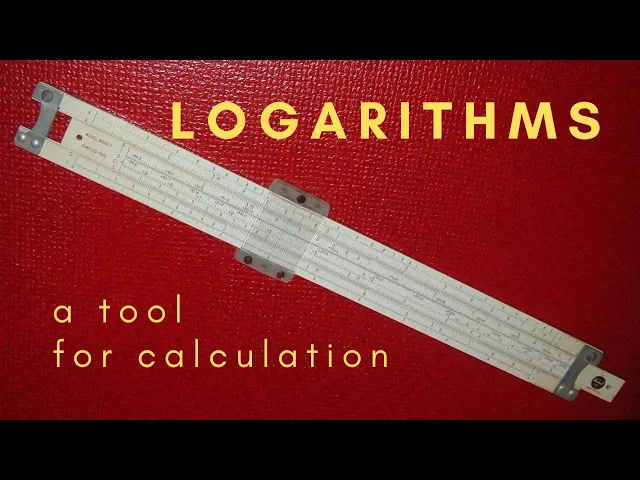
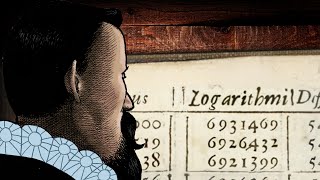
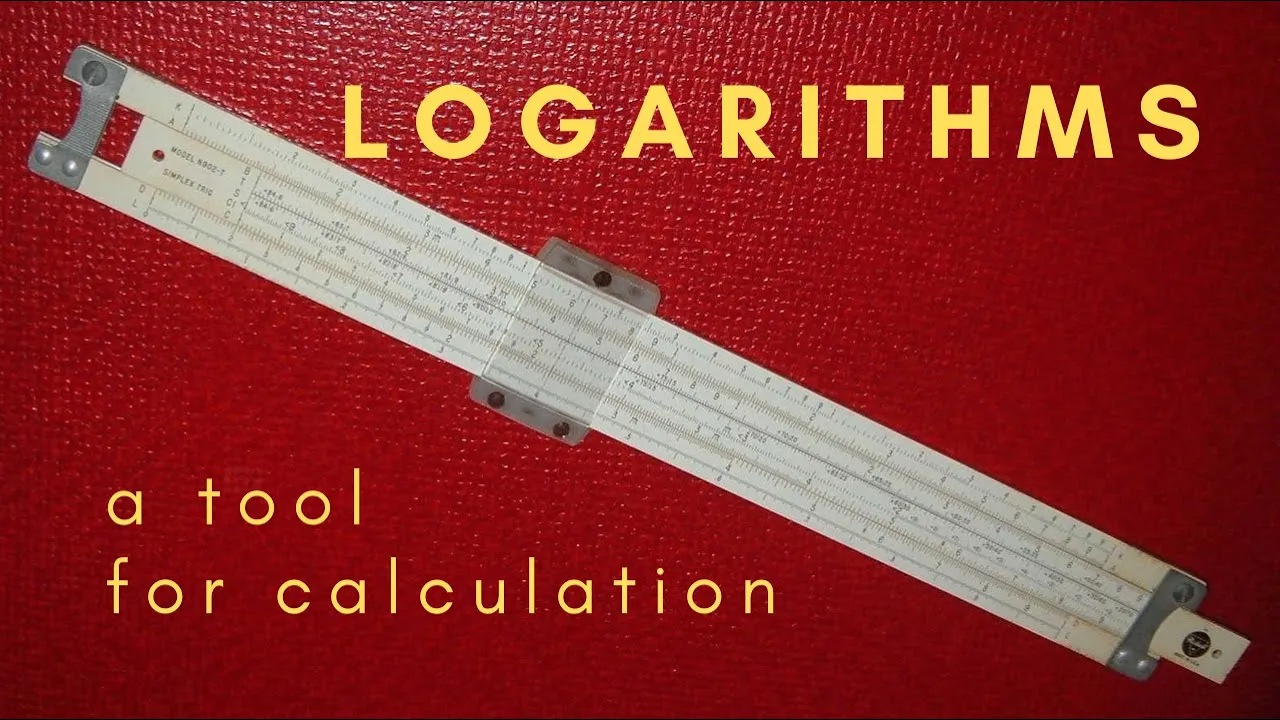
john napier was a scottish scientist best known for discovering a way to make complicated calculations easier his development of logarithms allowed multiplication and division operations to be converted into additions and subtractions napier introduced the logarithm in 1614 napier created a list by calculating the logarithm of many numbers after his death other scientists extended the list by 1624 the list included the logarithms of all the numbers from one to a hundred thousand using it people could quickly find the logarithms of two or more numbers and convert multiplication operations into additions [Music] for example suppose you bought 14 apples from a market and each apple costs 12 cents the amount you'd have to pay is 14 times 12. using napier's method first we need to find the logarithm of 14 from the logarithm list it turns out to be 1. 146128 then we need the logarithm or log 12.
it's 1. 079181 we add these to get 2. 225309 finally we'll look at which number from the list corresponds to this log and find our answer 168.
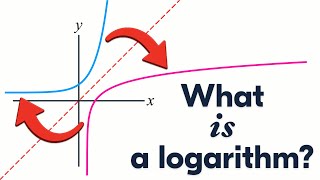
in this simple case it's true that it's quicker just to do the multiplication but the advantage of logarithms becomes clear when we start dealing with more numbers or bigger numbers in mathematics logarithms is the process used to find exponents for example what's the power of 2 that gives 8 the answer is three so the logarithm of eight to base two is three a common base to use is ten in which case we have the following log to base 10 of 100 is 2 because 100 is 10 squared log 10 000 is 4 because 10 000 is 10 to the 4. often our brains perceive changes in the environment not linearly but logarithmically for example when we compare two light bulbs that have intensities of 25 and 50 lumens we don't perceive the intensity of the 50 lumen bulb to be twice as great as that of the 25 lumen bulb but much more than that in fact a logarithmic increase the same is true of our sense of taste when we compare the same amount of water with 50 and 100 grams of dissolved salt after taking a sip of each the water containing 100 grams of salt is perceived as being much more than twice as salty as the water containing 50 grams of salt research also suggests the same is true of our perception of time as we get older time seems to go by much faster a 10 year old and a 70 year old for instance perceive the passage of a one year period very differently in practical applications logs are used mostly to deal with very large or very small numbers the brightness of the sun for instance is about 100 000 lumens per square meter whereas the brightest star visible at night has a brightness of [Music] 0. 0000 lumens per square meter it's hard to grasp such big differences in values but if we switch to a log scale the numbers become much more manageable the brightness of the sun becomes log 100 000 which is 5 and the brightness of sirius the brightest star at night is log 0.
0005 or minus 4. 3 let's take a look at some other examples of logarithms in real science as you know the richter scale is used to measure the severity of earthquakes and it's a logarithmic scale so an earthquake that measures six on the richter scale isn't twice as severe as one that measures three on the richter scale but one thousand times more powerful for a substance to be an acid it must give positively charged hydrogen ions to its environment in the term ph h represents these ions while the letter p is a mathematical function that denotes minus the logarithm so ph is the negative log of the hydrogen ion concentration for example the ph value of water is about 7 and this value is considered neutral ph 7 means log minus 7 which indicates that the hydrogen ion concentration in water is 10 to the minus 7.