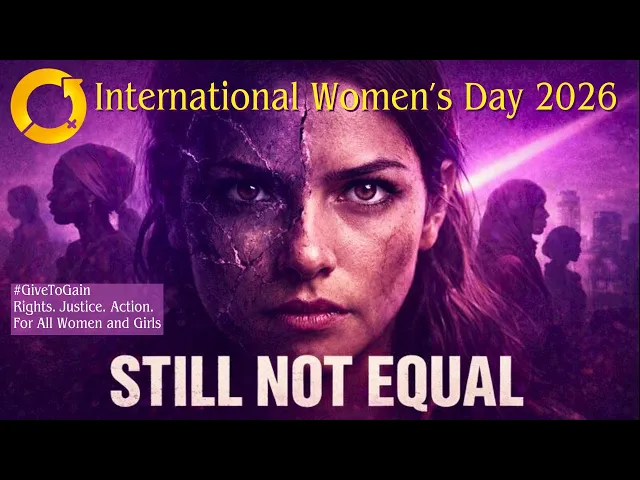
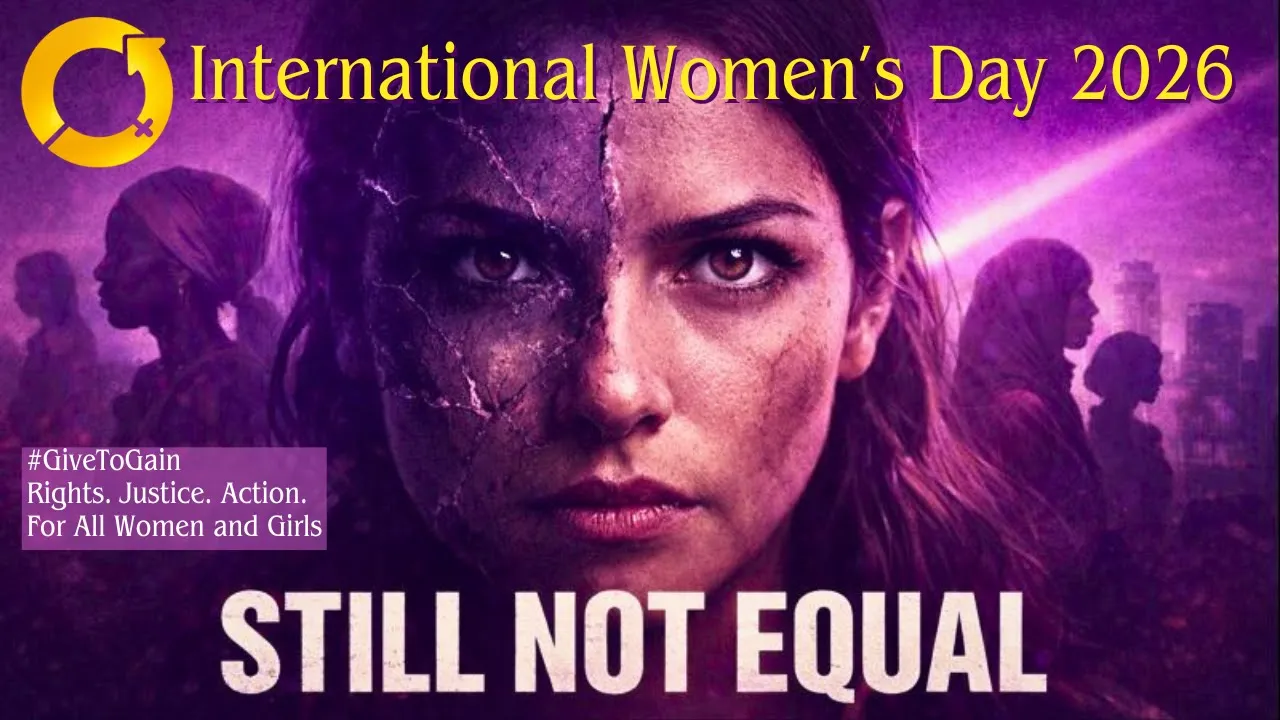
As we stand in the second quarter of the 21st [music] century, women are still not equal before the law. Not in 1926, not in 1976, [music] and still not in 2026. [music] Today is not a celebration.
Today is not about flowers, slogans, or hashtags. Today is about power and who has it and who still does not. As we stand [music] in the second quarter of the 21st century with advanced technology, global institutions, and [music] centuries of progress behind us, one truth remains deeply uncomfortable.
Women are still not equal before the law. Not in 1926, not in 1976, [music] and still not in 2026. Right now [music] in 2026, women hold only 64% of the legal [music] rights that men hold worldwide.
64%. This is not a statistic from the past. This is not history.
This is now. If progress continues at the current pace, it will take 286 years to close the legal protection gaps between women and men. 286 years.
That is not a timeline. That is surrender. In no country on earth have women and men achieved full legal equality.
Not one. Across fundamental areas of life, work, money, safety, family, property, mobility, business, health care, and retirement. The law continues to systematically disadvantage women.
And where the law fails women, justice fails women. Every year, 12 million girls are pushed into early or child marriage. Not because they lack potential, but because the law allows it.
Because systems look away. Because justice is denied before life even begins. Each number is a stolen future.
Each statistic is a silenced voice. Each delay is a decision. The Universal Declaration of Human Rights states, "All are equal before the law and are entitled without any discrimination to equal protection of the law.
" Yet, equality on paper means nothing when justice is not enforced. Without justice systems that work for women, rights become promises that never arrive. This is why [music] International Women's Day 2026 matters.
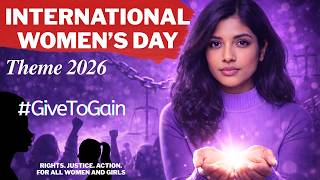
This year, under the United Nations official theme for 2026, [music] rights, justice, action, the world unites behind [music] one demand, equality, justice, and opportunity for every woman and every girl. For all women and girls, [music] not someday, not selectively, not symbolically, now. What does equal justice look like?
It looks like girls guaranteed education, not marriage. It looks like women free to choose work, leadership, and participation in society. It looks like zero tolerance for gender-based violence in homes, workplaces, streets, and online spaces.
It looks like family, labor, and health care laws that do not discriminate. It looks like justice systems without bias, centered on survivors, not silenced by power. It looks like affordable, accessible legal aid, not privilege disguised as law.
Equal justice means laws do not just exist, they are enforced. But justice does not move on its own. For more than a century, since 1911, progress has been fought for, demanded, and earned.
[music] And yet, in 2026, women are still waiting. Waiting for equal laws, waiting for protection, waiting for dignity. From deep rural Africa to South Asia, from conflict zones to modern cities, women continue to carry the cost of inequality.
Women's empowerment cannot remain words in books, speeches or policies. It must exist in lived reality. Now is not the time for reflection.
Now is the time for action. International Women's Day 2026 carries [music] the official global campaign theme, give to gain. Because when we [music] give, we gain.
Giving is not a loss. Giving is multiplication. When women thrive, societies rise, economies grow, communities strengthen, the future [music] expands.
We can give respect, [music] justice, equal pay, safety, education, mentorship, funding, visibility, opportunities, truth, time and voice. We can give by calling out stereotypes, [music] by challenging discrimination, by questioning bias, and by celebrating women's success loudly and unapologetically. Give to gain reminds us of a simple truth.
Gender equality is not a women's issue. It is a human issue. It belongs in homes, in classrooms, in boardrooms, in courtrooms, in communities, in governments, and in everyday decisions.
For over a century, since 1911, International Women's Day has belonged to everyone who believes in equality. As Gloria Steinum once said, "The story of women's struggle for equality belongs to no single feminist, nor to any one organization, but to the collective efforts of all who care about human rights. This movement is inclusive, global, and unstoppable.
This year, we refuse to step back. No matter how deeply rooted the sexism, no matter how discouraging the politics, no matter how loud the resistance, we climb together because 286 years is unacceptable. Because 64% is injustice.
Because silence is complicity. On 8 March 2026 and every day beyond it, we demand [music] rights not promises, justice not excuses, action not delays for all women and girls. And [music] we act by choosing to give to gain because equality will not wait and neither will Eat.