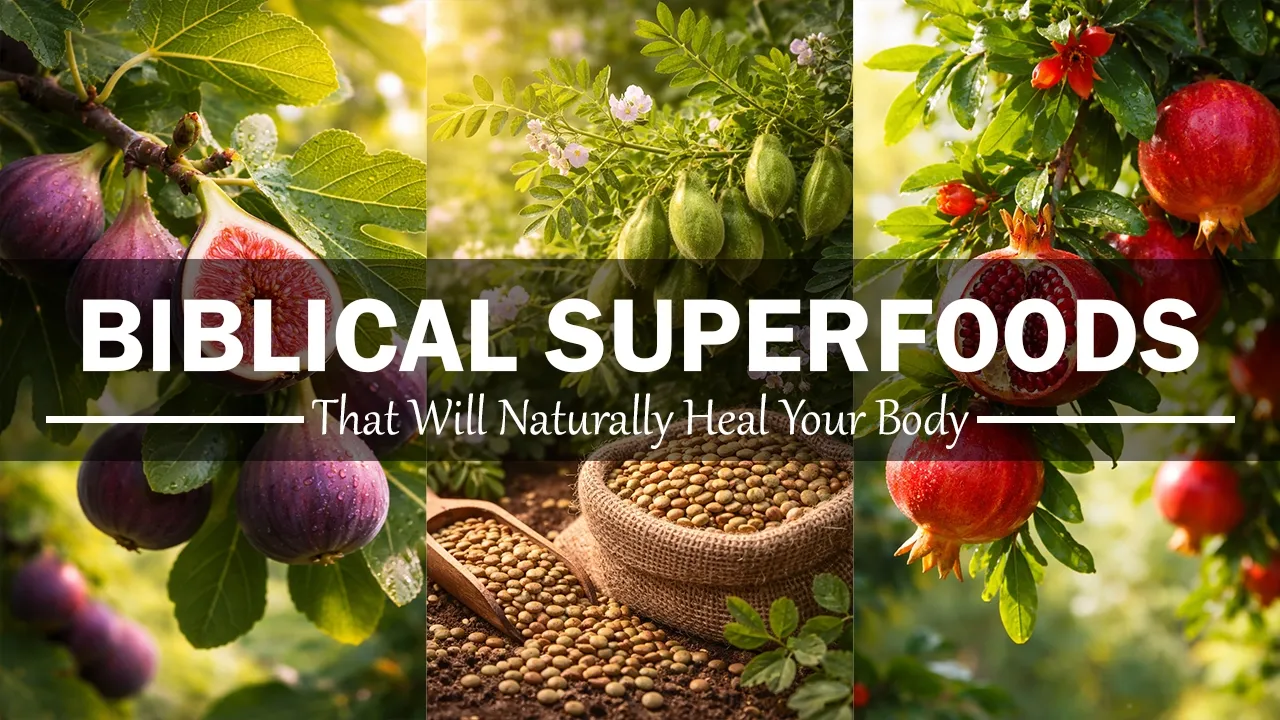
What if I told you that some of the most powerful healing foods on earth aren't in some lab or pharmacy, but written right there in the pages of the Bible? Foods with actual clinical evidence backing them up. And today, I'm going to show you 20 of them that will change the way you think about nutrition forever.
Hit that subscribe button so you never miss a video. So, let's get into it. Here are 20 biblical superfoods that will heal you, ranked from remarkable to absolutely miraculous.
Plant one, pomegranate, the jewel of the promised land. Let's start with a fruit that shows up in some of the most important moments in scripture. Pomegranates appear in Exodus 28 to 33, embroidered onto the hem of the high priest's robe.
They were one of the seven species listed in Deuteronomy 8 to 8, the fruits that define the abundance of the promised land. This wasn't decoration. This was a symbol of divine provision.
And here's what modern science confirms. Pomegranates are loaded with punicalagins and punicic acid, compounds with powerful antioxidant and anti-inflammatory effects. Clinical studies show that pomegranate juice can support healthy blood pressure, improve cholesterol profiles, and reduce markers of inflammation throughout the body.
The antioxidant activity of pomegranate is significantly higher than many other fruits, including blueberries and green tea. Here's what makes pomegranate special. Every single seed is packed with polyphenols that protect your cardiovascular system.
Traditional use in the Middle East, included eating pomegranates for digestive health, vitality, and as a general tonic. Pomegranate got overshadowed by trendier superfoods, but it was considered divine medicine long before any of those existed. Think of it as the fruit so sacred it was woven into the garments of priests, and it's sitting in your grocery store right now, waiting for you to remember what it really is.
Plant two, figs, the first food in the garden. Figs hold a unique place in scripture. They are arguably the very first plant mentioned by name in the Bible.
In Genesis 3 to 7, Adam and Eve used fig leaves to cover themselves. Later, in 1 Samuel 30 to 12, a starving Egyptian soldier was revived with a cake of figs. Jesus himself interacted with a fig tree in one of his most memorable parables.
The fig tree appears dozens of times throughout scripture, always associated with provision, abundance, and restoration. Modern nutrition science has caught up in a major way. Figs are rich in dietary fiber, potassium, calcium, magnesium, and a range of polyphenols.
Research shows that figs support digestive health, help maintain healthy blood sugar levels, and contribute to bone density. The soluble fiber in figs acts as a natural prebiotic, feeding beneficial gut bacteria. Clinical studies have demonstrated that fig consumption can improve markers of cardiovascular health and support healthy weight management.
Traditional use included eating dried figs for energy, applying fig poultices to skin conditions, and consuming fig preparations for digestive complaints. Figs got overlooked in modern nutrition because they aren't exotic or trendy, but they were the first food humanity reached for, and the science says that instinct was exactly right. Plant three, lentils, the stew that bought a birthright.
Lentils play a starring role in one of the most dramatic stories in Genesis. In Genesis 25 to 34, Esau sold his entire birthright to Jacob for a bowl of lentil stew. Most people focus on the drama and miss the nutritional message.
Lentil stew was considered so satisfying, so deeply nourishing, that it could tempt a man to trade away his inheritance. And modern science validates that reputation completely. Lentils are among the most nutrient-dense legumes on the planet.
They're packed with plant-based protein, iron, folate, and complex carbohydrates. Studies show that regular lentil consumption is associated with lower rates of heart disease, better blood sugar regulation, and improved digestive health. The resistant starch in lentils supports gut health and promotes satiety, meaning you feel full longer.
Here's what makes lentils special from a nutritional standpoint. They deliver protein and fiber in a combination that stabilizes blood sugar and provides sustained energy. Traditional Middle Eastern and biblical era diets relied on lentils as a dietary staple, and populations that still eat them regularly show measurably better cardiometabolic health.
Lentils got forgotten in the age of processed convenience foods, but they were literally the food worth a birthright, and your body knows it. Plant four, barley, the warrior's grain. Barley appears throughout scripture, from Ruth gleaning barley fields in Ruth 2 to 17, to the miracle of the loaves in John 6 to 9, where a boy's five barley loaves helped feed thousands.
Barley was the grain of common people, soldiers, and laborers. It was the foundation of daily life in biblical times. Modern research reveals why.
Barley is extraordinarily rich in beta-glucan, a soluble fiber that has been clinically proven to lower cholesterol and support heart health. Studies show barley consumption reduces LDL cholesterol, improves blood sugar regulation, and supports a healthy gut microbiome. The beta-glucan content in barley is among the highest of any grain.
Traditional use included barley bread as a daily staple, barley water for digestive comfort, and barley porridge for recovery from illness. Barley got replaced by wheat in modern diets, but nutritionally, it offers benefits that wheat simply can't match. Think of it as the grain that sustained warriors and fed multitudes, and it still has the power to transform your health today.
Plant five, olive oil, the liquid gold of scripture. Olive oil may be the single most referenced healing food in the entire Bible. From the anointing oil in Exodus 30, to the Good Samaritan pouring oil on wounds in Luke 10:34, to James 5:14 instructing elders to anoint the sick with oil.
Olive oil was medicine, nutrition, and sacred ritual all in one. And modern science has confirmed what the ancients knew in spectacular fashion. Extra virgin olive oil is rich in oleic acid and polyphenols, particularly oleocanthal, which has anti-inflammatory effects comparable to low-dose ibuprofen.
The Mediterranean diet, built around olive oil, is associated with dramatically lower rates of heart disease, stroke, and cognitive decline. Clinical trials consistently show that olive oil consumption improves cardiovascular markers, supports brain health, and may reduce the risk of certain cancers. Olive oil was considered so essential in biblical times that destroying someone's olive trees was an act of war.
It was wealth, health, and hope all in a single bottle. Here's what makes olive oil truly remarkable from a modern perspective. The polyphenols in extra virgin olive oil have been shown to protect LDL cholesterol from oxidation, which is a key driver of heart disease.
Studies on populations that consume olive oil daily show lower rates of Alzheimer's disease and age-related cognitive decline. The anti-inflammatory properties are so well documented that researchers now consider olive oil one of the most important components of any heart-healthy diet. And it is still one of the most powerful foods you can add to your daily routine.
Think of it as the oil that was sacred enough to anoint kings and prophets, and it's available in every grocery aisle today. Plant six, honey, the sweetness of the promised land. The promised land was described as a land flowing with milk and honey in Exodus 3 to 8.
Samson ate honey from a lion's carcass. John the Baptist survived in the wilderness on locusts and wild honey. Proverbs 24 to 13 says, "Eat honey, for it is good.
" Honey wasn't just a sweetener in biblical times. It was a survival food and a medicine. Modern research confirms that raw honey has genuine antibacterial, antioxidant, and wound-healing properties.
Studies show honey is effective against certain bacteria, supports upper respiratory health, and can soothe coughs more effectively than some over-the-counter remedies. The enzymes and bioactive compounds in raw honey support immune function and digestive health. Traditional use included applying honey to wounds, consuming it for energy and immune support, and mixing it with herbs for medicinal preparations.
Here's what most people miss about honey. Not all honey is created equal. Raw, unprocessed honey retains the enzymes, pollen, and bioactive compounds that make it medicinally effective.
The pasteurized, ultra-filtered honey found in most grocery stores has lost many of these benefits. Biblical honey was raw by definition, and that's the form that modern research supports. Honey got reduced to a sugar substitute in modern culture, but it was sacred nutrition in the ancient world, and the science says it deserves that status again.
Plant seven, garlic, the strength builder. Garlic appears in Numbers 11:5 when the Israelites, wandering in the wilderness, remembered and craved the garlic they had eaten in Egypt. This wasn't nostalgia for flavor.
In the ancient world, garlic was given to laborers and soldiers to build strength and endurance. The Egyptians fed garlic to the workers who built the pyramids. Modern research on garlic is extensive and impressive.
Garlic contains allicin, a sulfur compound with powerful antimicrobial and cardiovascular benefits. Clinical trials show garlic supplementation can modestly reduce blood pressure, improve cholesterol profiles, and support immune function. Studies demonstrate genuine antibacterial and antiviral properties.
Here's what most people miss about garlic. The allicin that makes garlic so medicinally potent is only released when the clove is crushed or chopped. Ancient cooks and healers knew this instinctively.
They crushed garlic before using it. Modern researchers confirmed that letting crushed garlic sit for 10 minutes before cooking maximizes its beneficial compounds. Traditional use included raw garlic for infections, cooked garlic in daily meals for cardiovascular support, and garlic poultices applied externally for skin conditions.
Garlic is so common now that we've completely forgotten it was once considered powerful medicine. It was the food that built empires and sustained armies, and it still works exactly as the ancients knew it did. Plant eight, dates, the desert survival food.
While not mentioned by name as dates in most English translations, the word often translated as honey in the Hebrew Bible, particularly the Hebrew word devash, in the context of the land's produce, is widely understood by scholars to refer to date honey, the thick syrup pressed from dates. The date palm was one of the most important trees in the biblical world. Dates are nutritional powerhouses.
They are rich in natural sugars, fiber, potassium, magnesium, copper, manganese, and B vitamins. Research shows that dates support digestive health, provide rapid energy, and contain antioxidants that protect against cellular damage. Studies have found that date consumption may support healthy labor and delivery in pregnant women.
Traditional use included dates as a travel food, an energy source for fasting, and a staple in daily meals. Dates got reduced to a holiday treat in Western culture, but in the biblical world, they were essential survival nutrition that sustained entire civilizations. Plant nine, grapes, the fruit of the vine.
I'm separating grapes from wine intentionally because grapes themselves were a cornerstone of biblical nutrition long before fermentation. Grapes appear throughout scripture, from Noah planting a vineyard in Genesis 9:20 to the spies bringing back a massive cluster of grapes from Canaan in Numbers 13:23, so large it took two men to carry it. Modern research shows that grapes are packed with resveratrol, flavonoids, and polyphenols that protect cardiovascular health, reduce inflammation, and support brain function.
Studies demonstrate that grape consumption is associated with improved blood vessel function, lower blood pressure, and reduced oxidative stress. Traditional use included eating grapes fresh, dried as raisins for travel food, and pressed into juice. The vine was so central to biblical life that it became the ultimate metaphor for spiritual nourishment.
That wasn't just symbolism. It was an observation about a fruit that genuinely sustains human health. Plant 10, almonds, the awakening nut.
Almonds appear in Genesis 43:11 as one of the choicest products of the land sent as a gift to Joseph in Egypt. Aaron's staff miraculously produced almonds in Numbers 17:8. The Hebrew word for almond, shaked, literally means the awakener because the almond tree is among the first to bloom in spring.
Modern research validates the almond's reputation beautifully. Almonds are rich in vitamin E, magnesium, healthy fats, and protein. Clinical trials show that regular almond consumption improves cholesterol levels, supports blood sugar regulation, and promotes satiety.
Studies demonstrate that almonds can support heart health and healthy weight management. Almonds were precious enough to be given as gifts to royalty, and they're one of the most thoroughly researched health foods in modern nutrition science. The awakening nut is still waking people up to better health today.
Plant 11, coriander, the manna spice. When God provided manna to the Israelites in the wilderness, Exodus 16:31 describes it as being like coriander seed. The food that literally fell from heaven was compared to this humble spice.
That comparison wasn't random. Coriander seeds and leaves, also known as cilantro, have genuine medicinal properties validated by modern research. Studies show that coriander has antioxidant, anti-inflammatory, and blood sugar-regulating effects.
Research demonstrates that coriander can support digestive health, help lower cholesterol, and has antimicrobial properties. Traditional use included coriander in cooking for both flavor and digestive support, and as a remedy for stomach complaints. Coriander got reduced to a garnish in modern kitchens, but it was associated with heaven's own provision.
That's a reputation worth paying attention to. Plant 12, cumin, the tithing spice. In Matthew 23:23, Jesus mentions cumin alongside mint and dill as herbs so valued that the Pharisees tithed on them.
Cumin was precious enough to give to God. Isaiah 28:25 also references cumin in agricultural instructions, showing it was a carefully cultivated crop. Modern research shows cumin is far more than a flavor enhancer.
Studies demonstrate that cumin has antioxidant, anti-inflammatory, and digestive benefits. Research shows cumin can support healthy cholesterol levels, aid digestion, and has antimicrobial properties. Cumin seeds contain iron, manganese, and other essential minerals.
Traditional use included cumin in cooking, as a digestive aid, and in traditional medicine preparations. The spice that was tithed upon in Jesus's time offers genuine health benefits that modern science continues to validate. Plant 13, wheat, the bread of life.
Wheat is one of the seven species of the promised land listed in Deuteronomy 8:8. Jesus called himself the bread of life. Bread made from wheat was the absolute foundation of biblical nutrition.
Here's what modern science tells us about whole wheat, and this is important. We're talking about whole, unprocessed wheat, not the refined white flour that dominates modern diets. Whole wheat is rich in fiber, B vitamins, iron, magnesium, and selenium.
Studies show that whole grain consumption is associated with reduced risk of heart disease, type 2 diabetes, and certain cancers. The fiber and nutrients in whole wheat support digestive health and provide sustained energy. The key distinction is between the whole grain that biblical people ate and the stripped, refined flour we consume today.
Biblical wheat was stone ground, whole, and nutrient-dense. It was called the bread of life for a reason. And when consumed in its whole, unprocessed form, it still lives up to that name.
Plant 14, fish, the feast of kings and fishermen. Fish appears at some of the most significant moments in scripture. Jesus called fishermen as his first disciples.
He multiplied fish to feed thousands. After his resurrection, he cooked fish for his disciples on the shore. Fish was the protein of the people, and it was prized at royal tables alike.
Modern nutrition science confirms fish is among the healthiest proteins available. Fatty fish, like those found in the Sea of Galilee, are rich in omega-3 fatty acids, which clinical research has shown support heart health, brain function, and reduce inflammation throughout the body. Studies consistently demonstrate that regular fish consumption is associated with lower rates of heart disease, improved cognitive function, and better mood regulation.
Traditional use included fish as a daily staple, salted and dried for preservation, and consumed fresh from the abundant waters of the biblical world. Here's what makes fish particularly remarkable. The omega-3 fatty acids DHA and EPA found in fish are essential for brain development and function.
Studies show that populations who eat fish regularly have lower rates of depression and anxiety. The anti-inflammatory effects of omega-3s extend throughout the entire body, from joints to blood vessels to the brain. Fish was so central to health and sustenance that it became woven into the very identity of Christ's ministry.
It was the food he cooked, multiplied, and shared. And modern nutrition science says he couldn't have chosen better. Plant 15, milk, the first nourishment.
The promised land was described as flowing with milk and honey. In 1 Peter 2:2, believers are told to crave pure spiritual milk. Milk represented the most fundamental, life-giving nourishment in the biblical world.
Modern research supports milk's nutritional importance. Milk is a complete source of protein, calcium, vitamin D, and other essential nutrients. Studies show that milk consumption supports bone health, muscle recovery, and may help maintain healthy blood pressure.
Fermented dairy products like yogurt and kefir, which were common in biblical times, provide additional probiotic benefits for gut health. Traditional use included fresh milk, fermented milk products, cheese, and butter as dietary staples. In a world without supplements, milk provided essential nutrients that were difficult to obtain elsewhere.
It was called the nourishment of the promised land, and nutritionally it earned that title completely. Plant 16, beans, the prophet's provision. In Ezekiel 4:9, God instructs the prophet Ezekiel to make bread from wheat, barley, beans, lentils, millet, and spelt.
This wasn't arbitrary. This was a divinely prescribed recipe designed to sustain life during hardship. Beans were an essential part of that survival formula.
Modern nutrition science explains why. Beans are rich in plant-based protein, fiber, folate, iron, and potassium. Studies consistently show that regular bean consumption is associated with reduced risk of heart disease, improved blood sugar control, and better digestive health.
The combination of protein and fiber in beans provides sustained energy and promotes satiety. Beans were considered essential enough to include in a recipe given by God himself. That's about as strong an endorsement as any food can get.
And the clinical research agrees with it entirely. Plant 17, mint, the tithing herb. Mint appears alongside cumin in Matthew 23:23, another herb so valuable that the Pharisees paid tithes on it.
This tells us something important about how highly mint was regarded in biblical culture. Modern research shows mint has genuine health benefits. Studies demonstrate that peppermint supports digestive health, can relieve symptoms of irritable bowel syndrome, and has antimicrobial and anti-inflammatory properties.
Peppermint oil is one of the most widely studied herbal remedies, with clinical evidence supporting its use for digestive comfort, headache relief, and respiratory support. Traditional use included mint tea for digestive complaints, mint poultices for headaches, and fresh mint in cooking and medicine. Mint was tithed upon because it was considered that valuable.
Modern gastroenterology research suggests the ancient world had the right idea. Plant 18, flax, the textile that heals. Flax appears in biblical scripture primarily as linen, the fabric made from flax fibers.
The high priest's garments were linen. Proverbs 31 describes the virtuous woman working with flax. But the flax plant produces both fiber for fabric and seeds for food, and both were utilized in the ancient world.
Modern research on flaxseed is impressive. Flaxseeds are the richest plant source of omega-3 alpha-linolenic acid. Studies show that flaxseed consumption can lower cholesterol, reduce blood pressure, and support digestive health.
The lignans in flaxseed have antioxidant properties, and the high fiber content promotes gut health. Traditional use included flaxseed in bread and porridge, and flaxseed oil for both cooking and medicinal applications. Flax served the biblical world in fabric and food, and the seeds that ancient people ground into their bread still offer remarkable health benefits today.
Plant 19, bitter herbs, the Passover medicine. In Exodus 12:8, God commands the Israelites to eat the Passover lamb with unleavened bread and bitter herbs. These herbs, likely including plants like chicory, endive, dandelion greens, and horseradish, weren't just symbolic.
They were medicinally significant. Modern research on bitter-tasting plants shows they stimulate digestive function by promoting the production of digestive enzymes and bile. Studies demonstrate that bitter herbs support liver function, improve nutrient absorption, and promote healthy digestion.
The compounds that create the bitter taste, various alkaloids and polyphenols, have antioxidant and anti-inflammatory properties. Traditional use included consuming bitter greens before or during meals to aid digestion, and using specific bitter herbs for liver and gallbladder support. Here's what most people miss.
Bitterness has been almost entirely removed from modern diets through selective breeding and food processing. We've bred the bitterness out of lettuce, out of cucumbers, out of nearly everything we eat. But our digestive systems still have bitter taste receptors, not just on our tongues, but throughout our entire digestive tract.
Those receptors trigger the release of enzymes and bile that optimize digestion. The bitter herbs of Passover were ancient digestive medicine prescribed by God himself, and the science says we should bring them back to our plates. Plant 20, the grapevine, the heart of scripture.
And here we are at number 20, the plant I saved for last because it represents everything we've discussed today. The grapevine appears over 500 times in scripture. Jesus called himself the true vine in John 15:5.
Wine was used medicinally. Grapes were understood to sustain life itself. And here's what modern cardiology has finally proven.
Grapes and moderate consumption of red wine have measurable cardiovascular benefits. The polyphenols, particularly resveratrol, protect heart health, reduce inflammation, and support longevity. Clinical research shows that the compounds in grape products are associated with reduced heart disease risk, improved cholesterol levels, and decreased oxidative stress.
The French paradox, lower heart disease rates despite higher fat diets, is partially attributed to regular red wine consumption. Traditional use included wine for digestive health, as a solvent for other medicines, and grapes for nutrition and vitality. Paul even instructed Timothy to use a little wine for his stomach in 1 Timothy 5:23.
The vine was so central to biblical life that it became the ultimate metaphor for connection, life, and sustenance. And that wasn't just spiritual symbolism. It was recognition of a plant that genuinely sustained human health for thousands of years.
The grapevine never got forgotten, but we did separate the spiritual symbolism from the physical reality. For heart health and longevity, grapes and wine offer what they've offered since ancient times, genuine cardiovascular support that scripture recognized long before we had the research to explain why. If you made it all the way to the end of this video, you've just learned something extraordinary.
The Bible isn't just a spiritual text. It's also a remarkable record of nutritional wisdom that worked then and still works now. These 20 superfoods aren't folklore or superstition.
They're legitimate nutrition validated by modern science. So, here's what I want you to do. Smash that like button if this video changed the way you think about scripture and nutrition.
Drp a comment below and tell me which biblical superfood surprised you the most. Are you team pomegranate and fig, team garlic and lentils, team the vine? I read every comment, and I love hearing from you.
And if you haven't subscribed to the Homestead Gardener yet, what are you waiting for? Hit that subscribe button and ring that notification bell so you never miss a video. We're exploring the fascinating world of plants, connecting ancient wisdom with modern knowledge, and I'd love to have you on this journey with us.
Remember, sometimes the most powerful nutrition isn't in a supplement store. Sometimes, it's in scripture, just waiting for you to read it with new eyes.