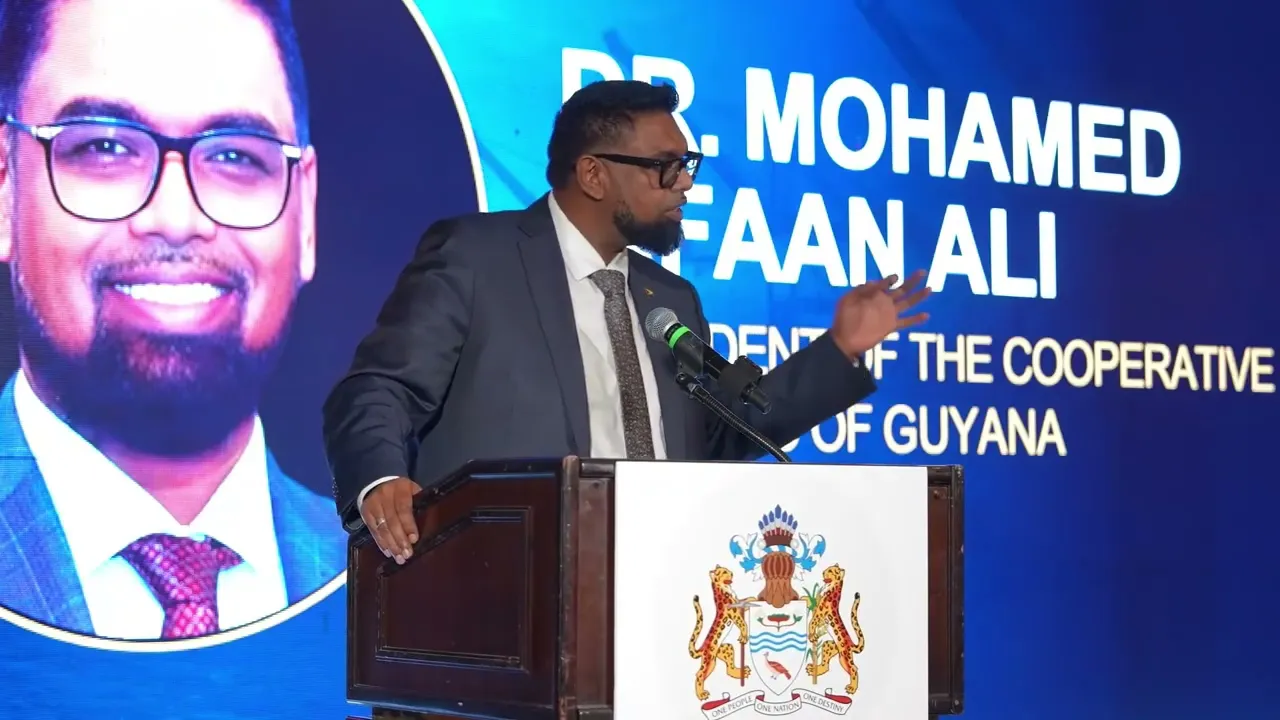
asking me to speak on a subject matter and they know that I can keep you here for a very long time and I will not endeavor to do any of that tonight but I've kindly asked Minister Zufi Ali to leave my energy conference presentation on the screen for those of you who have nothing to do with your life. You can stay back and listen for it, listen to it for the next hour and a half. But listen, you know, I saw three words on the screen earlier.
Partnership, investment, and opportunity. And each of these words means something to me to the country I represent and to the people who share that geo geographic space. Partnership is not a loose concept.
Partnership is a very important concept. Partnership speak about shared risk. You entered into partnership not to avoid risk but to share risk.
To share the risk of an investment, to share the risk of an opportunity and to share the risk of success or failure. For example, Exxon, CNO, Chevron and the government of Ghana, we are in partnership. So this concept of partnership is a very core concept.
It speak to shared risk, shared responsibility. You cannot enter into partnership where there is no shared responsibility. There must be burden sharing.
There must be shared ownership, shared vision, shared values and shared success. It is very important in any partnership for the vision to be embraced by every partner. And in my country, when you hear that more visitors are coming, so you put on some more rice.
I don't know about here. So you're here in this room to partner to form partnerships to understand the nature of partnerships and importantly to underpin that partnership on the vision of a country. the destination as to where we are taking Guyana.
And that is why to view this vision in a narrow onedimensional frame of energy and oil and gas is a total misunderstanding of the opportunities in Ghana. It is a complete underestimation of the potential of Guyana and it is limiting yourself in relation to the real opportunity that exists. There is no country in the world with deep sea offshore oil that can say they're building a strategy where oil and gas will create the wealth.
Oil and gas is a catalyst for prosperity. Prosperity is built on the way you invest the resources from oil and gas. It is built on the systems, the structure that support this sector because it is a finite resource.
In our case, we hope oil and gas will be there for a long time. But you cannot plan a strategy on what will be there for a long time for a country. You have to build a strategy that would ensure the success of a country forever so that this generation and all other generation will benefit from.
country, its opportunity, its growth and not its potential anymore, but the result we strive for. And that is the difference in our strategy. We want every person who decide decide to make Guyana their home.
Give them the opportunity to live a quality life supported by quality infrastructure and more importantly deeply rooted in culture, faith and responsibility. And this is important. We do not want to build a country without values, a country without faith.
For me, faith is the foundation upon which every success reside. And if we believe that we could build strong sustainable societies without strengthening and protecting our culture, enhancing our faith, structures and systems of government, one in which respect and shared responsibility are the basis upon which prosperity is elevated. Then I humbly put the view that we are making a terrible mistake.
In this room we have people from every corner of the earth. Different belief, different systems. But we are here because we want to be part of this partnership.
The second concept is that of investment. Now I want to be brutally honest with you. I find it hard sometimes to understand the philosophy of investors.
An investor would come to the US to invest without seeking a meeting with the president, without asking for government subsidy on land, without asking for cheap land, without asking for a research paper. Investment is a study decision. Investment comes with a cost.
You have to be ready to bear that cost. Do your research. Do your feasibility study and then come to investment.
Then make your investment decision. And it's important for us to understand this because sometimes people believe that because you're a small country uh there's different guidelines. We have the same shared values like the United States of America.
So I want us to be realistic. Investment must be studied. It must be strategic.
It must be seamless and realistic. And here is where governments come in. How do we build the system to allow you to have a seamless journey with our investment?
And that is where our concentration is on. How do we use technology, AI? How do we use all the available tool that takes away human biases that would allow you to make a confident investment decision and that would allow you a seamless journey to that path.
And here is where the work of policy, the work of government and the Guyana office for investment becomes critical. We must be able to create that enabling environment and that is where our concentration is. Opportunity and investment must in a modern world be linked to innovation, creativity, credibility, diverse opportunity, safety.
It must be deliberate and beyond borders. If you're investing in Guyana, you're not investing in the borders within the borders of Guyana. The journey that we are taking must allow you to understand that we are targeting a market of over 400 million consumers.
because we are part of a region where we have preferential treatment and trade agreement with a market of over 400 million consumers. So, how is it your small and medium-sized enterprise can benefit from low costs of energy, a highly efficient system, great geographic location, and building out what we're doing now, building out a logistics infrastructure that allows seamless connection to markets. That is the opportunity.
Whether you're doing furniture manufacturing, there was a time when using huge investment in furniture from the US and investors were manufacturing in China and bringing back the product into the US. Here is it. You have an opportunity to manufacture in Guyana with competitive energy prices and bring back your product in the US or take it to the European Union under the economic partnership agreement where we have preferential trade arrangement existing.
So the opportunity is really beyond our borders and the investment in those opportunities allow you market share and market potential beyond our borders. Now, I've spoken to many of you already today on the different paths or the pillars of growth and development that we are embracing. But this evening I want to speak on three words.
Creativity, innovation, and technology. And for me, these are not buzzwords. These are becoming strong policy and economic terms that are critical for the success of any economy.
We have to build a smart country. When you have population constraint and skills deficit, a smart country becomes even more important. And what do I mean by this?
Those of you who would have visited Guyana in 2020 and returned recently, you can attest that there are seismic shift in your experience at the airport. In just six years of investment, our airport is now ranked number one in the Caribbean for experience and second in all of Central and Latin America by technology, by AI, and by embracing a philosophy of people centered serviceoriented and resultsdriven. We're going through the second phase of the modernization by allowing for selfdecoration through scanners and AI and modernizing our laws to give you the freedom of decoration, the freedom of choice as to whether you want to pay a fine in the first instance, a higher fine in the second instance, or experience a period of jail time in the third instance because I believe in the human potential to make informed decisions.
We're going to invest in the technology to allow you to do what is right. We are already we have already outgrown the rehabilitated Cheddy Jagen International Airport and we have signed a new contract for terminal 2 of that airport that will now enable us to process to move from processing 800 passengers per hour to 3,200 passengers per hour. But more importantly, we know that your experience begins there.
And we are in investing in that experience to allow persons to feel the country, feel the beat, feel the service from the time you book that ticket to Guyana. You must be able to seamlessly complete all your customs im and im immigration services. It must be a people centered customer oriented service delivery framework.
Getting through the airport and walking through the airport, you must feel the pulse of our rainforest, the strength of our tourism product, the opportunity in agriculture, the hospitality of our people. And you must experience the fragrance of beauty, prosperity, service and love. And that experience must follow you throughout your state.
That is why smart country means safe country. So we have launched a safe country program. We have launched the fintech program to bring technology into financial services.
We have launched investment to allow for greater connectivity infrastructure service delivery in the best possible health care, best possible education, entertainment services, cuisine. All of this forms part of that holistic ecosystem. protecting our borders, understanding our threats, investing in the tools that would in a predictable way assess those threats and trigger mechanisms that would allow us to ensure our borders, our exclusive economic zone are policed through technology, through systems and through people.
Now infrastructure right now we are in that building out phase. So there will be inconveniences. There will be inconveniences but we are working at a rapid pace in building out infrastructure, challenging ourselves in building a new city, the silica city, building new urban centers, new places of beautifification, creating a walking trail within the city, a nature trail within the city, a heritage trail within the city, a cultural trail within the city, a commercial trail within the city.
Building a city in which life is celebrated. That is the future we're embracing. Quality of life, quality of care, quality of service.
We want to build quality citizens, quality human beings. Not only things that are physical quality in the way we think, the way we behave, the way we act, the way we process things, the way we treat each other, the way we orient our families, the way we celebrate community. We have seen the madness in this world.
We're the most wealthy of societies. have quality mindset upset because the focus has been always physical development. We need to create quality citizens and that is an important part of the investment story.
Upskilling, upgrading, investment in human capital. So, I'm already going on for too long. And what you will have seen, one of the things that you'll experience in Guyana is a smell of good food.
Now it brings me to something I have not spoken about much over the last 24 hours. The orange economy. We are going to invest heavily in the orange economy.
We want to be the destination for movies, Netflix series. We want the life of Hakeim to be written and produced in Guyana. We want Guyana to be a mega hub of culture, entertainment, sports.
These are things that we are going after. We don't want to be on a single track. We want to be there.
You know, if you know Colombia, do we have any Colombian in the room when they started the orange economy? >> No. No.
That's not how a Colombian would announce themselves. All right. We can test him to to see what was the first series that brought what what was it now?
You're not a Colombian. You get you're blocking your way. When they started the Orange Economy, you know, a series called Naros.
>> Remember that. >> The rest is history. >> The rest is history as to what this industry has become in Colombia.
There is no better place to film a series like survival or naked and afraid than Guyana. We have the ecosystem to support the orange economy in unbelievable ways. And that is why we want people who will help us to shorten the time to get to these products.
We can't go in a linear fashion. We have to leapfrog to that destination. We have to use every available tool to leaprog us to save us 30 years of straight line development.
That is why partnership and networking is so important for us. We want the partners that will take us there faster, more efficient but importantly in a safe manner. So the orange economy creating value, tech services, the modernization, the prochemical industry.
Again, as Alistister said, here is where in Wales the first pipeline is already on shore, ready to be turned on. And here is where the population will now see an entire ecosystem supporting onshore services. And I want to celebrate the gy at home and in the diaspora who are taking the risk.
You know some people are speaking people speak about this deep water port that will happen. But when you look at the combined investment from GY here, well in Guyana and in the diaspora, they have invested more than a billion dollars in shore-based facility and war facilities in Guyana. They're derisking by themselves.
These things are not celebrated every day, but this is the reality. The skyline is changing. We cannot produce enough power at the pace at which it's being demanded.
So now you will see onshore activities at an unprecedented scale. You will see the possibility of linking that gas potential with northern Brazil. Then of course the real opportunity that will come with the Burby's development and the exclusive development zone.
Just imagine four years ago, 5 years ago, we were fighting well six years now, we were fighting to save democracy, to keep the rule of law, and to keep Guyana within the nations of country that respect the outcome for elections. Today we have not only safeguarded that Guyana, we are celebrating the fruits of that labor. Four years ago, if someone would have said to you that we are going or we are receiving interest from some of the largest data centers in the world, Alistister, we would have laughed it off today.
I can say that almost every one of the major players in the data center world in hypers scale investment. They have Guyana on their trajectory. They are looking at Guyana as a possible destination for that investment.
That did not happen by accident. That happened by clarity of vision. by purposeful planning, by deep integration.
So big data, computing, AI, digitization, virtual pipelines, all of these things will play a critical part of this innovative, creative, technologically driven modern Guyana that we're building. So outside of everything that I've spoken about today, I wanted to add this appetizer. Do you have appetizer today on the menu of the Guyana story and as Alistair pointed out, we believe we're moving fast, but what lies ahead is a story that will be mind-blowing, that will be studied in universities.
ities that will create its own legacy, that would write its own history book. And this story must be owned by the people of our country, but celebrated by the citizens of our world. I thank you and God bless all of you.
President of the Cooperative Republic of Ghana, ministers of cabinet, I hear uh members of the diplomatic corps, many very warm welcoming guests or or hosts from from the beautiful city of Houston. Of course, led most importantly by as we heard, Luffy Hassan, who's such a wonderful friend for the people of Guyana. I'll also say of course the delegation from Guyana.
There's many of you in the room. I feel like I'm very much part of the that Gy delegation after 5 and a half years in the country and and it is a beautiful country and what an incredible time to be anywhere on the planet but I would say especially in Guyana. And so Hail set me up.
He mentioned partnership and I wanted to talk about three things that of three Ps partnership, people and progress because I think that is what is top of mind right now in Guyana. It starts with partnership. Our partnership with the country of Guyana, Exom Mobile's journey in the country started in 1999.
Not many people remember that date because the date everyone remembers is 2015 when we struck oil and we found the leiser field. But 1999 is when we first signed a contract with at the time uh the the president in 1999. What a journey that we've been on.
We have had partners that went with us on the journey and then in 2014 pulled out because the risk was too high. And let's face it, despite the discovery of oil and gas in the region, Guyana had tried for many years, for decades, and and dozens of wells to find oil in the country, but nothing economic had been discovered. So in 2014, our partner at the time walked away, and we were left looking around for partners because our board thought it was very risky, too.
But we found new partners in Hess and Senuk and they joined us in drilling the very first well, the Lisa well in the Starbrook block. And in May of 2015, of course, we were rewarded for that commitment. And so was the country for the perseverance and the belief that one day oil could be found offshore and it was with the Lisa discovery.
And then what a change is taking place. What a transformation. what progress but it has been the partnership that has enabled it as you heard from Sahel records are being set in fact from from Jerry and others too the pace of growth in the country is quite remarkable it's it's the fastest growing economy in the world but as we heard it's also not just about the oil and gas oil and gas is being used in that partnership to fuel other parts of the economy And we're seeing doubledigit growth in other parts of the economy, the rest of the economy.
That partnership though is fundamental. Exommobile, as you know, is a global player. While our home is in Houston, we operate all around the world and we find amazing resources in many countries around the world.
But there are very few where we've been able to establish a special partnership like this where we can establish a vision, see what's possible in the future and then move towards it at pace. And that is what is very very unique about our experience in Ghana. the fact that we have built a vision together, we've built trust and we've been able to unleash the capabilities that Exom Mobile has in Guyana to deliver what is industry-leading development, fastest cycle times from discovery to first production and from project to project.
So where are we today? 11 years from that discovery, we already have four production developments on on street. We're producing over 900,000 barrels per day.
The next production facility is expected to start up before the end of this year, taking Guyana over the 1 million barrel per day landmark milestone. That is remarkable that we'll be within seven years of first oil to exceed 1 million barrels a day and just 11 and a half years from the first discovery. But we're not finished there.
We have two other projects behind the Waru project that have been sanctioned. The Whiptail project and the Hammerhead project. They are under construction as well and are anticipated to start up next year and then in early 2029.
And we are working with the government on the longtail project. This is the project number eight, the eighth major development in the Starbrook block. We anticipate with the startup of that project by 2030, the end of this decade, the country will have a production capacity of 1.
7 million barrels per day. It is outstanding pace and progress but it's taken partnership and I would say that partnership between Exxon Mobile our partners Henuk and the government of Guyana has been fundamental but I also want to pick up on the private sector the local private sector we're talking about building connections between businesses and investors here in in the United States and with the people and the businesses in Guyana. Our experience as Exommobile has been quite remarkable.
I'm sure the president will talk to you about local content, the local content act that the government passed in December of 2021. And I will tell you that he will also recall some of the discussions we had where we weren't necessarily initially completely bought into this uh this new law. But what has been important again as a partnership is how it has been implemented.
It's been implemented as a partnership and what we've been able to see is the fostering of international partnerships between overseas investors and gyes and this is where the people part comes in. There are not many places and and yes said over 30 years I've been in the industry in various countries around the world. The entrepreneurial spirit that exists in Guyana is remarkable to see.
It's truly remarkable. It's hard to see any guy. We heard about the taxi driver.
I mean, everybody wants to be a part of this remarkable journey and why shouldn't they be? And that I think is the key for the local content is that the vision is and we're bought into that vision that every GY citizen should benefit from the development of their own natural resource and that is what we're developing and if we're truly a partner of the state then we should be doing everything we can to ensure that that is possible. So we're committed on that journey and part of it is the investment in the people.
So yes, there are the local businesses, but there's also the people. And I'm proud to say that in the industry, and remember that the industry has been very short-lived in Guyana, but in the industry in Guyana, there are over n we estimate around 9,000 people that are in already engaged and working in the industry and 70% of those are Gion. Now this is our industry is one with very high standards.
Starts with safety but of course quality is supremely important. Our our business has risks. We work offshore in a very challenging environment.
And so it's critical that everybody who works in the industry can meet those exacting standards. And so investing in the people allowing them that opportunity is something that we all deeply believe in. We have some landmark investments such as the technical training center in Port Morant and in the Burbese area where we are now training in worldclass facilities gy from all around the country to work offshore to the highest standards with the latest technology offshore.
But we're also through whether it's Exom Mobile's programs or many of the the contractors that work in the country investing in the people that are part of our workforce. And that is absolutely fundamental because these are the people that will drive our industry, will drive the oil and gas industry for the future in Guyana. It has been essential to bring in overseas talent to get it started up, but our job is also to turn it over to the GY workforce and ensure in the long term that almost all the jobs are performed by GY.
And I think we're on an excellent track for that to happen. So to progress, let me finish on progress. I already talked about some of the amazing statistics that have been enabled through the partnership and the people that are involved in the country.
But the progress ahead of us is in many ways despite the excitement that we've seen I think is even more exciting to come because most of what we've seen is happening offshore. Sure, we have some shore bases and other infrastructure and training institutions that we've established onshore, but most of the work happens offshore. The four floating production facilities, the five drill ships, a myriad of other vessels that support the operations are all offshore.
We have now landed a pipeline, and we're ready to deliver gas to the Wales uh development zone in region three. But the vision of his excellency and the challenge he has set us on timeline is that by the end of his presidency we will have also the Bise region supporting uh gas flow and a whole new set of industries and indeed I think the video started to lay out what is possible. So we're excited, in fact more than excited, very very excited about what has happened in Guyana so far.
Exommobile is honored to be a part of this. Yes, we are making huge investments over $65 billion US committed to the country. But what we have been able to do in the partnerships and with the people of Guyana gives us that confidence to continue on that journey, continue to lean into some more challenging resource and make it happen.
And that's what we're going to do with the longtail project and then hopefully also with the HIMAR project next year. Bring that forward to the government and build the resource develop that resource to support development in the Burbese area for a whole new onshore development. And that really is the future the progress of the country.
So, as I say, I feel like I've only been there a day, but it's been five and a half years. The changes, if you have never been to Ghana, or you haven't been for a long time, you're part of the diaspora, you need to come visit. I'm sure the president will mention there's a whole lot of new hotel rooms and that there are some wonderful options in Guyana for you now.
So please come see the opportunities, engage with the private sector commission, the Georgetown Chamber of Commerce, the other chambers. There are lots of eager business people delighted to spend time with you, share their interests, their exciting opportunities, and we will all together build the future that is bright for Guyana. Thank you.
I pause and recognize someone who has been a constant in this delegation journey. Mr Luti Hassan. Year after year, Mr Hassan has opened its doors, extended its network, and ensured that Guyana's delegation feels at home in Texas.
Mr Assan on behalf of the GCCI, the private sector and every GY who have passed through Houston on this mission, we thank you sincerely. Your contribution to this bilateral relationship is always appreciated. This is the sixth time Guyana has come to OTC, sixth iteration and each year this delegation has grown in size and in the quality of engagement.
That trajectory is the result of a deliberate coordinated effort by the public and private sector to ensure that Guyana's present here is in Houston yields outcome beyond visibility. The GCCI and Go Invest have worked in close partnership to structure this mission around one clear objective value for our delegates, for our investors, and for Guyana. We are here to participate in it, to compete within it, and to signal clearly and confidently that Guyana's private sector is open, capable, and ready to do business at the highest level.
The presence of His Excellency, President Ali, and senior members of government alongside our private sector delegation this evening sends a message that cannot be overstated. It speaks to a unity of purpose. A Guyana that is aligned that is coordinated and that understand the moment in the moment it is in.
Investors take note of these signals and the GCCI is proud to stand in that unified front. We are a country of immense opportunity anchored by stable democracy, a growing economy and a private sector that is ambitious, structured and ready to engage. The GCCI represents the private sector and we look forward to building tonight to tonight the partnership that will translate into tangible business even for tomorrow.
I thank you and do enjoy your evening. that Guyana is no stranger to anyone in the room and if it is give me a minute and I will introduce it very quickly for you. It's very important to to note that I remember standing in this very room lift um when you supported the first Guyana delegation to OTC.
I was a member of that delegation and I remember standing in this very room in awe of somebody who I've never met before but I connected with on a personal person-toperson level and you got it. You got it then, you get it now. What does Guyana need and where do we need to go and the support that we need to do there?
So, Lufty, I want to say a huge thank you to specifically to you for the support you've given to Guyana those many years ago. So, as Kathy mentioned, this has always been a GCCI and Go Invest Guyana um partnership. Has always been a public private partnership.
And for those of you who don't know, the GCCI, the Georgetown Chamber of Commerce is the largest and oldest business support organization in Guyana with over a thousand members. And they are a proud member of the private sector commission. how it works in Guyana.
And it's actually a model that's being uh uh replicated across the Caribbean and Trinidad and Jamaica where all of the different BSOs in the shipping, the manufacturing, tourism, aviation, and the different regional chambers, they will come together and they will form a private sector commission that is the apex body in the country. So we represent the length and breadth of Guyana as well as the sectoral institutional knowledge that is Guyana. And what I can tell you, Luffy, is that what we have seen grow here as we came to OTC and we were in a back tent in the middle of nowhere and then we've worked our way to be the keynote speaker, the center stage here in OTC.
And that is not uh a thing uh that is not a mistake. That is thank you to everyone in this room. Thank you.
Can I get a round of applause for all the private sector that's making that happen? So, let me introduce Guyana to those of you who may not know us at this point. Guyana is like a balloon.
If you think about a balloon, when it expands, it expands in every direction simultaneously. And what we have seen over the last 5 years is an exponential growth of that balloon expanding in every single direction using oil and gas as a catalyst of its growth. Now, let me explain that a little bit further.
If you think about Houston as the energy center of the US, and some other states might get upset with me, but I'm in Texas and I heard that Texas you guys don't care. So, Houston is the energy center of the US. Guyana is the energy center of the Caribbean.
And I know that some people in the room are going to be upset with me, but we're going to take a note of Texas's hat, and we don't care either. So, what I would say is Thank you. So Guyana is going to be is the energy center of the Caribbean.
And what took Houston decades to do, Guyana is doing in years. In 2015, we discovered oil. In 2020, 2019, 2020, we started producing oil.
And now we are a leader in the region. What that should tell you is that the rapid growth that Guyana is seeing, all right, is something that is absolutely planned. It is meticulously uh executed and it is done in a public private partnership way.
If you look around, our president just celebrated his 47th birthday. I am the head of the private sector. I'm 39 years old.
Kathy is the president of the GCCI. She is 21 years old. What that tells you is that we have a diverse we have a young leadership both public and private and we know what we want to see our future become and we're working every day towards that.
So if you think about the question why Guyana, you will know that we have unprecedented growth, doubledigit GDP growth for the last year's running. Last year 19. 3 GDP growth, 14% of which non oil GDP growth.
We are deliberately diversifying our economy outside of oil and gas. So and it's working. So if we have that level of non-oil GDP growth, I am telling you it is a balloon expanding in every direction simultaneously.
So what I want you to walk away with today is what do we need in Guyana is more and I'll get into this a little bit soon uh sooner. So Guyana is growing at exponential rates. We are diversifying our economy into agriculture.
And if you haven't known it by now, there's a $1. 5 billion market opening up in four years. So we have to make sure that we are leading the charge in a $ 1.
5 billion agriculture market. And I'm trying not to steal too much from the president's speech because I know he's going to touch on it. Um, so he has recognized that this $ 1.
5 billion market is opening up and he's positioning Guyana to be a leader in agriculture and agrop processing. So we're diversifying there. We're diversifying into logistics because if we're growing all of the food, we have to get it into the car market.
So if you start thinking logistics, both maritime trucking, air logistics, coal storage, warehousing, and the list goes on and on and on. We're expanding into ICT and technology. We're building data centers using our gas.
We need the the investment to take that data center and now making uh make further products down the line, value added products, for example, in AI development, in blockchain technology, in fintech. How do we make sure that Guyana is not just an energy leader, a food security leader, but also a technology and innovation leader? And that's what we're pushing Guyana towards, using the e the hydrocarbons, using the oil and gas industry to develop tech and and STEM centers.
We're also expanding into tourism and and orange economy. And what I'm doing is I'm laying out the game plan for you. So, if you're looking for Jerry's five-step guide to investing in Guyana, I'm giving it to you right now.
So tourism we have the largest amount of ecoourism per capita I like to say in the Caribbean and the reason is that we have a beautiful tech uh beautiful landscape ranging from waterfalls to savannah to beachfronts and those of you who don't believe me we have white sand beaches and blue water in Guyana you have to come and see it so all of this is happening and what I'm going to tell you and this part this last part if you don't take away anything that I'm saying remember this. We have a president that's on his second term. And he may not like me saying this, but if you want his full support, have a project and have it ready to deliver before 2030.
And you will make sure that a president understands the entrepreneurial spirit, a president that understands innovation, and a president that's willing to work with private sector if you can execute. So I'm putting the challenge out there to you. So, as a chairman of the private sector, I am here to ask you guys to tell you guys what Guyana needs.
And Guyana needs more. We need more people in the country. We have 850,000 people in a land mass the size of the UK.
We need more technology because we are rapidly growing our country and our economy and technology is a force multiplier. And frankly, we need more money in the country. So, we need people to come back.
We need people to invest and we need people to bring their technology and services. More importantly, we have a private sector that has been executing for the last 10 years. The economy didn't grow by accident.
It grew with private sector innovation and experience and execution. What we need now are the partners to help us carry it forward. So, I like the name of this uh this uh con this uh gathering is a business exchange and I need you guys to understand that we are actively looking for partners.
We are looking for people to invest with us to develop the Guyana of the future and we're open to investment and we're here to find them. So for those of you in the room, find the local the gy next to you and talk to them about what project they're doing. I guarantee you every single guy gy in this room has a project that's looking for an investor right now.
And with that, I want to say thank you so much to Luy and your family for hosting us once again. Here we are years later and I can't wait to see what the next six years hold. Thank you.
>> Putting Guyana on the New York Stock Exchange with a ticker called 1gy. And if you think in 2020, even if we were to get there, it would have been like a penny stock. You'll start listening to the numbers today where we have come in the last 5 years.
The growth numbers, you know, what do you look when you buy a stock? You look for vision. You look for strategy.
You look for execution. Got that in his excellency. You look for numbers performance.
We've got the last five years the fastest growing economies. You look at our diversification and we're not diversifying. I tell people I get upset when I hear the term we have already been a diversified economy.
What the president is doing is modernizing our known industries. So when you think of Houston as the capital of the world, the next chapter is being written in Guyana in real time. when you took it took you decades to get where you're at today.
It will take us less than that in real time. You look at countries in the past 60 years ago in the Middle East, I won't name them, that may have found oil and gas, may have had 400,000 people or 700,000 people similar to us. Look where they're at today.
What they didn't have that we have is natural resources. Look at our boxite. 1.
5 million tons of gradea a boxite. President will describe that. We've got more gold on the ground that we probably have disclosed.
We've got land for agriculture. We will feed the Caribbean. So when you listen his excellency speak tonight and if you listen to him today at OTC, ask yourself where do you fit?
How do you get in the game? We don't you mind you coming to Ghana and make money. We ask that you work with our local private sector and we will help you to deliver on your project.
Our commitment as a government is businessfriendly. We are here to enable your entrance into Guyana as smooth as possible. So while it may take those countries 60 years, I think our president's vision, strategy, and execution may take us 15.
God bless you. >> What time is it? What time is it?
>> That's not enough. What time is it? >> The Texas style.
>> Thank you very much. Ladies and gentlemen, it is such an honor to welcome his excellency, our president Muhammad Ali to Houston, Texas. I want you all to give him a round of applause now to to welcome him.
Many of you in this room know me and you know that over the years we have worked to build something very special between Guyana and the United States. not just in business but in trust in friendship in long-term partnership as I sat through watching various speakers and uh the videos that I have seen and particularly uh Captain Jerry Gawa why I remember is when I was invited to Guyana by the president the first time this was year 2021 early 91. They had just taken over the administration.
It won the election. And I was privileged and honored to to visit Ghana. And they put me on a plane and Captain Jerry Gawa was the one who took me around to show the country and I fell in love with that country.
I fell in love with the president, the vice president Barajdu and met few other people and there was no looking back. I committed myself to helping Guyana. So I I've I have had the privilege of watching Guyana's journey up and close and I can tell you.
What we're seeing today did not happen overnight. This has been years of work, years of belief, and years of leadership. Today Guyana is one of the fastest growing economies in the world.
But more importantly, it is country that is growing the right way with structure, with vision and with purpose. And in the world where energy stability and partnerships matter more than ever, Guyana has become an important voice not just in the region but globally. And this week here in Houston at the offshore technology conference, we are seeing the recognition in a very real way.
Guyana is not just present. It is being recognized. It is being respected and it is being heard.
And a big part of that comes down to leadership. I've had the privilege of working closely with this young and vibrant individual and seeing firsthand his commitment to his country and to his people and to doing things the right way. He represents a new generation of leadership and one that understands both opportunity and responsibility.