May 6th, 2011. Humble Toya Bay, National Forest, Nevada. The silence out here doesn't feel empty.
It feels sealed. Like the land has decided nothing should move without effort. At nearly 6,000 ft, the high desert stretches endlessly, broken only by patches of melting snow and deep red mud beneath.
Three ATV bikes move steadily through that quiet engines low, cutting across terrain that shifts between solid ground and soft traps without warning. They are not searching for anything unusual, just following a trail like they have done many times before. Then something interrupts the pattern.
A shape sits ahead, half blended into the landscape. At first, it looks like debris, something forgotten and left behind. But the angle is wrong.
It reflects light. It holds structure. As they move closer, the outline sharpens into something unmistakable.
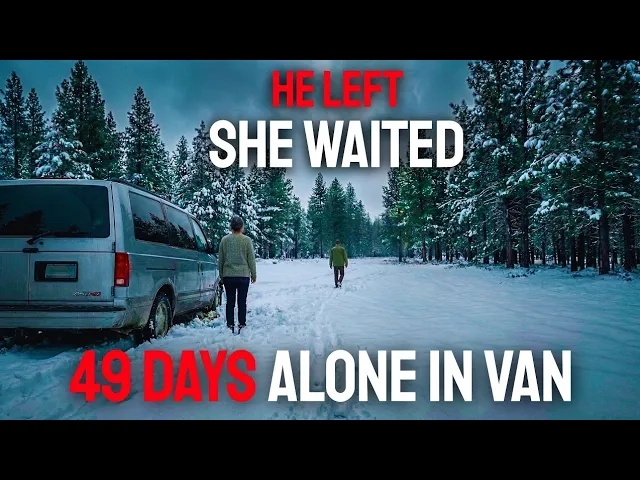
A silver Chevrolet Astro van tilted slightly, coated in dried mud and pine needles, as if it has been sitting long enough to become part of the terrain. Whatever happened here didn't begin today. March 19th, 2011.
Pentictton, British Columbia. The morning begins like any other travel day. Alberta and Rita Treium prepare for a long drive south to Las Vegas, a routine trip tied to work and familiarity.
They are not risk-takers. They are methodical, practical, used to doing things the right way. Albert, 59, runs a heavy equipment business.
Rita, 56, holds together the rhythm of their life. They leave with everything they need, clothes, snacks, simple supplies, and a GPS unit mounted on the dashboard. a tool meant to remove uncertainty.
The drive begins smoothly. Highways stretch long and predictable. Traffic steady, directions clear.
For hours, everything feels controlled, exactly as expected. By early afternoon, somewhere south of Boise, the GPS suggests an alternate route, a shortcut. It appears simple on the screen, a clean line cutting across the map, saving time.
Albert studies it briefly. There's no warning, no reason to doubt it. The road exists.
The system recognizes it and he turns. The GPS didn't know about the 4 ft of heavy snow waiting ahead. It couldn't feel the thick, sticky mud that acts like quicksand.
To the computer, the road wasn't a dangerous mountain trail. It was just a line of code on a map. It saw a clear path to a town that in the middle of winter was impossible to reach.
At first, nothing feels different. The road remains paved, the drive steady, the GPS guiding them forward with quiet confidence. Then gradually, the surface begins to change.
Pavement fades into gravel. The sound beneath the tires shifts. The road narrows slightly, but still feels manageable.
They continue. The gravel becomes dirt. The edges of the road blur into the surrounding land.
Snow appears in patches, then in larger stretches. There are no other vehicles now, no signs, no buildings, only the road, and the silence growing around it. Albert leans forward slightly, focusing more carefully.
Rita watches the landscape, scanning the trees, the uneven ground. Maybe it clears up ahead, Albert says quietly. The GPS continues guiding them forward without hesitation.
Time passes, but the conditions don't improve. The snow thickens. The dirt beneath softens.
The van begins to move differently. The tires slipping before catching again. Small corrections become necessary.
The road is no longer clearly defined. It exists only because they are following it. Then suddenly the van drops.
The front tires sink into ground that looks solid but isn't. Snow collapses into mud beneath, pulling the weight of the vehicle downward. Albert presses the accelerator gently.
The wheels spin, throwing mud outward. He tries again, harder this time. The engine responds, but the van doesn't move.
It sinks deeper. He shifts into reverse. Nothing.
The vehicle settles lower as if the ground is tightening around it. Albert stops and turns off the engine. Silence returns instantly, heavier than before.
He steps outside, boots sinking into the same mud that has trapped them. Rita joins him. Together, they try to clear space around the tires, working with what little they have.
For a moment, the van shifts slightly, just enough to give hope. Then it sinks again, deeper than before. This time, it doesn't move at all.
Albert takes out his phone. For a brief second there is a signal. He calls.
The line connects then drops. He tries again. Another connection.
Another drop. Then nothing. The signal disappears completely.
He lowers the phone slowly. Looking out across the empty landscape. No sound of engines.
No movement. No sign that anyone has been here. Inside the van, the GPS screen still glows softly.
Its line still pointing forward as if nothing has changed. The sun begins to sink behind the mountains and the temperature follows quickly. Inside they sit quietly, absorbing what has happened.
The road behind them is no longer clear. The road ahead doesn't exist. And the place they are in does not feel like somewhere people travel through.
It feels like somewhere people disappear. March 20th, 2011. The morning arrives slowly over the mountains of northeastern Nevada.
light spilling across the frozen landscape without bringing any real warmth. Inside the van, Alberta and Rita Shreang wake to a different kind of silence than the night before. It is clearer now, sharper, no longer just unfamiliar, but deeply unsettling.
The temperature inside the vehicle has dropped significantly, their breath visible in the air, the cold settling into everything around them. Outside, the snow reflects the early light, creating a scene that looks calm, almost peaceful. But the stillness carries no comfort.
They step out briefly, testing the ground again. Nothing has changed. The mud remains thick beneath the snow, unstable, unpredictable.
The van is still trapped, its weight pressing deeper into the earth. Albert walks a short distance ahead, scanning the road they came from, trying to judge how far they are from anything recognizable. There are no tire tracks left, no clear direction, no sign of where the road begins or ends.
It blends into the wilderness completely. They return to the van, closing the doors quickly to keep what little warmth remains. This is when the situation begins to shift, not suddenly, but in a way that settles quietly into their thinking.
The realization is not dramatic. It is practical. They are not just delayed.
They are not just lost. They are isolated. For the first full day, they follow instinct.
They stay with the vehicle. It is the only structure they have, the only barrier between them and the environment outside. The van becomes more than transportation.
It becomes shelter, protection, a fixed point in a place where everything else feels uncertain. They organize what little they have, spreading out their supplies carefully. A small bag of trail mix, a few pieces of beef jerky, some hard candies.
Nothing meant for long-term survival. Water becomes an immediate concern. They begin collecting snow, bringing it inside in small amounts, letting it melt slowly in cups.
It is not clean, not ideal, but it is enough to keep them going. Every action becomes measured. Every movement has purpose.
They are no longer traveling. They are conserving. Time begins to change its shape.
Hours feel longer. The absence of sound becomes more noticeable. No vehicles pass.
No distant engines. No signs that this road is used by anyone at all. The idea that someone might come along begins to feel less certain, but it is still there.
Still holding the situation together in their minds. Night returns quickly. The cold deepens.
They run the engine briefly, using the heater sparingly, careful not to drain the fuel too quickly. Every minute the engine runs is calculated, balanced against the unknown number of nights ahead. When the engine stops, the silence returns immediately, heavier than before, March 21st, the second day.
The environment does not change. The snow remains. The road remains invisible.
The silence continues. But inside the van, something shifts. The waiting begins to feel longer than expected.
The assumption that someone will pass by starts to weaken. They look at the same direction again and again, expecting movement that never comes. Albert studies the map more closely now, not casually, but with intent.
He traces the route they had been following. Trying to understand where it leads, where it connects. The GPS still shows a path forward, still displays locations, still offers direction.
One of those points stands out. Mountain City. A name on the screen.
A place that represents something real. Civilization, roads, people. He estimates the distance, roughly 30 m.
In normal conditions, it would be a manageable drive. Even a long walk under the right circumstances could be possible. But these are not normal conditions.
The terrain is uneven, the snow deep, the temperature low. Still, the presence of that point on the map changes something. It introduces an alternative to waiting.
Rita senses it before he says anything. The shift in his thinking, the way he looks at the map, then out the window, then back again. The way silence inside the van begins to feel different.
Not just quiet, but heavy with decision. They talk about it carefully, not as a plan at first, but as a possibility. What if waiting is not enough?
What if no one comes? What if the road they are on is rarely used, especially this time of year? The questions build slowly, each one adding weight.
By the third day, the balance has changed. March 22nd, 2011. Food is running low.
The small portions they have been taking are no longer enough to ignore. Water, though manageable through snow, comes with its own cost. lowering body temperature with every intake.
The van remains their shelter, but it is no longer a solution. It is a pause, not an answer. Albert looks at the map again.
Mountain City remains there, unchanged, a fixed point in an uncertain situation. 30 m, a number that now carries more meaning than it did before. Not just distance, but possibility.
This is where the calculation begins. Albert is not acting impulsively. He is thinking as he always has logically practically as someone responsible for solving problems.
Waiting in his mind is becoming the greater risk. Supplies are limited. Time is unknown.
If no one is coming, then staying means slowly running out of options. If he goes, there is a chance. The reasoning is simple, direct, difficult to argue against.
Rita listens, understanding the logic, but feeling the weight behind it. They both know what this decision means, even if they do not say it fully out loud. Leaving the van changes everything.
It removes the only stable point they have. It divides the situation into two separate paths. Still, the idea settles.
Albert prepares as best as he can with what they have. There is no proper gear for this. No insulated boots, no heavy winter layers designed for extended exposure.
He is dressed for travel, not survival. Light walking shoes, a windbreaker, clothing meant for a destination that is now irrelevant. He gathers minimal supplies, a small amount of food, some water, the GPS unit, the only tool they have for navigation.
It becomes essential now. Without it, direction would be guesswork. Rita remains inside the van, watching, processing each movement.
The space around her feels smaller now, more confined, as if the walls themselves understand what is about to happen. There is a moment before he leaves, a pause that stretches longer than the others. He leans in, kisses her, and speaks with a certainty that is meant to reassure.
I'll be back with a tow truck before you know it. It is a promise shaped by intention, not by certainty. But in that moment, it is enough to hold on to.
Rita watches him step outside. The cold air rushes in briefly before the door closes again. Through the window, she sees him adjust his footing in the snow, testing the ground, preparing for the first step.
He begins walking. At first, his movement is steady, deliberate. He follows the path they came in on, or what remains of it.
The road is no longer clearly visible, but there are slight variations in the terrain, subtle signs that guide his direction. He moves forward step by step, maintaining pace. Rita watches until he becomes smaller in the distance.
A figure against the white and gray of the landscape. She keeps watching, holding her gaze on the same point, as if looking away might erase him faster. Eventually, the distance grows too great.
The trees begin to close in. His shape fades, then disappears completely. The van is silent again.
Inside, Rita sits still, her attention fixed on the space where he was last visible. Time resumes, but differently now. The situation has changed.
She is alone. Outside, Albert continues moving through the snow, unaware of how quickly the conditions will begin to take their toll. The human body in cold environments like this operates within limits that are not immediately visible.
To maintain a stable internal temperature around 37° C, it must produce heat continuously. Movement helps generate that heat. But it comes at a cost, energy.
In terrain like this, kneedeep snow, uneven ground, low temperatures. The body burns through calories at a rate far higher than normal, thousands per day, far more than what Albert has with him. His intake is minimal.
His output is enormous. From the moment he begins walking, Albert isn't just walking. He is burning through his own muscles.
At this temperature, the heart has to pump thicker, colder blood. He is a 59-year-old engine redlinining on an empty tank. At first, the difference is not noticeable.
His body compensates. Muscles respond. breathing adjusts.
He maintains forward motion, focused on distance, on direction, on reaching something that exists somewhere ahead. But the equation is already unbalanced. Inside the van, Rita begins to reorganize her space again.
The routine shifts slightly, adjusting to being alone. She checks the supplies, measures what remains, calculates how long it might last. The van once shared now feels different, quieter, more confined.
She looks out the window again. The road is empty. No movement, no sound.
Just the same landscape, unchanged, stretching in every direction. Somewhere out there, Albert is still walking. March 23rd, 2011.
The morning arrives without announcement. There is no difference between night and day anymore, only a gradual shift in light that filters through the van's windows. Inside, Rita Tretion wakes slowly, her body stiff, her movements careful, as if even small actions require thought.
The space around her feels smaller now, quieter, altered in a way that is difficult to explain. Albert is gone. The absence is immediate, constant, and impossible to ignore.
She looks toward the direction he walked, the same direction she has been watching since he disappeared. Nothing moves. Nothing changes.
The road remains empty. The first hours pass with a kind of suspended expectation. Part of her still believes he could return quickly, that he might reappear at any moment with help, with a vehicle, with a solution that restores everything to normal.
That belief holds for a while, fragile, but present. But as time stretches, the silence begins to reshape it. The possibility remains, but certainty fades.
She begins adjusting without fully realizing it. Her movement slow. She stops unnecessary activity.
Every action becomes measured, deliberate. The van is no longer just shelter. It is the center of her survival.
Leaving it is not an option. Everything she needs must come from within or immediately around it. Food is already limited.
She knows this. She counts what remains carefully, not once, but repeatedly, as if the numbers might change. A small bag of trail mix, a few pieces of jerky, hard candies.
It is not enough for days, let alone weeks. So she begins rationing immediately. Small portions spread across long periods of time.
One bite becomes a decision. One piece of candy becomes something to hold on to, not just for energy, but for structure. Water comes from snow.
She gathers it in small amounts, bringing it inside, letting it melt slowly. It is cold, often mixed with dirt or debris, but it is enough. Each sip lowers her body temperature slightly, but dehydration is a greater risk.
Every choice now is a trade-off. As the days pass, her body begins to respond to the conditions in ways that are not immediately visible. Movement decreases.
Energy is conserved. She spends more time lying down, curled into herself, wrapped in layers of clothing, floor mats, anything that can provide insulation. The position becomes instinctive, compact, minimizing heat loss, reducing exposure.
Her body begins to change its internal rhythm. With limited food intake, it stops relying on immediate energy sources. Glucose reserves deplete quickly.
The body adapts, shifting into a different state, one designed for survival rather than function. It begins to consume stored fat, breaking it down slowly to maintain essential processes. This transition is not something she consciously controls, but it is what allows her to continue.
Her heart rate slows. Movements become smaller. Even breathing becomes more controlled, more efficient.
It is not rest in the traditional sense. It is conservation. March continues, though the days blur together.
There is no clear separation between one and the next. Light comes and goes. Temperature rises slightly during the day, then drops sharply again at night.
The van holds some warmth, but not enough to feel safe. It becomes a barrier, not a solution. She uses the heater sparingly at first, 10 minutes at a time, sometimes less.
Just enough to take the edge off the cold. Just enough to make the space livable for a short while. Each time she turns the engine on, she is aware of what it costs.
Fuel is limited. Once it is gone, it is gone. Eventually, the fuel runs out.
The change is immediate. The van becomes an enclosed space without any source of heat. The cold settles in fully, no longer interrupted by brief periods of warmth.
But the structure of the van still matters. It blocks the wind, reduces exposure, creates a small pocket of still air that is easier to endure than the open environment outside. She adapts again.
Layers become more important. Position becomes more important. She uses everything available, clothing, mats, blankets to create insulation.
She reduces movement further, staying as still as possible to preserve heat. Time stretches further. The silence deepens.
There are moments when the quiet feels overwhelming. When the absence of sound becomes something that presses inward rather than simply surrounding her. It is during these moments that she turns to something else, her Bible.
She begins reading regularly, not out of routine, but out of necessity. The words provide structure where there is none. They create a sense of continuity, a way to divide time into manageable pieces.
Reading becomes part of her daily rhythm. Alongside rationing food, collecting snow, conserving energy, she prays not in long dramatic moments but in quiet repeated intervals. It gives her focus.
It keeps her mind anchored to something outside the immediate conditions. Without it, the isolation would be harder to manage. The human mind in prolonged isolation begins to shift.
Thoughts can become disorganized. Perception can change. Time can lose meaning entirely.
By focusing on something structured, reading, prayer, she prevents that drift. She maintains clarity even as her physical condition weakens. Outside the van, the wilderness remains unchanged.
Days pass without any sign of movement. Far away in Pentictton, something has begun to unfold. The absence of Albert and Rita is no longer explainable.
Days have passed without contact. Calls go unanswered. Plans that should have been completed remain incomplete.
Concern grows into certainty. Something is wrong there. Sons report them missing.
Authorities begin gathering information. Last known location, route. Vehicle description.
The fact that they were traveling toward Nevada. The detail about a GPS route becomes important quickly. It introduces uncertainty into what would otherwise be a predictable path.
Search efforts begin. At first, they follow the most logical assumptions. Main highways, expected routes, areas where travelers typically pass.
Helicopters take to the air, scanning long stretches of road. Ground teams check known paths, rest stops, intersections. But the search is based on expectation.
A van traveling from British Columbia to Las Vegas should be on a highway, not deep in a remote forest at high elevation. The search expands, but slowly. The area is vast, stretching across state lines filled with terrain that is difficult to access and even harder to search thoroughly.
Snow covers much of the ground, making visibility from the air unreliable. A vehicle can disappear into that environment completely, blending into the landscape. Days pass, then weeks.
Search teams continue, but they are looking in the wrong places. They follow logic, but the situation itself does not follow logic anymore. Inside the van, Rita continues her routine.
Food is nearly gone now. The small portions have stretched as far as they can. Candy becomes less frequent.
Each piece is spaced further apart, reserved for moments when energy drops too low. Water remains available through snow, but it comes with cost. Her body is weaker.
Movements are slower. Standing requires effort, but her mind remains focused. She continues reading, continues praying, continues watching the same direction, the same empty stretch of land where Albert disappeared.
Time has lost its normal meaning. Days are not counted in hours, but in actions. Eat, melt snow, read, rest, repeat.
The van is quiet. The wilderness is silent. And somewhere beyond what she can see, people are searching.
But they are not searching. here. They are miles away, following roads that make sense, looking for something that fits expectation.
They do not know about the logging tracks. They do not know about the path the GPS suggested. They do not know that a van sits at 6,000 ft, hidden in terrain that does not appear on most maps in a meaningful way.
The distance between Rita and the search is not just physical, it isformational. They are close enough to find her, but far enough to miss her completely. May 6th, 2011.
The morning begins like every other day before it, quiet and unchanged, with no sign that anything will be different. Inside the van, Rita Cretion lies still, wrapped tightly in layers that no longer provide real warmth. The cold settled deep into her body.
No, longer sharp, just constant. Movement is difficult now. Even lifting her head takes effort, and her strength is almost gone.
every small action feeling heavy. At some point during those long, silent days, she prepared for what she believed was coming. She wrote letters to her children, short messages, simple words meant to explain what had happened.
There was no panic in writing them, only quiet acceptance. The van, once her shelter, now feels like the place where everything might end. She lies back, conserving what little energy remains, no longer checking the window as often, no longer expecting anything to change.
The waiting has stretched beyond hope into something quieter. Not fear, not panic, just stillness. Then somewhere within that silence, something breaks through.
A sound. At first, it is faint and unclear, blending into the background so easily it could be mistaken for anything. Her mind struggles to recognize it, unable to place where it belongs.
For a moment, it could be the wind, a distant shift in the trees, or something imagined entirely. Then it comes again, stronger this time, more consistent, carrying a rhythm that doesn't belong to the wilderness engines. She listens carefully now, holding on to the sound, trying to understand if it is real.
It grows louder, closer, cutting through the silence that has defined everything for weeks. This is movement. Her body does not respond immediately.
The signal to move is there, but the strength is not. She forces herself up slowly, pushing against the seat, using whatever support she can find. The effort is overwhelming, her vision shifting slightly as she rises before settling again.
The sound is closer now. She moves toward the door, each step unsteady, her balance weak, her body no longer reliable. But something stronger than exhaustion pushes her forward.
She reaches the door, her hand trembling as she pulls it open, and cold air rushes in instantly. Outside, three ATVs appear along the uneven track, moving steadily through the terrain. For a moment, they don't see her.
Then she lifts her arm slowly with effort, signaling the only way she can. The riders notice. They slow immediately, engines dropping as they come to a stop.
One of them steps off and approaches, taking in the van, the ground, the isolation, and then her. Her condition is clear. Her frame is thin, her movements fragile, as if she is standing on the edge of collapse.
They move quickly now, speaking to her, asking questions, trying to understand. Her voice is faint but steady enough to be heard. How long have you been here?
Since March. The answer settles heavily between them. They stay close, supporting her, making sure she does not fall.
One rider watches her carefully while another turns back toward the ATVs, already thinking about distance, about where they can find a signal because out here there is none. They give her water carefully, small amounts, knowing too much too quickly could be dangerous. They keep her talking, keeping her present, keeping her aware.
Every second matters now. Two of them leave, riding out fast across the rough terrain, pushing toward the nearest place where they can call for help. One stays behind with her, not leaving her alone again.
Time moves differently now. The waiting is no longer silent. It is urgent.
Then another sound appears, louder, stronger, cutting through the air above. A helicopter. It circles once, then begins to descend.
The wind from its blades breaking the stillness, pushing snow and dust outward. Rescue has arrived. Medical teams move quickly, assessing her condition, stabilizing her, preparing her for transport.
Every movement is controlled and precise because they know how fragile she is. She is lifted carefully, secured, and placed inside. As the helicopter rises, the van becomes smaller below, returning to stillness once again.
For the first time in weeks, she leaves the place that held her. The flight to Elco passes in fragments. Moments of awareness followed by drifting.
The shift from silence to noise overwhelming her senses. At the hospital, everything moves quickly. Doctors beginning treatment immediately.
Fluids administered carefully. Her condition monitored closely as the process of recovery begins. News spreads fast.
A woman missing for weeks, found alive in the Nevada wilderness. The story moves quickly, carried by disbelief and relief. Survival after so long in such conditions feeling almost impossible.
For a brief moment the tone is relief. Then it changes because one question remains. Where is Albert?
The question is asked carefully but directly. Rita answers slowly. He went for help.
She gestures toward the mountains toward the vast landscape beyond. 7 weeks ago. Everything shifts again.
Relief turns into urgency. Search teams mobilize immediately, the van becoming the center of a new operation. Ground crews move outward.
Air support scans from above. Technology is used to search deeper through terrain that does not easily reveal anything. The landscape is vast, miles of forest, uneven ground, shifting snow that hides every detail.
Search teams move carefully, methodically, covering as much ground as possible, but they find nothing. No clear signs, no direction. The mountain remains silent.
Back in the hospital, Rita continues to recover slowly, strength returning in small amounts, awareness becoming clearer. But her thoughts remain fixed on one thing. Albert.
Somewhere beyond what anyone can see, the answer exists. But for now, it remains hidden. And the search continues.
October 2012. 18 months have passed since the day Rita Treion was lifted out of the Nevada wilderness, and the story that once filled headlines has grown quiet. Seasons have changed.
Snow has come and gone. The mountains have returned to their usual stillness, holding their silence the same way they always have. For most people, the story has faded into memory.
But for a few, it has never really ended. In the high country of Elco County, elk hunters move through a rugged drainage known locally as the bad lands. The terrain lives up to its name.
It is steep, uneven, and difficult to navigate. A place where every step requires attention. Pine and brush crowd the slopes, and the ground shifts constantly underfoot.
It is not a place people wander into without purpose. As they move through the area, scanning for tracks and movement, something catches their attention. It is not natural, not part of the landscape.
A piece of fabric worn and faded caught against the ground. They approach it slowly, unsure of what they are seeing. It is a windbreaker, weathered, torn, and clearly out of place.
Nearby, partially obscured by dirt and debris, lies something else. A small electronic device. They pick it up carefully.
A GPS unit. Old, worn, but still recognizable. The two objects together create a quiet realization.
They know this story. They know who has been missing. The area changes instantly in their minds.
What was just terrain moments ago now feels different, heavier, connected to something that has remained unresolved for more than a year. They begin searching the immediate surroundings more carefully, moving slowly, scanning every detail, and then they find him. Not far from where the items were discovered, partially sheltered by the landscape, they come across the remains of Albert Cretier.
The moment is quiet. There is no sudden reaction, no rush of movement, just recognition. After 18 months, the search has come to an end.
Authorities are notified and the area becomes the focus of a careful investigation. The site is documented, every detail recorded, the position of the remains, the surrounding terrain, the location of the items he carried. Each piece begins to form a picture of what happened in the days after he left the van.
The findings reveal something both simple and devastating. Albert did not reach his destination. He did not walk 30 m.
He walked roughly 10. The GPS unit he carried continued to guide him, displaying a path forward, a direction that appeared logical on a screen. But the device had no understanding of the terrain it was mapping.
It showed lines, not reality. It did not account for elevation, for impassible drops, for conditions that could not be seen from a digital map. As he moved through the wilderness, he climbed higher.
The elevation increased steadily, reaching nearly 7,800 ft. At that height, the environment becomes even more unforgiving. Oxygen levels drop.
Movement becomes harder. The cold intensifies. Every step requires more energy than the last.
At some point during his climb, Albert reached a position where the landscape opened enough to reveal something in the distance. A ranch, lights, a sign of life. It was visible, but not reachable.
Between him and that point lay a steep drop nearly 1,000 ft in vertical descent. Terrain too dangerous to navigate in his condition, especially with the snow and unstable ground beneath him. The path the GPS suggested did not exist in any practical sense.
It led across space that could not be crossed. He had come far enough to see help, but not far enough to reach it. The investigation concludes that Albert died of hypothermia.
The combination of cold, exhaustion, and limited resources created a situation his body could not overcome. Based on the evidence, it is likely that he survived for less than 2 days after leaving the van. The distance between him and Rita, measured in miles, had been far smaller than it seemed.
But the conditions made it impossible. The case becomes more than just a story of survival. It becomes a lesson studied and referenced not for its outcome alone but for what it reveals about decision-making technology and the limits of human endurance.
One of the clearest lessons is simple but difficult to accept in the moment. The vehicle is life. Rita survived because she stayed.
The van was visible. It was stationary. It gave search team something to find, something to anchor their efforts to.
Even though it took weeks, it remained where it was, waiting to be discovered. Albert, once he left, became part of the landscape, moving through miles of terrain. Without a fixed point, he became nearly impossible to locate.
In a wilderness this vast, a single person can disappear completely. Another lesson emerges from the role of the GPS itself. The device did not fail in the way people expect failure.
It functioned exactly as designed. It provided directions based on the data it had. But the data was incomplete.
It did not understand seasonal roads. It did not recognize elevation hazards. It did not distinguish between a passible route and one that becomes dangerous under certain conditions.
This case becomes one of the most referenced examples of what experts call automation bias. The tendency to trust a system simply because it provides clear, confident instructions. The GPS did not question his own path, and in following it, Albert entered terrain that required knowledge beyond what the device could provide.
The phrase death by GPS begins to appear in discussions surrounding cases like this, not as a simplification, but as a warning. Technology can guide, but it cannot replace awareness of environment. It cannot account for every variable.
For Rita, recovery is slow but steady. Physically, her body regains strength over time. The weight returns gradually.
Movement becomes easier. But the experience leaves something deeper, something less visible. The memory of those 49 days does not fade easily.
It remains present, not in constant pain, but in quiet moments, in awareness, in the understanding of how close everything came to ending differently. She speaks about the experience not as something extraordinary but as something that taught her how fragile and how resilient life can be at the same time. She becomes an advocate for wilderness safety, sharing what she learned, emphasizing preparation, awareness, and the importance of understanding the environment before entering it.
Albert is remembered in a different way, not as someone who made a mistake, but as someone who acted with purpose. He made a decision based on what he believed would give them the best chance. He chose to go, to try, to find help.
His actions were not careless. They were driven by responsibility, by the instinct to protect, to solve, to provide. The story in the end is not defined by failure.
It is defined by effort. The silver Astro van is eventually recovered, pulled out of the same ground that held it for weeks. The road where it was found is no longer as unmarked as it once was.
Signs have been added. Warnings placed where there were none before. Small changes meant to prevent something similar from happening again.
But the landscape itself has not changed. The high desert of Nevada remains vast, quiet, and indifferent. The wind still moves across the ridges, carrying nothing but the sound of itself.
The roads still shift with the seasons appearing and disappearing depending on conditions. There are no visible signs left of what happened there. No markers that tell the story to those who pass through.
Only the memory remains. A memory of 49 days where time stretched beyond expectation. Where survival depended on stillness.
Where one decision led two people into a place that tested the limits of endurance. And somewhere in that silence, the story continues to exist, not as something the land remembers, but as something carried forward by those who understand what it means.