The plaintiffs in most copyright infringement suits are interested in money in addition to, or sometimes instead of, the kind of injunctive relief considered in the previous segment of this lecture. In the United States, such plaintiffs are able to rely on three different principles when seeking financial recoveries. First, they could obtain "actual damages".
In other words, enough money to compensate them for the injuries they have sustained. Second, they can recover profits made by the defendants attributable to the defendant's infringing behavior so long as those profits are not duplicative of the actual damages sustained by the plaintiffs. Last but not least, instead of either actual damages or lost profits, plaintiffs may recover so-called statutory damages-- sums of money that bear no necessary relationship to either the magnitude of the injuries the plaintiff sustained or to the profits wrongfully earned by the defendants.
The first two of these forms of recovery, actual damages and defendant's profits, are conventional. Although the methods by which they are calculated in US courts are somewhat unusual, these two types of monetary recovery may be found in the copyright systems of most countries in the world and indeed are often granted to the victims of many other kinds of unlawful behavior, both in the United States and elsewhere. The third form of recovery, by contrast, is unusual.
Relatively few countries currently recognize so-called statutory damages and there's considerable controversy over whether they should. I'll now spend about 20 minutes describing how these three types of financial recovery work. When I'm done, I'll step back from the trees and consider the ongoing debate concerning which dimensions of this forest make sense and which do not.
The statutory authority for the first approach is contained in section 504(b) of the statute. As you can see, that provision entitles a copyright owner to recover "the actual damages suffered by him or her as a result of the infringement. " The purpose of this provision is to enable a successful plaintiff to recoup all of the money she lost because of the defendant's infringement.
The most clear cut example consists of profits the plaintiff would have earned had the defendant not encroached upon her copyright unlawfully. The conventional way of proving such lost profits by the plaintiff is to introduce evidence of the volume of sales at the plaintiff likely would have enjoyed in the absence of the defendant's behavior combined with evidence concerning the profit the plaintiff would likely have a earned on each of those sales. A less well established variant of this approach permits the plaintiff to recoup losses she sustained if she was forced to reduce the price of authorized copies of her work in order to compete with the infringing defendant.
This component of actual damages certainly makes sense as a matter of theory, but case loss support for it is thin. A recent addition to the set of types of actual damages is the so-called value of use theory. The idea underlying this variant is that a plaintiff should be able to recover from a defendant an amount of money equivalent to the license fee that the defendant would have paid to the plaintiff in order to obtain permission to engage in the conduct at issue.
Somewhat more specifically, this variant permits a plaintiff to recover from the defendant the amount that a willing licensee would have paid a willing licensor for the right to engage in that conduct. In determining that amount, courts take into account such factors as the customs prevailing in the industry in question, the terms on which the plaintiff herself had previously granted licenses to other parties to engage in similar activities, and perhaps special circumstances that would have prompted the plaintiff to demand unusually high or low licensees. As I say, this so-called value of use theory is a relatively recent innovation.
It was pioneered by the Seventh Circuit Court of Appeals in the Deltak case in 1985. The Court of Appeals for the Second Circuit, which, as you know, enjoys disproportionate influence in copyright law, initially rejected this basis of liability. But in 2001, in the case of Davis versus The Gap, the Second Circuit embraced it.
A year later, the Ninth Circuit did as well. Nevertheless, the argument remains highly controversial. Critics contend that it fails to take into account the likelihood that if the defendant had been aware of the illegality of his activity, he might not have engaged in it at all and thus would not have paid the plaintiff any license fees.
In short, the critics argue, this theory gives the plaintiff a windfall. Finally, some courts have been willing to allow plaintiffs to recover under the heading of actual damages sums of money necessary to compensate them for what might be described as indirect or collateral injuries. Included in this grab bag are such things as money the plaintiff was forced to spend in order to modify her own product to compete with the defendant's infringing product, loss of goodwill because of the presence in the market of the defendant's infringing product misled consumers into thinking that the plaintiff's version was not unique, and ancillary revenue that the plaintiff may have lost because the defendant failed to give her appropriate credit for her creations.
Either the plaintiff or the defendant may insist that these issues be resolved by a jury rather than by the trial judge. The way in which burdens of proof are allocated at trial is that the plaintiff bears the initial burden of showing a reasonable probability that there's a causal connection between the defendant's infringing activities and the plaintiff's injuries. The defendant then has an opportunity to rebut those assertions.
If he fails to do so, the plaintiff is entitled to recover. The statutory basis of the plaintiff's a right to recover the defendant's profits is also contained in section 504(b). As you can see, that provision indicates that a copyright owner is entitled to recover "any profits of the infringer that are attributable to the infringement and are not take into account in computing actual damages.
" The last clause in this sentence prevents a plaintiff from using this device to achieve a double recovery. In other words, any profit the defendant reaped that derived from sales diverted from the plaintiff must be excluded from the plaintiff's recovery under this theory, because they've already been taken into account under the heading of actual damages. As a practical matter, this exclusion means that the opportunity to recover a defendant's profits is most beneficial to plaintiffs in two situations.
First, where there are more than two competitors in the relevant market and thus that the defendant's profits were diverted not just from the plaintiff, but also from a third party. Second, where the defendant has a much larger business than the plaintiff and thus was able to sell many more products than the plaintiff could have done. Burdens of proof under this heading are allocated as follows.
The plaintiff must introduce evidence of the defendant's gross revenues. The statute, as you can see, does not require the plaintiff to show that the revenue at issue is attributable to the defendant's unlawful behavior. But the courts have added that important qualification to the plaintiff's burden.
So what kinds of revenues count under this standard? The principal examples are those I just mentioned. Namely, revenues earned by the defendant from sales of an infringing product.
What about revenues he earned from sales of related non-infringing products that were boosted in some way by sales of the infringing products? These are recoverable in theory, but difficult to prove. Occasionally courts have also been willing to count under this heading revenues generated by advertisements created and distributed by the defendants that contain infringing material.
Usually, however, such recoveries are denied because the plaintiff is unable to establish a causal connection between the advertisements at issue and the defendant's enhanced sales. Finally, revenue attributable to the enhancement of a defendant's goodwill caused by his sales of infringing products are, again, recoverable in theory, but almost never provable in practice. Of course, the defendant's gross revenue overstates the magnitude of his illicit gain.
To determine his profit, we must deduct from his revenues the associated costs. For obvious reasons, the burden to introduce evidence concerning the magnitude of those costs is borne by the defendant, not the plaintiff. What kinds of expenditures may fairly be counted as costs?
In answering that question, courts typically look to generally accepted accounting principles. An interesting nuance under this heading is that a defendant is permitted to deduct income taxes unless his infringement was willful. Intriguing issues arise when the defendant's product consists of a combination of infringing material and non-infringing original material contributed by the defendant.
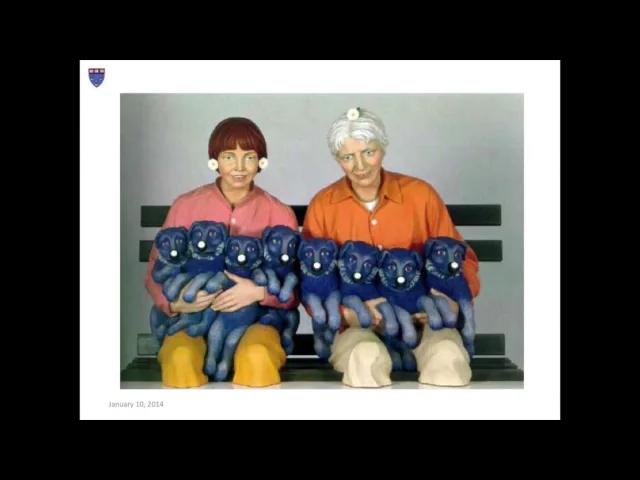
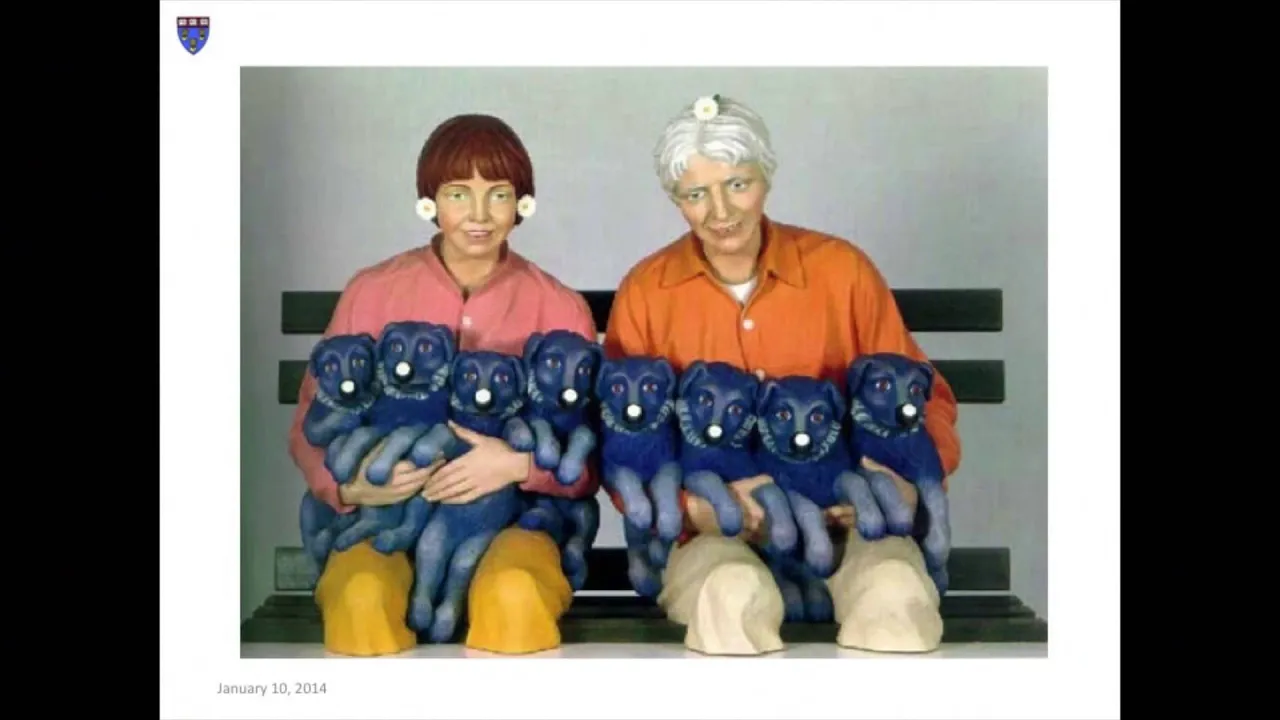
Under such circumstances, the defendant is permitted to introduce evidence showing what portion of the revenue generated by the composite product is properly attributable to his own non-infringing contribution, and thus not properly payable to the plaintiff. Delicate and difficult questions lurk here concerning what features of products matter to consumers. Remember for example, the controversy between the photographer Art Rogers and Jeff Koons arising out of Koons' use of this photograph as the reference work for this sculpture.
As you'll recall, Koons' effort to excuse this behavior on the basis of the Fair Use Doctrine failed. Rogers was thus entitled to damages. Included in the sum to which Rogers was entitled was the profit that Koons earned as a result of his infringement.
Koons made a lot of money by selling copies of his sculpture. Specifically, three of the four copies he made were sold to collectors for a total sum of $367,000. A substantial portion of that sum represented profit.
Koons argued, plausibly, that much of the profit was attributable to his own creative contributions, not to the value he derived from Rogers photos. He also argued that some of that profit derived from a third source, specifically from Koons' artistic reputation. Koons is something of a star in the art world.
The large amounts that collectors pay for his works are attributable, in large part, to the fact that Koons made them, not to their final form. In this particular case, Koons contended that Rogers did not deserve to share in that reputational premium. The Court of Appeals for the Second Circuit agreed.
Here's the pertinent language. "On the subject of apportioning profits, the copyright law requires that Koons have the opportunity to establish those elements of profit attributable to factors other than the copyrighted work. These elements may include Koons' own notoriety and his related ability to command high prices for his work.
To the extent that Koons is able to prove that the profits at issue derive solely from his own position in the art world, he should be allowed to retain them. " We come finally to the controversial topic of statutory damages. Here's how they work.
Section 504(c) provides that at any point before final judgment in a copyright case, the plaintiff may renounce the recovery of actual damages and defendant's profits and instead opt to recover an amount of money set by a jury or the judge. How much money? The pertinent statutory provision sets forth some broad ranges, but gives the decision maker lots of discretion in picking a point within those ranges.
The currently applicable ranges appear on your screen. The default, as you can see, is between $750 per infringed copyrighted work and $30,000 per infringed work. If the defendant's conduct was willful, meaning that the defendant knew that his conduct violated the copyright statute, then the range is between $750 and $150,000.
A lower range, as you can see, applies if the defendant's behavior was innocent, meaning that "the infringer was not aware and had no reason to believe that his or her acts constituted an infringement of copyright. " In other words, innocence in this sense has both a subjective and an objective component. To qualify for the lower range, it's not enough that a defendant was unaware of the illegality of his actions.
It's also necessary that his misimpression had been reasonable. Who picks the amount of statutory damages within these broad ranges? Congress, as you can see from the text of the statute, clearly contemplated that "the court," meaning the trial judge, would make that determination.
But the United States Supreme Court in the Feltner case determined that the Seventh Amendment provides a right to a jury trial in all issues pertinent to an award of statutory damages under Section 504(a), including the amount of the award itself. The upshot is that every time you see the word court in 504(c), you should replace it with the word jury. What factors should the decision maker rely upon when setting that amount?
The only guideline the statute itself provides is that it should be the amount that the court considers just. When, after Feltner, courts delegate this determination to juries, they usually instruct the juries to pick the amount the juries consider just. Sometimes the judges suggest other factors that the jury could consider when making their choice, such as evidence of how much the plaintiff was actually harmed, the need to deter wrongdoing in the future, the nature of the plaintiff's work, and so forth.
But these are just suggestions. Within the ranges set by the statute, the jury is largely in constraint. If the defendant has infringed only one of the plaintiff's copyrighted works, say a novel or a musical composition, then as we've seen, the maximum amount of statutory damages the plaintiff can recover is $150,000.
But if the plaintiff has infringed two of the plaintiff's works, the amount doubles. If three, it triples, and so forth. The key variable, to repeat, is not the number of occasions on which the defendant has engaged in an infringement.
It's the number of works he has infringed. In some cases, that number is not obvious. For example, if I rip a CD containing 12 sound recordings, have I infringed one work or 12?
For obvious reasons, it makes a big difference. The general standard the courts use in such circumstances is that the individual pieces are deemed distinct works if and only if they have independent economic value. And applying that criterion, courts unavoidably exercise some discretion and often tacitly exercise that discretion in an effort to do rough justice.
A crucial limitation on the availability of statutory damages is that with narrow exceptions, they are only available if the plaintiff registered her work prior to the defendant's infringement. As you know from lecture number six, registration of a copyright is now optional in the US. But registration gives a copyright owner some advantages.
The availability of statutory damages in case of infringement is perhaps the most important of those advantages. In addition to damages of these three sorts, parties who prevail in copyright infringement suits can sometimes recover their court costs and their attorney's fees. These amounts are not trivial.
Attorney's fees in particular can be very large. Indeed, anxiety about possible liability for attorney's fees is often the principal driver that motivates settlements of infringement suits. That anxiety derives in part from the fact that both costs and attorney's fees are more commonly awarded in copyright cases than in most other types of suit in the United States.
With respect to both costs and fees, the trial court is empowered to make awards "in its discretion. " The kinds of factors the courts look to when exercising that discretion include the strength of the losing party's substantive arguments-- the stronger they were, the less likely will be the court to award fees-- the legitimacy of the reasons why the losing party litigated the case, the need to deter abusive litigation by similarly situated parties in the future, conversely the importance of not deterring legitimate efforts to defend legal rights or to resolve unsettled legal issues, and so forth. The same standards are applied when assessing requests for costs and fees made by prevailing defendants as when assessing such suggestions made by victorious plaintiffs.
An intriguing variation on these themes suggested by Judge Posner in the Gonzalez case is that a judge should be more willing to award attorney's fees, particularly when the defendant's behavior was willful, if the magnitude of the compensatory or statutory damages that the plaintiff could collect is modest. And thus, unless the plaintiff could recover such fees, she might be disinclined to assert her rights. Finally, it should be emphasized that attorney's fees, like statutory damages, are only available to copyright owners who registered their works prior to the infringement.
This reinforces the incentive I mentioned a minute ago to register one's works. Underlying this rather intricate combination of rules are five general themes or objectives. Sometimes these themes reinforce one another, but sometimes they are in tension.
When considering how, if at all, this system of remedies should be modified, it's helpful to bring these objectives to the surface. When they conflict, it's necessary to decide which is the more important. The first, and least surprising purpose, is to compensate copyright owners.
In other words, to indemnify them against loss. A copyright owner who's been injured by a defendant's infringement should be able to recoup from the defendant all of her losses. All four of the general theories of copyright law we have considered in this lecture series provide support for this first objective.
Viewed through the lens of either fairness or personality theory, the rights that the law confers upon copyright owners are grounded in moral considerations. The moral right to a fair return for one's hard creative work, or the moral right to protection of the fragile bond between oneself and one's creations. Fidelity to those moral considerations requires at a minimum that copyright owners not suffer uncompensated injuries when their legal rights are abridged.
Viewed through the lens of either welfare or cultural theory, the rights that the law accords authors and artists are designed to induce them to behave in ways that will advance some larger goal, generating and disseminating works that will advance net social welfare, or will foster a rich and stimulating culture. Authors and artists will not be so induced if they are exposed to uncompensated abridgments of their rights. So as to this first point, there's not much controversy.
The second of the objectives is the prevention of unjust enrichment. We don't want infringers to profit from their wrongdoing even if copyright owners do not suffer thereby. This is a very common sentiment.
Not just in copyright law, but in other fields as well. It looms large in contract law, for example. But despite its ubiquity, it's harder to justify and harder to connect convincingly to the general theories upon which copyright law rests.
It seems connected to the same intuition that prompts us to recoil or object when a murderer writes a book recounting his crime and collects royalties from it. The third goal helps reinforce the somewhat shaky foundations of the second-- deterrence. We want to craft remedies that discourage potential infringers from violating copyright owners' entitlements in the future.
Litigation is enormously time consuming and painful. A copyright owner forced to litigate can never be truly made whole. Thus, if possible, we want to deter people from infringing their rights in the first instance.
One way to do so is to award and publicize monetary judgments that will make potential defendants think twice or thrice. The fourth ambition is punishment. Copyright infringement is wrong.
We want to penalize the people who engage in it. Not just to deter similar conduct in the future, but because the infringers deserve it. Another word for this is retribution.
Finally, copyright law, as you know by now, aspires to create and maintain a delicate balance between on one hand, the entitlements of creators, and on the other hand, the interests of the public in making use of their creations. The primary expression of the latter is the long list of statutory and judicial exceptions and limitations. Embedded in the copyright statute, the most famous of which the United States is the Fair Use Doctrine.
Against this back drop, we want to craft a set of remedies that will maintain that balance. In particular, just as we want to ensure that copyright owners have appropriate incentives to assert their rights, so we want to ensure that users have appropriate incentives to assert their privileges. In this respect, copyright infringement is fundamentally different from homicide say, or rape.
In those contexts, we're not particularly concerned about over enforcement. If someone is not entirely sure what constitutes manslaughter or sexual assault and his behavior is, to use the legal vernacular, "chilled" a bit, we're not troubled. That such people are prompted to steer well clear of a vague line is not a serious problem.
And copyright law, by contrast, chilling borderline behavior-- in other words, discouraging people from engaging in activities that approach but do not cross the line of legality-- is a serious problem. When setting and interpreting the rules governing damage awards, we want to avoid it. By now, the reason why these goals sometimes conflict should be clear.
Goal number three, and even more so goal number four, sometimes counsel larger awards than is optimal from the standpoint of goal number five. The context in which these considerations are currently most salient is statutory damages. Most countries in the world do not currently permit copyright owners to recover statutory damages.
A thorough analysis of the law of each nation in this regard can be found in a forthcoming article by Pam Samuelson, Tara Wheatland, and Phil Hill. Phil, as I think you know, is one of the teaching fellows in the edX course for which these lectures were in part prepared. The authors of that study demonstrate that only 24 of the 177 member states in the World Intellectual Property Organization currently allow recovery of statutory damages.
And very few of the countries that do have such regimes also have copyright based industries comparable in size and health to those in the United States. The US is currently trying to change the state of affairs. Its diplomatic representatives are using various levers to try to induce other nations to adopt systems that resemble the system in force in the US.
Why? Primarily because US based organizations representing at least some copyright owners have asked them to do so. Critics of this initiative make three arguments.
First, many countries, unlike the United States, regard punishment of offenders as an inappropriate function of civil damage awards. Punishment, they believe, should be left to the criminal law, to which we'll return in the last segment of this lecture. The reason why this is relevant is that over time, the US system of statutory damages has gradually taken on an ever more punitive role.
Originally adopted primarily as a mechanism to provide compensation for copyright owners who have trouble proving the magnitude of the injuries they suffer, it now works in large part to penalize infringers. Many observers, especially outside the US, think that that's not a role for private lawsuits. Second, the critics point out that the broad ranges of permissible awards under the US system and the paucity of meaningful guidance concerning how awards should be set within those ranges give judges and now juries too much discretion and result, consequently, in unpredictable, even arbitrary awards.
Uncertainty of this sort is especially threatening to the delicate balance between private rights and the public interest. Third, and finally, some critics point out that the statutory damage system generates perverse results when applied in situations in which a defendant infringes a large number of works, each of which has only modest economic value. Because as we've seen, copyright owners are permitted to recover statutory damages for each work, the result is to enable them to recover amounts that dwarf the injuries that the copyright owners actually suffer.
The context in which this unanticipated problem has proven especially serious has been file sharing. The large majority of the individual defendants who've been sued by the record companies for unlawfully copying and redistributing sound recordings through file sharing networks have settled the claims for modest amounts of money. But the few defendants who have not settled have incurred enormous awards.
Jammie Thomas Rasset, for example, was found to have infringed the copyrights in 12 recordings, and after a series of three trials, ended up, as you can see, with a damage award of $222,000. Joel Tenenbaum was found to have willfully violated the copyrights in 30 recordings and ended up with a damage award of $675,000. In both of those cases, the trial judges balked at the magnitude of the jury's awards.
In both instances, the judges concluded that the awards were so large as to violate the federal constitution. In both instances, however, the Court of Appeals reversed. Although the grounds on which the two courts of appeals did so differed.
In the Thomas Rasset case, the Eighth Circuit rejected the defendant's constitutional argument on the following ground. "Applying the Williams standard, we conclude that an award of $9,250 per each of the 24 works is not so severe and oppressive as to be wholly disproportionate to the offense and obviously unreasonable. " Congress, exercising its wide latitude of discretion, set a statutory damages range for willful copyright infringement of $750 to $150,000 per infringed work.
The award here is toward the lower end of this broad range. As in Williams, the interests of the public, the numberless opportunities for committing the offense, and the need for securing uniform adherence to federal law support the constitutionality of the award. In the Tenenbaum case, the First Circuit concluded that the trial judge should have avoided the constitutional question.
However, in so ruling, the First Circuit strongly intimated that like the Eighth Circuit, it believed the Constitution had not been violated. In both of these cases, the United States Supreme Court declined to review the Court of Appeals decision. As a result, we do not yet have a conclusive answer concerning the constitutionality of such applications of the statutory damage regime.
And we're not likely to get a conclusive declaration in the near future. The net result is that the struggle over statutory damages will continue in the political arena. Reformers in the United States will seek to curb them.
Skeptics in other countries will likely continue to resist them, or more modestly, to discipline statutory damages with guidelines more precise than the vague standards used in the US. By contrast, representatives of copyright based industries in the United States will continue to defend statutory damages and argue for the adoption of the US model elsewhere. How this struggle will end remains to be seen.