Do you know that if you were to ask most people, "What is your financial problem? " people who are struggling would usually tell you, "I don't make enough money; expenses are too high. If I just made more money, everything would be okay.
" Do you know that that very thought is the problem that keeps them in poverty? So, what thought would you think other than that? How would you change that thinking?
That's what we're going to talk about on the broadcast today. Don't go away! Across the sands of time, God's people have walked His ancient paths.
Join us as we explore divine identity and purpose on Earth—God's Word on wealth. Discover the blessing passed between family generations and find life filled with empowering relationships. You will soar like never before!
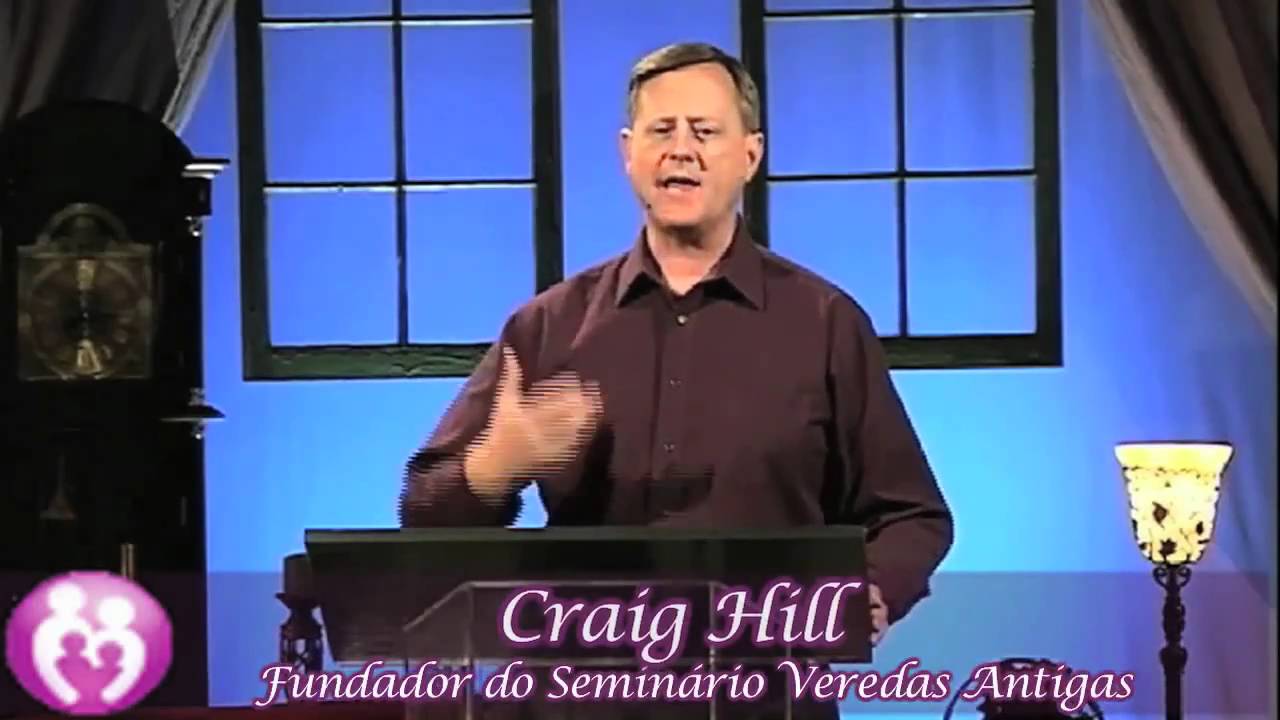
Welcome to Ancient Paths with Craig Hills. In the last broadcast online, we talked about the critical importance of vision. Provision, which we discussed as coming from God, is made up of two parts: the word "pro," which means "for," and "vision.
" So, provision is what comes from God for vision, and we talked about the critical importance of having vision in order to release provision. If you missed that broadcast, it's still available online at www. CraigHill.
org. I encourage you, right after this broadcast, to go and listen to that because there's some critical information on vision in that broadcast. Now, today we're going to go ahead and talk about one of the key secrets that the four percent understand.
I wrote about it in this book, "Five Wealth Secrets Ninety-Six Percent of Us Don't Know. " So, we're going to look today at one of these keys—actually, the very first key secret in this book. What is that?
Well, it has to do with the fact that the four percent never answer that question. If you ask them, "What is your problem? " they never say, "I don't have enough money.
" The reason is they understand it's not a matter of how much money you have; it's a matter of how you use the money you have—not trying to get more. You know, it's very interesting. A friend of mine had a Jewish accountant.
He went to do his taxes with the accountant, and afterwards he said, "Could I ask you a personal question? " The accountant said, "Sure. " My friend said, "Do you have both Jewish and Christian clients?
" The accountant said, "Well, of course, I have clients of all different faiths. " He said, "Well, which ones tend to be more prosperous? Which ones have a stronger financial statement, your Christian clients or your Jewish clients?
" The man sort of laughed and said, "Well, my Jewish clients, of course—probably 10 to 1. " And that's how my friend said to him, "Well, being Jewish yourself, how do you explain that? Why do you think that is, that your Jewish clients have such stronger financial statements than your Christian clients?
" He thought about it for a moment, and then he picked up my friend's Christian Bible, which he had with him because he was coming from a meeting, and this Jewish accountant said, "I think the reason is this: you Christians tend to live out of the back of this book; we Jews tend to live out of the front of this book. And unfortunately for you guys, all the financial principles are in the front of the book. They're in Leviticus and Deuteronomy and Proverbs and places like that.
And now many times it seems like Christians just disregard those principles. " What are the principles in that front of the book? They're not the law; they're not legalistic rules we need to follow.
What they are is ancient paths—ways of God that cause people to prosper and cause life to function when we walk with them. You know, an interesting thing: many, many Jewish people tend to prosper. They tend to be some of the four percent because they simply naturally understand these principles.
Imagine a Jewish father or a father who is one of the four percent multipliers teaching his son. He might say, for example, to his son, "Son, you're 10 years old; it's time for you to learn about money. You know what I'm going to do?
I'm going to begin to give you $10 a week, son. Here's what I'm going to do: you can do whatever you want with this $10, but before I release it to you, I want to give you a teaching, because Proverbs 22:6 says, 'Train up a child in the way he should go, and even when he is old, he will not depart. ' So, I want to train you, son.
And the very first principle I'm going to train you in is the very next verse, verse 7: 'The rich rules over the poor, and the borrower becomes the lender’s slave. ' So, son, here's my question to you: you have a choice. You can be a master or a slave, rich or poor.
What's your choice? " The son thinks, "Mmm, that's hard, Dad. Let's see: rich, poor, master, slave.
. . Mmm, you know, I think I will choose rich and master.
" The father says, "Good choice, son. Now here's your first $10. What do you want to do with it?
" Do you know what most kids do—what this son did? He has one jar; he takes the $10, puts it all in the jar, and he says, "Dad, I'm going to spend it. " "How much of it are you going to spend, son?
" And the son says, "All of it, because I got a list that requires more than $10. " And his dad says, "Son, I'm very sorry. Do you know what you just qualified yourself to be?
Poor. " Son, let me give you a definition of poor people. .
. This is my definition of the poor: a poor person is someone who spends 100% of the money they receive. So, son, you just qualified yourself to be poor and probably a slave.
Son, let me take you on a little trip through town so you know what this father does. He drives through various parts of town. He goes to the very first part of town, which is the slums, where there’s junk strewn all over people's yards and windows that are boarded up and that sort of thing.
He says, "Son, would you like to live in this neighborhood when you grow up? " The son says, "No, Dad, I don't want to live here. " The dad says, "Son, do you know who lives here?
" "No, Dad, who? " The father says, "People who spend 100% of the money they make. That's the qualification; that's what makes a poor person.
Son, I don't think you want to live here. " And maybe he takes him through some other parts of town and shows him. “Do you know people that don’t spend 100% of the dollar?
They qualify themselves in a totally different way. ” So the son says, "Well, Dad, what would I do instead? " And the dad says, "Son, what you want to do is put your money in different jars.
So instead, let me give you ten $1 bills, and son, here’s what we're gonna do. We're gonna take your first dollar, and we're gonna put it in this jar. This one is called the Lord's tithe, and the purpose of this jar is for you to learn how to manage money that doesn’t belong to you.
Actually, one out of every ten dollars, 10%, isn’t yours; it belongs to God. Now, son, many people have that wrong. Many people think that the tithe is giving your money to God, but it's not giving your money to God.
This is God’s money. God owns it. It’s as though you were an escrow agent; you’re offered an opportunity to manage money that doesn’t belong to you.
And Jesus said in Luke chapter 16, verses 10 through 12: 'He who is faithful in a very little thing is faithful also in much, and he who is unrighteous in a very little thing is unrighteous also in much. ’ And in verse 12: 'If you have not been faithful with the use of that which is another's, who will give you that which is your own? ' So this is the Lord’s tithe; it's 10%.
Its purpose is for you to learn how to manage that which belongs to another. It qualifies you in God's sight to give you much more. Then, son, let's get another jar.
We're gonna call this one offerings. Let’s take another dollar and let’s put that dollar in this jar. And son, here’s the purpose of this: we will always have poor people.
There will always be people who’ve been disadvantaged, people who lost a home in a tsunami, or a fire, or a flood, or an earthquake, or people that have experienced a tragedy. We want to have some money budgeted to be able to give to them, to bless them. So that’s the purpose of this; we’ll put $1 in there—that’s your offering jar.
Then, son, let’s have another jar. This one’s called savings. Let’s take $1 and let’s put it in the savings jar, and the purpose of that jar is so that you can save for larger expenses in the future—larger purchases or things you may want to buy.
Son, let’s get a fourth jar. This jar is the investing jar. What’s its purpose?
I’ll explain that in just a moment. Let’s put two dollars in the investment jar. And son, let’s get one other jar.
This jar is spending, and we’re going to take the remaining five dollars and you get to put all five dollars in the spending jar, and you can spend it on what you like. So son, you’re going to limit your spending to just what’s in this jar. You’re not gonna take money from this jar and put it over here and spend it, but son, you’re gonna limit your spending and if you do that, son, you will be wealthy, and you’ll be a master.
Now, suppose the son says, "Dad, I understand the Lord’s tithe, I understand offerings, I understand saving for sure, I understand spending, but what on earth is investing? " And the dad says, "Son, let me explain that to you. Investing is when you use money; you take money and you put it somewhere in a place that you hope for it to multiply.
So you’re expecting a multiplication from that money. Let me just give you an example. Son, do you have any children at your school who also receive an allowance?
" The boy says, "Well, sure, almost all the kids receive an allowance. " He said, "Son, here’s what you can expect: most of them will not receive this teaching that I’m giving you from their fathers, and so the consequence is—you know what they will do? They’ll put all their money in just one jar, like you wanted to do, and they’ll spend it all.
And then come Thursday or Friday, they’ll remember something they desperately want to do over the weekend, and they won’t have the money to do it, and they’ll be looking for somebody to lend them money. Son, here’s what you can do: take your two dollars and offer to lend it to them. Now, I don’t want you to set the interest rate because I don’t want you to cheat anybody; you let them set the interest rate.
Let them tell you how much they will give you back, but you. . .
" Be generous and be willing to lend them two dollars and receive back from them whatever they're willing to give you. So the little boy says, "Okay, Dad. " He goes to school, and sure enough, when Friday comes, guess what?
Another little boy at school—let's call him Billy—says, "Oh, the Batman movie is opening over the weekend! I desperately want to see it, but I need $2 more. Does anybody have $2?
" And this little boy says, "I do! " Billy says, "If you would lend me the $2 today, you know what? I would give you back $4 on Monday.
" And he says, "Really? $4? You'd pay me a hundred percent interest for three days?
Why would you do that? " Billy said, "Because I desperately need the money. " So he said, "Okay.
" So he gives him the two dollars, and guess what? Four dollars comes back on Monday plus he has another two dollars in this investment jar from his dad. So now he's got six dollars.
Guess what happens? The next week, Billy tells his friends Bobby and Sammy that they each need money over the weekend; they want to borrow. And so the next thing you know, he lends out six dollars and they make the same deal with him.
So guess what comes back? Twelve dollars the next Monday! He has $12 plus $2 from his dad; now he has $14.
So what happens? He lends $14, which turns into $28 the next week, plus $2 from his dad. Now he has $30.
What happens after that? He lends that out; it comes back as $60, plus $2 from his dad—$62, $124, and so on, and so on, and so on. And this little boy is multiplying money!
Now, what happens to all the other little boys at school? What are they learning to do? They're learning to be poor.
They're learning to put all their money in one jar and spend it all. And guess what happens when they get to the end of the week? They forget about something that they desperately needed, and now they have to borrow money.
So they're not meek; they don't have any margins. And what happens? They lose the land.
What happens to the meek one—the Jewish boy or the son of the 4% family who listened to his father? He's meek, so he's increasing and increasing and increasing. Now we're going to take a break because I really want you to get this book, Five Wealth Secrets, and also the CD series, God's Power to Get Wealth.
These are so critical for you to get hold of. I really want these in your hands because they'll make a huge difference. I mean, just that one principle right there would be life-changing for you.
So when we come back from this break, then we're going to continue talking about this first principle of using different jars. Have you seen decline or even devastation instead of abundance in your finances? Do you want to walk down the path where your financial life works like never before?
Then you need the new package, God's Ancient Path to Wealth from Craig Hill. This offer includes Craig's book, Five Wealth Secrets: 96% of Us Don't Know, and his 8-part CD series titled God's Power to Get Wealth. Craig Hill's practical experience and biblical insight will guide you through God's master plan for handling finances, the power behind money, five biblical uses of money, the truth behind sowing and reaping, and much more.
Order these indispensable financial roadmaps, God's Ancient Path to Wealth, today for a gift of just $45 or more. Call our product line now at 303-797-1139 or simply order online at CraigHill. org and get your financial future placed on God's Ancient Path to Wealth.
Again, the number to call is 303-797-1139. Dr Craig, so we're using a totally different definition of who's wealthy and who's poor compared to most people. Do you know most people think, "If I just had a lot of money, I'd be rich; I'd be wealthy"?
Do you know that is absolutely not true? Do you know there are people that make two hundred, three hundred thousand dollars a year? Most people would think that's a lot of money.
Do you know many of those people actually spend more than they make? I mean, somebody thinks, "Well, I only make $4,000 a month. If I made $6,000 a month, that would be much better; I'd be able to make it.
" Do you know what happens? The more you increase money with somebody who thinks wrongly, they simply spend in the same proportion. So if you spend 120 percent of what you make, now if we double what you make, you'll spend 120 percent of that as well.
There are people that make large amounts of money and spend more than they make. So I like this definition: the rich person is someone who voluntarily limits his spending. He tithes, offers, saves, invests first, and spends what's left in his spending jar.
Whereas what everybody else does—the ninety-six percent—they take all their money, put it in one jar, spend first, then there's nothing left for tithe, offering, saving, investing, and people never do it; they're not able to do that. Here's a very simple principle I'll give you; I'll give you a little preview. We're going to talk about this in future broadcasts.
Suppose God comes to this investing jar and he's going to multiply it a hundred times. If there's nothing in the investment jar, what's a hundred times zero? Still zero.
Do you know if there was just one dollar in there, a hundred times one would be a hundred? So what I'm saying is you want to get. .
. Something in each one of these investment jars is critical to understand. So, back to my story: this little boy is generating money.
Do you know a friend of mine—somebody I know—actually did this very thing? After he graduated from high school, he went in the army and continued to do the same thing. He didn't need money in the army.
He said, "What do I need money for? They pay for everything; they give me clothes, they give me shelter, they give me food. I don't need money.
" But do you know that other people in the army didn't feel that way? They spent their whole paycheck and needed to borrow money on the weekends all the time. So, he lent them money.
Do you know that this man actually bought his first house for cash when he graduated from high school? He rented it out and had a cash flow coming regularly from it. Later, when he married—when he was out of the army—he married and moved into that house with his bride, and they had their first house that they owned free and clear.
They didn't take a mortgage on it; he owned it with no debt on it whatsoever. He actually made enough money in the army that he began to purchase real estate without even needing to use leverage, without needing to use debt to do it. An amazing, amazing story!
You know what happened to these other little boys—Billy, Sammy, and Bobby—who were borrowing money from the little boy I mentioned, whose father had taught him these principles? Well, in all probability, in their senior year of high school, they probably received an offer in the mail for a credit card if their father would cosign. Most of the fathers wanted to help their children, so a father would cosign.
And guess what? Billy, Bobby, and Sammy all graduated from high school with a $2,500 credit card debt and no cash. What's the difference?
Here’s the difference: You know what Billy, Bobby, and Sammy were thinking? "If I could just get my dad to give me $15 a week instead of $10 a week, then I'd become rich. " No!
Because guess what? They would spend the $15 and still need to borrow. See, the little Jewish boy—what he did is what his father taught him.
He used different jars and limited his spending voluntarily. That qualifies a person to be meek. What happens to the meek?
They inherit the land. That's the principle we looked at in Matthew 5:5. He literally inherited a house; he was able to purchase a house for cash.
Why? Because he was meek. The other boys couldn't purchase a house for cash; they already had credit card debts and had to take on a lot more debt in order to purchase a house.
In order to sacrifice, this is a whole lifestyle that gets set in most people's minds. How can you change it? You say, "Well, there's no way that I could, you know, maybe take 20 percent and put it in an investment jar.
" Well, these jars are good for children—they're probably not the same percentages you would use for adults. But here's what I want to tell you: You can start today! You know what you can do?
Get yourself these same five jars. Now, this 10% is not negotiable; the tithe literally means in Hebrew 10%. You can't give ten percent, eight percent—you can't give ten percent, fifteen percent.
You can only give ten percent. This is just a qualification to see if you know how to manage somebody else's money well. What do you think would happen if you were a stockbroker?
If you're a stockbroker and somebody gives you money to manage on their behalf to invest, where do you put that money? If you put that in your own personal account? No, of course not!
You have a special jar; it's a dedicated jar. You put their money in that jar. It's not your money; it's dedicated money.
What do you think would happen if a stockbroker said, "You know, I return to my clients eighty percent of the money they give me"? That guy would go to jail! What about a real estate escrow agent who said, "I deliver funds eighty percent of the time to closing"?
No, it's not your money; it's dedicated money. That's what this tithe jar is. I found many, many Christians don't understand that.
They think it's them giving God their money. This isn't you giving God your money; this is you managing a small account of God's money, which qualifies you to manage a large account of God's money if you're faithful in managing this small account. So, what do you start with?
You start with the tithe. Get a jar, put 10%! I know some are shaking in their boots right now; you're going, "10%!
How could I ever put 10% of my income in the Lord's tithe jar? " You know what? It teaches you to live supernaturally.
Here's what I want to tell you: God never intended for you to live a natural life anyway! God intended for you to live a supernatural life. Do you know God sent a man to me one time when I was in the counseling ministry?
Our ministry responded by receiving offerings. This man was destitute. He said to me—I said at the end of the appointment, "Do you know, let's pray and ask God what you're to give in any offering?
" He said, "Brother, I don't even need to pray; I don't have anything. I can't give anything. " And it was a boldness that just rose up in me.
I said, "I don't believe you. Empty your wallet. " He opened his wallet; there were no.
. . "Credit cards?
No. Debit cards? No.
Cash? Nothing," he said. "See, I told you I got nothing.
" I said, "I don't believe you. Empty your pockets. " What he did, and out fell two quarters.
He had 50 cents. I said, "I knew it! I knew it!
I knew you had something. " He said, "But that's the bus fare! I need to get home.
It's January, it's snowing outside, and the bus doesn't take 40 cents. The bus, that big, takes 45 cents; it takes 50 cents. That's all I have.
" I said, "Well, brother, then you're a candidate for a miracle because you know what? You are going to learn to give. You're going to manage God's money and not just keep it all for yourself.
" He said, "But if I don't have 50 cents, I'm gonna have to walk home. " I said, "I don't believe that. I believe God will make a way for you because He loves you more than birds.
So let's pray. What are you going to give? " We prayed.
He said, "Okay, I'll give a nickel. " So I had to make change for him. He gave his 5 cents, and I gave him back 20 cents.
You know, he went out of my office muttering, complaining, and angry, and he came back the next week, and he had a story. And this was his story: he said, "You know what? I was angry at you, and I left because you took my bus money, and now I was gonna have to walk home.
Do you know when I got to the bus stop? " He said, "I looked down at the base of the bus stop; there was a nickel sticking up out of the snow! I picked it up.
Do you know I didn't even recognize it was God? I just said, 'Boy, that sure is lucky! If I wouldn't have found this, I'd have to walk!
'" So he got on the bus, and about halfway home, the revelation hit him: "God, You did that! You know me! You love me!
You love me more than birds! You put that nickel there! " And a revelation began to come to him: God loves me more than birds.
Do you know that when he got home, there was an unexpected check in his mailbox for $5. 00, which he also attributed to God? So he said, "I've got $5.
00 this week! Let's pray over the offering before we even start. " I don't remember what he gave—50 cents or something like that, or 25 cents—but he began to give.
Do you know what that did? When I forced him to give that five cents, it broke his trust in the money. It broke the power of the spirit of Mammon, and it released him to begin to trust God.
Now, I wasn't after his money; it wasn't a matter of whether he gave the whole 50 cents to our ministry or not. Wouldn't it change the thing? I knew he just needed to break that spirit of Mammon, and he needed to begin to manage money that was not his.
He began to tithe. See, he needed that nickel, but when he gave it, he broke something open spiritually. The same thing will happen for you when you go, "Well, I couldn't afford to tithe!
" Of course not! Who can afford to tithe? Who gets to the end of the month, looks in their bank accounts, and says, "Wow, we got an extra 10%!
I wonder what we should do with that. Oh, maybe we should tithe! " No, it doesn't work that way for anybody.
The tithe is first. First, when you receive anything, you put it in the tithe jar. Do you know Jan and I, all of our adult lives, have tithed?
And God has multiplied! God has increased! We've never gone hungry; we've never had lack.
We've always had provision for everything within our vision, and we found that that's just a qualifier that releases something very, very powerfully. So what do you do? Start with the tithe.
And you know, it’s an incredible thing to watch God do miracles. God will do miracles for you. You start with the tithe and then put something in every one of the other jars, even if it's a tiny percent.
Even if all you feel you can put in the investment jar is one percent, put one percent in there! God might multiply it, but if there's nothing in there, there's nothing that God can multiply. So begin with that.
Now, in the next broadcast, which is going to be on the internet only—you won't be able to see it on the television—I really want to encourage you to go there: CraigHill. org. What we're going to talk about on the next broadcast is a critical component to understanding these five jars: how do you decide how much goes in each jar, and how do you use the money in a spending jar?
Most people misuse money in their spending jar. There's a critical key that God showed me; I want to share it with you on the internet broadcast: www. CraigHill.
org. See you there! As Craig mentioned, we produced an exclusive web broadcast just for our Ancient Path viewers, which further expands on today's essential teaching.
This special program can be viewed at any time on our website, CraigHill. org. We'll see you there, and be sure to tune in again next week right here at this same time on this same television network for our next TV broadcast of Ancient Paths with Craig Hill.
Has this television broadcast been a blessing to you? Would you like to be able to share it with other people? Now you can!
We're going to make this entire series of 14 broadcasts available to you, called God's Ancient Path to Wealth, so you can order. Online or from our telephone operator, God's ancient path to wealth— the information will be on your screen, and you can share these series of broadcasts with your friends, with your children, with anybody that you'd like to. Plus, you can review them at your leisure at home, any time you want.
God's ancient path to wealth—I really encourage you; you won't want to miss having this series for your very own that you can share and watch anytime. As Craig just mentioned, you can receive this entire fourteen-part broadcast series, Ancient Path to Wealth, now on DVD for a gift of just $30. 00.
I want to let you know about an opportunity available to you to participate in an Ancient Path experience. You know, these are going on in 48 nations around the world and all over the United States and Canada. We have trained ministry teams to touch the depths of people's hearts—not only to bring knowledge and information to them but to bring real life change to areas such as anger, fear, and inability to produce results in finances.
An Ancient Path experience called Financial Foundations is available, and I just want to let you know these are accessible. You can find out where the closest one to you is right now on our website, CraigHill. org.
I really want to encourage you to go to that site, check out where the nearest Ancient Paths seminar is, and to attend that seminar. See you there! Again, the next broadcast is available for viewing online at CraigHill.
org. Be sure to join us there, and thank you for watching today's episode of Ancient Paths with Craig Hill.