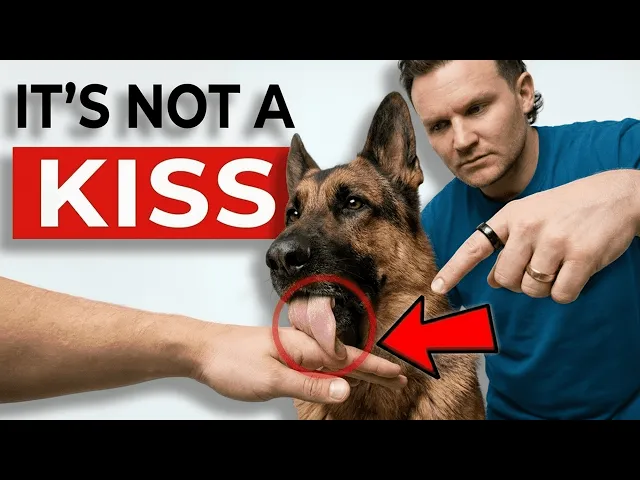
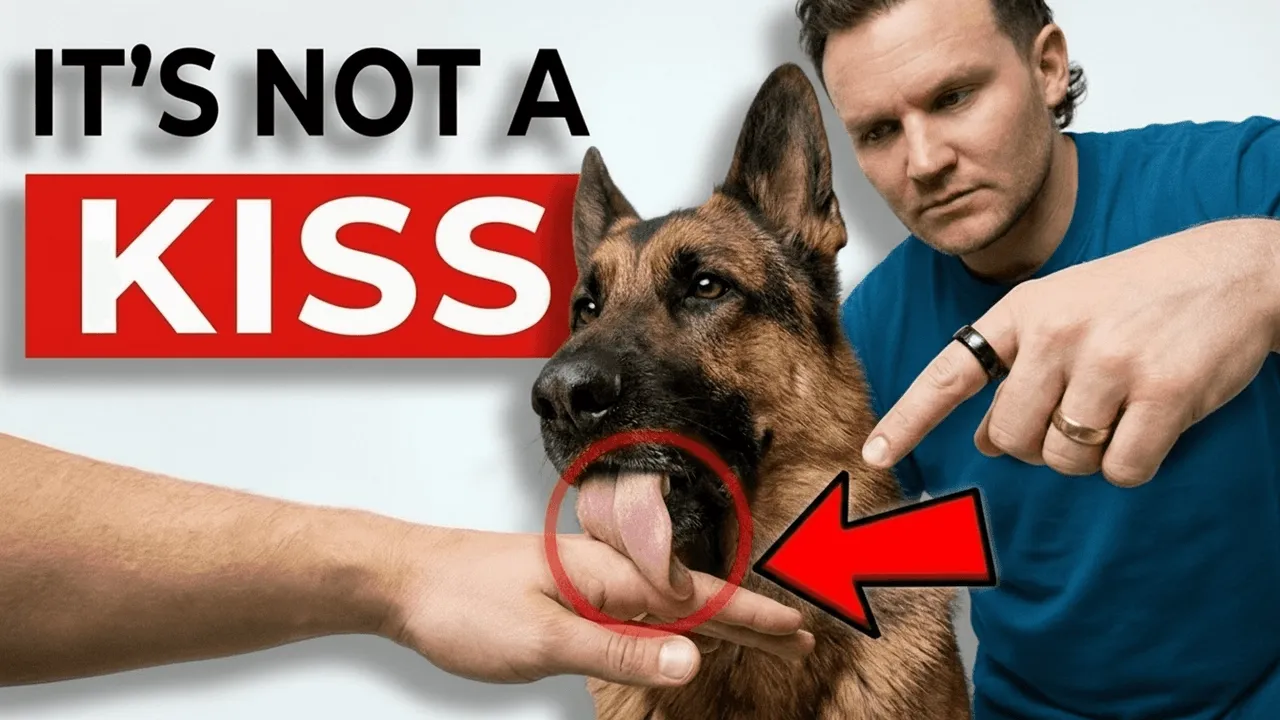
Most people think that when a dog licks you, it automatically means love. But as a pro dog trainer, I can tell you that it's way more than that. Dogs use licking, for an example, and a ton of other quirky behaviors to communicate to us as humans.
Things that we rarely notice. So, today I'm going to jump into 10 surprising dog behaviors that reveal what your dog is actually trying to tell you desperately. Number one is sitting on your feet.
Now, most dogs do this to everybody, not just us dog owners. But when your dog does it to you as an owner, your dog is plopping down right on your feet because [music] it's a cozy spot. And your feet carry the strongest signature of scent of you as their owner.
And dogs with their next level sense of smell are wired to seek that out of comfort. So, when a stranger enters the room and your dog applies even more pressure to your feet, they're making a clear statement in dog language. This is my person and I'm sticking close.
Number two, this is huge. This is why dogs unfortunately sometimes get put into shelters or even worse. This is going to be growling when they're woken up.
If you've ever tried to wake up your dog and got a low growling response, don't take it personally. From my training perspective, this is a natural reaction for most dogs. When dogs are in a deep sleep, their brains are almost on autopilot, right?
Meaning, their protective instincts are completely switched on before they even realize what's happening. So, your dog is very vulnerable. Your dog is not paying attention to you, and your dog isn't necessarily growling at you.
It's a defense mechanism for your dog who is in deep sleep. If this happens frequently, the best thing to do is say their name before touching them. Or just make sure when people are running around, there's kids around, that they don't bump into your dog when they are sleeping.
Correcting or punishing them for this can actually make them more anxious and confused because, of course, they just growlled because they're trying to wake themselves up. their body is in in fight orflight mode and now they don't know why they're getting punished while they're waking up. So, be very mindful and careful of that.
Number three, eating dirt. If you've caught your dog munching on dirt or mulch or something like that, you're not alone. And it's not just a weird habit.
And as a pro dog trainer, I always look at the reason behind this. Sometimes dogs turn to soil or dirt because they're instinctively seeking minerals or nutrients that they might be missing from their regular diet. Always check with a vet or a canine nutritionist to rule out any diet gaps or health issues.
If everything looks good on the medical side, then dirt eating might just be your dog's way of busting boredom, or like I said, they could have a deficiency. They could need something else that is not in their current diet. Number four, sneezing while playing.
Now, if you've ever seen your dog sneeze in the middle of a rowdy play session, that's not just random. From a dog training angle, this is their clever way of pressing reset. That sneeze is a signal to everyone involved and to you, if they're playing rough with you, that, hey, this is just for fun.
I'm not really fighting because dogs naturally use this to [music] keep roughousing from crossing that line, especially with other dogs and with people so it doesn't turn into [music] actual conflict. It's kind of like laughing after a sarcastic joke like, "Hey, I'm kind of busting on you. I'm playing with you, but just so you know, it's all in good fun hun.
" Number five is refusing to eat unless you are present. Now, dogs do this for many different reasons, but have you ever noticed your dog just sits around and stares at their bowl, but maybe waits for you to eat? This isn't about them needing your permission.
It's wired into their nature. Dogs, much like their wild ancestors, feel safe eating within their pack. When you're nearby or even present, that gives them a sense of security and a signal that it's okay to relax and they can eat.
Because when dogs are eating, they're eating something high value. Their head is down and it makes them vulnerable. So, with you being around, sometimes that can give the dog the permission for them to start eating.
Or sometimes dogs will only eat if another dog is in the room. That could be completely other thing. That could be early signs of potential resource guarding.
Just be mindful [music] of that. Number six, sudden sprinting or what we dog trainers and dog owners call zooies. Ever see your dog just run around and chase their tail and race around the room?
Or if you're my dog, you're rearranging the furniture because he's giant. This is the zooies and it's basically your dog's way of blowing off steam. Dogs are built to move and to be super active.
And it's a totally normal thing and it's a great sign that your dog is healthy and happy and has energy and can move around the house freely. If anything, just make sure that you got a safe place to let your dog do the zooies because like I said before, if you have a giant rhino running around your house like I do, your furniture can get dislodged or even maybe your toddlers can go flying across the room. Number eight, hiding treats or toys in your bed or in their bed.
When you find a half- chewed toy or even maybe a a dirty old bone buried in your sheets, your dog isn't actually being silly. They're actually following an age-old instinct. Dogs are natural resource guarders because they think that's what's going to keep them alive.
And from a trainer's perspective, hiding food or toys in your bed is a way of picking what they consider the safest spot in the house. Why? Because your bed smells like you.
We talked about this earlier with your dog sitting on your feet. [music] It feels like the most secure vault for all of their hidden treasures. So instead of scolding your dog for bringing that disgusting old bunny rabbit on top of the bed, understand that this is normal K9 behavior rooted in survival, just give the sheets a shake, maybe wash them, and maybe not let your dog into the room when you're not in there.
Number nine is killing the toys. Now, this is something I talk to dog owners about all the time. When your dog grabs that toy and gives it a fierce shake from side to side, it's not just random play.
It's an instinct in action. And as a trainer, I see this behavior as a built-in release for their natural prey drive. [music] In the wild, this motion would quickly disable small animals.
Aka guys, they are killing that animal. We look at it as, "Oh, we got them a toy. Isn't this cute?
Look at they're playing. " That squeaker and many toys is exactly like the sound of prey. So, they're taking that animal and they're killing it.
When they're ripping the stuffing out, they're ripping the guts out. Now, my job is to tell dog owners and dog lovers what their dog actually [music] is. And that's part of it.
So, it's far from being a problem by any means. It's actually mentally healthy for dogs to channel that energy and practice age-old instinctual behaviors and habits. So, don't worry.
Let your dog have fun with that vigorous toy shake. But understand, it is violence. Number nine, something I see unfortunately in my house all the time is lying on your suitcase.
Lying on your suitcase, it's not just your dog being cute or even clinging. It's a classic case of canine logic in action. Now, as an international dog trainer who travels the world, I see this all the time with my personal dogs, they see that suitcase, they instantly know because of conditioning, this means you are leaving.
And by laying on your luggage or even getting inside your luggage, your dog is doing their best way to delay your departure and surround themselves with your scent, which is deeply soothing for them. They're kind of getting that last hit before they know that you're leaving. So, if your pup gets extra anxious whenever you pack, understand it's not stubbornness.
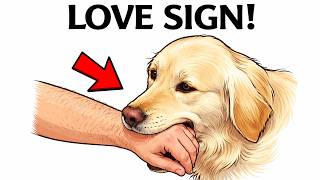
And if your dog really does get anxious, I highly suggest packing in a location where your dog doesn't see it. Guys, last but not least, number [music] 10 is licking. Now, when your dog licks you, it isn't just a tongue bath or kisses or random bursts of affection.
Sometimes it can be, but it's not always that. And as a dog trainer, my perspective is is licking is one of the deepest forms of communication your dog has. It starts from puppyhood.
Think about it, guys. Moms lick their pups to stimulate them, to show care and get them to become alive, and their behavior sticks with them for life. When your dog licks you, they are mixing your scent with theirs.
And this reinforces that you belong in their inner circle. So, it's not just, oh, my dog is giving me kisses. Although it looks like it and it feels like it, and it is endearing to most dog owners, but at the same exact [music] time, your dog is basically marking sense, but it's also their ability to investigate.
How many people have come home and they've had injuries, scrapes, scratches, uh broken bones, and your dog is immediately on that? They know what's going on, and they're likely going to lick you to try to help you, to try to heal you, and to try to figure out what else is going on. Now, by learning to decode these behaviors, you're already on your way to building a better relationship, the kind of trust and understanding that I, as a trainer, always aim for for my clients.
But a lot of people, unfortunately, don't get to get there. So, thank you guys so much for joining me today. I put videos out like this at least twice [music] a week.
Make sure you guys check out my podcast where I have on doctors and veterinarians and surgeons and other dog trainers and tons of cool guests to help you guys understand your dog better. And you guys can click the link to of course find that or look it up on any podcast platform. Thank you guys so much for hanging out with me today.
Keep working with your dog and you'll both be growing together. Onward and upward. Peace.
Most people think that when a dog licks you, it automatically means love. But as a pro dog trainer, I can tell you that it's way more than that. Dogs use licking, for an example, and a ton of other quirky behaviors to communicate to us as humans.
Things that we rarely notice. So, today I'm going to jump into 10 surprising dog behaviors that reveal what your dog is actually trying to tell you desperately. Number one is sitting on your feet.
Now, most dogs do this to everybody, not just us dog owners. But when your dog does it to you as an owner, your dog is plopping down right on your feet because [music] it's a cozy spot. And your feet carry the strongest signature of scent of you as their owner.
And dogs with their next level sense of smell are wired to seek that out of comfort. So, when a stranger enters the room and your dog applies even more pressure to your feet, they're making a clear statement in dog language. This is my person and I'm sticking close.
Number two, this is huge. This is why dogs unfortunately sometimes get put into shelters or even worse. This is going to be growling when they're woken up.
If you've ever tried to wake up your dog and got a low growling response, don't take it personally. From my training perspective, this is a natural reaction for most dogs. When dogs are in a deep sleep, their brains are almost on autopilot, right?
Meaning, their protective instincts are completely switched on before they even realize what's happening. So, your dog is very vulnerable. Your dog is not paying attention to you, and your dog isn't necessarily growling at you.
It's a defense mechanism for your dog who is in deep sleep. If this happens frequently, the best thing to do is say their name before touching them. Or just make sure when people are running around, there's kids around, that they don't bump into your dog when they are sleeping.
Correcting or punishing them for this can actually make them more anxious and confused because, of course, they just growlled because they're trying to wake themselves up. their body is in in fight orflight mode and now they don't know why they're getting punished while they're waking up. So, be very mindful and careful of that.
Number three, eating dirt. If you've caught your dog munching on dirt or mulch or something like that, you're not alone. And it's not just a weird habit.
And as a pro dog trainer, I always look at the reason behind this. Sometimes dogs turn to soil or dirt because they're instinctively seeking minerals or nutrients that they might be missing from their regular diet. Always check with a vet or a canine nutritionist to rule out any diet gaps or health issues.
If everything looks good on the medical side, then dirt eating might just be your dog's way of busting boredom, or like I said, they could have a deficiency. They could need something else that is not in their current diet. Number four, sneezing while playing.
Now, if you've ever seen your dog sneeze in the middle of a rowdy play session, that's not just random. From a dog training angle, this is their clever way of pressing reset. That sneeze is a signal to everyone involved and to you, if they're playing rough with you, that, hey, this is just for fun.
I'm not really fighting because dogs naturally use this to [music] keep roughousing from crossing that line, especially with other dogs and with people so it doesn't turn into [music] actual conflict. It's kind of like laughing after a sarcastic joke like, "Hey, I'm kind of busting on you. I'm playing with you, but just so you know, it's all in good fun hun.
" Number five is refusing to eat unless you are present. Now, dogs do this for many different reasons, but have you ever noticed your dog just sits around and stares at their bowl, but maybe waits for you to eat? This isn't about them needing your permission.
It's wired into their nature. Dogs, much like their wild ancestors, feel safe eating within their pack. When you're nearby or even present, that gives them a sense of security and a signal that it's okay to relax and they can eat.
Because when dogs are eating, they're eating something high value. Their head is down and it makes them vulnerable. So, with you being around, sometimes that can give the dog the permission for them to start eating.
Or sometimes dogs will only eat if another dog is in the room. That could be completely other thing. That could be early signs of potential resource guarding.
Just be mindful [music] of that. Number six, sudden sprinting or what we dog trainers and dog owners call zooies. Ever see your dog just run around and chase their tail and race around the room?
Or if you're my dog, you're rearranging the furniture because he's giant. This is the zooies and it's basically your dog's way of blowing off steam. Dogs are built to move and to be super active.
And it's a totally normal thing and it's a great sign that your dog is healthy and happy and has energy and can move around the house freely. If anything, just make sure that you got a safe place to let your dog do the zooies because like I said before, if you have a giant rhino running around your house like I do, your furniture can get dislodged or even maybe your toddlers can go flying across the room. Number eight, hiding treats or toys in your bed or in their bed.
When you find a half- chewed toy or even maybe a a dirty old bone buried in your sheets, your dog isn't actually being silly. They're actually following an age-old instinct. Dogs are natural resource guarders because they think that's what's going to keep them alive.
And from a trainer's perspective, hiding food or toys in your bed is a way of picking what they consider the safest spot in the house. Why? Because your bed smells like you.
We talked about this earlier with your dog sitting on your feet. [music] It feels like the most secure vault for all of their hidden treasures. So instead of scolding your dog for bringing that disgusting old bunny rabbit on top of the bed, understand that this is normal K9 behavior rooted in survival, just give the sheets a shake, maybe wash them, and maybe not let your dog into the room when you're not in there.
Number nine is killing the toys. Now, this is something I talk to dog owners about all the time. When your dog grabs that toy and gives it a fierce shake from side to side, it's not just random play.
It's an instinct in action. And as a trainer, I see this behavior as a built-in release for their natural prey drive. [music] In the wild, this motion would quickly disable small animals.
Aka guys, they are killing that animal. We look at it as, "Oh, we got them a toy. Isn't this cute?
Look at they're playing. " That squeaker and many toys is exactly like the sound of prey. So, they're taking that animal and they're killing it.
When they're ripping the stuffing out, they're ripping the guts out. Now, my job is to tell dog owners and dog lovers what their dog actually [music] is. And that's part of it.
So, it's far from being a problem by any means. It's actually mentally healthy for dogs to channel that energy and practice age-old instinctual behaviors and habits. So, don't worry.
Let your dog have fun with that vigorous toy shake. But understand, it is violence. Number nine, something I see unfortunately in my house all the time is lying on your suitcase.
Lying on your suitcase, it's not just your dog being cute or even clinging. It's a classic case of canine logic in action. Now, as an international dog trainer who travels the world, I see this all the time with my personal dogs, they see that suitcase, they instantly know because of conditioning, this means you are leaving.
And by laying on your luggage or even getting inside your luggage, your dog is doing their best way to delay your departure and surround themselves with your scent, which is deeply soothing for them. They're kind of getting that last hit before they know that you're leaving. So, if your pup gets extra anxious whenever you pack, understand it's not stubbornness.
And if your dog really does get anxious, I highly suggest packing in a location where your dog doesn't see it. Guys, last but not least, number [music] 10 is licking. Now, when your dog licks you, it isn't just a tongue bath or kisses or random bursts of affection.
Sometimes it can be, but it's not always that. And as a dog trainer, my perspective is is licking is one of the deepest forms of communication your dog has. It starts from puppyhood.
Think about it, guys. Moms lick their pups to stimulate them, to show care and get them to become alive, and their behavior sticks with them for life. When your dog licks you, they are mixing your scent with theirs.
And this reinforces that you belong in their inner circle. So, it's not just, oh, my dog is giving me kisses. Although it looks like it and it feels like it, and it is endearing to most dog owners, but at the same exact [music] time, your dog is basically marking sense, but it's also their ability to investigate.
How many people have come home and they've had injuries, scrapes, scratches, uh broken bones, and your dog is immediately on that? They know what's going on, and they're likely going to lick you to try to help you, to try to heal you, and to try to figure out what else is going on. Now, by learning to decode these behaviors, you're already on your way to building a better relationship, the kind of trust and understanding that I, as a trainer, always aim for for my clients.
But a lot of people, unfortunately, don't get to get there. So, thank you guys so much for joining me today. I put videos out like this at least twice [music] a week.
Make sure you guys check out my podcast where I have on doctors and veterinarians and surgeons and other dog trainers and tons of cool guests to help you guys understand your dog better. And you guys can click the link to of course find that or look it up on any podcast platform. Thank you guys so much for hanging out with me today.
Keep working with your dog and you'll both be growing together. Onward and upward. Peace.