we discussed protein primary structure in our previous chapter now I want to see how proteins can be sequenced in order to determine that structure since proteins are often too large to be directly sequenced our first step in this process is to break up the protein into smaller fragments part of determining the primary structure of a protein is to determine its amino acid content this can be accomplished by hydrolyzing the protein breaking all the peptide bonds we can then separate and identify the component amino acids often employing some of the techniques mentioned in earlier videos we
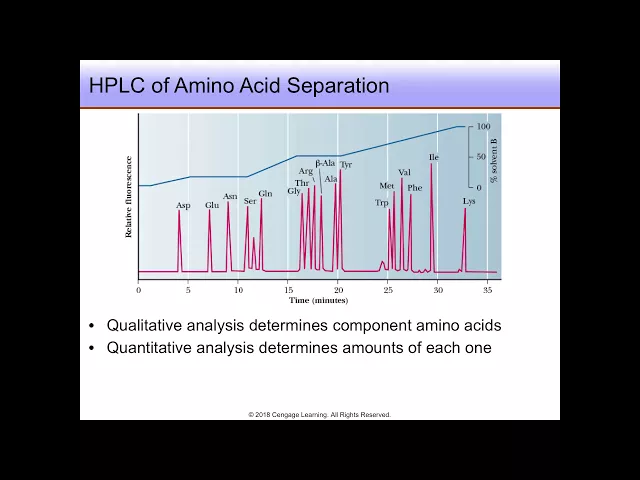
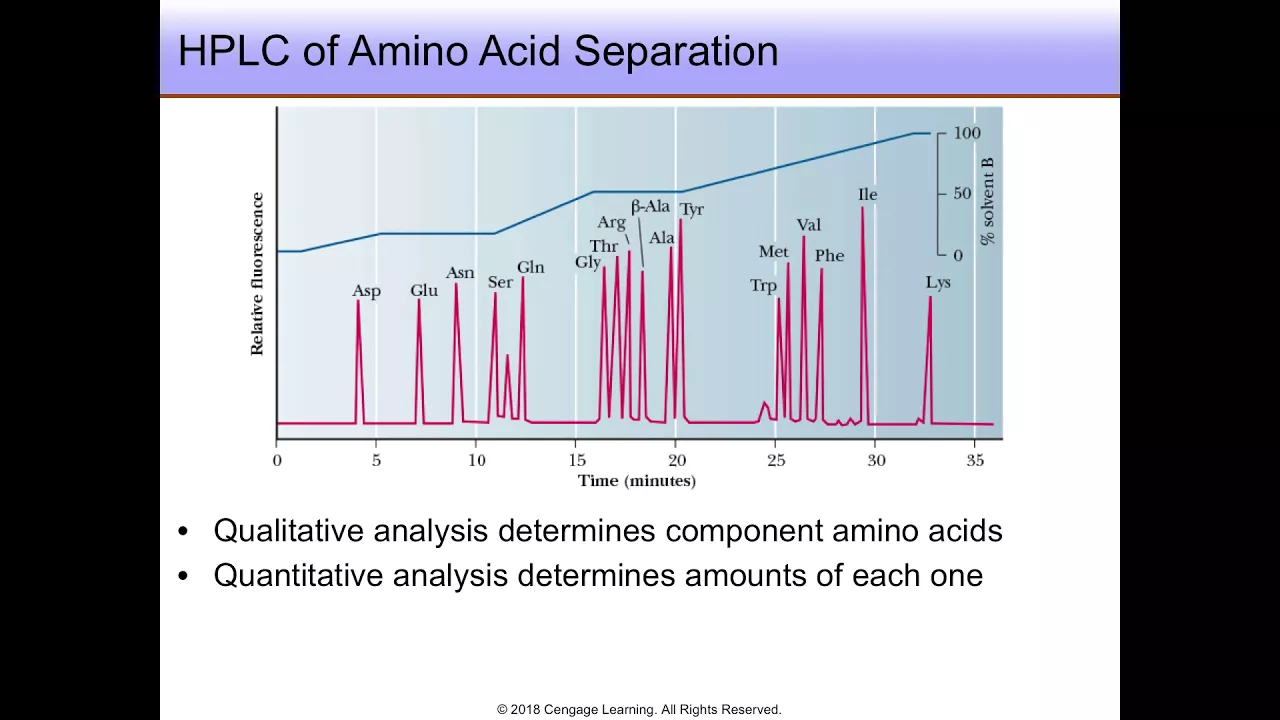
can also use special reagents in order to determine the N and c-terminal residues we might use HPLC analysis to accomplish a separation of our component amino acids from this we can perform a qualitative analysis to determine which amino acids are present and a quantitative analysis to determine the amounts of each one our first goal in determining the sequence of our protein is to divide it into smaller more manageable fragments this may be accomplished by using various digestive enzymes we can take separate samples of our protein and subject each to a different digestive enzyme then we'll
determine the sequence of the individual fragments finally we can combine the information from overlapping peptides to get the complete sequence let's look at some of the digestive enzymes we might use in this process of cleaving our protein into smaller fragments each has a certain specificity in terms of which peptide bonds they break trypsin is an enzyme that breaks peptide bonds that are on the C terminal side of basic amino acids like lysine and arginine as shown here we can see that digestion with trypsin produces a distinct pattern of peptide fragments chymotrypsin is a protease that
hydrolyzes peptide bond on the c terminal side of aromatic residues like tyrosine tryptophan and phenylalanine finally the compound cyanogen bromide chemically breaks peptide bonds at internal methionine residues cleavage by these different enzymes and reagents will produce a series of distinct fragments in each case we can separate the fragments by HPLC or some other type of chromatography as shown in the figure below we can resolve the order of the fragments due to overlapping regions hopefully you can see that in each case we'll get a different set of peptide fragments each of which can then be subjected
to sequence analysis