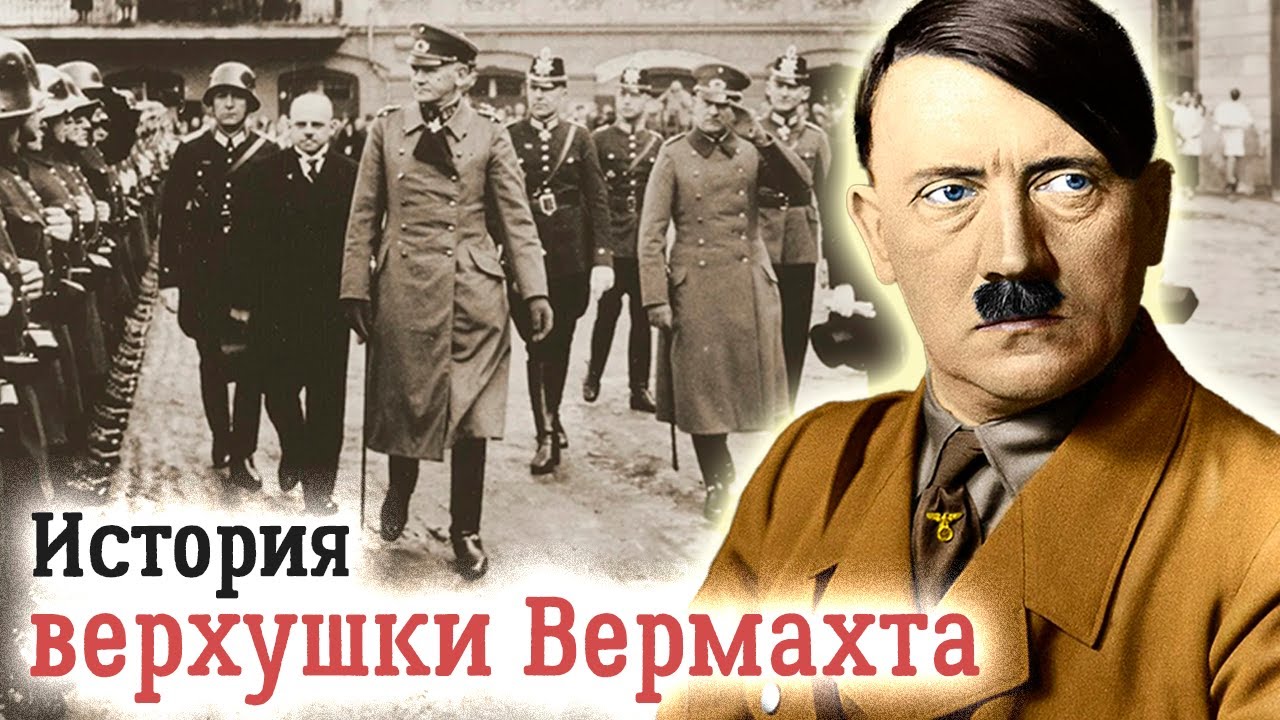
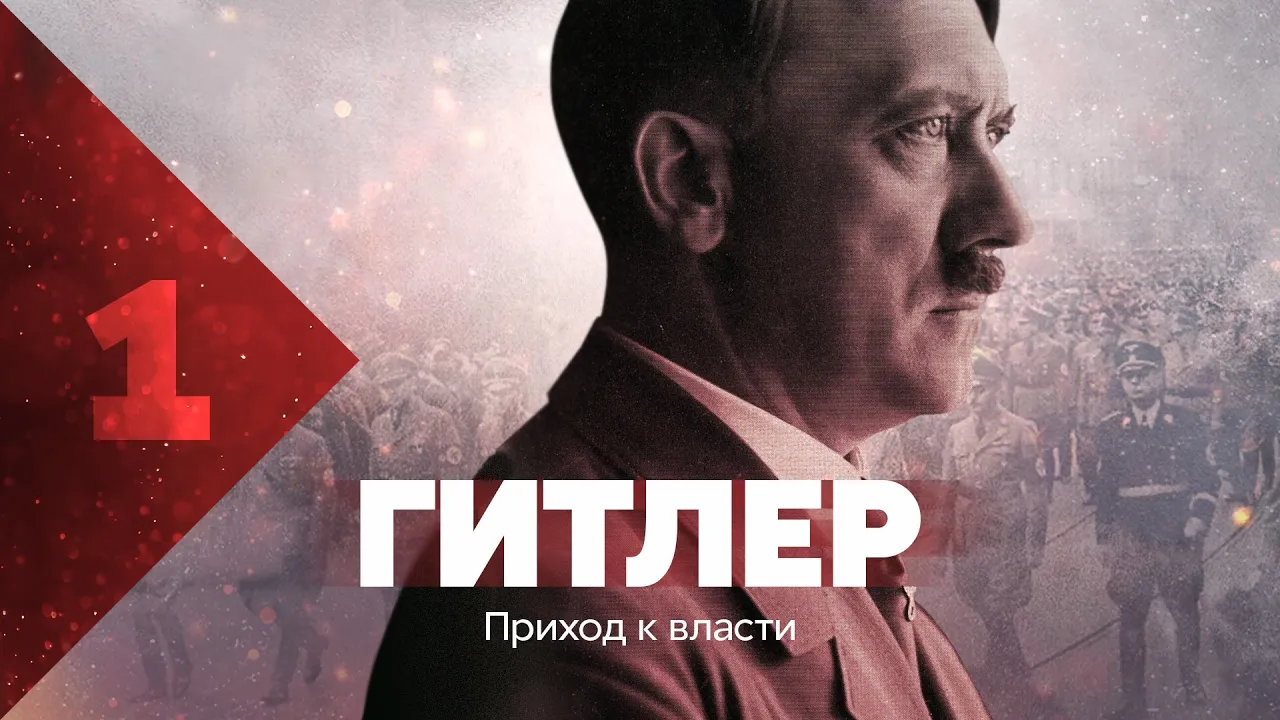
Good day, dear friends! This is "History Lessons with Tamara Eidelman". Today we will talk about Hitler. Thank you, dear patrons, supporting us on Patreon, thank you, sponsors, helping us on YouTube, thank you to those in Russia who managed to subscribe to donations on the Boost platform. Without you, nothing would have been possible, we wouldn't have been able to film anything. And that is why we are very, very grateful to you. And, of course, as always, we ask everyone to like, share and thus help us reach somewhere, somewhere, somewhere up on YouTube. Thank you! Hitler is
probably one of the most famous people of the 20th century, Well, maybe even in all of history. One of the most famous villains. In many ways, well, let's say, the embodiment of absolute universal evil. At the same time, a huge number of books have been written about Hitler. Understandably, an infinite number, a huge number of books in one way or another try to answer the question: how did this happen? How did he not only come to power, but lead a huge civilized European people? These discussions, to some extent, already existed in the thirties, after the
war, they were even stronger. Here is one direction - how could this happen? Germans - it's... then comes a long list: a nation that gave the world Goethe, Schiller, Beethoven, and more, and more, and more, the list is huge, no less than the list of those great figures whom, let's say, Russia gave to the world. How could this civilized people turn not just into cattle, but into murderers, into guards of concentration camps, commit all these terrible atrocities? Something must have happened. There are many speculations about what happened, that a miracle occurred, that Hitler bewitched everyone.
His comparisons, there, with a demon, with the devil, with a terrifying sorcerer, there is a lot of that. Perhaps those who say this do not really believe, Literally, that he was a demon. But that there was something demonic in him, something magnetic, that he mesmerized people - contemporaries wrote about this. For example, people who listened to him, could not understand what was happening to them, much was said about this later. But here, of course, one needs to delve deeply, into who, why, and why they are writing about this, but in general, everything related to Hitler,
of course, requires very careful historical analysis. It is clear that after the war, many people, made every effort to distance themselves from what was happening in Germany before that. Therefore, this kind of position, like, Hitler bewitched me, I followed him, not understanding anything - someone even used it at the Nuremberg Trials, but in general, it was quite a widespread thing. On the other hand, there is, well, the opposite, that he was insignificant, he was an empty vessel, he was a clown. To some extent, if you look at his biography, it's quite evident. A man who
could not receive any education, who knew practically nothing. No matter how much he claimed to have read constantly, he did read a lot indeed. But the question is - what did he read and what did he truly understand from it? In reality, some kind of petty scoundrel, a petty hooligan. But we know that this hooligan led to the death of millions of people. So, there must have been something in him, for this concentration of dark will and terrible power... Or, perhaps, this should convince us that such an insignificant person, As a famous German journalist and
writer, Kurt Tucholsky, said in the 1930s: "This man - referring to Hitler - does not exist at all. There is only the noise he creates." But if this is an empty space, how did this empty space become so significant? And here, of course, the conversation about Hitler is closely linked to the conversation about responsibility. The very topic that, unfortunately, is so relevant in our country in the current tragic circumstances. Who was responsible, who is responsible for what happened in Germany during the era of fascism. If Hitler was simply a villain, who led a gang of
bandits and drove everyone crazy, then they are responsible. This version was very widespread. Especially right after the war. As one historian said, the more reports of wild, cruel, terrible, insane murders, for example, in concentration camps, came to light, the more naturally it caused horror, but at the same time, to some extent, relief. Because if all those who followed Hitler were like some Ilse Koch, who made lampshades from the skin of prisoners - that's understandable, they were maniacs. And then everyone else, well - it's all terrible, but we are not responsible for what the insane do.
At the same time, very quickly, already after the war, maybe even during the war, the idea arose that not only Hitler and his close associates were guilty. We have already discussed this in the lecture on the Nuremberg trials, we won't repeat now, who should bear criminal, moral responsibility? These debates lasted a long time and to some extent continue to this day. Studying Hitler's figure was also important here. Historian Joachim Fest, who wrote a huge three-volume biography of Hitler, wrote: "Hitler was the result of a long and not limited to the boundaries of one separate country,
degeneration, the outcome of German, as well as European development and universal fiasco." And immediately, of course, he clarifies: "Of course, this judgment does not diminish the responsibility of the German people, but divides it among all." There are several important thoughts here. On the one hand, the idea that the entire German people, to some extent, bear responsibility, because they supported Hitler, because they voted, because they did not resist, because they were happy with what was happening. it is perceived today as more or less self-evident. But Fest has another thought here, Many have thought and written about
this. There is an English historian, very interesting, Mark Mazower. and here is a completely different meaning, a different emphasis. This is about Europe in the 1920s and 1930s. I must say that when I read it, long ago, I felt a very troubled state. Now I somehow, more or less, well, not that I have come to terms with this idea, but, in any case, I have learned a lot more about it. And Mazower examines different countries, far from just Germany, different countries of the 1920s and 1930s, and suddenly it turns out, That the soil on which
fascism grew, it was very widespread. And it's not even about how many countries between the First and Second World Wars moved away from democracy and transitioned to one or another form of authoritarian regimes, the same Italy under Mussolini, Hungary, Romania, then Spain, Portugal - many others. But this is just the external manifestation of broader things. The cult of strength, militant nationalism and many other traits, which today we largely associate with Hitler's Germany, they were present almost everywhere. And this is a very scary conclusion for us. That is, how easy it is to think: "Well, yes,
there was such a villain, he had everyone wrapped around his finger." Or even think: "Well, those Germans, all proud of their Goethe, Schiller, and all the others, of course, in their culture there's so much dark, aggressive stuff." And this can also be very interesting to prove. One of the greatest novels of the 20th century, Thomas Mann's "Doctor Faustus," which is sort of about culture, of course. The main character of the novel is the great composer, Adrian Leverkühn, who sold his soul to the devil, as understood from the title, but it's also a novel about Germany,
selling its soul to the devil, it's a novel about the history of humanity, in general, about everything. But what's important now - both the main character of the novel and the narrator, they are by the will of Thomas Mann from a small fictional German town, called Kaisersaschern, Literally meaning "ashes, dust of the emperor", also a very symbolic name, describing the town idyllically, peaceful, beautiful. The narrator describes its rootedness in German history, in German culture. Here is a castle, here lies buried a German emperor, here are the roots of Protestantism, dating back to Luther. Speaking of
Luther, by the way, when talking about the roots of fascism, Luther is often mentioned with his beastly antisemitism. Here is the bourgeoisie, the German bourgeoisie, here is the culture. And in this Kaisersaschern, Thomas Mann creates a sort of microcosm of German culture, and then shows how from here emerged the great, astounding Adrian Leverkühn, who sold his soul to the devil, and then a lot happens with him. Biography of the main character largely reproduces the biography of the great philosopher Friedrich Nietzsche, who is also often accused of laying some ideological foundations for what would happen in
the thirties. So, of course, one can search a lot in Germany's past. And find, of course. This is also, to some extent, for those outside Germany, a relief. Like, the Germans, besides their great culture, had anti-Semitism, admiration for the state, had Nietzsche, had Wagner, and they all gave rise to fascism. And we, it seems, had nothing to do with it. There is a broader view. Here is one of the most famous English historians of the 20th century, Alan Taylor, wrote: "The interwar period, - referring to the world wars, - seemed as if it was specially
created for the rule of lunatics." But it is clear that Hitler was not insane in the clinical sense of the word, but Taylor, of course, points to such a crazy, strange, turning point atmosphere of those decades. And, notably, he does not limit it to just Germany. And one can see in the development of the great stunning culture of the 19th century, far from just German, some traits, that seemed at that moment interesting, intriguing. Some, perhaps, dangerous, but not catastrophic. And it is very interesting to see how these traits, gradually accumulating, accumulating, lead, in general, to
the civilization catastrophe, which, in general, is fascism. What can be said? This is, of course, the birth of nationalism, which in the 19th century was so beautiful, romantic, linked to the liberation of different countries and with many other pleasant things, with the struggle for freedom, which then underwent a transformation, and maybe did not, but some things emerged, clearly making this movement completely different. And nationalist ideology in different countries is becoming more aggressive, more xenophobic, What will emerge in the 20th century with great force. One can talk about a strange view of man, generally prevalent in
the 19th century. On one hand, if we look at the beginning of the 19th century and see the romantics, with their reverence for the individual, for the strong personality, independent, who can do anything, has the right to anything. How good it is, what a liberation of the individual. But if we now repeat what I said: a person who has the right to anything, can do anything, it is no coincidence that romantics admired great villains too, they also seemed liberators to them. In the early 19th century, it was very beautiful, then somehow not so much. And
on the other hand, there is also a denial of the value of the individual. What a huge number of ideologies, directions, organizations, thinkers, who write that there are things more important than the individual. This could be the nation for nationalists, a revolution, a community for socialists, societies, associations - it doesn't matter. And among these people who wrote so, there were wonderful, noble people. But they wrote that there are things more important than man. What will later be manifested in Nietzsche, And reach out to the superhuman, who knows no mercy. And another thing, probably incredibly important
to understand the emergence of Hitler, is the attitude towards reason. For several centuries, starting from the Renaissance era, human reason was exalted, considered a huge driving force, the most important factor, the pride of people. Renaissance, the Age of Enlightenment - for them, for all people, especially as the bearer of reason, - this is a great, mighty force. The middle of the 19th century arrives, and philosophers emerge, among whom, of course, the most famous are Schopenhauer and Nietzsche, beginning to talk about how reason is not so important. Schopenhauer, who will say, That at the foundation of
our existence lies a dark, non-reasoning will to live, which forces us to live, despite all suffering, and reason, that is, reason sees how terrible life is, and within us lives some elemental principle, unconvincing to reason to persuade us how bad everything is. And he writes that the will to live - is a strong, powerful blind man, who carries on his shoulders a feeble seer. That is, reason suddenly turns out not to be the main force of progress, but the "feeble seer". But here there is still some respect for reason, of which Nietzsche will have very
little. And right away, in the middle of the 19th century, a man appears, who will be incredibly important to Hitler - this is the great composer Richard Wagner. But with Wagner, of course, everything is complicated, because he was so closely associated with fascism, in particular because Hitler adored Wagner, from his youth he continuously listened to his operas. He went to see "Tristan and Isolde" in Vienna thirty or forty times. One of his crazy projects in his youth - he tried to complete an unfinished opera by Wagner. That is, for him Wagner was an absolute deity.
And he borrowed a lot from him, of course. And that's why today often they perform with caution. 15 years ago there was a horrifying incident at the Moscow Conservatory, when they were supposed to play Wagner, and some scoundrels showed up In semi-fascist attire, sat in the front row, the conductor refused to start the concert, then they finally started. In general, it was all very unpleasant. At the same time, Wagner, undoubtedly, was a great composer, admired by far more than just fascists. But what does Wagner have to do with it? The fact that he completely changed
not only the musical life, but the cultural life in general. Wagner, let's say, incredibly intensified the irrational character of music. We can say that any music is irrational, naturally. Here's something strange: Nietzsche hated recitatives in music. What was it about recitatives that bothered him? In Mozart's operas, there are so many beautiful arias. There are duets, trios, quartets, where individual voices merge into a beautiful whole. And then there are recitatives, where they speak under the music. Well, it's like something in between singing and speaking - very beautiful, very good. Nietzsche believed that some meaning of music
was being distorted here. I think Wagner thought the same. Because with Wagner, everything is structured completely differently. He changed the orchestra's structure, emphasizing the importance of wind instruments, sounding menacing, powerful, grand. This grandeur - that's exactly what would fascinate Hitler in Wagner. In Wagner's operas, the choir plays a completely new role. It's not a solo aria Or even the merging of multiple voices, but the power of, let's say, a hundred singers, several hundred instruments. It's like a wave carrying a person away. It overwhelms the listener and transports them to other worlds. It's clear that this
is a work of art, but this is how Hitler will build his speeches. And there will be many memories of people not understanding anything while listening to him. Likewise, Wagner will treat his music, not as secular entertainment - gathered in a salon, listened, la-la-la, - but as a sacred act. The religious nature or, there, semi-religious nature of Nazi propaganda and Hitler's speeches - that's also something that will be frequently noted. And, of course, Wagner's appeal to German antiquity, to pagan imagery - again, that's what will be used by numerous different nationalist movements and, in particular,
by Hitler. At the same time, it is necessary to understand - this does not negate the fact that he was a great composer, that he wrote amazing music. And when people simply say, that Wagner was a precursor to fascism... Wagner as a person was despicable, but then again, many in world culture were despicable. He simply concentrated on certain things, important for the mid to late 19th century. And these things accumulated more and more. The same Joachim Fest, whom I have already quoted, writes there, he discusses extensively the influence of Wagner on Hitler: "With Wagner, an
era in art begins of indiscriminate enchantment of the masses, and it is simply impossible to imagine the style of spectacles in the Third Reich without this operatic tradition, without the demagogic essence of Richard Wagner's artistic creation." But perhaps not all music lovers will agree with such harsh words towards Wagner, but there is certainly something to it. And Hitler himself, in his later years, said: "Anyone who sees in National Socialism only a political movement, knows almost nothing about it. It is even more than a religion - it is the will to create a new man." And
this creation of a new man - this is what various beautiful, terrible, appealing to us today or repulsive to us today thinkers of the 19th century dreamed of. To them it seemed that something completely new would emerge, that a new religion would be on Earth. What is communism? Paradise on Earth. What are Nietzsche's dreams of the overman? It is the creation of a new being. So these people, these movements could be hostile to each other. They were walking towards a certain horizon, which seemed beautiful to them. But it turned out not so great in the
end. Against this backdrop, the life of Adolf Hitler begins to unfold. Hitler was born on April 20, 1889 in the suburb of the Austrian town of Braunau. Much has been written about Hitler's childhood, his ancestors, and his development a huge amount. Biographers love to draw many conclusions from a person's childhood, from his attachments or, conversely, his enmities, from his relatives, from his childhood complexes. If we don't consider this the only factor, it definitely makes sense to pay attention to how a person grew up, where, what influenced them. Hitler's family roots do not trace back to
Germany at all, as he would have liked, but to the history of Central Europe. Hitler was born in Austria, he spent the first part of his life as an Austrian citizen. Only later, in the twenties, he renounced his hated Austrian citizenship. His ancestors on both sides were peasants, living in villages for centuries, perhaps in small Austrian towns, and not only Austrian ones. It should be noted that Central Europe, now consisting of many countries, for many centuries was the Holy Roman Empire, which later became the Austrian Empire, then the Austro-Hungarian Empire. Here, there has always been
a mix of many peoples, many cultures, languages, traditions, religions. Which, on one hand, created beauty, interest, diversity of this place. On the other hand, it generated tremendous tension. There is a version, for example, that the surname Hitler, which was spelled differently: Hidler, Hüttler, might be of Czech origin, which Hitler probably wouldn't have been pleased about. Here, in this world, far away from big cities, many passions boiled. Both public and personal. Here, different peoples sometimes lived peacefully, but often with enmity towards each other, often with hatred. And this too will be what he absorbs from childhood.
And especially later, when he moves to Vienna. But we'll talk about that later. Another thing is his strange family relationships. But about the role his complexes played in Hitler's life, his sexual problems, and his relationships with his family, a lot has been written about that, maybe even too much. But, in any case, it can be said that his family history, did not at all correspond to Hitler's own self-image. He was constantly creating an image, even in his youth, gradually, and especially in the 1920s, when he writes "Mein Kampf", and beyond - an image of a
proud young man, destined for a great future, who, battling circumstances, overcomes them and breaks free, to fulfill his great destiny. It sounds beautiful. But the circumstances that shaped his life, Were so pitiful, so insignificant. It has long been observed how he slightly embellished them. Well, not embellished, it was advantageous for him to show: "How terrible everything was, and yet I made it through." but he made them less humiliating. Well, let's start with the fact that his father, Alois Hitler, was illegitimate. Hitler's grandmother, Anna Schicklgruber, gave birth to a child out of wedlock. There was even
a version, which, well, seems to not be confirmed today, that Hitler's real father was a wealthy Jew, with whom Anna Schicklgruber worked as a maid in his house. But apparently, these are just tales. But, in any case, after giving birth to a son, she will get married and they will live in terrible poverty. For some reason, the boy will be given to be raised by her husband's brother. Later, when Alois Schicklgruber is an adult and his parents die, his uncle will adopt him. And there are disputes going on about who was the real father? The
one who was considered his father, or this uncle who adopted him and gave him the surname Hitler, where, apparently, somewhere there, the "d" turned into "t" - unclear. But, in any case, it is clear that there is some strange mixture of poverty, completely incomprehensible, not even romantic, some kind of sexual relationships. Here is this kind of darkness "leaden horror of life," if we speak the language of Russian literature. And Alois Hitler will continue to pursue a career. Well, at least what seemed like a career to him. His son will not see it that way at
all. He will be in public service, a customs official, will rise through the ranks, will be an exemplary servant, will become wealthy by the end of his life, buy a house. This will be a good career for those from these poor Austrian villages. It will be a luxurious career. Hitler described his father as a chronic alcoholic, and apparently, they had very complicated relationships, because, no matter what the father was like, he was very strong-willed and tried to impose his will on his son, which the son did not like at all in his youth. But from
here, the tradition of strange, dirty, not very healthy relationships also extends to Hitler. His father had three wives. Hitler was born to the third wife. And each time it turned out that the next wife was pregnant while the previous one was still alive. In addition, this Clara, Hitler's mother, was a relative of his father, his niece. When they were married, - she was much younger than him - she called him "Uncle Alois" even in marriage. They even needed special permission - they were Catholics - they needed special permission to marry. So here, if not direct
incest from today's point of view, Then, in any case, some unclear, unhealthy relationships. And in a way, Hitler too, well, we can't say he inherited it, but continued this tradition, because, obviously, the main woman was not at all Eva Braun, whom everyone knows, his lover, short-lived wife, that woman, with whom they both committed suicide in 1945, and the main woman was his niece, Geli Raubal. although historians are also passionate about this - was it a romance, or were they just platonic relationships? But apparently, there was, of course, a romance. And this young woman took her
own life in 1931, Which also sparked a wave of strange conspiracy theories, that she was killed by the SS because she had too much influence on Hitler, that Hitler himself killed her... And other similar nonsense. But it seems she took her own life, unable, perhaps, to bear her strange situation or the nature of her lover, or some other issues. But, in any case, these strange unhealthy relationships - are also what will shape Hitler. And he will find a way out of this, of course, in his relationship with the crowd. As he later said, his only
bride is the masses. The literal erotic ecstasy experienced by thousands listening to Hitler - this has also been noted repeatedly. But let's go back to his childhood for now. The life of a little civil servant, rising through the ranks, looks like a success. At the same time, of course, the young Hitler's life was not that cheerful. Well, for starters, his mother, before giving birth to him, had lost three children, three babies died. So when little Adolf comes along, he becomes the center of the universe. Although at this time there are children from his father's previous
marriage living in the house, then another brother appears, who dies young, then a sister appears. The family grows. The boy is sent to school. He changes schools in different places. And at first, in the early grades, in a small, well, almost a village, in a small town, let's say, he studied very well. He was praised. And he, in general, always loved being praised. Then they moved to a bigger city, and there was a complete failure. This is also an important feature of Hitler's development - he never completed his education anywhere, nothing worked out for him.
Of course, he later portrayed it as if he didn't want to learn from those outdated programs, he wanted something completely different, he wanted to create. But in reality, he just couldn't do it. Maybe he was embarrassed, that was also the case for him at the beginning, Maybe he felt like a stranger among those city kids. In any case, he did very poorly. He was left behind for a second year, he had to retake exams, he had to leave one real school, then, well, as he claimed - only because his mother begged him, he went back
to study, maybe he wanted to study himself, - but again, nothing worked out. In the end, he won't have any diploma, he will be a complete dropout. Meanwhile, one of the few subjects he does well in is drawing. And he considers himself an artist. In 1907, after his father's death, he moves to Vienna, To apply to the academy of fine arts. And here - a few important things for his formation. First, he arrives in Vienna. Vienna at the beginning of the 20th century - it's an amazing place. It's a place where culture thrives in many
ways, where amazing breakthroughs are made, especially in painting, literature, philosophy, in medicine - Freud, in psychology, so to speak, - in architecture. It's a luxurious imperial city, a city where many different peoples mix. And for Hitler, this influence will be more, probably, negative. He is not feeling well in Vienna, Vienna does not accept him. By the end of the war, there will be a request from Hitler's command to allow the transfer of additional air defense resources to Vienna. And he will say: "No, let them find out what it's like when a city is bombed." Obviously,
maybe he simply did not have the means at that moment, but it is very characteristic that this city, where he spent several very important years of his life - "let them find out what it's like when they bomb". That's his attitude. And all these incredible breakthroughs, achieved by artists, poets, writers, they did not affect him much. The art that emerges here is what will later be declared degenerate art, decadent. Hitler is exactly the absolute realist in art, he is oriented towards tradition. And he acts, tries to get into the academy. He takes the entrance exams,
barely passes the first round, and fails the second. For him, of course, this is a terrible blow to his ego, he will still see himself as an artist for a very long time, he will perceive himself as an artist for a very long time, and, interestingly, he apparently kept this hidden. He kept it from his family, he did not mention it in his applications, so he has no formal education, he called himself an artist. The following year he will try again to apply, And he won't even be allowed to take the exams, they will look
at his work and immediately reject him. And, also interestingly, when he tried to challenge the exam results and went to the head of the academy, and begged to be accepted, Well, that's understandable: like, leave us alone, go study somewhere else. But he couldn't study architecture, although later he also repeatedly said that he was thinking about architecture, because he didn't have a diploma from finishing school, gymnasium, or vocational school. So this path was closed to him. And the years he spends in Vienna, will be difficult for him, horrible, desperate. First of all, he is not needed
by anyone. He even had some money for a while, because relatives left him an inheritance. Until he reached the age of majority, he received an orphan's pension. After all, he described himself as almost dying of hunger in Vienna, at first, it was not so bad, but then, of course, it got worse. The main thing is that he can't find any use for himself. He paints his own idiotic watercolors, and there are people who sell these watercolors, but it's all completely different from what he dreams of. At the same time, he shows his acquaintances, it's even
hard to say friends, he had even a bad time with friends at that time. One of them was his childhood friend, with whom he rented an apartment in Vienna for a while, And then, when that friend left for a short while, then came back, and Hitler was gone - he just moved. And that's it. But he explained to his acquaintances that he had important matters, important assignments. In reality, he wandered the streets, he sat in libraries, he read books, of various qualities - sometimes good, sometimes completely meaningless. And he spent a lot of time on
all sorts of completely meaningless projects. This person, who was advised to become an architect, but who never spent a second studying any architecture, he sits and develops a project to demolish the Hofburg Imperial Palace and rebuild it anew. He is developing a project to create a non-alcoholic drink for the people. It's interesting that this monster, who killed millions, Was a supporter of a healthy lifestyle. Later on, he will be against alcoholism and strongly against smoking and will become a vegetarian starting from the thirties. Just an example for everyone. Absolutely amazing. Some canal construction, something else.
At some point, his friend asks him: "What are you doing?" Maybe he's studying somewhere, but he doesn't attend any classes, it's unclear. And Hitler replied: "Well, I'm working on the housing shortage in Vienna and conducting some research." From this phrase, it can be concluded that he was assigned research, he will now write a project. In reality, these are his insane projects. And the desire to reshape reality, make it resemble his wild fantasies, he already had it at that time. At that time, he indulges in Wagner. And, of course, he absorbs from Wagner grandeur, above all,
this is very important for him. He himself is such a little man, just a hero, well, I don't know, from some Russian works: small, unhappy, unwanted by anyone. Full of baseless dreams. But he sees himself as a hero, a great hero. And not just any hero - not just a great artist Or, later, a great politician, he also sees himself as a hero in the spirit of Wagner - the savior of humanity, a revolutionary, already reaching completely superhuman, superhuman boundaries. But for now, he looks completely ridiculous, of course. First, he rents a room with a
friend, then somehow changes accommodation, and eventually ends up in a dormitory, well, what we would probably call today a hostel. Where people of all kinds live, of different nationalities and views. It's clear who will live in such a dormitory - those who can't earn a living Not even for his own housing, not even to rent an apartment. These are former employees who hit rock bottom, bankrupt merchants, vagabonds who happened to end up here. He lives among such people and dreams of greatness. Joachim Fest has a very witty thought that Hitler absorbed the dynamics of a
male dormitory and then preserved them everywhere. What is a dormitory? You have acquaintances, but no family, no close friends, just superficial human connections, which is exactly what Hitler had. And Fest writes: "In the trenches of war, later on, among his ordinary soldiers and drivers, whose company he preferred, already being the leader of the party, and then the chancellor, and finally, in the bunker world of his headquarters, it constantly seemed, that Hitler was reproducing the lifestyle of a male dormitory, knowing only detached forms of cohabitation and quite accurately reflecting his ideas of human relationships in general."
This is probably more important than speculations about his sex life, how capable he was in that regard. He was incapable of human relationships, that's what's essential. Or maybe, well, perhaps, we are all to some extent capable of them, but he consciously cut them off, he didn't engage in close relationships with people. Perhaps that's why his relationships with women were so complicated, because he couldn't imagine truly intimate romantic relationships with another being. This, of course, determined a lot. On the other hand, here in Vienna, as he later said himself, he became a true nationalist from a
weak cosmopolitan, Which was easy to do in Vienna, because nationalism thrived in various forms incredibly here. There was a strong anti-Semitism here, and at the same time, much has been said and written about the roots of German anti-Semitism, as I have already mentioned, sometimes they trace them back to Luther, maybe even further, but at that time, in the early 20th century, anti-Semitism in Germany was much weaker than in Central and Eastern Europe. German Jews were mostly assimilated, most of them were middle class, there were even very wealthy people, they were intellectuals. And, actually, if a
person was not such a beastly anti-Semite, who seeks hateful features in every face, It was quite difficult to distinguish them from Germans. Unlike Jews in Eastern and Central Europe, who still lived traditionally, there, of course, was a layer of fully assimilated people, but the majority lived traditionally, wore traditional clothes, were very religious. In other words, Austrian Jews, stood out significantly. And at some point, Hitler focused on them. Hatred, in general, was a very important feeling for him. If he was poorly capable of love and friendship, he was very well adapted for hatred. This was noted
by various people, sometimes even admiring him. "How strong was his hatred towards Germany's enemies," - something like that. And in Vienna, the hatred is overflowing. And if at first, well, it spreads to everything, to those wealthy people he wanted to belong to but couldn't, to those who didn't appreciate his artistic genius, supposedly existing, gradually he focuses on Jews, on strangers. By this point in his mind, such a poorly educated and haphazardly reading person - it's always a very dangerous mix, he starts to have a jumble of different ideas in his head. And such nationalist and
anti-Semitic works could be found in huge numbers at that time. On one hand, from books, on the other hand - from his surroundings, where there were also plenty of anti-Semites, naturally, this terrible, horrible, beastly hatred is formed. It was also long noted that, let's say, at the end of the war, when he will have many other things to do, besides what will be called the final solution to the Jewish question, and he will not back down, that the Jewish question must be resolved anyway, the Jews must be exterminated. So it was completely unrelated to the
interests of the war, moreover, for example, Himmler by 1943 was already considering, whether at least some famous, outstanding Jews to hand over to the Americans and thus create the groundwork for a separate peace. There were such projects that did not materialize, but they existed. Hitler could not conceive of this. For him, this hatred is combined, firstly, it overwhelms him entirely and largely defines his personality, and secondly, it is combined with his self-image as a savior, as a bearer not just of ideology, but of some religious destiny. And he cannot deviate from it. This will also
be shaped here, in Vienna, in his young years. This beastly hatred towards Jews, in general, such beastly nationalism will be closely intertwined with his complexes, with his human relationships. But, as we know, the favorite image of nationalists of all kinds, far from just anti-Semites, - is the talk of how they, someone, are preying on our women. And the image that, let's say, various nationalist organizations at the beginning of the 20th century already exploited, later will be used by Nazi propaganda to the fullest, when "disgusting, vile Jews" who are preying on beautiful blonde Aryan girls. This
will be a clear propaganda image. Propaganda always appeals to the irrational within us, to fear, to the darkness within us. That fear of a terrifying enemy, who is precisely targeting what is most precious to us - this is a very ancient feeling. This is what the newspaper "Der Stürmer" will be filled with, which will be published in millions of copies during the Nazi era, and Julius Streicher, the man who later He will go to the gallows, after the Nuremberg trials, he filled it with such practically pornographic descriptions and gruesome caricatures of how somewhere else some
"disgusting and vile Jews" seduced, corrupted, raped beautiful Aryan German girls. This is what Hitler had in Vienna already. This intersection of his sexual fears and his nationalist ideals. And he would tell that he dreamt of, filled with nightmarish visions of seduction Of hundreds and thousands of girls by repulsive and crooked Jewish degenerates. These images of his - are his some terrible and frightening complexes. Which here, in Vienna, probably were there before, but here, in Vienna, they flourish in all their poisonous power. Another thing he learned here is the experience of a man, who was sometimes
accused of being in some way a precursor of the Nazis, he was, of course, a nationalist. And sometimes they said it's not so bad, - this longtime mayor of Vienna, named Karl Lueger, a man who did a lot for Vienna, which was recognized by people of various views. Vienna flourished incredibly under him. And he really did a lot and developed, and rebuilt, and improved, a lot of things. And he was very popular. But he earned his popularity with such populist methods, speeches, aimed primarily at the crowd. Here, perhaps, Hitler also took something for himself. He
can't even imagine yet that one day he will be an orator, bringing millions to ecstasy, is afraid at the moment to say something in front of several people. And Karl Lueger delivers fiery speeches. He is one of the first, well, at least in Viennese politics, in Austrian politics, who does not address the narrow elite. He is supported by skilled workers, small traders, craftsmen - in other words, ordinary people. And he emphasizes in every way: "I am one of you, I am a simple person." And, in particular, in order to win their support, he strongly plays
the anti-Semitic card, although there were disputes about it, and whether he was really an anti-Semite - there are those who claim he was not. But he understood that with the crowd one could influence in this way. And this was one of the first lessons for Hitler, as a future politician, that one should not interact so much with the elite, but address the people. A very interesting turn. In 1913, Hitler leaves Vienna, he has nothing to do there, he is not accepted for studies, there is no work, and he moves to Munich. He goes to Bavaria,
part of the German Empire, and while still living in Austria, he He felt himself more German than Austrian, he is leaving for Munich. There is a very simple version of this, he himself explained, that it was his attraction to his German roots. But some believe he was hiding from military service. In any case, he did everything to avoid being found, when the time came to join the army. The police sent him to Salzburg for a medical examination, as we would say today, and he tried to delay this process for a long time. In the end,
he had to go, and he was deemed unfit for combat, because he was very weak. This was quite humiliating for a future great leader's decision. But he seemed content, as he would not serve in the Austrian army he hated, and he headed to Munich. This was 1913. And, as we know, in the summer of 1914 the First World War began - a terrible tragedy in human history. Hitler's happiest years, as he would later recall. He wrote how his heart was filled with proud joy, when he learned that the war had started. But let's be clear
that this proud joy was felt or expressed by many, in many countries, when the war had just begun. When it seemed like it would end very quickly, "And now we will make them pay for everything," - these feelings were in France, Germany, Russia, everywhere. And here Hitler is not alone, which is also characteristic, He embodies much of what millions felt. Interesting things happen next, as he turns to the Bavarian king, within the framework of the German Empire there was this semi-autonomous Bavarian kingdom. He appeals to the Bavarian king to enlist him in the army. So,
a man who had been avoiding military service and evading the necessity to serve in the Austrian army, now eagerly wants to go to war. And he goes. He will serve bravely and receive the Iron Cross - an honorary order, which he will proudly display in the most difficult moments of his life. Even two Iron Crosses. And he will be thrilled by what is happening in the war, strangely enough. Because here he feels some kind of close energy. This energy of death... What is war - it is the death of millions of people. What is the
First World War? It is the death of millions on an unprecedented scale, absent before this. Hitler will come under fire, he will be wounded, he will fall victim to a gas attack and even be temporarily blinded. So he witnesses all this war horror. And the First World War, of course, made a huge impression on everyone who participated in it. And even on those who, perhaps, were not directly on the battlefields, but the feeling will be directly opposite. But on the one hand, for a huge number of people, this will evoke a desire For it never
to happen again. This is documented, well, let's say, in Remarque's "Three Comrades." Where the main characters, having survived the war, they remember it, they have this camaraderie from the war, which they have preserved. But at the same time, they want to live a normal, free, happy life. By the way, they come into conflict with those stubborn nationalist veterans. But there is something completely different. The author of one of Mussolini's biographies, analyzing what was happening with the Italians on the front, as the Italians were fighting on the opposite side, joined the Entente, and he writes: "We
cannot say that war gave birth to fascism, but war gave them permission to kill." So, war created a convenient environment. Probably, this will be very important for Hitler as well. Again, during the Second World War, when he was informed, that many young officers, who had just been called up, had died in a military operation, he replied: "That's why they are young." So, this horrific logic of cannibalism - they are young, who else should die if not them. A logic that, unfortunately, many dictators share. The cult of death, the cult of war, the cult of power,
the cult of violence - all of this was in Hitler, of course, even from his pre-war years. During the war, this intensified sharply. At the same time, on a human level, no changes occurred. He didn't have those Kameraden, like the "Three Comrades" in Remarque's book. He didn't form any of those military bonds with comrades. There are interesting, very different memories of how he behaved in the war. The commander said: "Calm, somewhat non-military looking person, who at first did not stand out from his comrades." But then he distinguished himself, he showed courage. And from the mouths
of soldiers who served with him, he did not rise above the rank of corporal. There is even a version that they wanted to promote him to non-commissioned officer, but then realized he couldn't command people. Very strange, isn't it? A man who millions will later obey. And soldiers remembered that he often sat in a corner with a helmet on his head, immersed in his thoughts: "None of us could pull him out of this apathy." That's also a characteristic thing - Hitler, a man who infected everyone with some wild, insane, and malicious energy, he had periods of
complete apathy and utter helplessness. Then he would get going. A very interesting question is what fueled him? We'll talk about that later. But what happens next? Germany loses the war. Hitler, of course, refuses to admit it until the very end. And when in November 1918 a revolution takes place in Germany, It seemed like salvation for Hitler. He is lying there at that moment, coming to after a gas attack he was in. In fact, we know, the German November revolution began with that, that the sailors in the city of Kiel rebelled because it was clear to
everyone that the war was lost, and they were being sent to another naval battle, where naturally, thousands or hundreds of thousands of them were supposed to die. They did not want to give their lives for a lost war. And Hitler was horrified! When a revolution occurs, he understands that it is the end of the war, and indeed, a ceasefire will be concluded in a few days. And for him, this is a tragedy. And a very large part of his propaganda in the twenties will be based on calls to punish those he called "November criminals." Those
who ruined Germany. And Germany was losing, no, we must fight to the end. This need for suicidal battle, suicide will also be a part of his life, he will say many times: "If we don't win tomorrow - I will end it all." In the end, he will end it all, as we know. Life is not important to him. The famous story when General Paulus, commanding the German troops under Stalingrad, at the moment when it was clear that the battle was lost, Hitler appoints him as a field marshal. It seemed, why reward him? But it was
a hint - No German field marshal ever surrendered. So, by making Paulus a field marshal, he was indirectly telling him to end his life. But, as we know, Paulus did not follow his hidden advice. The war is over, he is returning to Munich. It is completely unclear what to do. He still remains in the army, because he has no other business and he doesn't know how to do anything. Meanwhile, he falls into a horrifying chaos. In Munich, well, like everywhere in the world after the war, a huge upheaval is taking place. Huge disappointment in their
own governments. Hitler can understand this too. Here a revolution is taking place, here its own government is being established, then in the spring of 1919, there will be an attempt to create a Soviet republic here, Which will be completely drowned in blood. This will also be important history for Hitler, because later he will constantly talk about the Bolshevik danger, and this will attract many to him. Because the fear of the left will be very strong. Well, there is a revolution in Russia. God knows what is happening there. Will the same happen to us? And it
must be said that at this moment in Bavaria, well, in Europe in general, it turns out, naturally, there are many Russian emigrants. Well, in particular, there will be many emigrants from the Baltics, Baltic Germans. Well, Alfred Rosenberg, also one of those, who will go to the gallows after the Nuremberg trials. Here they will meet Hitler, in Munich. And we know many wonderful, noble, wonderful Russian emigrants, who fled from the Bolsheviks. But it must be understood that among them there were many who were very close ideologically to the fascists. Well, Rosenberg, actually, grew up in the
Baltics, studied in Moscow, He fled from the Bolsheviks, and for him, the Bolshevik threat and the Jewish threat are practically the same. And Hitler also absorbs much of this here. Well, then, Germany as a whole and Bavaria in particular descend into chaos. But what is Germany after the First World War? Humiliated, not only by defeat, but also by what happens afterwards. In Versailles, in the Hall of Mirrors, a conference is opened, In the very palace where the German Empire was proclaimed. Everything is done demonstratively to humiliate Germany to the maximum. The Treaty of Versailles will
be signed on July 28, 1919, on the anniversary of the shot in Sarajevo, when Gavrilo Princip killed the Austrian Archduke Franz Ferdinand, which became the cause of the war. All very demonstrative. And the main culprit of the war - Germany. This is beyond doubt for anyone. Next, well, let's say, when it is decided that war criminals should be judged, although after the First World War this will all be a farce, we talked about this in the lecture on the Nuremberg trials. The Germans tried to subtly suggest that maybe other armies, there, also committed cruel acts?
"Germany is to blame for everything, there is no doubt about it," they will say to the Germans. Germany will be deprived of certain territories, Germany will be deprived of the ability to have a large army - the Reichswehr will be limited to just a hundred thousand people. At the same time, no heavy weaponry. So Germany will be politically humiliated, Germany will have to pay huge reparations. what will deal a terrible blow to its already weakened economy. Germany will lose very important territories, such as Silesia, which provided coal essential for heavy industry, and many others, as
we know, parts of the territories in the east, which will go to Poland, Alsace and Lorraine will return to France, The Saar coal basin will be under French control, again. So, a horrifying economic situation, complete military defeat, moral decline. A very democratic Weimar Republic is established with a beautiful, remarkable democratic constitution, but one that turned out completely ineffective. Furthermore, in the following years, several things will have a huge impact on Hitler, and the country as a whole. Firstly, it's the weakness of the government, the government's inability to solve economic problems, which will escalate with great
force. And if other warring powers, in general, recover by the mid-1920s, and an economic upturn begins, then in Germany - well, a little bit of stabilization in 25-26, but overall, it will be complete horror: inflation, rampant unemployment. And the government will be completely incapable of solving this. There will be strong nationalistic sentiments, there will be numerous nationalistic organizations, from which eventually Hitler's party will emerge. Many of these organizations will consist of front-line soldiers, who, coming from a world of discipline, obedience, and legalized violence, enter a world that seems free, but is completely chaotic and incomprehensible,
these are the ones who will follow Hitler. And, finally - this world is full of fear. It would seem that the war is over, rejoice in life. After such a war, it is impossible to rejoice in life. There is fear of the Allied countries, which of course, want to further humiliate Germany and constantly demand reparations, and make other demands, and control - that's one thing. There is fear of this new world, where it is unclear how to live. There is, of course, a terrifying fear of ongoing modernization and urbanization, cities are expanding and life is
changing. How to live in this situation is unclear. Wherever there are mass fears, dark feelings develop. Now it is clear why - fear deprives us of the ability to reason. And when there are so many fears, then, of course, they always look for an enemy - it's their fault. Or, there, they are. This is also where Hitler will rise. At first, he will say that the guilt lies with England, with its Jewish capital. Then, that the guilt lies with the Bolsheviks, with their Jewish leadership. Or the guilt lies with the Republic in Berlin, with its
Jewish ministers. It's as if he absorbs all those terrible fears, that existed among various people. But, very importantly, he will very quickly start offering them a way out. Nationalistic books, articles, speeches were being written long before Hitler. But usually they reasoned about how everything is bad. Here is the famous book by Arthur Gobineau, a French philosopher, which also influenced Hitler, discussing the inequality of human races, Where he explains that there are superior races, there are inferior ones, and the mixing of these races leads to the literal collapse of humanity. But what conclusion can be drawn
from this? Yes, and here all races are mixing, and soon there will be a complete decline. Hitler says approximately the same thing, but he says it in a way that will lead both Germany and the Aryan race out of this decline and to greatness. And how pleasant it is to hear when they promise that they will lead you to greatness. And so, this still unknown to anyone corporal of World War I, he was noticed in the army and sent to such wonderful courses of civil self-awareness, well, the army was preparing for itself such propagandists, a
little bit, of course, spies. Here, in these courses, it became noticeable, That when Hitler speaks, he is listened to very attentively. Although from the point of view of classical logic, everything was very bad there. Because he usually does not present any reasonable arguments or presents few of them. But he is very captivating with his energy. And it was also noticed in those early months and years of his oratorical activity. For example, there are many stories about how he sits, listens to conversations, and remains silent. And then someone says that he is annoyed, and he starts
to object. And he launches an attack. He was provoked, and then this shy, somewhere in a corner hiding person, starts to speak like this, that everyone falls silent and listens to him. They start sending him, Well, in Munich at that time, political life was heavily concentrated in beer halls, and they start sending him to beer halls, to some militarized organizations, for him to promote there. But obviously, it is assumed that he will promote loyalty to the government there, although he talks about something completely different. After he finished these citizenship courses, he starts visiting various organizations,
and in 1919 he attends a meeting of the German Workers' Party, founded by locksmith Anton Drexler, who worked on the railway, where there were only a few dozen people. They sit there, discussing something like that, that the government treats them poorly, that the Jews have taken over everything, That we need to achieve good jobs for everyone. Well, they are kind of against the capitalists, who oppress them, against the Jews, who mistreat Germans, they say something like that. And he sat, sat and also started speaking. And Anton Drexler listens and leans over to the person sitting
next to him, says: "We need this guy." They invite him to join their party. He even hesitates somehow, he looks at them disdainfully, they send him a membership card. Very interestingly, it was number 555, and later Hitler will claim that it was number seven. So, of course, he needed to show that he was one of the party's founding members, Which very soon from the German Workers' Party was renamed to the National Socialist German Workers' Party. And then he starts speaking. Somewhere in beer halls, at some meetings, at some gatherings, where 20 people come, 40 people,
50 people. Here are already visible the peculiarities of his speeches, which will be there later, when millions will listen to him. He never gets into specifics, he talks about very vague things. "All Germans must gather, go forward," - no specific details. Later he will even compose, together with other founding members of the party a program will be drafted consisting of twenty-five points. Well, of course, condemnation of the Versailles Treaty, Condemnation of the government, down with Jewish capital. But everything is also very vague. There is a remarkable description of one of the police informants, who was
sitting at one of these meetings, he writes: "Mr. Hitler fell into such a rage, he was shouting so loudly, that little could be understood from behind". Here is a very important thing - little could be understood from behind. And there is no need to understand, because this is not a speech addressed to understanding, this is a speech addressed to feeling. And thanks to these suddenly emerging oratorical abilities, party membership starts to grow rapidly. From 1919 to 1923, This tiny, one of many organizations, Is transforming, at least for now, at the Bavarian level, into a union
of hundreds at first, then thousands of people. And it's not just about Hitler's hysterical energy. It must be said that when he shouts, he literally throws a fit, at the same time, he turns out to be a very skilled organizer. He understood some important things. He starts organizing such waves of rallies. For example, there were evenings when rallies took place in eight different locations. And people get the impression that these National Socialists, that they are everywhere. How is all this organized? Boldly, with quarrels, with fights. And people start to like it, or at least, it
grabs attention. He creates such a political circus, literally a spectacle. They are constantly taking to the streets, then money appears, they will start marching with orchestras. They rudely quarrel, they fight with communists. And all this, firstly, attracts attention, and secondly, - when it comes to the question of responsibility, - a huge number of people like it. Chaos all around, something unintelligible, a very weak government, a weakened Germany, and here are people showing off how tough they are: how they fight, how they quarrel. And this attracts. What should seem repulsive, attracts. On one hand, it attracts
crowds, it attracts the lower classes. At the same time, Hitler becomes very popular in high society. He starts getting invited to salons of the nobility, intellectuals, military commanders. So, on one hand, the streets are following him, drawn to his rudeness, On the other hand, he is flirting with the upper class. At first, he is terribly afraid, he comes, let's say, to visit, to some salon and brings such a huge bouquet to the hostess, which is simply indecent to bring, he bows almost to the ground. There is a remarkable story about Hitler in one of these
social salons communicating with the famous General Ludendorff, one of the icons of the First World War for the Germans, and he is a corporal, Hitler himself. And Ludendorff expounds, and after each of his phrases, Hitler sits on the edge of the chair, he rises slightly, of course, he doesn't even dare to talk while sitting to such a great man and says: "Yes, your Excellency, I completely agree with your Excellency." But that's just the beginning. In a few years, he won't speak like that anymore. And during these years, the twentieth, twenty-first, there are people who give
him and his party money. And they have more and more opportunities to hold rallies and hire orchestras and already walk with banners, putting up leaflets everywhere. In other words, they simply become more and more noticeable. Around him, more and more of those people Who will later be with him in the Third Reich. This includes Göring, Rosenberg, later Himmler, Goebbels, and others. He takes on a more important role in his party. Drexler, who founded this party, gradually gets pushed further and further away. And then a conflict arises between them, because Drexler believed that they should unite
with other nationalistic organizations. and to create such an alliance. But Hitler says there will be no unification: "If someone wants to join us, let them join our party and submit to me." But in reality, it's not "us", it's "me". And at some point, when they have a sharp conflict, he says, "Oh, then I'll leave the party." His influence is already so great that the party committee writes him a completely humiliated letter, begging him to return, saying they will fulfill all his demands, and that Drexter will now only be an honorary chairman. That's it - Hitler
becomes an obvious dictator, at least within the party. The party continues to grow. Another important step he takes in 1921 - he starts creating armed formations. Captain Ernst Röhm, originally seemed to be Hitler's superior. It was Röhm who sent him to sit In various meetings of different organizations, and it seemed like Hitler was still reporting to him. But now everything has changed. And with Röhm's help, one of the few people who perhaps even considered Hitler a friend, well, I don't know, in any case, they were on familiar terms. With Röhm's help, they begin to create
stormtrooper units. Initially, they were even called "sports units," "defense units," then, of course, they strengthened, becoming the "SA," stormtroopers, Sturmabteilung - their own militarized formations. Hitler starts building his personal army. Basically, after World War I, this wasn't so unexpected. Since Germany didn't have a regular army, there was the severely weakened Reichswehr, So there were these voluntary militarized associations. But Hitler is not just creating alliances, he is creating his own army. It's very interesting that this immediately causes conflicts with Röhm, because Röhm believed that this was a support for the army: we cannot officially have a
large army, we are creating our own units, and they will later become part of the Reichswehr. No, Hitler wants this to be his army. And this is where they start to diverge, although for now, the stormtroopers serve the party. The stormtroopers behave consciously recklessly, boldly, they start fights, beat people up, and eventually even kill someone. One of their slogans is: "We know how to let our fists fly". And it attracts a huge number of people, especially those traumatized by war. So, on one hand, the stormtrooper units represent discipline, This is what many of those who
went through the war lack. They can't adapt to a free, peaceful world. Assault squads - it's discipline, it's drill, they like military camps. And on the other hand - it's power, violence legalized again. Well, maybe not legalized by the state, but the state is very weak. And for them, this is an opportunity to carry weapons again, to get into fights, brawls with communists, socialists - it's such a huge energy release, an outburst. And on top of that, they have their own kitchens, their own dormitories. This is still in a country where inflation and unemployment are
rampant. This is like a social cushion, a safety net, so to speak. Assault squads are growing rapidly right before our eyes, people are just flocking there. Hitler welcomes the stormtroopers, but he always wants to put them under his control. And when it becomes clear that, for example, he demanded to have his personal security detail assigned to him, and the stormtroopers refused to do so. And then he starts creating other units. So at first - it's just his guard, consisting of only eight people, but then from these eight people strike units will grow - these will
be the SS units. So this is just the very beginning. In this situation, Germany is moving from one crisis to another, Which plays right into Hitler's hands. In 1923, the so-called Ruhr Crisis or Ruhr Conflict erupts. Due to the very important Ruhr coal basin in the Ruhr region. The economy of Germany is completely shattered. and Germany finds itself unable to pay reparations. As a punishment for this, Germany failing to meet its obligations under the Treaty of Versailles, the Entente sends troops into the Ruhr Basin. These will be French and Belgian troops. So, of course, no
one perceives this as the international community sending troops. It's France after all - a long-standing enemy. A terrible crisis erupts, The government calls for passive resistance, halts reparation payments, strikes are happening somewhere. And the country is in complete chaos, with terrible inflation. At this moment, money is being weighed in Germany, prices are skyrocketing, unemployment is in the millions. One would think Hitler should also be calling for a fight against France, but he behaves completely differently. He does not support this passive resistance in France at all, because it's passive. What is that? And at this time,
he expresses himself: "Until the nation sweeps away the murderers within its borders, success abroad is impossible. We must call not for "Down with France", but "Down with the traitors of the homeland", "Down with the November criminals". First, a revolution must take place in the country, and then we can fight external enemies. In the fall of 1921, the government relented, reparations resumed, even this passive resistance ended. At this point, Hitler, who was already very popular, is restless due to Mussolini's success, who in 1922 marched on Rome and became a dictator. And in the fall of 1923,
there were constant talks of a march on Berlin. These stormtrooper units, where, as Hitler said, only those who are ready to die at any moment will now march on Berlin. It's just in the air. At this time, Hitler is heavily emphasizing the contrast between Munich and Bavaria on one side, and Berlin and Prussia on the other. We will go to Berlin, to the Prussian government, we will overthrow these November traitors. On the 8th of November 1923, well, they always say, in the beer hall, and it immediately seems like a small room. In reality, in the
large beer hall Bürgerbräukeller, in the center of Munich, a meeting is taking place, where representatives of the Bavarian government speak, whom Hitler sees as enemies and traitors, And accordingly, various people come to listen to them, among them are supporters of National Socialism, and there are opponents. And at this political meeting, Hitler appears with several hundred armed stormtroopers. Everything is organized incredibly theatrically, he had learned this over the previous years. He appears in the doorway with a beer mug in his hand, fires a shot into the air, takes a sip of beer demonstratively, then throws the
mug and rushes onto the stage. He shouts that the march on Berlin will begin now, and power must shift to someone not entirely clear. He is not greeted warmly at all. Interestingly, there were cries of "South America", South America is famous for such numerous coups. He goes to a back room and tries to persuade these government representatives to support him, declare a coup and start a completely new history. They reject it with indignation. Meanwhile, the stormtroopers are already bringing here that very General Ludendorff, to whom Hitler, jumping up not long ago, said, "Yes, Your Excellency."
And Ludendorff will be the one to support Hitler. But these government officials, they are outraged. Hitler takes the stage and immediately shamelessly lies to the public and says that they supported him. And then a very strange thing happens. The audience, which was hostile towards him before, he says a few phrases, and it completely changes, it applauds him with enthusiasm. Perhaps there were those who did not feel any enthusiasm, but the overall feeling was: "Hooray! We are starting something new, we will fight against this disgusting Berlin government!" They bring these representatives of the Bavarian government onto
the stage, They can no longer back out, because they see everyone rejoicing. And they sort of agree with Hitler, although then they immediately leave the beer hall, someone lets them go, and they just disappear into thin air. And the next morning, on November 9th, it is clear that it's a failure. Because there are no government representatives, what to do next is unclear, troops are already converging on the city. Hitler starts again, of course, saying that if they don't win, he will shoot himself now, but he doesn't. But he organizes a demonstration in the center of
Munich, also a suicidal one, some kind of march to Berlin. It's completely unclear what will happen. In this demonstration, the police shoot, and there will be casualties, who will later be turned into martyrs, and there will be a cult in Munich around these casualties, a monument in the very center, and it was expected that throughout the time they would salute with the Nazi salute and remember these fallen heroes, And every year on the day of the putsch he would come to Munich and give a speech. But all of this will come later. Meanwhile, the demonstration
continues, and they start shooting at them. Ludendorff showed himself to be much more brave, albeit stubborn, but he kept going somewhere, leading someone forward, while Hitler just ran away. He explained that he supposedly rescued a child from under fire and placed him in an ambulance and they were taken away. In reality, he just fled in that ambulance. Naturally, later all of this was presented as his outstanding heroic behavior. And thus the Beer Hall Putsch was suppressed. And then unfolds, one might say, comical events, Although in reality there is nothing comical about it, because this is
just another stage. Here he lost, but in fact, this is a stage of his rise. Because Hitler and other organizers of the Beer Hall Putsch are being judged, and this trial turns into his triumph. He sits, covered in flowers, around the courthouse his supporters praise him, he delivers long speeches, condemning these very "November criminals". He is being judged, and he turns himself into an accuser of the authorities. And he is listened to with enthusiasm. The judge does not interrupt him, he answers any question with long speeches. As one government member said, the judges never once
demonstrated, That their views differ from the views of the accused. And when it's time to deliver the verdict, the presiding judge in the court struggles to persuade the other jurors to at least find Hitler guilty. Although he always admitted that yes, he attempted a rebellion. But he does not admit guilt. He says in court: "I do not feel like a state traitor. I feel like a German, who wanted the best for his people." Ovation in the hall. He is sentenced to five years. He and other putschists are sent to the Landsberg fortress, which simply becomes
a center of the national movement. Here he begins to develop himself into a führer. By the way, he is already called that. He carefully plans his gestures, his expressionless face. Around him there are always hangers-on, other prisoners clean his cell. During exercise time, he moves slowly, does not engage in games with other prisoners, sports, he certainly does not play, he does not stoop to that. But he talks a lot with them, converses. He hangs a laurel wreath in his cell. He receives an incredible amount of letters praising him. Formal visits were scheduled at specific times,
but every day there is simply a pilgrimage to him. Men, women who admire him. The authorities allow all this because, in general, they also sympathize with him. At this time, he starts dictating to his, well, probably then called friend, although, of course, it was to his confidant, Rudolf Hess, he starts dictating "Mein Kampf," and Hess prints it for him. And in the evenings, he reads to his comrades gathered here. They sit at the table, it's no longer just a prison meal, but some kind of feast, a meeting of outstanding revolutionaries. "Mein Kampf," such a famous
and advertised book, which, naturally, later, when Hitler comes to power, will be published in millions of copies, it will be mandatory in every Nazi home, although initially, let's say, the publisher didn't even want to publish the first volume, because it was so boring. His pompous musings about his youth, Retelling some nationalist brochures, not to mention the style it's written in: "The rats of political toxicity have gnawed away at the already meager school knowledge from the hearts and memories of the masses." Everything is fine here, right? "The rats of political toxicity" have gnawed away knowledge from
the hearts - well, it's complete nonsense. "The flag of the Reich rose from the womb of war" - just imagine that. That's how he writes, and people will buy it and read it. He is being released. Conditionally, with a ban on performances. And the feeling that he came to a broken trough. In this year, within the party, everyone turned against each other. He left Rosenberg in charge, because there was a theory that he deliberately left him, a person not too intelligent and not possessing special authority, so that no one would replace him during this year.
But as a result, everything fell apart, party membership decreased. Moreover, in these years of 1924, 1925, the economy more or less improved, not everything is so terrible anymore, and maybe, things won't be so bad. And he himself cannot perform, well, the end. But, unfortunately, we know that this is actually just the beginning. In 1925, he will establish a new foundation for the party. Not a revival, not a reshaping of the party, he is founding it anew. By this time, no one doubts anymore. Who is Drexler - all forgotten, those who were there at the beginning,
he founds his party. He still has supporters, he still has patrons. Both in the state apparatus and in the army. There are people who donate money. For example, when I was in school, we were always told, that fascism came to power in Germany thanks to monopolies, thanks to big entrepreneurs. But actually, at that time no big entrepreneurs support him yet. This will come later, and even then with caution. But precisely the party's finances, which grow every year, are formed from small donations from party members. Well, and from their membership fees, and from their donations. Further,
thanks to this nationalistic rhetoric and anti-democratic rhetoric, thanks to his speeches that the Treaty of Versailles needs to be revised, those who are spiritually close or people from neighboring countries start donating to him. From Hungary, from Switzerland. They have more and more money, which means they have more and more propaganda. Again, more and more of these mass rallies everywhere, everywhere. Gatherings. And he develops a technique that makes an incredible impression for conducting all these gatherings. Here, of course, he learned a lot from Wagner. And in general, his love for opera - of course, it played
a role. But it's not just that. Everything was thought out to the smallest detail. All these talks about Hitler being hysterical, Hitler being a clown, Hitler being insignificant - yes. But Hitler is an amazing organizer. Every detail is thoroughly planned. People gather. At first it's hundreds, thousands, then tens of thousands. First of all, they are heated up with anticipation, he doesn't appear right away. First orchestras play, people sing, They carry the banners solemnly, with drumming. It always makes a very strong impression. Psychologists and philosophers have written a lot about this. This Nazi ritual, of course,
works on the unconscious. Here is the great philosopher, psychiatrist, theorist of culture, Carl Gustav Jung, who thought a lot, reflected on Nazism, one of Jung's main ideas is that in our unconscious exist not just some of our own ideas, Left over from childhood, as Freud wrote, but there are archetypes, remaining with each of us since ancient times. And specifically, there is an archetype of a leader and a desire to worship him. But our rational thinking, our consciousness, suppresses this archetype. But under certain conditions, it easily breaks out. And drumming, banners, brown uniforms of stormtroopers, then
black SS uniforms, also torchlight processions - all of this precisely evokes some deep primordial memories. Who is a primordial leader? This is a supernatural being, in direct contact with divine forces, this is a protector, a father, the one who saves everyone. This is how propaganda is built, praising the Führer more and more, and all this ritual affects it. So, people are waiting, the atmosphere is heating up, drums are beating, songs are sung, they come out with the banners. And when everything is heated to the limit, that's when - sometimes he made the crowd at the
rally wait for him for several hours, and they waited. He once spoke in the morning and noticed that it made a lesser impression. And since then all Nazi events - late at night or during the night. He emerges from the darkness, also like a "prince of darkness". He was the first politician in Germany, but, in truth, later, in 1929, who would fly in an airplane. And it's not just that it allowed him to Quickly visit many different cities and many different pre-election meetings. The slogan was: "Hitler over Germany". There he hovers over Germany, and then
he descends from the sky to his comrades. He never came out from behind the stage, but walked through the aisle among the audience, by this point already in a frenzy. They were already brought to ecstasy by these expectations. Here is the sublimation, here is his only bride, this mass. And there are recordings, as Joachim Fest writes: "The recordings of that time clearly convey a peculiar atmosphere of indecent mass gatherings, that prevailed at those events." Moans, sighs, groans. Indeed, the feeling that they experience some kind of erotic sensation when he appears. Very characteristic that Hitler, as
he continued, his speeches were all prepared in advance, he planned everything in great detail, even for small meetings, not to mention large ones rallies or Nazi congresses. Everything is scripted. Then he starts speaking, and he gets excited by the crowd, from this contact. Another interesting thing is, that as soon as someone from the crowd started to object to him, he would shrink, he would falter, he would lose this feeling of unity with the crowd. That's why there were always stormtroopers present at all rallies, who would immediately shut down, beat, and drag away anyone who dared
to object. And the crowd goes wild, giving him that energy. He starts speaking louder, shouting, and screaming. Reading his speeches is completely pointless, as there is no real reasoning there. But the way he said it, the atmosphere in which he spoke, absolutely mesmerized people. There are memories from various people, who truly felt like they had experienced some kind of religious revelation afterwards. But don't think it's just about Hitler's oratory skills and how it was all organized. There were many other factors at play. Firstly, he had been working on this for years, what we would now
call party building, Creating a complex party apparatus. The Nazi Party had long expanded beyond Bavaria, it was present throughout Germany. And at the head of the party, of course, stood Hitler. on which the Munich organization received exclusive rights, and Hitler controls, of course, completely the Munich organization. He, let's say, there, with the Nazis from the north of Germany for quite a long time had complex relations, because they were more leftist, leaning more towards socialism, in this combination of "national-socialism," for them "socialism" also meant a lot. They talked a lot about how important it was to
press the big industry. And Hitler very sharply, harshly fought against them and eventually completely crushed them. By the way, from these initial leftists first came Hitler's opponent, and then his closest assistant, Joseph Goebbels, who, by the way, already in the late twenties helped Hitler very much. Goebbels, as we know, was a propaganda genius, and he will organize all these mass events very thoughtfully too, and, I wanted to say, subtly, but actually not subtly, but crudely. So that they hit straight on, so that it stank in the nose, and a huge number of people liked it.
There were no more weak intellectual reasonings. But let's go back to what else helped Hitler. So, he creates a branched party apparatus and establishes strict control in it. At the same time, by the end of the twenties he practically creates a shadow government. That is, in his party, he had, let's say, a department of foreign policy, a propaganda department - like quasi-ministries. They were already developing policies in various directions. Further, he continues to develop both stormtroopers and SS units. At that moment, he had a conflict with Röhm, because Röhm still couldn't understand, why there should
be some special Hitler army. As a result, at some point Röhm resigns and leaves for Latin America, from where he will later return to his misfortune when Hitler calls him after several years. But Röhm will die in 1934, during the "Night of the Long Knives", but that's another story. Meanwhile, Hitler insists that this is somehow his private army. Although all formalities must be observed, and this is also a moment that helps him, because he needs to establish relationships with the authorities and the army. Hitler keeps saying different phrases aimed at the authorities. He says that
after he came out of prison, he realized, that he needed to act by legal means. And, by the way, he really understood this, he is no longer preparing a coup, he is preparing to seize power by legal means. On the other hand, he does not stop at deception, at violence. The stormtroopers beat, kill people, endless fights between fascists and communists in various German cities. "We are now a legal party," he says, although he does not hide at all from his supporters, That this legality only covers their illegal methods. But the authorities, many of whom, again,
sympathize with him, and some think they can use this strange man for their own purposes, and then get rid of him - a big mistake. The authorities turn a blind eye to what is happening. Another very important thing is that the Nazis work a lot with the youth. The Hitler Youth has already been established - a youth organization. And even independently of the Hitler Youth, he promises the young people some perspective. They live in a world where everything is terrible. There are no jobs, the country is humiliated, everything is very bad, fears of either a
communist revolution or an invasion by France, and more. And he tells them, "Follow me - and everything will be great. I will give you work. You are the best, better than other nations. We will live beautifully." And a huge number of young people follow him. Considering this Nazi cult of strength, power, contempt for reason, for reasoning - it appeals to many young people. "We don't need that, it's all just old people talking about something, arguments back and forth. We will play with muscles." And more and more people follow him. Then circumstances simply help him. Because
these few years of relative stability are again replaced by worsening economic conditions. 1929 - the world economic crisis breaks out. And Germany, which had not even started to recover, now completely collapses economically, which of course plays into Hitler's hands. In these circumstances, in the Reichstag elections, parliament, in 1928 the Nazis received less than three percent of the votes. So, they were nothing - extreme radicals, ugh on them. In 1930, they already received eighteen percent of the votes. So, an incredible leap occurred in two years. The support of big capital joins in. At the industrialists' club,
where he seemingly convinced them, gave guarantees, That although the word "socialism" is in the name of his party, that it is a "workers' party," there were very few workers in his party initially, well, by 1932, of course, there were all kinds of people. But he convinces the industrialists, that there will be no attack on private property, and he indeed receives large donations. But these donations should not be exaggerated at all. When he finished his speech, one of the present industrialists shouted, "Heil, Mr. Hitler!" And some joined in, but not even half, let alone all. And
he, in general, was disappointed with this meeting Because he expected that millions would pour in to support him - that didn't happen. He is having various negotiations with varying success with other nationalist organizations, and, in particular, he is receiving support from various press outlets, such as conservative, nationalist ones. And this further increases the propaganda - it's not just their publications anymore, but many others. 1931, 1932 - already there are about eight hundred thousand members in the party, Already millions are voting for her - this is the power that must be reckoned with. But at the
same time, one should not exaggerate, because after all the social democratic party has approximately the same number of votes, which is also very popular. Of course, Comrade Stalin played a role here, who in the late twenties, on his orders, the Comintern the union of all communist parties, decides that social democracy is social fascism. For the German communists, this specifically meant that they were practically forbidden, because Moscow's vote was law for them, they were forbidden to unite before elections with the socialists. Hardly would this alliance have saved Germany, but, in any case, it was some opportunity
to resist. But the leftists go to the elections divided, everyone fears the communists no less, maybe even more than the fascists, and the socialists start losing votes, many switch to the Nazis. The government is very weak at this time. Chancellor Brüning is making huge efforts to somehow cope with the economic situation. Well, such efforts are always unpopular. He calls for thrift, he calls for reducing government spending. This is never liked by anyone. He calls to wait a little, because he is really negotiating, he hopes to achieve the cancellation of reparations. But waiting in a situation
where there is no work, where your children are starving, when there is a full-blown crisis, few want to do that. And Hitler does not suggest waiting, he says, that as soon as he comes to power, he will solve all problems. He doesn't explain very well how, but he promises. And many already like this. At this time in Germany, according to the constitution, power is somewhat divided between the president - and the president is the incredibly popular Field Marshal Hindenburg, though he is already very old - and the chancellor. According to the constitution, the president appoints
the chancellor. So there is no automatic dependency. For example, the leader of the party that receives the maximum number of votes in the Reichstag, must be appointed. Well, the Nazis do not have the maximum number yet. The president chooses the chancellor from some of the most prominent politicians. In 1932, there was a lot of pressure on Hindenburg from various sides. On one side, there are politicians, for example, an unsuccessful diplomat, Franz von Papen, who believes that Hitler can Be used for his own purposes, at one point he said to Hindenburg: "We will squeeze Hitler so
hard in a few months that he will squeal." They did squeeze him. He starts convincing Hindenburg that there is a leader of one of the largest parties, who should be made chancellor, meaning giving him power. And Chancellor Brüning, who will be chancellor until the summer of 1932, does everything possible to prevent Hitler from coming to power in any form. Not that he was such a convinced anti-fascist, but he sees some destructive force in Hitler. And Hindenburg, who is weakening and deteriorating, has less and less strength. Brüning tried to make a clever move, he tried to
make Hindenburg a lifelong president, but he refused, he simply does not have the strength. In 1932, the presidential elections begin, they persuade Hindenburg to run as a candidate once again, although he really does not want any of this anymore. And Hitler puts forward his candidacy. At the same time, there are several other candidates, including Ernst Thälmann from the Communists. Hitler understands that he is in a difficult position, because Hindenburg is incredibly popular, and by running for president, He will have to go against this popular politician. "Old man, we respect you too much - here the
word "old man" is also very interesting - to allow people we seek to destroy to speak on your behalf. And as much as we regret it, you must step aside. Because they want a fight, and so do we." Hindenburg gains the majority of votes, but not enough to become president immediately. The second round takes place, and in the second round, Hindenburg wins. And then the pressure begins, that if Hitler does not become president, Let him be chancellor. And the choice: either give in to this, the trial of the stormtroopers takes place, who beat a young
communist to death in front of his mother in a village. They are sentenced to death, but then there is so much pressure on Hindenburg, that he commutes their death sentences to life imprisonment, and literally a few months later, to bring order somehow, that there is just some lawlessness happening on the streets, he says: "But we can't anymore. If we stand up against them, they will sweep us away." And that's why, when Hindenburg is offered, and he is very popular, and he still holds the power of the president, when he is offered to take some measures
against the Nazis, he almost in tears, already in some old man's weakness, he says: "I am too old to take on the responsibility at the end of my life to start a civil war." And he gives in more and more. Already in January 1933, when Hindenburg after very difficult negotiations, where everyone deceived each other, where there were concessions counter-concessions, advances, and, in general, he agrees that Hitler will be the chancellor, and Schleicher, the Minister of Defense, accuses him of deceit. What Gindenburg says: "I have one foot in the grave, I don't know, If I will
have to repent in heaven for my decision." To which Schleicher coldly, such a cold Prussian general, tells him: "After you have not justified the trust placed in you, I am not sure, your excellency, that you will go to heaven." Gindenburg will die in two years, and Schleicher will also be killed in the "Night of the Long Knives" in 1934. On January 30, 1933 Hitler, by decree of the president, becomes chancellor. That is, he leads the government. However, in this government the Nazis do not have a majority, and many are waiting for them to immediately, right
now, launch an attack, but at first everything seems quiet. The next day, January 31, Goebbels says: "While we do not want to resort to direct countermeasures against the communists, let the flames of the Bolshevik revolutionary attempt first ignite, and then we will strike at the right moment." Then on February fourth, a law is passed to protect the German people, granting the chancellor and government extraordinary powers. On February twenty-seventh, the Reichstag building is set on fire. Historians still do not know to this day what happened. As we know, Hitler immediately blames the communists. Among the burning
Reichstag, they captured a crazy Dutchman former communist van der Lubbe, who apparently set fire to the Reichstag. Yet today, as I understand it, most historians agree that Did van der Lubbe really set fire to the Reichstag, but did he do it alone, or was he helped, as is often believed, is unclear. Sometimes it is written that the Reichstag, a huge building, caught fire from several sides at once. Were there, for example, stormtroopers who also set fires. This is a complex question. But, in any case, even if it was just a madman, who decided to set
fire to the parliament building, Hitler immediately uses this to his advantage, declares, that it was the beginning, an attempt at a communist coup. Thus, the government, that is, him, must be given extraordinary powers. This is how the Nazi dictatorship begins. We will talk about this separately, in another lecture. Thank you to everyone who attended this lecture, to those who support us on Patreon, on YouTube, on the Boost platform, and I hope you haven't forgotten to like, I hope you haven't forgotten to share. Thanks to everyone who helps us. And, of course, it would be interesting
to know your opinion, which factor, one or maybe several, primarily ensured Hitler's victory? I look forward to your comments. Cheers!