When you hear the word Money what's the first thing that comes into your head? It's likely that in your mind arises a colorful paper like this, with the beautiful art of a fish. Or even this one with the caramel dog But after all, when did it start?
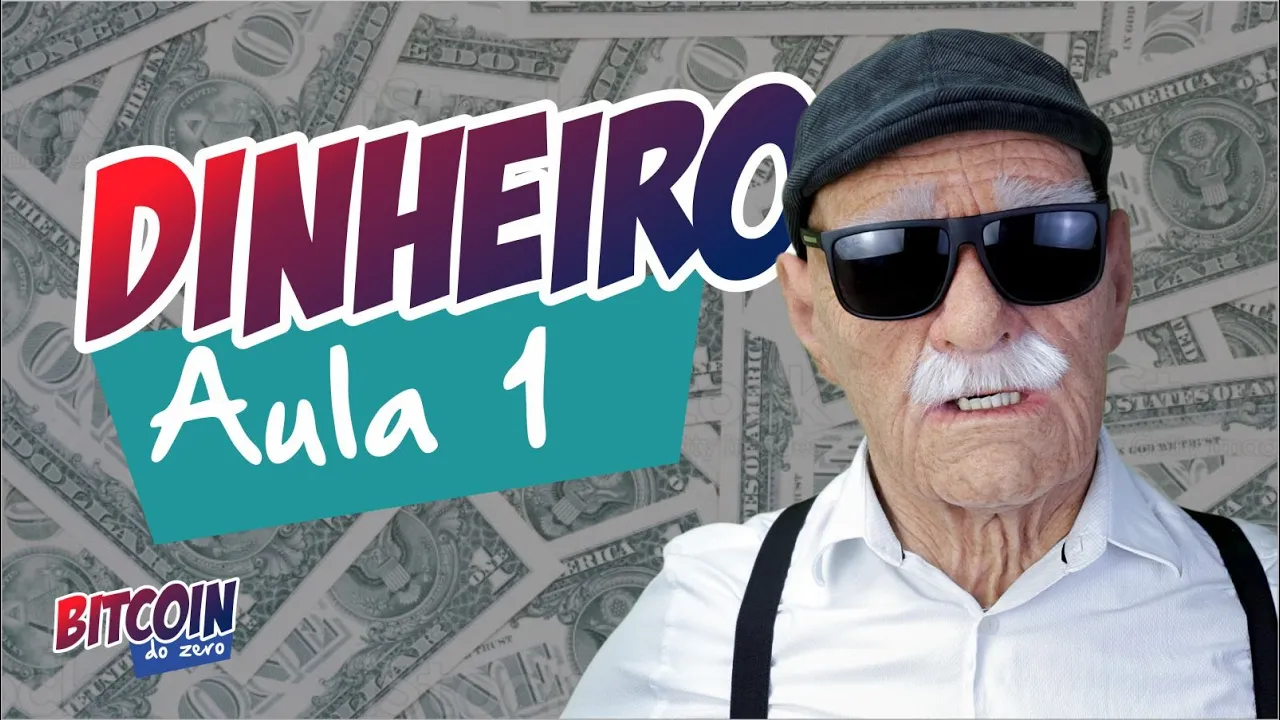
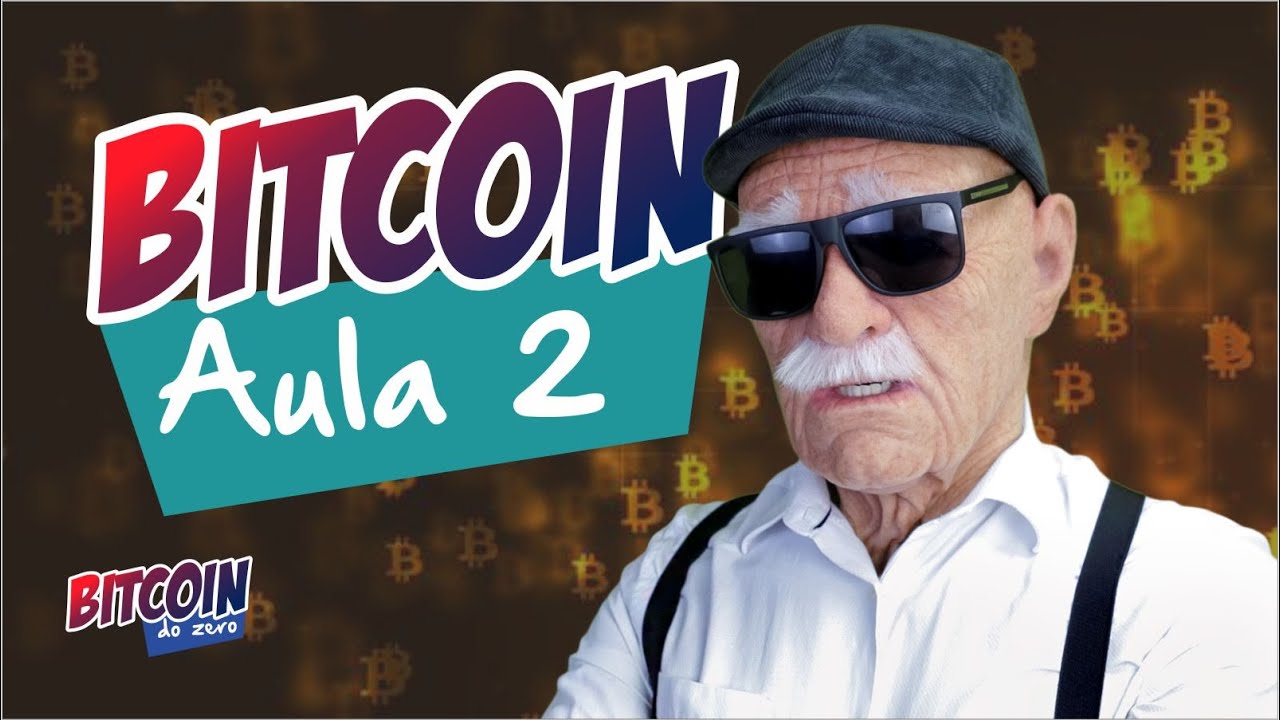
Welcome to the first free video of our Bitcoin do Zero course I'm Vô Epa and in this video series, I want to take you by your hand and put you in this cryptocurrency Market I want you to understand that this whole bitcoin and cryptocurrency story isn't speculation. There are a lot of things involved in this Market and one of them is Money's future and whether you want to accept it or not this can impact your future. People say that money doesn't bring happiness and I agree with that statement because it doesn't bring happiness, send bring.
There's a very interesting statement by Oscar Wilde "When I was young I thought that Money was the most important thing in the world. Now I'm sure. " Have you ever stopped to think that everything around us depends on Money?
If you need to eat, you need Money If you need a house, you need Money if you want to drive around, you need Money If you got a fever you need Money. Or do you think the SUS is free? I'm not here to talk about capitalism, or about socialism, which never worked.
I'm here to talk about bitcoin and I want you to understand Money because bitcoin is Money. So we'll go deeper into the subject. Money is the greatest invention of humanity, it allows a barber to buy bread without having to shave the baker.
Imagine what the world would be like if things worked that way by the way, this has already happened, at the time of barter. "Barter is the exchange of goods or services directly without currency. " In Brazil, this was used in the Early days of Portuguese colonization.
The Indians didn't know what currency was so the Portuguese traded cheap products for brazilwood. I hope you keep that phrase: "Things only have value because people value them". For Indians the brazilwood was plentiful, so they found it worthwhile to exchange for a mirror or a whistle, They valued that as the Portuguese valued brazilwood.
Historians and archaeologists say that Barter exists since prehistory on the neolithic period 10. 000 years ago, so we can say that barter was the first form of payment of humanity, but there was a problem, some goods were more valued than others. he salt, wheat, and cattle were highly valued commodities at the time of barter and originated words from our vocabulary such as pecuniary which means money that comes from the Latin pecus which means cattle, or even the word salary that comes from salt that was very valuable in those times by their power to conserve food.
Man, I can't imagine a world without a fridge, I even have one in my room, but on a beautiful day, I don't know-how, the man discovered the metal, he also discovered its great utility for the manufacture of utensils and weapons, and the metal started to have value because people value it and shortly thereafter it began to be used as a form of payment, mainly for its ease of division and transportation. In the 7th century BC, the first centralized currencies emerged, issued and controlled by governments. They were made of gold or silver and to guarantee their value, they received the impression of the official stamp of whoever issued it.
In the Middle Ages, the custom arose to keep coins with gold and silver dealers known as goldsmiths, who had great security, with safes and guards at their services. Every deposit of precious metals generated a receipt that validated the amount deposited and those receipts started to have value, why? Because people gave value, and soon it began to be used as a form of payment, giving rise to paper money, and thus the first paper money deposits appeared.
We can say that this was the origin of the banks. In Brazil, the first receipts were issued in 1810 by the Bank of Brazil, take a look at what it was like the paper was filled in by hand and to avoid counterfeiting, governments started issuing these bills with ballast which was a guaranteed that that piece of paper had value. his ballast was the same as the ballast of the goldsmith's time, they were made of precious metals like gold and silver.
No banknotes could be issued if there was no guarantee of precious metals in government safe boxes, this was the age of the gold standard, a monetary system adopted by governments from the 19th century, 1815 to 1971. But in 1914 in the 1st World War, ballast began to be set aside to cover the costs of war. The guys simply needed to print money without any guarantee to spend in wars.
I don't even need to say that it was the population who got screwed. The German population has suffered the most from hyperinflation, search this on Google for you to see. Some countries have tried to take back the gold standard, but it ended up being left aside and was forgotten.
Today the ballast of our money. . .
UMM, I think I have Alzheimer, the ballast of our money is trust in our governments, our money has no ballast in any wealth, we can say that this colorful paper is the confidence in the honesty of politicians, and it's just a piece of paper that has value because we value it. So today besides the absence of warranty our money also has lack of transparency. Governments and banks print money, throw it in the market, and you and I pay this bill.
I usually measure the level of inflation by the Kinder egg excise. In the old times, I used to buy it for 1R$, now you can buy from 7 to 10R$ to eat this delicious chocolate. Your money has been losing value because governments are not content with tax money.
From the 1st of 2021 to the 29th we have collected only 248 billion reais, that's not many guys! Not enough to buy lobster, have you seen the price of lobster? And that's why in addition to taxes you need to print more money.
What? Don't you believe that printing money without a guarantee is something harmful? Then tell that to the Venezuelans.
In Venezuela, they need piles of paper money to buy toilet paper. This image isn't of this year, and probably they need more piles of money to buy toilet paper. But what do I mean?
I want you to understand that things have value because we give them that value, there is a law that is called the law of supply and demand "Supply is the quantity available in the market, while demand is the existing interest in the same. " The more you look for the product offered the more value it will have, the higher will be its price. The less you look, lower your price will be.
A great example of this was when the coronavirus pandemic started and the hand sanitizer started to have a great demand and its price increased. When there is a great demand for the product, it ends up going through a scarcity. Many things have been money, as I said: cattle were money once, salt, wheat, metals, piece of paper, which is money until today.
Now we can use digital representations of our money through credit cards, bank applications, and ATMs. But money has the same problem since the gold standard age: the lack of transparency and trust. And also my friend, is centralized money controlled by banks and governments.
Did you know that if everyone tried to withdraw money at the same time, the bank would not be able to pay? The money we use today is imaginary, it's not real money, and we're on the verge of the collapse of our economy, but is there a solution to this problem? Learn about it in the next video.

![CURSO COMPLETO DAY TRADE PARA INICIANTES [ATUALIZADO 2023]](https://img.youtube.com/vi/LEy28ys2B3c/maxresdefault.jpg)