This is the Indo-European language family. It stretches from the north of India all the way to western Europe. Almost half of the global population speaks an Indo-European language and that includes you and me.
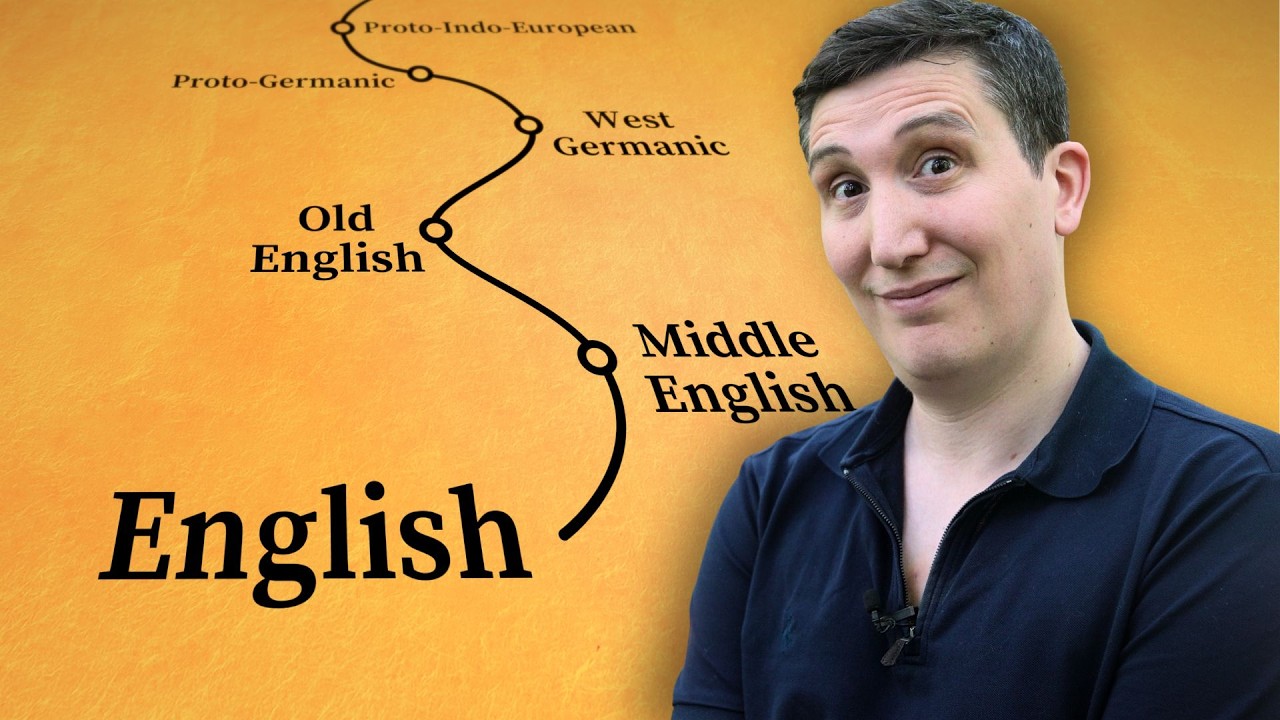
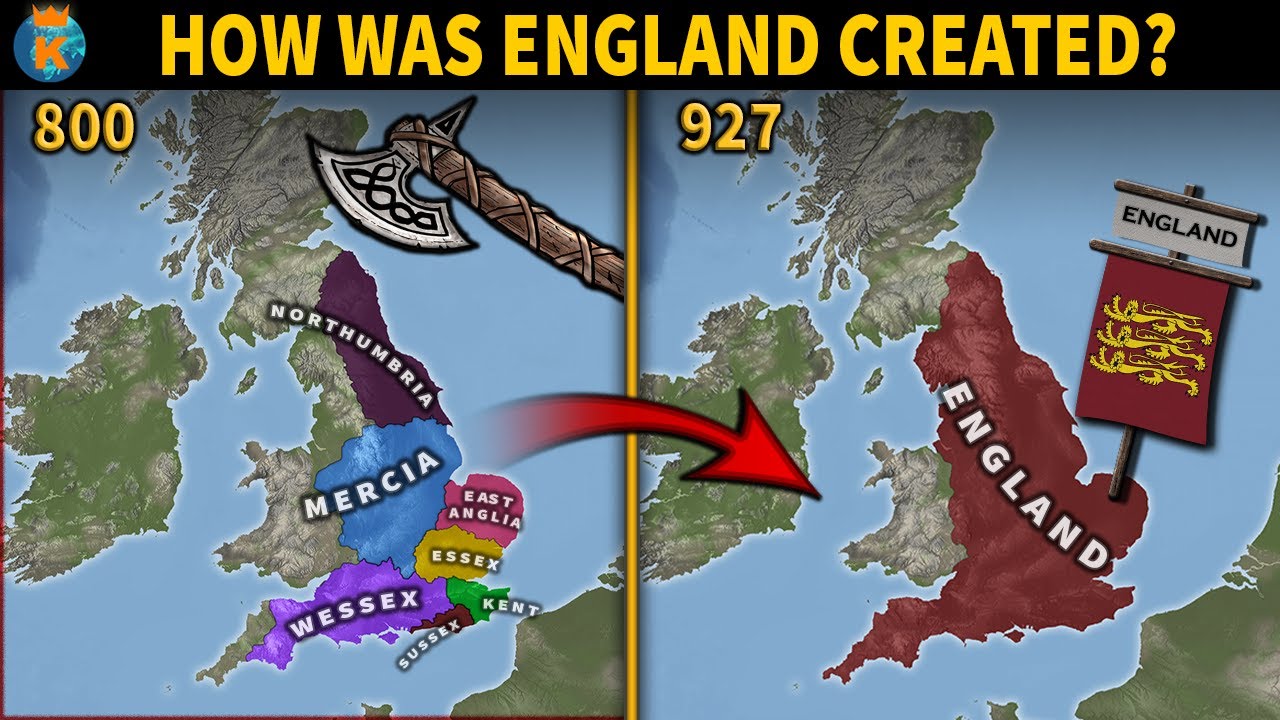
English is an Indo-European language, specifically part of the Germanic branch of the family along with languages like German, Dutch and Swedish. in the early 5th century the Romans, who had ruled over England for over 400 years withdrew their hold over the island. Filling this vacuum, a number of Germanic tribes from Denmark and the north of Germany ventured onto the island, and slowly replaced the Celtic and Romano-British cultures that had been dominant in the area.
Celtic speakers became concentrated in Wales, Scotland and Cornwall while the area we now know as England became culturally Germanic. The Germanic peoples in Britain, while from a number of separate tribes, eventually developed a common cultural identity as Anglo-Saxons. And with these Anglo-Saxons our story truly begins [Music] the Anglo-Saxons, in their many kingdoms, spoke a language we now call Old English.
Old English really sounds nothing like our modern language and is largely incomprehensible to us modern speakers. Here's an example of the language from the epic poem Beowulf: Hwæt. We Gardena in geardagum, þeodcyninga, þrym gefrunon, hu ða æþelingas ellen fremedon.
So I assume you understood none of that. not to worry, no modern English speaker would be able to understand. It's so old, and English has evolved so much that it may as well be a foreign language.
While not understandable today, half of our most commonly used words come from this Anglo-Saxon tongue. Words like 'water,' 'child,' 'ear,' 'talk' and 'the. ' Basically most short simple words come from this Old English language.
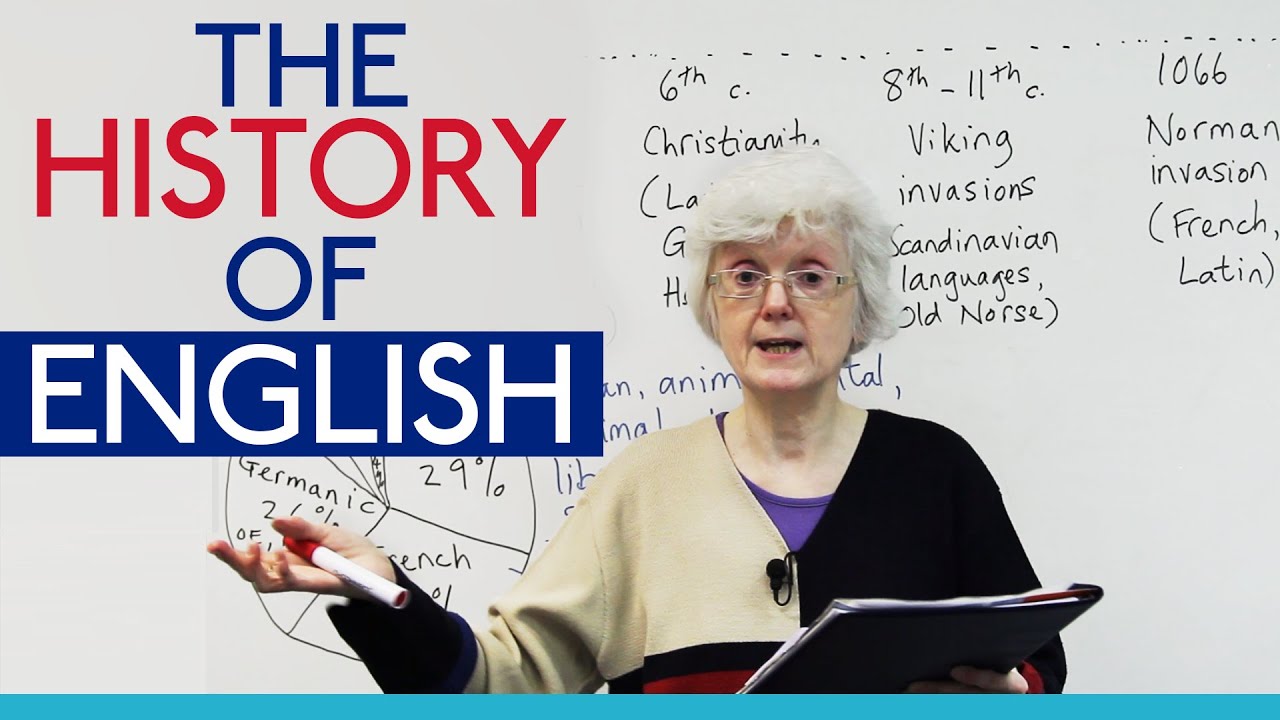
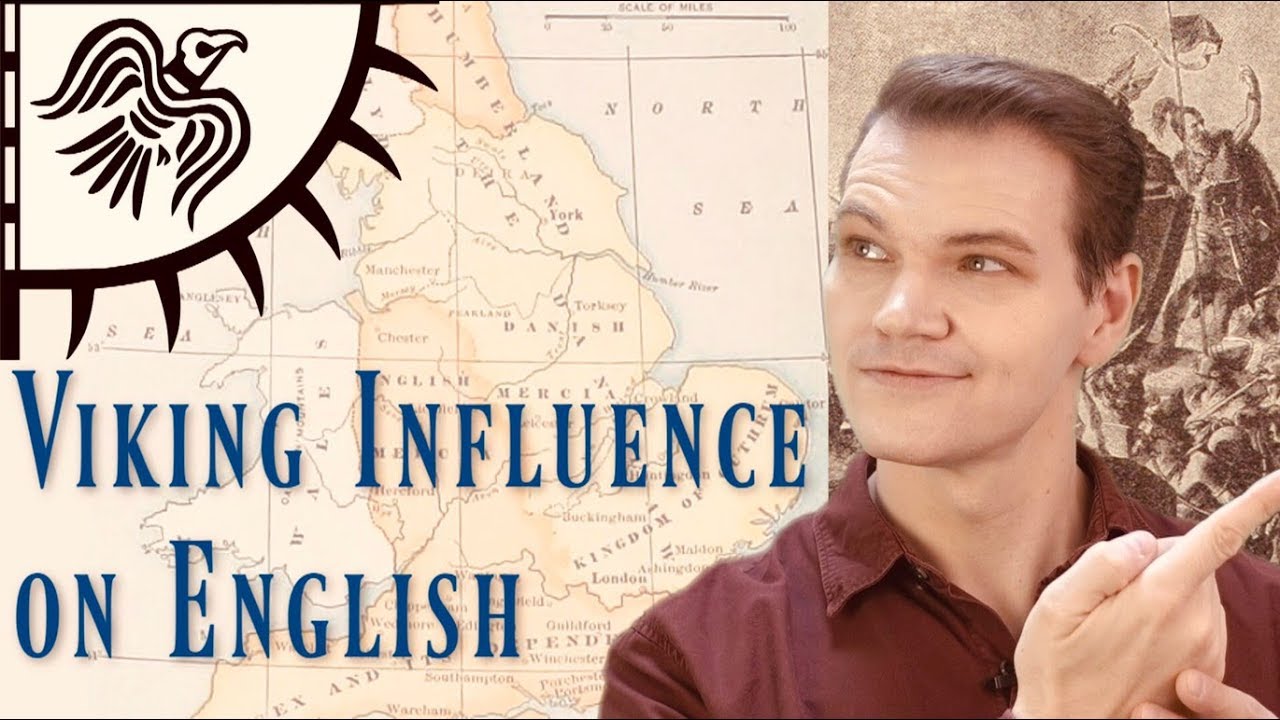
Now Old English was not a static language; no languages ever are, but most of the major changes to the English language through its history came not from within, but from without. The first major influx of change to English came with the Viking invasions in the 8th century onward. Norsemen from Norway and Denmark invaded the north of England and even set up a kingdom of their own called the Danelaw.
These Vikings spoke a language called Old Norse which is the ancestor of the modern Scandinavian languages. Its influence on English was mostly vocabulary, with words like 'sky,' 'bag,' 'law,' 'hit' and even 'they' coming from Old Norse. [Music] In 1066 William the Bastard, later called William the Conqueror invaded England with his Norman army, and at the Battle of Hastings successfully conquered it.
These Normans, now the ruling class of England spoke a dialect of Old French. This Norman French came to be the language of the royal court, while Old English continued to be the language of the peasantry. After around 100 years of this the two languages began to merge, creating what we call Middle English.
If you've ever wondered why English, a Germanic language, has so many cognates with romance languages like Spanish or French, this is why. A whopping 30 percent or 10,000 English words are French in origin. These words are most commonly seen in the spheres of law, religion, and science.
This French connection is also why English has so many words that mean the same thing, called synonyms. If you look at an English dictionary it is almost always much larger than a dictionary of another language. The most famous example of these synonyms comes from the realm of food.
In English we use two different words when referring to an animal and the meat that comes from said animal. Words like pig, cow and chicken are all Anglo-Saxon, as the farmers who raised these animals were English speakers, while pork, beef and poultry are all Norman French because the elites who ate the fine food were French speakers. With this influx of French words, as well as a simplification of the grammar rules of Old English, Middle English is one step closer to the language we know today.
Still, it is by and large incomprehensible to most English speakers. Here is an example from the Canterbury Tales by Chaucer, the most famous Middle English writer: Whan that Aprille with his shoures soote, The droghte of March hath perced to the roote, And bathed every veyne in swich licóur Of which vertú engendred is the flour. In the 15th century a phenomenon known as the great vowel shift started occurring, which propelled English into its Early Modern version.
This vowel shift affected almost all English pronunciation in quite dramatic ways. We won't get too into the specifics because I don't want to get into complicated linguistics, but basically English long vowels like 'ooh' started becoming shorter diphthongs like 'oh. ' A diphthong by the way is basically a sound made of two vowels.
Also there were many consonants that became unpronounced which we now call silent letters. A good example of this change is in the word knife. In Middle English it was pronounced 'kneef' but after the vowel shift the 'k' became silent and the 'e' turned to the diphthong 'ai.
' As you can see while the pronunciation of the word has changed, the spelling has not. This is one of the major reasons why English spelling is so notoriously difficult. So with this change over around 200 years the English language landed in a place most of us will recognize.
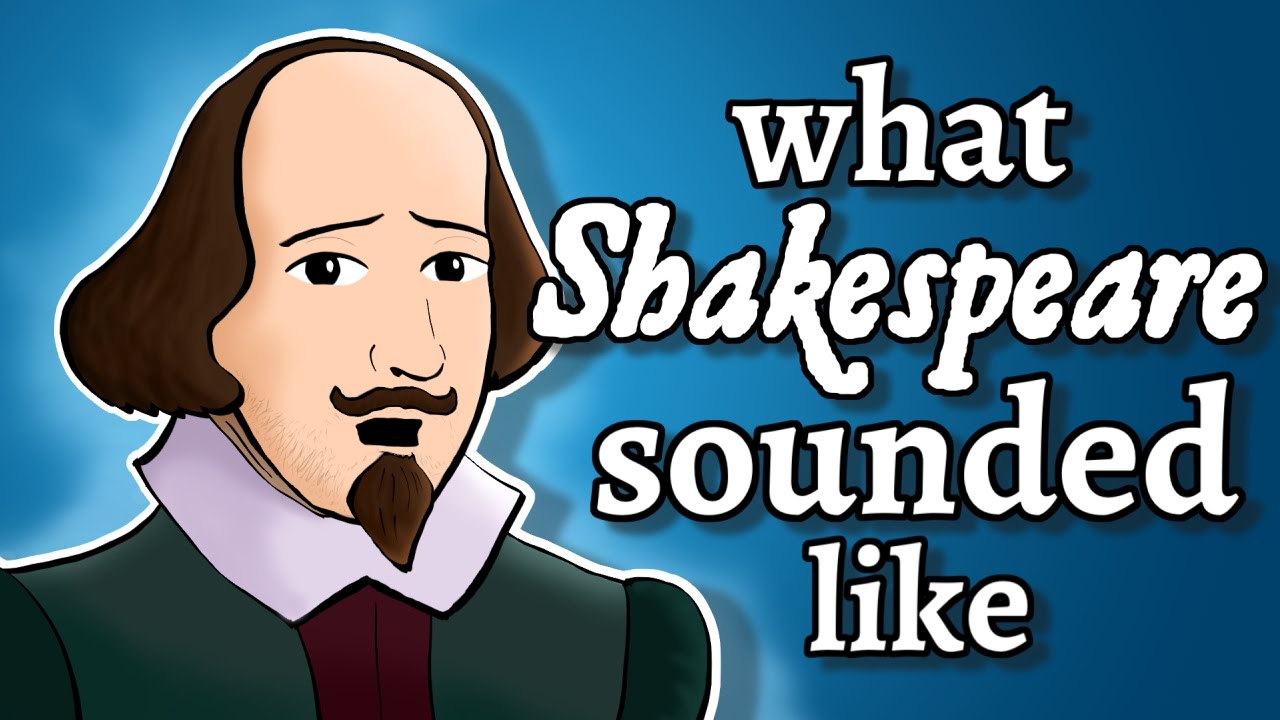
A good example of what we call Early Modern English is the work of Shakespeare. Two households, both alike in dignity (In fair Verona where we lay our scene), From ancient grudge break to new mutiny, where civil blood makes civil hands unclean. That was a small part of the prologue from Romeo and Juliet.
It is understandable, but the word choice is quite different from how Modern English speakers speak, making it sometimes difficult to comprehend entirely. Beginning in the 16th century the British started exploring and subsequently created an empire. At its height in the 19th century the British Empire covered a quarter of the Earth, and had control over almost a quarter of the Earth's inhabitants.
This spread of English, as well as the later industrial revolution transformed English even further, mostly in the realm of vocabulary. New words from English colonies as well as new words for new technology ballooned the English vocabulary into what it is today. Also the spread of English created many English varieties, most prominently in North America where English pronunciation froze in place.
The standard American accent like my accent is actually closer to the accent of Shakespeare than most modern British accents. American English is particularly influential because of the success of American pop culture around the world. English today is still evolving as much as it ever was, with new words being added to dictionaries every year, as well as many old words falling out of use.