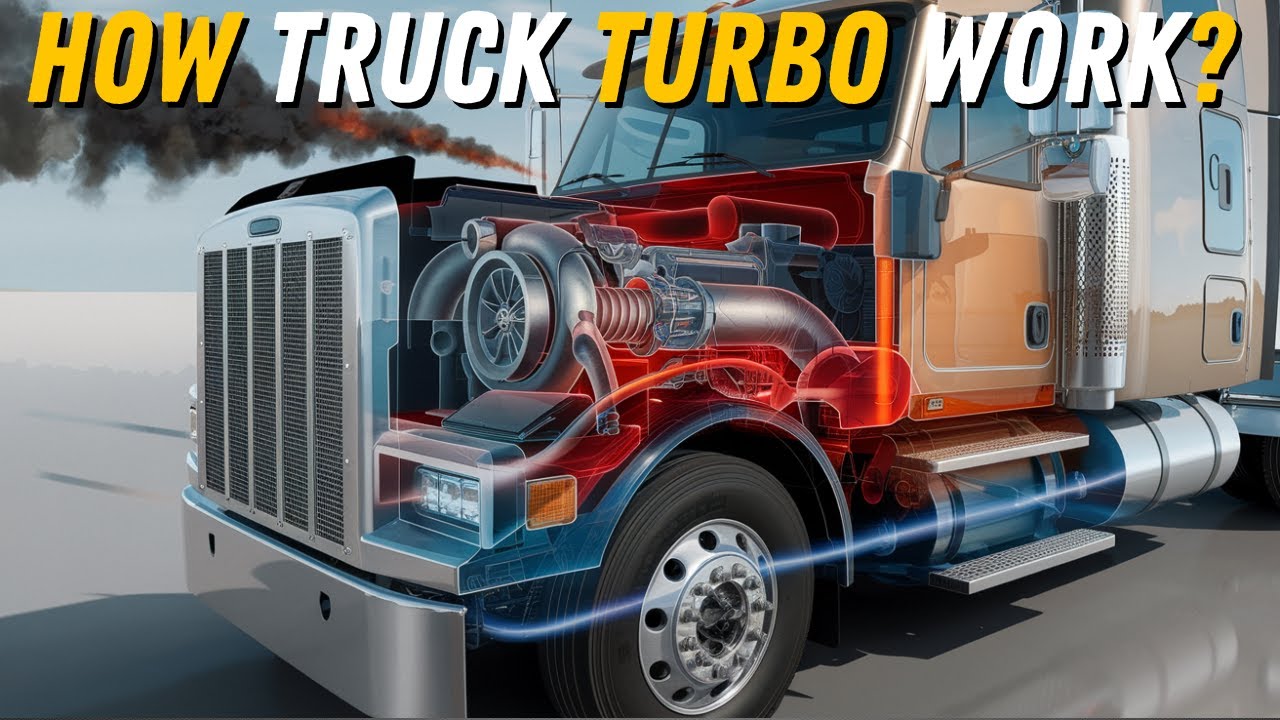
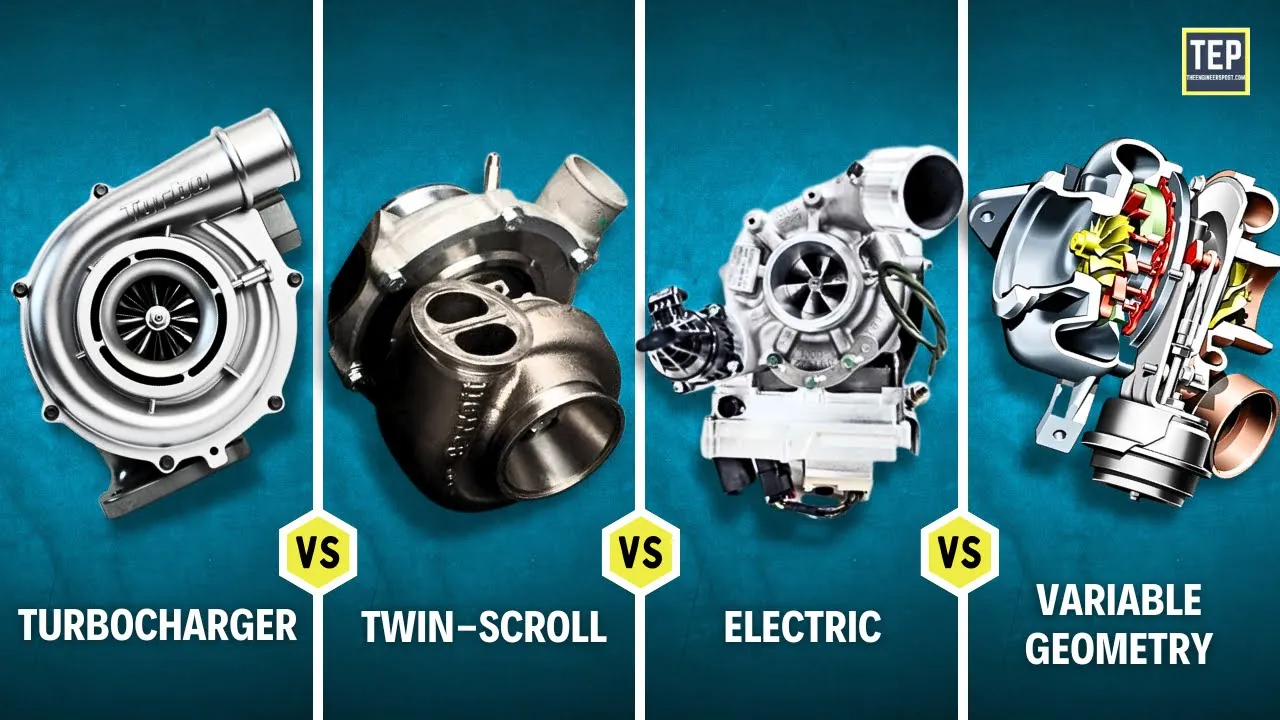
this is the turbocharger it is often called as turbo is a gas compressor and a form of forced induction used to force air into an internal combustion engine it compresses the intake gas forcing more air into the engine in order to produce more power for a given displacement breaking it down further it has a hot side and a cold side at the most basic level a Turbocharger consists of three major components the turbine which is located at the hot side the compressor located at the cold side and the bearing system that supports the turbine shaft
connecting the turbine and compressor Wheels together this side of the turbo is bolted onto the exhaust manifold of the engine and the other side at the engine's air intake as engine is running the exhaust gases would otherwise be wasted but on a turbocharged engine these exhaust gases passes through the turbo it spins one fan called the turbine the turbine wheel is responsible for converting heat and pressure into rotational Force as the turbine will rotate it spins the turbine shaft which in turn spins the compressor wheel as you see the compressor wheel has a fixed connection
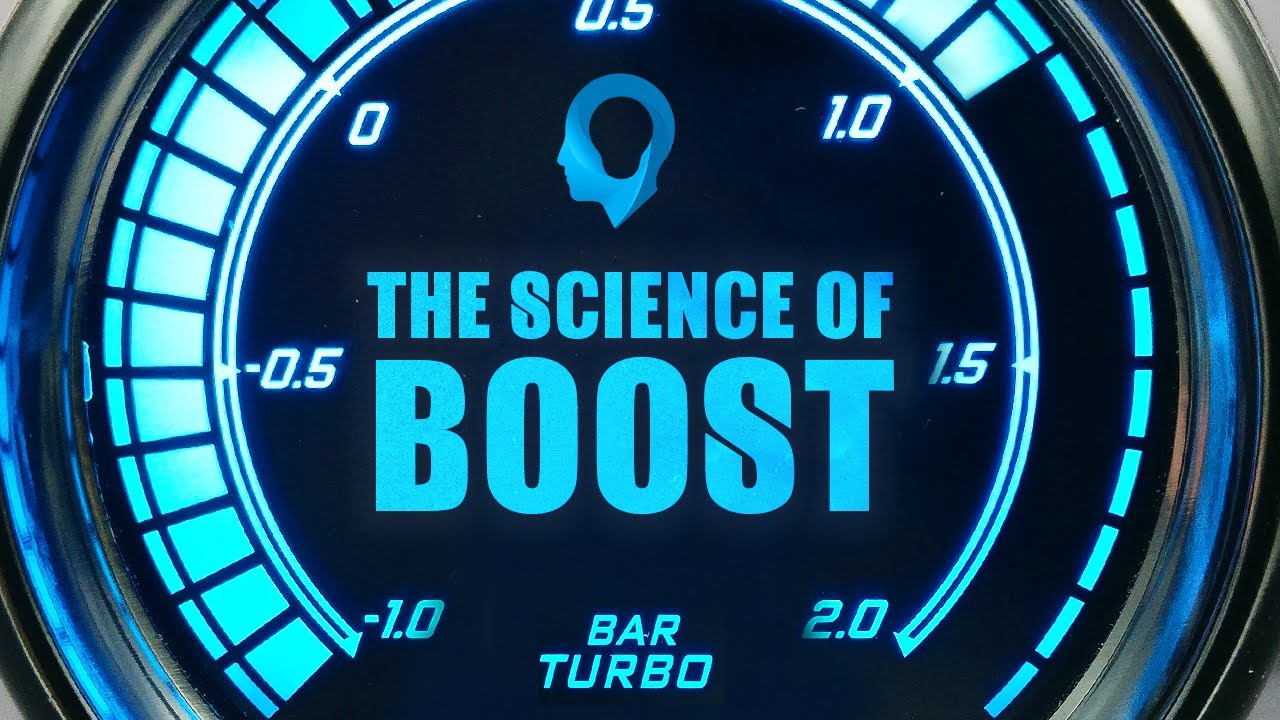
to the turbine wheel via a common shaft so when the turbine wheel spins the compressor wheel also spins the compressor's job is to suck air into the turbocharger pressurize it and forces it into the engine intake manifold and from there into your combustion chamber this compression of air helps turbocharged engines to make more power at normal atmospheric pressure the difference between atmospheric pressure and the amount of air pressure the turbo provides is known as boost and is measured in pounds per square inch the typical boost provided by a Turbocharger is six to eight pounds per
square inch since normal atmospheric pressure is 14.7 pounds per square inch at sea level you can see that you are getting about 50 percent more air into the engine therefore you would expect to get 50 more power it's not perfectly efficient so you might get a 30 to 40 percent Improvement instead one way to get more power out of an engine is to increase the amount of air and fuel that it can burn you can do this by adding more cylinders or make the current cylinders bigger sometimes these changes may not be achievable a turbo
can be a simpler more compact way to add power to your engine for decades turbochargers were priced for their ability to boost horsepower making them popular for race or high performance sports cars but modern turbos can also increase fuel economy and horsepower making smaller engines more efficient and capable of highway speeds other main component of turbocharger are a wastegate intercooler bearing system and oil supply the wastegate is a valve that controls the amount of exhaust gases that flow through the turbine it is used to regulate the boost pressure and prevent the turbocharger from over speeding
an intercooler is used to cool the compressed air coming from the compressor before it enters the engine this helps to increase the density of the air which results in more oxygen available for combustion and more power from the engine oil supply and drain turbocharger needs lubrication and cooling therefore it is connected to the engine's oil supply system to provide lubrication and cooling to the bearings and shaft also it has a drain system to remove the oil that has circulated through the turbo the bearing system is a set of bearings that support the shaft and allow
it to rotate smoothly and efficiently it also helps to maintain the proper operating conditions for the turbocharger [Music] before the invention of the turbocharger forced induction was only possible using mechanically powered superchargers the use of superchargers began in 1878 when several supercharged two-stroke gas engines were built using a design by Scottish engineer Douglas Clerk however it was in 1905 that turbochargers began to take shape when Swiss engineer Alfred Bucci introduced a prototype to increase the power of a diesel engine during his early years Alfred became fascinated with the challenge of improving combustion engine efficiency relating
to exhaust heat loss it took Alfred 20 years to get the first successful exhaust gas turbocharging system effectively applied to a diesel engine getting a power increase in excess of 40 percent these early units were referred to as turbo superchargers at the time all forced induction devices were classified as superchargers during World War One as airplanes took to the skies engineering teams on all sides of the global were looking for ways to improve the performance of their airplanes one particular challenge Engineers were facing was the power loss these planes faced at higher altitudes due to
lower air density to resolve this issue in 1918 general electric engineer Stanford Alexander Moss attached a Turbocharger to a V12 Liberty engine and demonstrated into Pike's Peak in Colorado at 14 000 feet he showed how forced induction counters the power loss brought on by the effects of reduced air pressure and density at high altitudes two years later in 1920 the first turbocharged plane was tested it managed to do something considered impossible for a long time I'll appear biplane fitted with a 12-cylinder liberty engine it managed to get up to 33 000 feet without any loss
of boost the tests were repeated over the next year with the highest recorded altitude of forty thousand feet turbo charging was about to take over the aviation industry by the mid-1920s turbocharged diesel engines also started appearing on ships and locomotives the turbo design and Manufacturing technology advanced rapidly during World War II turbos were used extensively on Military aircrafts to maintain power at high altitudes in short this made them faster and more efficient in 1938 Boeing B-17 Flying Fortress used turbochargers produced by General Electric other early turbocharged airplanes included the Consolidated B-24 Liberator Lockheed P-38 Lightning
Republic P-47 Thunderbolt and experimental variants of the foka Wolf fw-190 in 1938 the first Automotive use of the turbocharger was by Swiss manufacturer SAR on a diesel truck engine although many experiments were made to fit a turbo on cars but none were really successful and didn't do it to any sort of mass production until 1962 when General Motors introduced the Oldsmobile jet fire and the Chevrolet Corvair Monza spider the world's first turbocharged cars the Oldsmobile Jetfire has a 3.5 liter 8-cylinder engine which works together with the turbocharger the 8-cylinder engine in the power pack version
was able to develop 185 horsepower but for the Oldsmobile Engineers these parameters only seem satisfactory so then they put in a Turbocharger and increased the engine efficiency by as much as 40 percent to 215 horsepower and to top it off they managed to do this without affecting engine durability or fuel economy the Oldsmobile Jetfire was undeniably ahead of its time even if its buyers weren't since car companies didn't have Smart engine management systems these early turbocharged engines suffered from quite a few problems for one they were overly complicated the engine in the jet fire had
a second tank that owners needed to fill up with a turbo rocket fluid it is the mixture of methyl alcohol and distilled water to avoid engine knock this solution needed to be sprayed into the intake Airstream as you can probably imagine however many people would forget that this tank existed and needed to be refilled if an inattentive driver failed to keep the reservoir filled and the fluid ran out the car would shut off the turbocharger this resulted in driver complaints about their sporty cars losing power ly turbocharged engines also suffered heavily from Turbo lag than
the company decided to remove the Turbo System from the jet fire in free of charge in 1973 the oil crisis brings on new awareness of fuel reduction and turbocharging technology had evolved enough to make inroads within the Commercial Diesel Market in 1975 Porsche decided to introduce their first ever turbocharged car the 911 Turbo it has a 3.0 liter engine producing 276 brake horsepower the 911 Turbo has achieved the highest milestone in the history of the turbocharger because it changed Global perception of what a turbo means and what it does when it was introduced the first
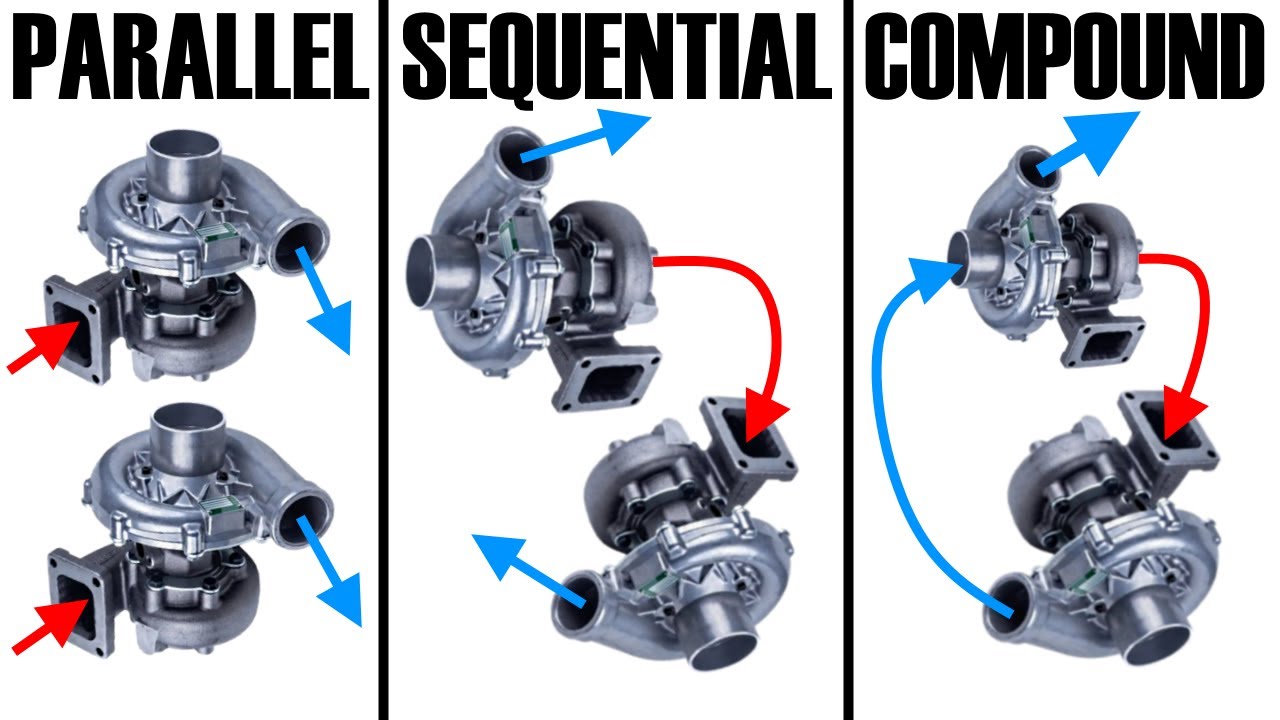
successful application to a passenger car was the Mercedes-Benz 300D which came on the market in 1978 with its achievements of low emissions and better efficiency this became the first step in winning over the world to the advantages of turbocharging in 1981 the Maserati by Turbo was the first production car to use a twin turbocharged engine in which two turbochargers work in tandem to compress the intake Fuel and air mixture the aim of using twin turbos is to reduce turbo lag by being able to use smaller turbochargers usually two turbochargers are used in V6 V8 or
V12 engines using one turbocharger for each Bank of cylinders has several packaging and efficiency advantages a single turbocharger is sufficient for most four-cylinder engines at times it is used in V6 and inline 6 engines too twin turbo engine's design has two turbochargers of different sizes a smaller turbocharger works with lower exhaust flow and supplies more power at lower rev rates as you accelerate a second larger turbocharger builds more power with a compression valve that allows the larger turbine to create more power at a higher rev rate the bi-turbo has two parallel turbochargers of the same
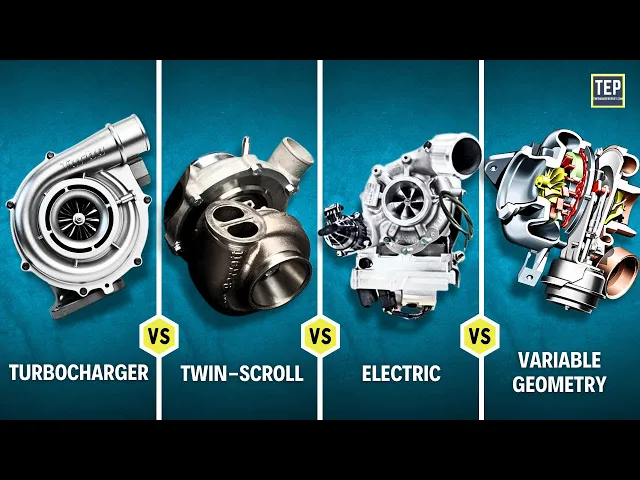
size each turbocharger is assigned to a single Bank of the engine with the exhaust gases divided equally by the two turbocharges Bugatti even used a setup with four sequential turbochargers on a w16 engine although new Innovative turbo Technologies were introduced such as twin scroll turbo and variable geometry turbos both designed to reduce the dreaded turbo lag in Twin scroll turbocharger the scroll is a spiral path that the exhaust gases take when they enter the turbine section in order to separate the exhaust pulses to prevent gas flow interference the exhaust tracks of consecutively firing cylinders are
separated all the way to the mouth of the turbine continuing into the turbo the exhaust gases continue to maintain separate channels by entering two separate Scrolls called as twin scroll within the body of the turbocharger unit twin scroll turbochargers offer higher levels of gas flow efficiency reduced turbo lag and allow engines to be tuned for slightly more power than the single scroll variety these twin scroll turbochargers are used in many of the latest engines variable geometry turbochargers mean variable AR ratios internal veins within the turbocharger alter the area to radius ratio to match the RPM
at low RPM a low AR ratio is used to increase exhaust gas velocity and quickly spool up the turbocharger as the revs climb the AR ratio increases to allow for increased airflow the result is low turbo lag a low boost threshold and a wide and smooth torque band one of the first cars to use a variable geometry turbo was the 1988 Honda Legend which used a water cooled variable geometry turbo on its 2-liter V6 engine just one year later in 1989 the second generation of the Mazda RX-7 showed off twin scroll technology which helped reduce
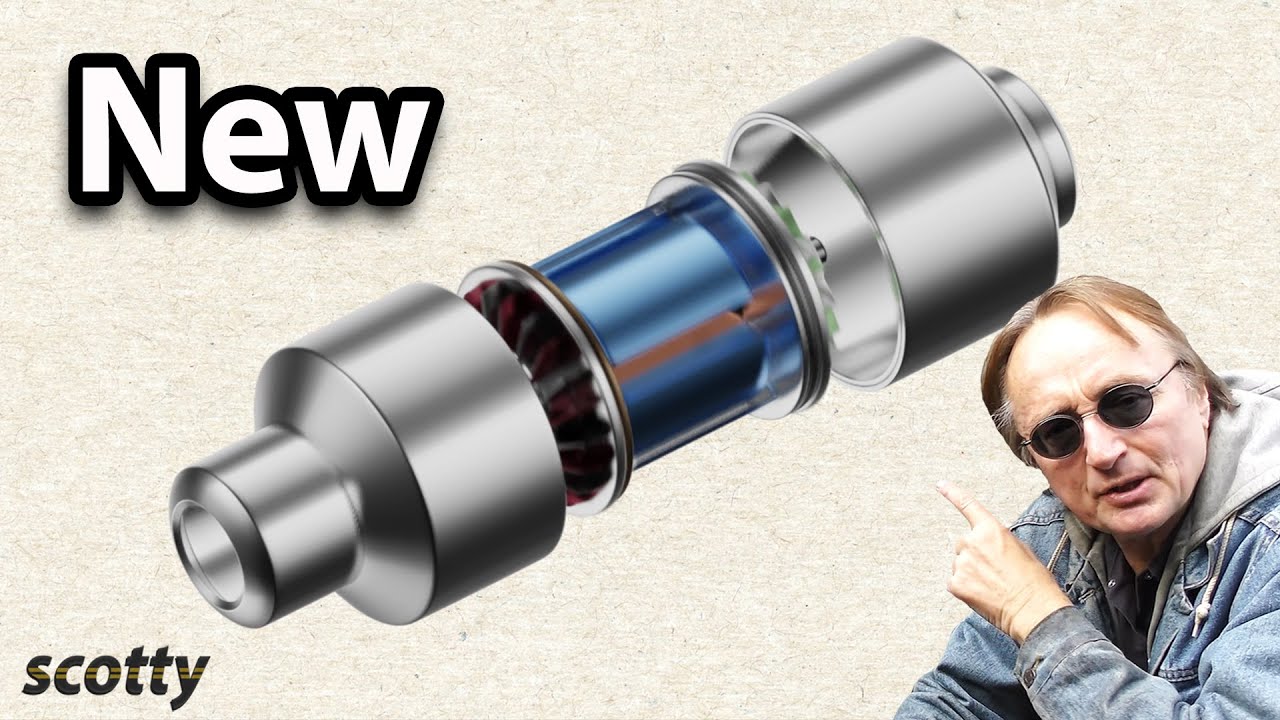
the lag and improve the responsiveness of its rotary engine the history of the turbocharger is far from Over the high demands for emission reduction and electrification paves the way for new technologies electric turbochargers are the future of turbocharger technology and propose a new solution in the move to smaller engines without reducing power delivery while improving overall efficiency currently there are two types of electric boosting systems electrically assisted turbocharging and a Turbocharger with an electric compressor in electrically assisted turbocharger the electric motor can not only be used to drive the turbocharger shaft but it can also
be used to break it the electric motor then becomes a generator and creates electricity by directly connecting an electric motor to the compressor wheel turbo lag and insufficient exhaust gases can be virtually eliminated by spinning the compressor with electric power when needed improving drivability and performance of vehicles perhaps the next phase of modern turbo charging there are undoubtedly drawbacks of the electric path as well however with the growing Market of 48v hybrid vehicles electric boosting systems are expected to become widely implemented in the coming years foreign turbochargers are generally more efficient than superchargers because they
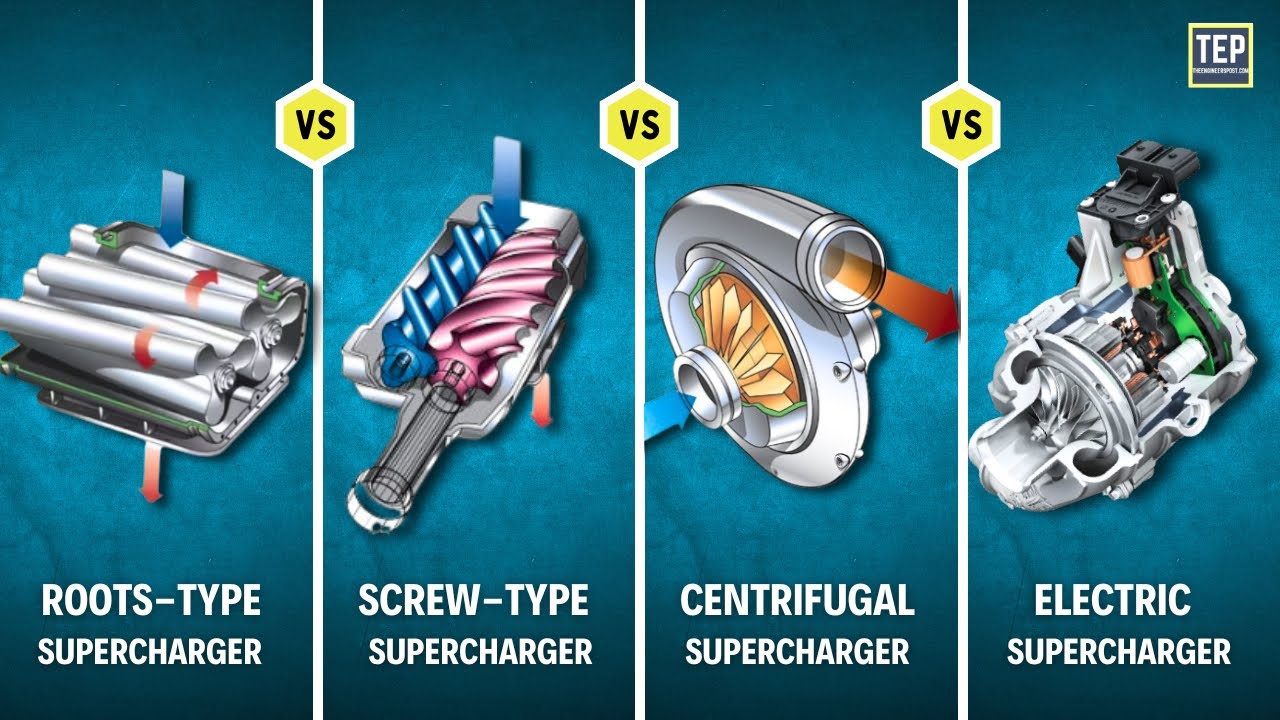
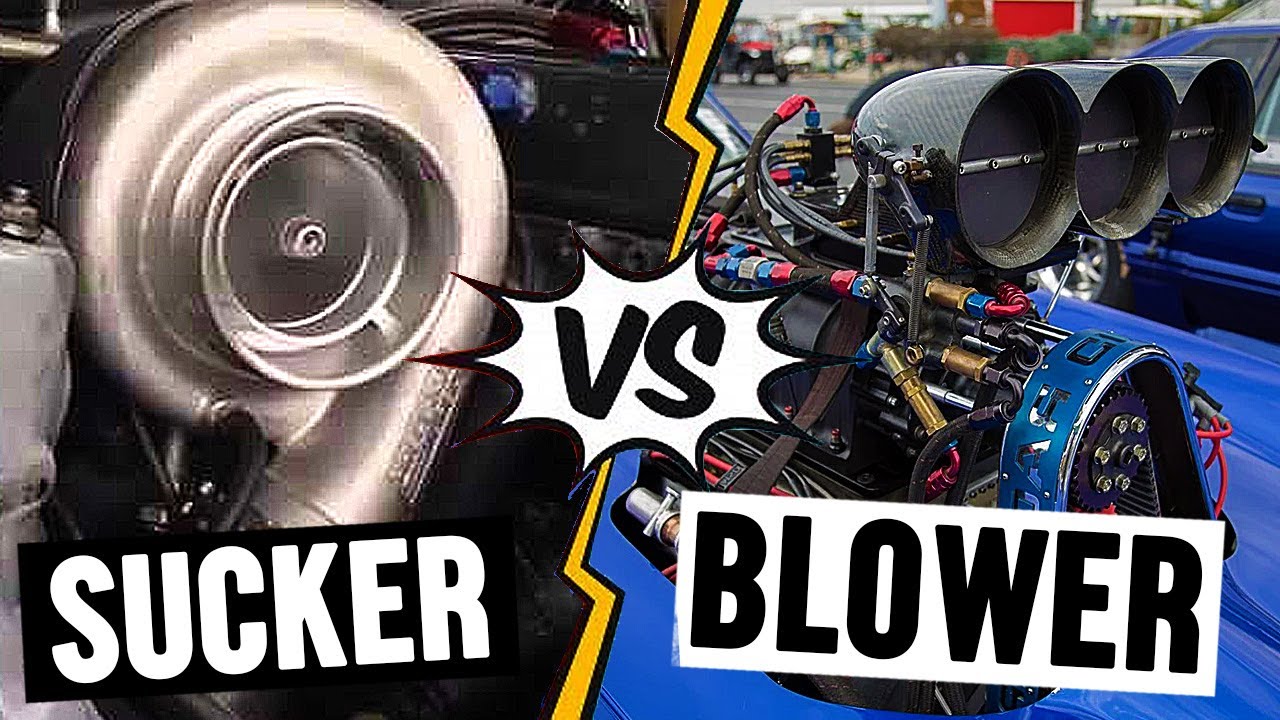
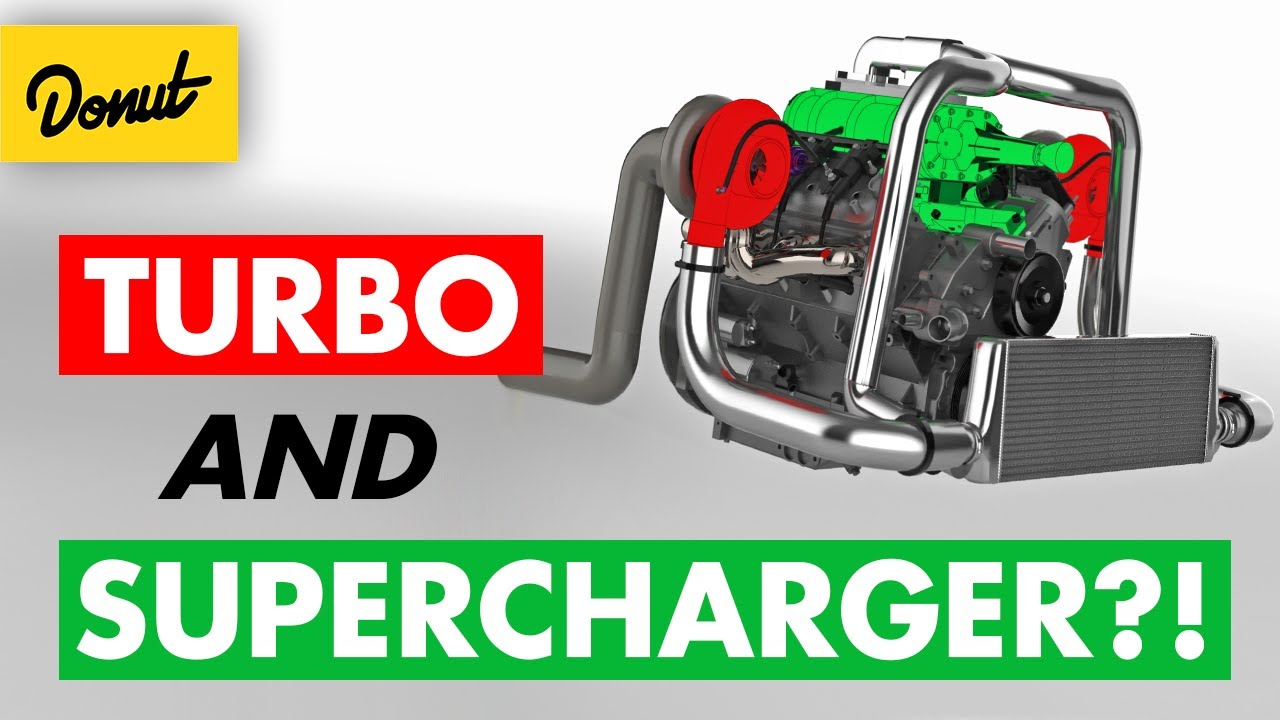
use the energy from the exhaust gases that would otherwise be wasted this means the turbocharged engines can produce more power from a smaller displacement engine turbochargers tend to be more Compact and lightweight than superchargers which makes them ideal for high performance cars and trucks where space is at a premium the turbine wheel and a shaft connecting it to the engine are all the hardware that a Turbocharger uses a supercharger on the other hand needs pulleys belts and gears to run turbochargers are generally less expensive than superchargers especially in larger engines vehicle powered by a Turbocharger
will be more fuel efficient than a supercharger turbocharged engines generally produce lower emissions than supercharged engines turbo lag is a common problem faced by turbocharged engines in a turbo lag the turbocharger takes longer to build up sufficient pressure in the combustion chamber to operate the engine when you press the gas pedal turbo lag is a result of a variety of factors including the size and tuning of the engine turbine efficiency and exhaust back pressure any car whose engine is experiencing a turbo lag will have difficulty maintaining high speeds and would not accelerate smoothly if an
intercooler is not used in a Turbocharger can generate excessive heat in the engine this heat can cause car breakdown from heating melting of engine components and even turbocharger failure using an intercooler can alleviate this problem but is an expensive purchase as they are not usually sold in the kit with the turbocharger the faster you drive the more stress you put on the engine when you add a Turbocharger to increase acceleration the engine works harder to move the car causing damage to your engine in summary a single turbocharger is the most basic type and it is
typically used in small to medium-sized engines it is simple reliable and cost effective a twin turbocharger system uses two turbochargers this type of Turbo charging is typically used in larger engines and can provide more power and torque than a single turbocharger twin scroll turbochargers have two separate scroll chambers that allow for better exhaust gas flow and reduced turbo lag they are typically found in larger engines and provide improved performance and efficiency a variable geometry turbocharger uses a set of vanes that can be adjusted to change the angle of the turbine and compressor Wheels vgts are
commonly used in diesel engines and larger engines electric turbochargers use an electric motor to spin the turbine rather than exhaust gases this allows for instant boost and eliminates turbo lag making them ideal for high performance cars and trucks these are still in the early stages of development and not widely available yet it's important to note that the type of turbocharger that is best for your car will depend on the specific make model and year of your car as well as your driving needs and preferences the best way to determine which type of turbocharger is best
for your car is to consult with a qualified mechanic or a dealership who can give you more specific information on the options that are available for your car thanks for tuning in to our video on turbochargers we hope you learned something new and found it informative if you have any questions or comments feel free to leave them below until next time drive safely [Music] thank you foreign [Music]