Your bladder is not to blame. I will repeat, it has nothing to do with it. If you get up at night to go to the bathroom one, two, or even three times, the problem is not where you think it is.
The problem is in your legs. Right now, while you are sitting and watching this video, fluid is accumulating in your lower legs and feet. You do not feel it while you are standing or sitting.
The fluid is just quietly collecting at the bottom. But then evening comes. You lie down in bed, assume a horizontal position, and all of this fluid breaks loose.
It rushes back up toward your kidneys. And your kidneys do not ask whether you want to sleep or not. They simply do their job and turn this fluid into urine.
The result, you wake up at 2:00 in the morning, then at 4, and by the morning you feel as if you had not gone to bed at all. Does this sound familiar? Then today, we will stop it.
I will show you three simple exercises that you can do right on the bed or sitting on a chair. No special equipment, no physical preparation, just a few minutes of your time. And most people notice a difference in 3 to 5 nights.
We will literally squeeze the excess fluid out of your legs before you go to sleep. And after the exercises, I will tell you which symptoms you must not ignore and when it is better to consult a doctor. And pay attention.
I saved the final exercise for last. So, be sure to watch until the end. My friends, before we begin, I have a small favor to ask.
If you find this video helpful or if you simply believe in taking a natural approach to your health, please take a moment to hit that like button and if you haven't already, subscribe to this channel. That one small click helps this video reach thousands of other seniors who are losing sleep every single night. Thank you.
Now, let's get to work. Let's start with exercise number three. I call this the seated calf pump.
Think of this as our warm-up. We are waking up the circulation in your lower legs. Before we move on to the more powerful exercises, sit down in a sturdy chair with both feet flat on the floor.
Keep your back straight and your shoulders relaxed. Now, slowly lift both heels off the ground as high as you can. You should feel your calf muscles squeeze at the top.
Hold that squeeze for just one second. Then, slowly lower your heels back down. That's it.
Up and down. up and down. Why are we doing this?
Your calf muscles are the second heart of your body. When they contract, they act as a pump, pushing blood and fluid back up from your feet and ankles. During the day, gravity pulls fluid down into your legs.
If we don't pump it out before bed, your kidneys will process it while you sleep. And that means bathroom trips at 2 3 4 in the morning. Let's keep going.
Nice and slow. Up, squeeze, and down. You might already feel a warmth building in your calves.
That's a wonderful sign. It means circulation is kicking in. Do 15 to 20 repetitions.
If you feel a cramp starting, just pause, wiggle your toes, and start again. Good. That was our warm-up.
Your legs are now awake and ready for what comes next. And what comes next, my friends, is a much deeper and more targeted technique. Now, we have arrived at exercise number two.
I call it the calf ring out. Think of it like a deep tissue massage that you give yourself. After the calf pump, there may still be fluid trapped deep in your calves.
This massage physically pushes it out. Sit comfortably on your bed or in a sturdy chair. Take your right ankle and cross it over your left knee, making the shape of the number four.
Your right calf is now completely relaxed and exposed. This position is key. When the muscle is relaxed, it is soft and pliable, which means we can work much deeper into the tissue.
Step one, find the channel. Place both of your thumbs on the back of your right calf, right at the center. You will feel a small groove running between the two halves of the muscle.
This is where the deep veins live. This is the highway that carries fluid back to your heart. We are going to work along this channel.
Step two, the squeeze. Now wrap both hands around your calf like you are holding a thick rope. Start down near your Achilles tendon just above the heel.
Squeeze firmly and slide your hands upward toward the back of your knee. Imagine you are ringing out a wet towel. You are physically pushing the fluid out of the tissue and directing it upward toward your heart.
One long firm stroke from heel to knee. Then release. Go back to the heel and do it again.
Five to six passes on this leg. Now, let me show you what not to do because this is very important. Mistake number one, never massage from the knee down to the ankle.
When you push fluid downward, you are working against the natural flow of your lymphatic system. You are pushing fluid back into the tissue instead of draining it out. This can actually make swelling worse.
Mistake number two, do not just slide your hands over the skin with no pressure. If your hands are gliding across the surface and you are only moving skin, you are not reaching the deep tissue where the fluid is trapped. You need firm, steady pressure, not painful, but firm enough that you feel the muscle moving under your hands.
After the squeezing, open your hands flat. Using the full surface of your palms, make long sweeping strokes from your ankle all the way to your knee. Moderate pressure, 10 passes.
This is the finishing flush. You are smoothing everything out and sending the last of the fluid on its way. Now slowly switch legs.
Left ankle on right knee. Find the groove. Squeeze from heel to knee.
Five to six passes. Then the palm flush. 10 strokes.
When you finish both legs, you might notice something remarkable. Your calves feel lighter. Your ankles may already look less puffy.
Some of you might even feel a slight urge to use the bathroom. That is exactly what we want. That means the fluid has moved from your legs into your system and is being processed right now, not at 2 in the morning.
Take a deep breath. Give your legs a gentle shake. Wonderful job.
We have arrived at exercise number one. This is the one I want you to pay very close attention to. I call it the 478 leg drain.
It combines three powerful tools into one. Gravity, a scientifically proven breathing technique, and a guided body scan. Step one, get into position.
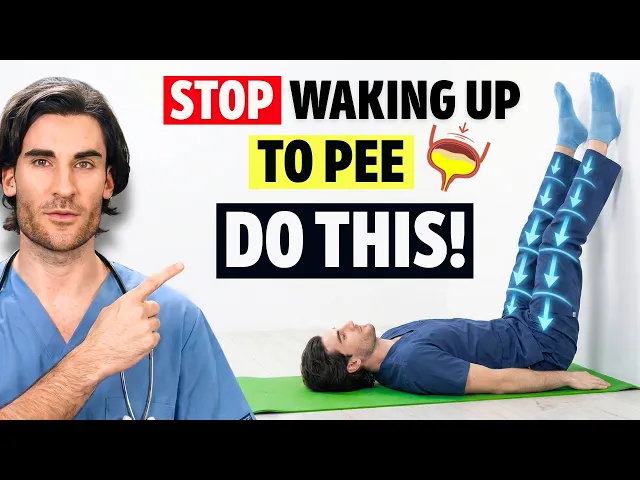
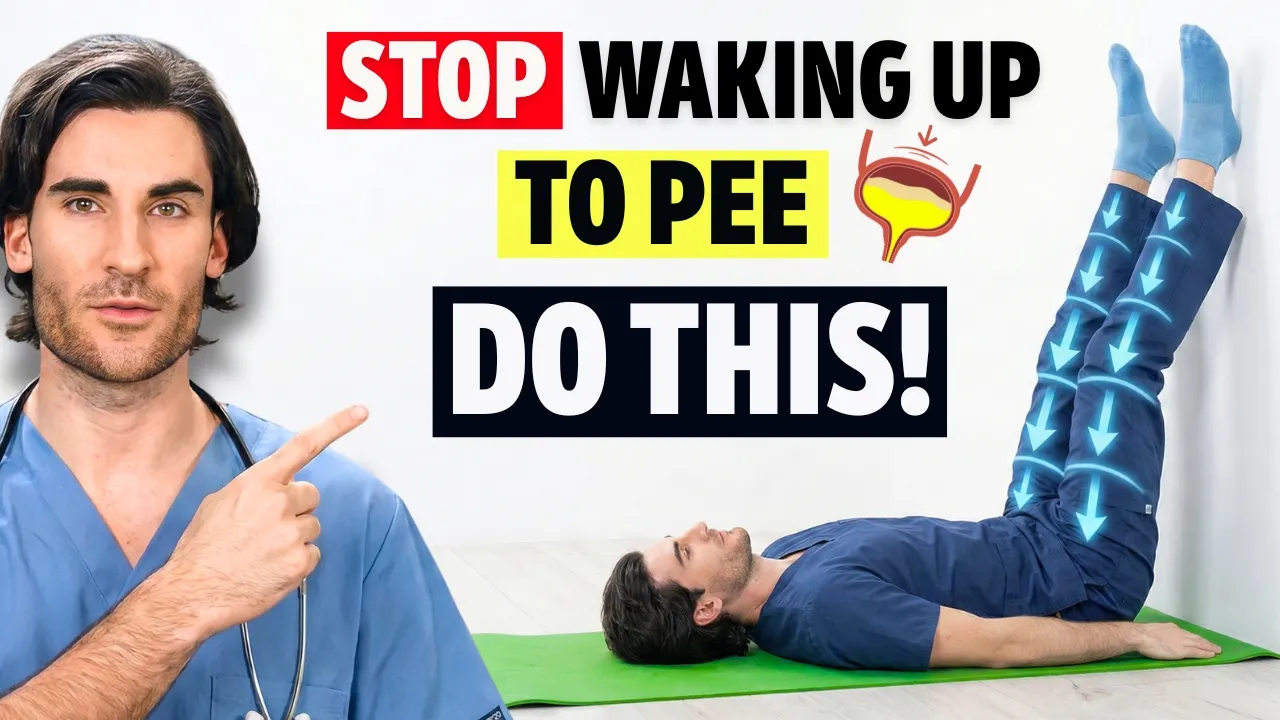
You have two options here. Option A, if you have a wall near your bed or a yoga mat on the floor, scoot close to the wall and place your legs up against it. Your bottom should be a comfortable distance from the wall.
You don't need to press your hips right against it. If your hamstrings feel tight or your lower back lifts off the surface, simply move your hips further away until you are completely comfortable. Option B.
If the wall is not an option, that is perfectly fine. Simply stack two or three pillows at the foot of your bed and rest your calves on top of them. The key is that your feet must be higher than your heart.
This is non-negotiable. When your legs are elevated, gravity immediately begins pulling that trapped fluid, the lymph and the blood out of your feet and ankles, sending it back to the core of your body where it can be processed. Once you are settled, place one hand on your chest and one hand on your stomach.
This is important. Your hands are your feedback system. They will tell you if you are breathing correctly.
Step two, the 478 breath. Now we add the secret ingredient. This breathing pattern was developed by Dr Andrew while it is based on an ancient yogic technique called pranayyama.
It is one of the most powerful natural tranquilizers for your nervous system. Here is how it works. Breathe in slowly through your nose for a count of four.
Feel your stomach rise and push your hand up. Your chest hand should stay almost completely still. If your chest is rising, you are breathing too shallow.
We want deep belly breaths. Now hold that breath for a count of seven. I know 7 seconds feels long at first.
If it is too much, start with a hold of 3 or 4 seconds and work your way up over the coming weeks. Now exhale slowly through your mouth for a count of eight. Purse your lips as if you are blowing through a thin straw.
Feel your stomach fall. Push every last bit of air out. That is one cycle.
Let's do it again together. Inhale through the nose. 2 3 4.
Hold. 2 3 4 5 6 7. And exhale through the mouth.
2 3 4 5 6 7 8. We are going to do four complete cycles. Why four?
Because research shows that four cycles of this breathing pattern are enough to activate the vagus nerve. This is the master switch for relaxation in your body. It tells your heart to slow down, your blood pressure to drop, and your digestive system to calm.
It shifts you out of fight orflight mode and into rest and digest mode. This is the state where deep unbroken sleep begins. Do two more cycles on your own slowly.
No rush. Step three, the body scan. Keep your eyes closed.
Your legs are still elevated. Your breathing is slow and natural. Now, we are going to do something very simple but very powerful.
We are going to switch off your body one piece at a time. like turning off the lights in every room of your house before bed. Start with your toes.
Say to yourself silently, "My toes are relaxed. They are heavy. They are warm.
" Now your feet, let them go. Your ankles, your calves, let them melt. Your knees, your thighs, feel the heaviness.
All that fluid is draining down toward your center now. Your hips, your lower back. Let it sink into the mattress.
Step four, visualization. This is the final piece. With everything relaxed, I want you to picture this.
Imagine all the heaviness, all the water weight in your legs, slowly draining out like turning a bottle upside down. It flows from your toes, past your ankles, through your calves, down your thighs, and pools at the center of your body where your kidneys can process it right now. Not at 3:00 in the morning.
Stay here for 2 to 3 minutes. There is no rush. Step five, the double voiding technique.
When you are ready to finish, slowly bend your knees. Roll gently to one side. Use your arms to sit up.
Do not stand up quickly. Sit on the edge of the bed for 10 seconds. Then stand up and walk to the bathroom.
Because we just moved all that fluid back into your core, your bladder is ready to be emptied. Since this is your final bathroom visit before sleep, I want to show you exactly how to do it using the double voiding technique. First, I want you to sit down on the toilet.
Gentlemen, please listen to me. There is absolutely no shame in sitting down to urinate. Sitting naturally relaxes your pelvic floor muscles much better than standing.
Our only goal right now is to empty the bladder completely so you can sleep peacefully, and sitting is how we achieve that. Here is how you do it. Sit down and go to the bathroom just as you normally would.
When you feel like you have finished, do not leave the bathroom just yet. I want you to choose one of these two options to make sure the bladder is completely empty. Option one.
Once you finish, carefully stand up. Gently tilt your torso forward and backward a few times. This slight movement helps shift the bladder and physically squeeze out the remaining fluid.
Then sit back down and try to go one more time. Option two, if you prefer, simply stay seated after you finish. Gently lean your torso forward and backward, rocking slightly to shift your weight, and then try to go a second time.
Now, here is the most important principle for both of these options. Do not force it. Do not push and do not strain.
Straining actually tightens your muscles and traps the fluid. Instead, you need to completely relax. Take a couple of deep, slow breaths.
Let your body soften and let nature do the work. You will be surprised. There is almost always a little more left.
By gently getting that last bit out, you are buying yourself extra hours of deep, uninterrupted sleep. My friends, I want to be honest with you for a moment. The exercises and techniques we covered today work beautifully for one of the most common causes of nighttime urination, which is fluid retention in the legs.
But I would not be responsible if I did not tell you this. Not all nighttime urination is caused by fluid in your legs. There are medical conditions that require a doctor's attention and it is important that you know the difference.
Here are the warning signs you should never ignore. If you feel a burning or stinging sensation when you urinate, that could be a sign of a urinary tract infection or cyitis. These are bacterial infections that need to be treated with medication.
For men, if you are experiencing a very weak urine stream, if it takes a long time to start, or if you feel like you can never fully empty your bladder, these could be signs of an enlarged prostate. Your doctor can check this with a simple exam, and there are effective treatments available. If you are constantly thirsty and urinating large amounts, both day and night, this could be related to blood sugar levels.
A simple blood test can rule this out. And if your nighttime urination suddenly gets much worse, or if you develop fever, back pain, or unexplained weight loss, do not wait. See your doctor as soon as possible.
The exercises we learned today are your daily maintenance. Think of them like brushing your teeth. But if there is a cavity, you still need the dentist.
If something feels wrong beyond simple fluid retention, please go see your doctor. There is no shame in asking for help. My friends, we have covered a lot today.
We warmed up with the seated calf pump. We performed the calf ring out. And we finished with the powerful 478 leg drain.
Physically pushing that stubborn fluid out with our own hands. You do not have to do everything perfectly tonight. If you can only do one thing, do the leg drain.
Tomorrow add the massage. The next day, add the double void. Small steps lead to big results.
The fact that you are still here with me tells me you are not someone who gives up. You are taking your health into your own hands. And if this video helped you in any way, please take a moment to press the like button and subscribe to the channel.
It truly helps this community grow and allows me to keep creating practical, simple health guidance for you. Trust your body. Be patient with yourself.
A peaceful night of sleep is not a luxury. It is something you deserve. Thank you for spending this time with me.
I wish you a calm, dry, and uninterrupted night.